Electro Cables
Login

2026 Best Blow Maker for Global Sourcing?

Global packaging demand is changing quickly, and choosing the right Blow Maker requires more than comparing online prices. In 2026, buyers must examine machine performance, supplier reliability, energy use, and long-term service support. A polished product page is not enough. Real sourcing decisions depend on verifiable specifications, factory evidence, and clear commercial terms.

This guide focuses on practical evaluation for international buyers. It considers output speed, bottle volume, preform compatibility, mold-change time, compressed-air consumption, and power requirements. A factory producing 6,000 bottles per hour may suit one project but fail another. Container samples matter. So do test records, inspection procedures, spare-parts availability, and operator training. Buyers should request a live factory demonstration or a documented factory acceptance test before making a commitment. Certifications should also be checked through trusted issuing bodies, not accepted from screenshots alone.

Supplier communication deserves equal attention. Can the team explain tolerances clearly? Can it provide drawings, maintenance schedules, and realistic delivery dates? These details often reveal more than a low quotation. Payment protection, warranty coverage, installation support, and after-sales response times should be written into the contract. No sourcing guide can remove every uncertainty. That is worth admitting. A supplier may appear dependable yet struggle during peak seasons or after installation. Careful verification reduces that risk, but it never replaces judgment. By combining technical review, commercial due diligence, and direct factory evidence, global buyers can identify a Blow Maker that supports consistent production rather than creating expensive surprises.
2026 Best Blow Maker for Global Sourcing?

What Is a Blow Maker and How Does It Work?

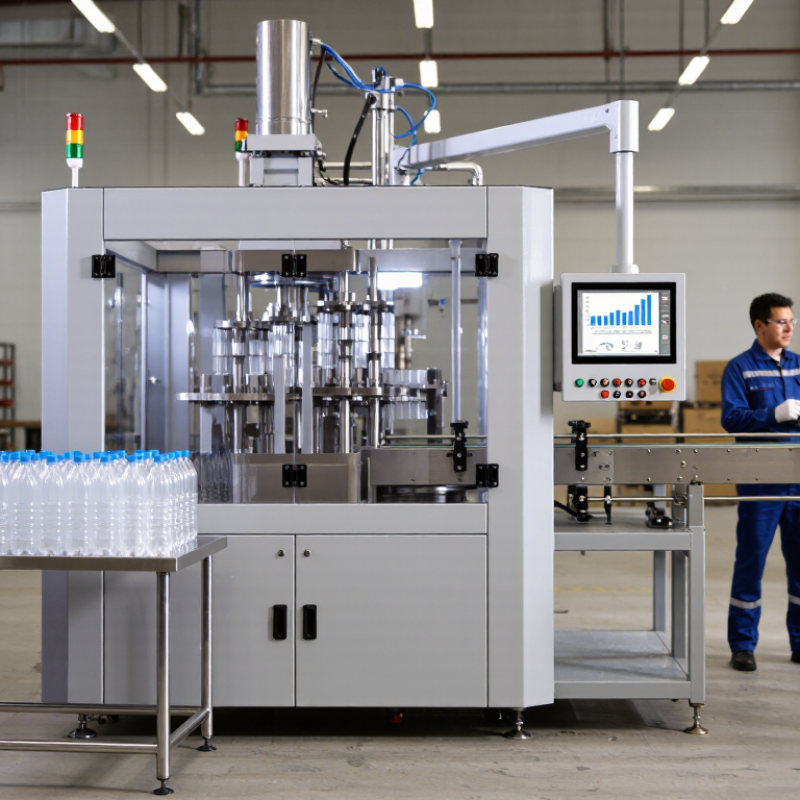
In global sourcing, a “blow maker” usually means a blow molding machine. It forms hollow plastic products, such as bottles, containers, and small industrial tanks. The machine heats plastic resin until it becomes soft. It then places the material inside a mold and uses compressed air to expand it against the mold walls. The result is hollow.

Common systems include extrusion blow molding, injection blow molding, and injection stretch blow molding. Extrusion systems create a hot plastic tube called a parison. The mold closes around it, and air inflates the tube. Injection systems produce a preform before stretching and blowing it into its final shape. Each method affects speed, wall thickness, tooling cost, and product strength.

A reliable sourcing decision requires more than checking the machine price. Review output per hour, energy use, mold-change time, and spare-part availability. Ask for sample production using the intended resin and product design. Inspect the neck finish, wall distribution, cooling cycle, and leakage rate. Small errors multiply. A machine may look efficient during a short demonstration but perform differently during continuous production. I would also verify safety controls, operator training, maintenance records, and applicable market requirements. A perfect machine does not exist. The better choice depends on the container design, expected volume, resin type, factory skills, and long-term service support.
2026 Best Blow Maker for Global Sourcing? — What Is a Blow Maker and How Does It Work?

A blow molding machine heats plastic, forms a hollow preform or parison, and uses compressed air to expand it against the mold wall. The chart compares typical container-capacity ranges for major blow molding processes.

Capacity ranges are industry-typical working ranges and can vary according to machine configuration, mold design, material, and product requirements. Injection stretch blow molding is commonly used for lightweight PET containers, while extrusion blow molding covers a wider range from small bottles to large industrial containers.

Key Types of Blow Makers for Different Manufacturing Needs

Choosing the best blow maker for global sourcing starts with the product, not the machine price. Different containers require different forming methods, cooling systems, and production speeds.

Extrusion blow molding suits bottles, jerry cans, and hollow industrial parts. It handles varied shapes and thicker walls well. A continuous extruder can support stable, high-volume output. However, uneven parison thickness may create weak areas if settings are poorly controlled.

Injection blow molding produces precise small containers with clean neck finishes. It works well for pharmaceutical, cosmetic, and sample packaging. Its preform stage improves dimensional consistency. The trade-off is higher tooling complexity and limited flexibility for large containers.

Injection stretch blow molding fits lightweight PET bottles. It stretches the material in two directions, improving clarity and strength. This method often reduces material use. Yet, it needs accurate temperature control, preform quality, and compressed air management. Small errors become visible as thin shoulder areas or cloudy walls.

Accumulator-head extrusion machines are useful for large containers and technical parts. They deliver larger material shots and support thicker structures. The equipment also demands careful die design and stronger clamping capacity.

In sourcing projects, I check mold-change time, spare-part availability, operator training, and after-sales response. A factory floor tells more than a catalog. Listen for abnormal vibration. Inspect rejected bottles beside approved ones. Energy consumption is another practical concern, especially during continuous production.

No machine is perfect. I have seen buyers focus on hourly output, then struggle with cooling delays and inconsistent recycled material. A slower machine with stable quality may perform better across a full production year. The decision still needs testing with the actual resin, mold, and target product.

Essential Features to Compare Before Global Sourcing

Choosing the best blow molding machine for global sourcing requires more than comparing catalog prices. Start with output, container size, material compatibility, and cycle stability. A machine that produces 2,000 units per hour may struggle with thicker containers or frequent mold changes. Ask for test samples using your actual resin, mold design, and production settings.

Energy use deserves close attention. Compare motor efficiency, heating control, cooling demand, and compressed-air consumption. These costs continue long after purchase. Inspect the control system, safety functions, spare-part availability, and maintenance access. A clear interface helps operators reduce setup errors. It also shortens training time. Small details matter.

Supplier reliability is harder to measure. Request inspection records, process documentation, warranty terms, and realistic delivery schedules. Video demonstrations are useful, but an on-site or independent inspection is stronger evidence. Check whether technical support covers your time zone and language. I have seen buyers focus too heavily on the lowest quotation. That decision later created delays, replacement costs, and frustrated operators. A better comparison includes total ownership cost, factory testing, installation guidance, and future upgrade options. Even experienced teams can miss hidden expenses. Leave room for doubt.

How to Evaluate Suppliers, Quality, and Production Capacity

For global sourcing in 2026, choosing a blow maker starts with the supplier, not the quotation. A low unit price can hide unstable output, weak maintenance, or costly mold changes. I usually request factory records, production photos, machine specifications, and three recent customer references. Then I compare them with the target bottle size, resin type, cycle time, and monthly demand. Be specific. Ask who owns the tooling and who responds after installation.

Quality needs measurable proof. Request sample containers from the intended production line, not only polished laboratory samples. Check wall-thickness distribution, neck dimensions, leakage, drop resistance, and appearance under normal lighting. A documented inspection plan should define sampling levels, test equipment, calibration dates, and corrective-action timing. Third-party testing can strengthen confidence, but it cannot replace an on-site process review. I have seen attractive samples fail when material ratios changed during production.

Capacity claims deserve practical testing. Review shift patterns, installed machines, mold availability, maintenance logs, operator coverage, and current utilization. A supplier promising 500,000 units monthly may have no room for peak season. Run a pilot order and record hourly output, scrap rate, downtime, and packaging accuracy. Leave room for doubt. Forecasts change, and even a capable factory may underestimate setup delays. Spare-part access matters too; a small valve failure can stop a line for days.

Costs, Compliance, Shipping, and After-Sales Support Comparison

2026 Best Blow Maker for Global Sourcing?

The lowest machine price is rarely the lowest total cost. Compare mold changes, compressed-air use, electricity, scrap, installation, and operator training. A realistic quotation should separate machine cost, tooling, packaging, insurance, freight, duties, and commissioning. UNCTAD’s Review of Maritime Transport 2024 reports that shipping moves over 80% of global merchandise trade by volume. Route disruption can therefore change delivery dates and landed costs quickly.

Compliance needs equal attention. Request a risk assessment under ISO 12100, electrical test records, guarding details, and a complete technical file. For European buyers, the Machinery Regulation (EU) 2023/1230 will apply from January 20, 2027. A 2026 purchase should already support that transition. Product-contact parts also need documentation for the target market. Do not accept a generic certificate. It may not cover your exact machine configuration. After-sales support is often overlooked. Ask for spare-parts availability, remote response times, onsite commissioning, software backups, and technician coverage near your plant. A cheap machine with a three-week downtime is not cheap.

Tips: Build a five-year cost model. Include energy, rejected bottles, molds, freight, service visits, and lost production. Ask for customer references using similar materials and output rates. World Bank logistics data shows major differences in customs reliability and delivery performance between markets. I would also test sample production before final payment. It takes time, but assumptions fail quietly.

2026 Best Blow Maker for Global Sourcing? - Costs, Compliance, Shipping, and After-Sales Support Comparison

Anonymous supplier-profile comparison for a standard 2-cavity PET stretch blow-molding machine

Comparison Dimension Profile A
High-volume Asia OEM
Profile B
Mid-market Asia OEM
Profile C
South Asia OEM
Profile D
European premium OEM
Profile E
Regional export OEM
Typical machine scope 2-cavity PET stretch blow machine; approximately 3,000–4,000 bottles/hour 2-cavity PET stretch blow machine; approximately 2,500–3,500 bottles/hour 2-cavity PET stretch blow machine; approximately 2,000–3,000 bottles/hour 2-cavity PET stretch blow machine; approximately 3,000–4,000 bottles/hour 2-cavity PET stretch blow machine; approximately 2,500–3,500 bottles/hour
Indicative equipment price, EXW US$28,000–48,000 US$35,000–60,000 US$30,000–55,000 US$85,000–150,000 US$40,000–70,000
Typical tooling cost for one PET bottle mold US$2,500–6,000 US$3,500–8,000 US$3,000–7,000 US$8,000–20,000 US$4,000–9,000
Estimated total landed cost to a major seaport EXW price + approximately 8%–18% for export packing, inland haulage, ocean freight, and basic cargo insurance EXW price + approximately 8%–20% EXW price + approximately 10%–24% EXW price + approximately 6%–16% within Europe; more for intercontinental delivery EXW price + approximately 8%–18%
Normal production lead time 45–75 calendar days 60–90 calendar days 60–100 calendar days 90–180 calendar days 60–100 calendar days
Indicative ocean transit time 18–40 days, route dependent 18–42 days, route dependent 25–50 days, route dependent 10–30 days within Europe; 25–50 days overseas 15–35 days, route dependent
Common trade terms offered EXW, FOB, CIF, and FCA EXW, FOB, CIF, and FCA EXW, FOB, CIF, and limited DAP support EXW, FCA, DAP, and project-based DDP EXW, FOB, CIF, and FCA
Electrical and safety documentation Usually available: wiring diagram, risk assessment, manual, and CE technical file on request Usually available: wiring diagram, manual, and declaration documents; verify test evidence Usually available: manual and electrical documents; confirm guarding and emergency-stop testing Typically comprehensive documentation aligned with applicable EU machinery requirements Usually available: standard manuals and electrical drawings; customer-specific documentation may cost extra
Quality-management evidence ISO 9001 may be available; request current certificate and issuing-body verification ISO 9001 commonly available; audit scope should be checked ISO 9001 availability varies; conduct a process audit before payment Documented quality systems and factory acceptance testing are commonly offered ISO 9001 availability varies; inspect production and final-testing records
Energy and operating profile Competitive purchase price; verify heater power, compressor demand, and actual output at target bottle weight Moderate energy efficiency; servo and infrared-heating upgrades may be optional Competitive operating cost; local utility and compressed-air quality must be assessed Often stronger automation and energy-management features, with higher capital cost Balanced efficiency; confirm spare-parts availability for proprietary controls
Installation and commissioning Remote commissioning commonly included; on-site service usually extra Remote support standard; paid engineer visits typically available Remote commissioning common; local integrator support may be needed On-site installation and validation packages commonly available Remote support standard; regional field service depends on destination
Warranty structure Typically 12 months from shipment or commissioning; clarify coverage exclusions Typically 12 months; consumables and misuse usually excluded Typically 12 months; response and freight terms require written confirmation Typically 12–24 months, often with defined service-level options Typically 12 months; confirm whether labor and travel are included
Spare-parts support Common parts often available from stock; specialized control parts may take 2–8 weeks Standard parts generally available; maintain a critical-spares kit Lead times can vary by component; request a two-year recommended-parts list Structured parts catalogs and long-term support are commonly available Standard parts usually manageable; proprietary items require advance planning
Best fit for global sourcing Cost-sensitive buyers with technical staff and established import processes Buyers seeking a balance of price, customization, and export experience Buyers prioritizing competitive pricing and regional service access High-utilization plants prioritizing documentation, automation, and lifecycle support Buyers needing moderate customization with shorter regional communication lines
Overall sourcing position Best initial price potential Strong value-to-support balance Competitive for budget-led projects Best documentation and lifecycle depth Good regional sourcing compromise
Procurement note: Cost, speed, certification status, production capacity, warranty coverage, and shipping time are indicative industry ranges for 2026 planning. Final figures depend on bottle specifications, mold design, automation level, destination, exchange rates, customs duties, taxes, and confirmed factory documentation. Verify compliance against the laws and standards of the destination market before purchase.

Lighting Power & Control-Signal Cable

This content is restricted to site members. If you are an existing user, please log in. New users may register … LEARN MORE “Lighting Power & Control-Signal Cable”