A partner you can trust
Choosing the right Solar Pv Battery in 2026 requires more than comparing advertised capacity and prices. Global buyers must examine chemistry, operating temperature, warranty terms, safety controls, and service availability. Lithium iron phosphate, or LFP, remains a strong option for residential and commercial systems because it offers long cycle life and stable thermal performance. However, lithium nickel manganese cobalt batteries can provide higher energy density where installation space is limited. Sodium-ion technology may attract buyers seeking lower material costs, although its market maturity and long-term service record still require careful review.
Real-world conditions often change the decision. A coastal villa may need stronger corrosion protection, while a warehouse in a hot region may require active cooling and conservative charge settings. A battery installed beside an inverter should have compatible voltage ranges, communication protocols, and protection systems. Small details matter.
They often decide reliability.
Experienced installers also inspect cell balancing, enclosure ratings, emergency shutdown access, and replacement procedures. Independent testing, transparent datasheets, and verifiable certifications can separate dependable suppliers from impressive marketing. Buyers should compare usable energy rather than nominal capacity, since reserve limits reduce available storage. Warranty language deserves close attention, especially cycle limits, retained capacity, and geographic exclusions.
No single battery type suits every country or project. Grid stability, electricity tariffs, sunlight patterns, financing costs, and local technical support can change the ranking. Some recommendations may age quickly as new chemistries improve. That uncertainty deserves honesty. This guide evaluates leading Solar Pv Battery types through practical performance, safety evidence, lifecycle value, and global purchasing considerations.
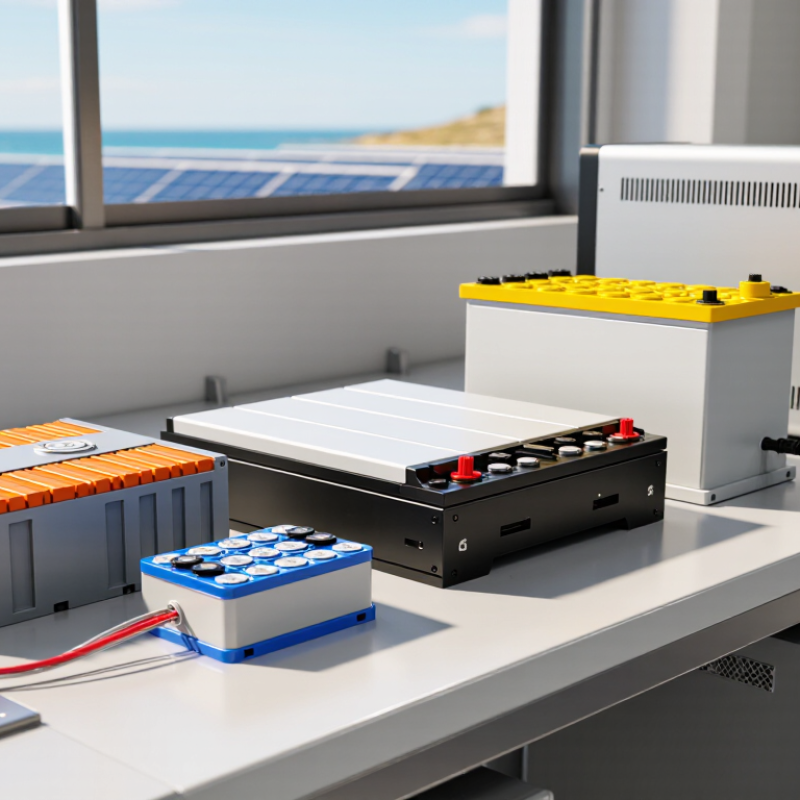
2026 Best Solar PV Battery Types for Global Buyers?
Solar PV batteries store midday electricity for evening demand, cloudy hours, and grid interruptions. They also reduce curtailment when solar production exceeds local consumption. IRENA’s Renewable Capacity Statistics 2025 reports global solar capacity reached about 1,865 GW by the end of 2024. Storage must now expand with generation. The IEA’s Batteries and Secure Energy Transitions report recorded approximately 42 GW of new battery storage in 2023, more than doubling annual additions from 2022.
Lithium iron phosphate batteries suit many global projects because they offer strong thermal stability, long cycle life, and useful daily cycling. Nickel-based lithium batteries provide high energy density, but heat management and raw-material exposure require closer review. Lead-acid systems remain practical for smaller, budget-sensitive installations, although their shorter service life can raise lifetime costs. Flow batteries deserve attention for long-duration applications, especially where space is available.
The chemistry is only one decision. A buyer should compare usable capacity, round-trip efficiency, warranty terms, degradation assumptions, and temperature performance. Ask for independent safety testing and clear battery-management records. IEC 62619 testing can support industrial battery safety assessment, but local grid rules still matter. In hot climates, a container can feel like an oven. Cooling loads may quietly reduce output. That detail is often missed. My own purchasing view is cautious: the cheapest battery is rarely the cheapest energy over ten years, and forecast models remain imperfect.
In 2026, solar storage buyers are comparing chemistry, usable capacity, safety, and service life. The best battery depends on the site, not a universal ranking. Lithium iron phosphate batteries suit many homes and small businesses. They provide strong thermal stability, long cycle life, and predictable daily operation. A 10 kWh system may support evening lighting, refrigeration, and network equipment. That safety margin matters.
Nickel manganese cobalt batteries offer higher energy density when installation space is limited. However, they require careful thermal management and certified protection systems. Lead-acid batteries remain familiar and relatively affordable, but they are heavier and usually tolerate fewer deep discharge cycles. They may fit backup systems with occasional use, not demanding daily cycling. Sodium-ion batteries are gaining attention for cold environments and material diversity. Their energy density is still a practical limitation.
Large commercial projects may consider flow batteries for long-duration storage. They can handle repeated cycling, but tanks, pumps, and installation space increase project complexity. Field evaluations should examine temperature ranges, inverter compatibility, fire protection, replacement access, and independent safety testing. Do not compare batteries by nameplate capacity alone. Usable capacity, round-trip efficiency, and degradation change the real payback. The difficult part is forecasting future electricity prices. I would leave room for uncertainty. A cheaper battery can become expensive when downtime, maintenance, or early replacement enters the calculation.
For global buyers in 2026, battery selection should begin with the duty profile, not advertised capacity. Lithium iron phosphate usually offers strong thermal stability, deep-cycle performance, and long service life. Nickel-based batteries provide higher energy density, but heat management becomes more demanding. Lead-acid systems remain familiar and affordable upfront. However, their usable capacity drops during repeated deep discharge. Sodium-ion batteries may suit cold regions, although field data and availability still vary.
Compare usable kilowatt-hours, round-trip efficiency, power rating, cycle life, and temperature performance. A 10 kWh battery may deliver only 8 kWh after reserve limits and conversion losses. Ask for test conditions, not laboratory headlines. Safety requires cell monitoring, certified protection devices, suitable clearances, and qualified installation. Local electrical, fire, transport, and grid requirements also matter. Even safe chemistry can become dangerous through poor wiring, overheating, or incorrect settings.
Cost analysis should include inverters, installation, maintenance, replacement timing, and recycling arrangements. Divide ownership cost by expected delivered energy, not nameplate capacity alone. A cheaper system may need earlier replacement in a hot, high-cycle household. Temperature control matters. Software quality matters too. Field projections often look precise, while actual usage remains poorly measured. This is an uncomfortable gap. Buyers should request warranty limits, degradation assumptions, service response times, and independent test evidence before signing.
| Battery Type | Typical Round-Trip Efficiency | Recommended Depth of Discharge | Typical Cycle Life | Expected Service Life | Relative Upfront Cost | Safety and Thermal Stability | Temperature Considerations | Best-Fit Applications | Key Limitations |
|---|---|---|---|---|---|---|---|---|---|
| Lithium Iron Phosphate (LFP) | 92–98% | 80–100% | 4,000–8,000 cycles | 10–15 years | Medium | High Strong thermal stability and lower risk of thermal runaway than nickel-rich lithium chemistries when properly designed and managed. | Charging below 0°C may require heating or battery-management protection. High temperatures accelerate aging. | Residential storage, commercial systems, off-grid power, and frequent daily cycling. | Heavier and less energy-dense than NMC; usable capacity and life depend on temperature, charging limits, and battery management. |
| Nickel Manganese Cobalt (NMC) | 90–95% | 80–90% | 1,000–3,000 cycles | 8–12 years | Medium to High | Medium High energy density, but generally more sensitive to overheating, overcharging, and mechanical damage than LFP. | Performance decreases in cold conditions; thermal management is important in high-temperature environments. | Space-constrained installations, backup systems, and applications prioritizing compact size and high energy density. | Usually shorter cycle life and higher thermal-management requirements than LFP; cobalt and nickel supply-chain exposure may affect cost. |
| Sodium-Ion | Approximately 90–95% | 80–100% | Approximately 2,000–5,000 cycles | About 10–15 years | Medium; market-dependent | High potential Uses abundant sodium-based materials and generally offers good low-temperature and thermal-safety characteristics, but field data remain less extensive than for lithium systems. | Often performs better than many lithium systems at low temperatures, but the exact charging limits depend on cell design. | Cold-climate storage, cost-sensitive stationary systems, and installations where reduced lithium and nickel dependence is valuable. | Commercial availability, certification, system integration, and long-term field experience vary significantly by region and supplier. |
| Absorbent Glass Mat Lead-Acid (AGM) | 80–90% | Up to about 50% for regular use | 500–1,200 cycles | 3–7 years | Low | Medium Sealed and maintenance-free, but it can vent gas under abnormal charging and requires correct charging controls. | High temperatures shorten life. Capacity and charge acceptance decline in cold conditions. | Small backup systems, cabins, low-cycling solar applications, and projects prioritizing low initial purchase cost. | Low usable energy, lower efficiency, heavy weight, and significantly shorter life under deep or frequent cycling. |
| Flooded Lead-Acid | 75–85% | Up to about 50% for regular use | 300–1,000 cycles | 3–6 years | Lowest | Medium with maintenance Robust and well-established, but requires ventilation, periodic water maintenance, and protection against hydrogen-gas accumulation. | High heat accelerates water loss and corrosion. Freezing can damage a battery that is deeply discharged. | Large off-grid systems with accessible maintenance areas and infrequent discharge. | Maintenance requirements, gas ventilation, low efficiency, heavy weight, and poor suitability for daily deep cycling. |
| Vanadium Redox Flow Battery | 65–85% | 80–100% | 10,000–20,000+ cycles | 15–25 years | High | High Aqueous electrolyte is generally non-flammable and the energy medium is separated from the power-conversion hardware. | Needs temperature control and protection from freezing or excessive heat. Pumps and auxiliary equipment consume energy. | Utility-scale and commercial storage requiring long duration, frequent cycling, and long calendar life. | Low energy density, larger footprint, higher balance-of-system complexity, and higher initial project cost. |
| Data note: Values are typical technology-level ranges for 2026 planning and comparison, not guarantees for a specific product. Actual performance depends on cell design, battery-management software, inverter efficiency, ambient temperature, charge and discharge rate, installation quality, maintenance, and warranty limits. For cost comparisons, evaluate total installed cost, usable kilowatt-hours, replacement schedule, safety equipment, and levelized cost of stored energy rather than purchase price alone. | |||||||||
For global buyers, battery selection begins with regional conditions, not chemistry labels. In hot climates, daytime cabinet temperatures can exceed 45°C, accelerating degradation and reducing usable capacity. Lithium iron phosphate batteries offer strong thermal stability and frequent cycling, making them suitable for sunny commercial sites. However, their lower energy density may require more floor space. BloombergNEF’s 2024 Battery Price Survey reported an average lithium-ion pack price of 115 US dollars per kWh, down 20% year on year.
Cold regions create a different problem. Charging performance can fall sharply below freezing, so buyers should verify heating systems, insulation, and operating limits. Nickel-based batteries provide higher energy density, but thermal management becomes more demanding. In remote areas, long service intervals matter more than peak efficiency. The International Energy Agency reported that global battery storage additions reached about 42 GW in 2023, showing rapid deployment but also exposing gaps in maintenance skills and grid integration.
Grid rules shape the final choice. Australia and parts of Europe increasingly value frequency response, while weak-grid regions may prioritize backup duration and simple controls. Sodium-ion systems could suit cold climates and supply-constrained markets, but field experience remains limited. That uncertainty matters. A battery that looks inexpensive on paper may require oversized inverters, extra cooling, or early replacement. Buyers should compare 10-year delivered energy, not only the quoted kilowatt-hour price.
The chart compares representative technical values for major stationary-storage battery chemistries. LFP generally offers long cycle life and strong thermal stability, while NMC provides higher energy density. Lead-acid remains suitable for low-cost, low-cycle applications, and sodium-ion is emerging for cost-sensitive projects with less demanding energy-density requirements.
Regional selection depends on climate, grid reliability, available installation space, safety requirements, maintenance capability, and the expected frequency of daily cycling. Hot climates require strong thermal management, cold regions may need battery heating, and markets with frequent power interruptions usually benefit from chemistries with higher cycle durability.
The best solar PV battery depends on load patterns, climate, safety needs, and available space. Lithium iron phosphate (LFP) suits homes and small businesses because it offers strong thermal stability and long cycle life. Nickel manganese cobalt batteries provide higher energy density, but their tighter thermal management increases system complexity. Lead-acid remains affordable for basic backup systems, although frequent cycling can shorten its service life. According to BloombergNEF’s 2024 Battery Price Survey, average lithium-ion pack prices fell to 115 dollars per kWh. Lower prices make daily solar shifting more practical.
Tips: Match battery capacity with evening demand, not total daily generation. Check usable capacity, warranty cycles, round-trip efficiency, and cold-weather performance. A 10 kWh battery may deliver less than 10 kWh after reserve limits and conversion losses. Small details matter.
For remote telecom sites, agricultural pumps, and weak-grid locations, LFP often balances durability, safety, and maintenance needs. Large solar farms may consider containerized LFP systems with advanced monitoring and fire protection. Sodium-ion batteries are attracting attention for cost-sensitive projects, but their commercial track record is still developing. The International Energy Agency’s Batteries and Secure Energy Transitions report states that global battery storage capacity must expand substantially this decade to support renewable integration. However, choosing only by price is a mistake. Field conditions can expose weaknesses that laboratory figures hide. A technically impressive battery may still fail the application if installers cannot service it locally.
This content is restricted to site members. If you are an existing user, please log in. New users may register … LEARN MORE “Lighting Power & Control-Signal Cable”
We are here to help. You can contact us or create an account online to have access to special products, technical specifications and our new online quote tool.
ELECTRO CABLES
9 Riverside Drive
P.O. Box 276
Trenton, Ontario
CANADA K8V 5R5
N.A. Toll Free: 888-ELECTRO
(1-888-353-2876)
World: 613-394-4896
Fax: 613-394-4101
Email: sale@machinecables.com
We manufacture cables that are certified by the Canadian Standards Association (CSA), listed by Underwriters Laboratories and/or listed by Intertek (ETL).
Our quality management system is registered to ISO 9001: 2015. Our team is dedicated to consistently providing quality service and products to our customers.

© 2025 ELECTRO CABLES • SITE BY SNAP 360•