2026 Best Wire and Cable Types for Home and Industry Needs?
In the evolving landscape of electrical connectivity, the selection of wire and cable is pivotal. According to a recent industry report from Allied Market Research, the global wire and cable market is projected to reach $319.2 billion by 2026. This growth is driven by increasing demands in both home and industrial settings. The choice of wire and cable directly affects efficiency and safety in installations.
Considering the diverse applications, it's essential to know the right type for specific needs. Some homes may require flexible cables for lighting, while industries might seek robust and durable options for machinery. However, choosing the wrong type can lead to safety hazards and increased costs. The National Fire Protection Association (NFPA) indicates that improper wiring is a leading cause of electrical fires.
Often, decision-makers overlook details such as material, insulation type, and voltage ratings. The complexity of regulations adds to the confusion. When tackling wire and cable selections, industry stakeholders must reflect on these critical factors. A simple oversight can have severe repercussions on performance and safety standards.
Best Conductors: Analyzing Copper, Aluminum, and Their Alloys
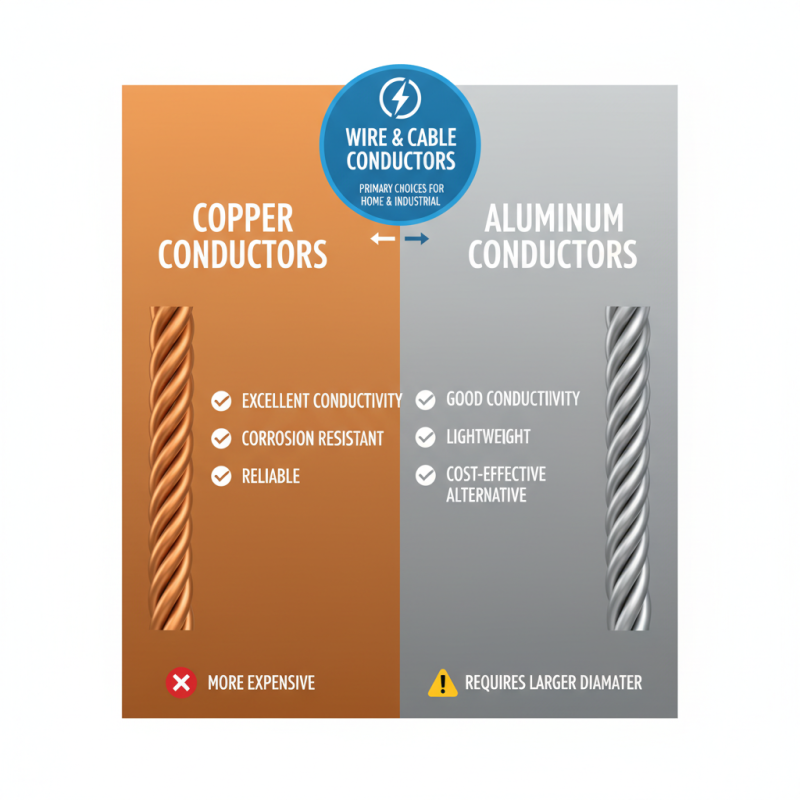
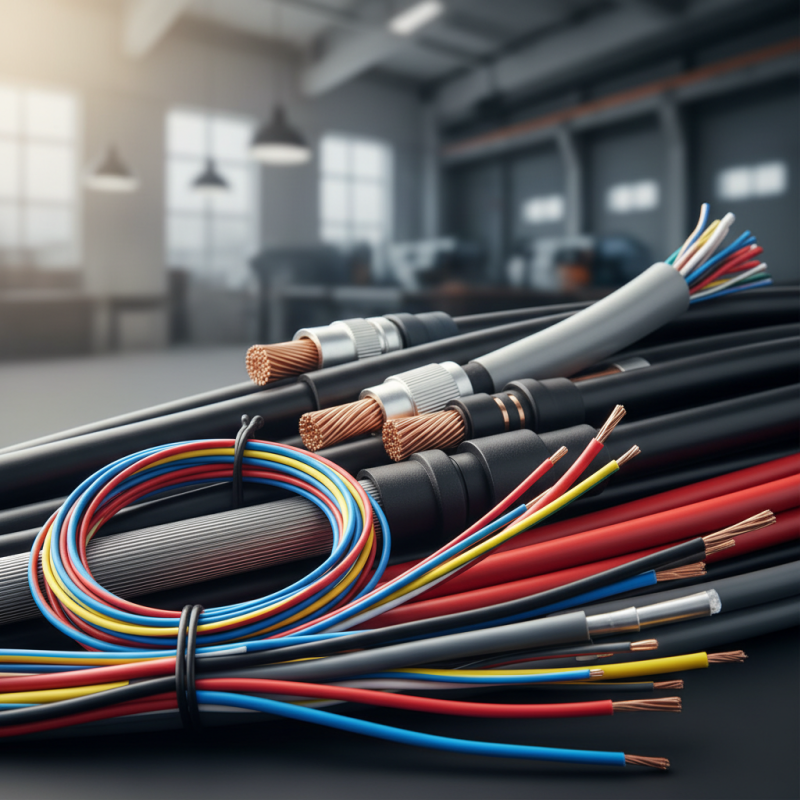
When it comes to choosing wire and cable types, understanding the conductors is crucial. Copper and aluminum stand out as the primary choices for both home and industrial applications. Copper is known for its excellent conductivity. Its resistance to corrosion makes it a reliable option. However, it is often more expensive. Budget constraints can lead to exploring alternatives.
Aluminum, lighter and cheaper, also acts as a decent conductor. Yet, it has a higher resistance compared to copper. This can lead to efficiency losses in larger installations. For example, an aluminum wire may require a thicker gauge to match copper’s performance. Many users overlook this detail, resulting in subpar outcomes. Understanding these nuances is essential for effective wiring solutions.
Alloys of both metals can offer unique benefits. They can combine the strength of aluminum with the conductivity of copper. Yet, this can complicate decisions. One must consider factors like temperature fluctuations and environmental conditions. Proper testing is often needed to ensure safety and performance. The choice involves weighing costs against long-term reliability.
Insulation Materials Comparison: PVC, XLPE, and Rubber Usage in Cables
When selecting insulation materials for cables, PVC, XLPE, and rubber each offer unique benefits and limitations. PVC (polyvinyl chloride) is widely used due to its cost-effectiveness and versatility. It is a good insulator and offers decent resistance to moisture and chemicals. However, its lower thermal performance limits its application in high-temperature environments. Industry reports suggest that PVC accounts for approximately 40% of the wire insulation market, driven by low production costs.
XLPE (cross-linked polyethylene) is favored for its superior thermal and electrical properties. It can withstand higher temperatures and performs well in various environmental conditions. Studies indicate that cables with XLPE are less prone to aging and have a longer service life compared to PVC. Yet, the cost can be a barrier for some applications. Its market share is growing, with estimates showing it represents about 30% of the insulation materials used in the industry.
Rubber insulation provides excellent flexibility and resistance to abrasion. It is often used in applications where cables are subject to frequent movement or mechanical stress. However, rubber can be more expensive and may degrade faster under certain conditions, making it less desirable for some users. Data shows a modest 20% market share for rubber, reflecting its specialized applications. Choosing the right material often requires balancing cost, performance, and specific environmental needs.
Voltage Ratings Explained: Choosing Cables for Residential vs. Industrial Needs
When selecting cables for residential or industrial use, voltage ratings play a crucial role. Residential applications typically require cables with lower voltage ratings, such as 120V or 240V. These ratings ensure safety and efficiency in home wiring. Standard household devices often operate within this range, making lower voltage cables suitable.
In contrast, industrial setups may demand higher voltage options, such as 480V or 600V. Equipment in factories requires robust wiring to handle heavy machinery and significant power loads. Choosing the right voltage rating helps prevent overheating and potential hazards.
However, many overlook these essential details. A wrong choice could lead to issues like electrical fires or equipment damage. There's a fine line between cost-saving and safety. Reflecting on past mistakes, it's vital to consult experts when in doubt. Always ensure voltage ratings match the requirements of the intended application.
2026 Best Wire and Cable Types for Home and Industry Needs
This bar chart illustrates the common applications of different wire and cable types for both residential and industrial needs as of 2026, showcasing their relevance based on usage frequency.
Emerging Trends: Smart Wiring Solutions for Modern Homes and Facilities
Smart wiring solutions are transforming how we wire modern homes and facilities. These systems allow for seamless integration of various technologies. They enable smart lighting, automated temperature control, and enhanced security features. Homeowners now want more efficient and sustainable energy usage. This shift encourages the adoption of advanced wiring methods.
One emerging trend is the use of low-voltage systems. They consume less energy and are safer for residential environments. Many homeowners are uncertain about the installation process. This uncertainty leads to mixed results in achieving optimal performance. Moreover, flexible wiring systems can support new technologies as they emerge. However, not every solution fits all scenarios. It's crucial to evaluate individual needs before making a decision.
The demand for user-friendly interfaces in smart wiring continues to grow. Homeowners desire systems they can control with ease. Nevertheless, complexities can arise during installation and setup. A balance between functionality and simplicity remains an ongoing challenge. As smart solutions develop, so must our approach to wiring. Each installation carries its obstacles, and adaptability is key.
Safety Standards and Certifications: Ensuring Compliance in Wire Selection
When selecting wires and cables for home and industry, safety standards are crucial. The National Electrical Code (NEC) outlines regulations that ensure a safe wiring environment. Compliance with these standards reduces risks of electrical fires, which cause over 45,000 residential fires annually in the U.S., according to the National Fire Protection Association. Companies need to ensure that the materials used meet these rigorous standards.
Certifications like UL and CSA indicate compliance with safety norms. These certifications assure users that products have undergone extensive testing. A report from the International Electrotechnical Commission highlights that more than 30% of electrical accidents could be prevented by using certified products. It’s vital for both consumers and industry professionals to prioritize these certifications when selecting wiring solutions.
Despite the significance of these standards, many still overlook compliance. Some contractors may cut corners to save costs, exposing themselves to liability. This can lead to serious safety hazards and hefty fines. Proper education on safety standards is necessary. Every wiring decision should consider safety first, even when budgets are tight. After all, a small oversight today can lead to a significant issue tomorrow.