2026 Top Anti Clogging DTF Ink for Global Buyers
Choosing the right Anti Clogging Dtf Ink is no longer a minor purchasing decision. For global buyers, it affects print quality, machine uptime, waste, and delivery reliability. A cartridge may appear economical, yet unstable ink can create blocked nozzles, blurred edges, or uneven white coverage. These problems often become visible after hours of continuous production.
Dr. Ian M. Hutchings, a respected inkjet-printing researcher, has emphasized: “Reliable inkjet printing depends on controlling ink behavior throughout the process.” This principle matters in direct-to-film printing. A dependable formula should maintain smooth flow through fine printhead channels, especially during pauses, temperature changes, and heavy white-ink circulation. It should also support strong color density, clean powder adhesion, and consistent transfer performance.
Real production conditions are less perfect than laboratory samples. A workshop may face dry air, irregular maintenance, or operators with different habits. Anti Clogging Dtf Ink cannot remove every risk. That expectation needs reconsideration. However, well-developed ink can reduce nozzle checks, cleaning cycles, and avoidable film waste. Buyers should examine viscosity stability, particle dispersion, storage requirements, compatibility, and supplier testing records. Small details matter, such as a printhead remaining clean after an overnight pause.
This guide reviews leading options for 2026. It focuses on practical evidence, not attractive claims alone. Global buyers can compare performance more carefully and avoid choosing ink based only on low price.
What Makes DTF Ink Resistant to Clogging in 2026
What Makes DTF Ink Resistant to Clogging in 2026
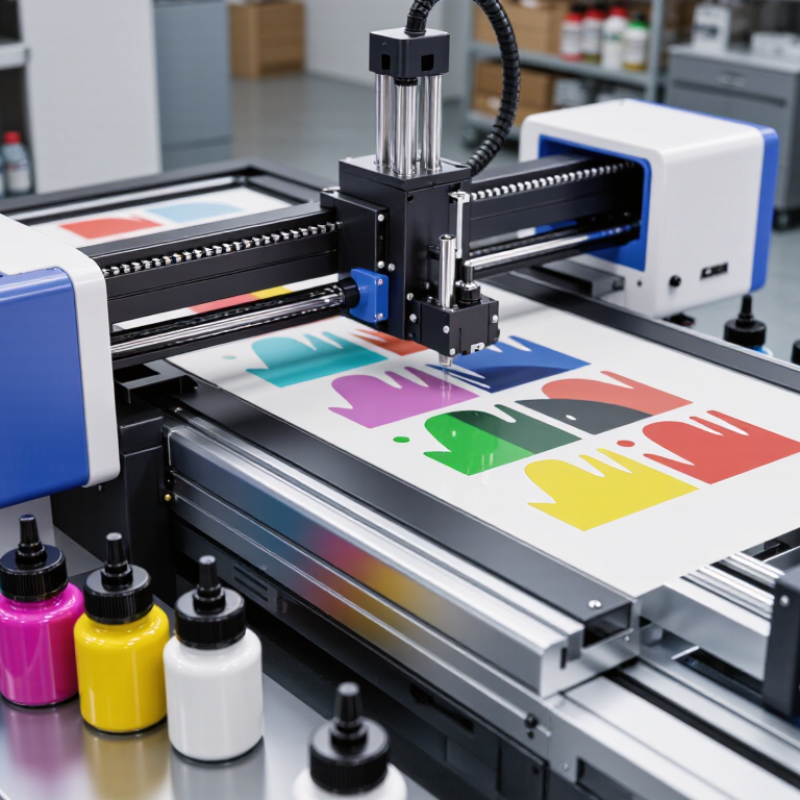
Clog-resistant DTF ink begins with stable pigment dispersion. Pigment particles must remain evenly separated during storage and printing. Oversized particles can settle inside cartridges or block fine printhead channels. Tight filtration helps remove these risks before the ink reaches the nozzle.
Viscosity also matters. Ink that is too thick moves slowly and leaves residue around the nozzle plate. Ink that is too thin may produce weak color and unstable drop formation. A balanced formula keeps droplets consistent across long production runs. Humectants help prevent premature drying, especially during short pauses. Controlled surface tension improves wetting without causing excessive spreading.
Room conditions still influence performance. Dust, heat, and low humidity can undermine good ink chemistry. Keep cartridges sealed and store them away from direct sunlight. Regular nozzle checks can reveal problems before visible banding appears. This simple habit saves material and reduces unexpected downtime.
No formula is clog-proof. That matters. In practical testing, a printer may perform well for weeks, then struggle after poor storage or infrequent use. Some buyers focus only on color density, but nozzle recovery is equally important. A reliable evaluation should include idle-time tests, startup performance, filtration quality, and printhead compatibility. The best 2026 choice is not merely vivid ink. It is ink that remains predictable under real working conditions.
2026 Top Anti Clogging DTF Ink for Global Buyers - What Makes DTF Ink Resistant to Clogging in 2026
| Technical Dimension | Typical Anti-Clog Reference Range | Why It Matters for Clog Resistance | Global Buyer Checkpoint |
|---|---|---|---|
| Pigment particle size | Sub-micron dispersion; commonly targeted below approximately 200 nm for the dispersed pigment system | Finer, well-dispersed particles reduce the chance of nozzle obstruction and sediment-related deposits. | Request particle-size distribution data, not only an average particle-size figure. |
| Viscosity at 25°C | Typically about 2–5 mPa·s, depending on the printhead and ink formulation | A controlled viscosity supports stable drop formation and helps prevent poor jetting or ink accumulation around the nozzle plate. | Compare the ink’s test temperature and method with the printer or printhead requirements. |
| Surface tension | Often approximately 25–40 mN/m for aqueous inkjet formulations | Balanced surface tension supports clean meniscus behavior, consistent drop release, and reduced satellite droplets. | Confirm compatibility with the printhead’s specified operating window. |
| Filtration level | Fine final filtration is commonly used; the exact rating must match the printhead design | Effective filtration removes agglomerates and foreign particles that could block narrow ink channels or nozzles. | Ask for filtration specifications and batch-control procedures. |
| pH stability | Commonly mildly alkaline, approximately pH 7.5–9.0; the acceptable range is printhead-specific | Stable pH helps maintain pigment dispersion and reduces changes in viscosity or surface tension during storage. | Check the recommended pH range and whether it remains stable after accelerated storage testing. |
| Humectant and moisture balance | Formulated with water-retaining components; the exact percentage is proprietary and printhead-dependent | Humectants slow evaporation at the nozzle plate, reducing crust formation during pauses and low-frequency printing. | Evaluate nozzle recovery after idle periods such as 8, 24, and 72 hours. |
| Sedimentation and redispersion | Uniform appearance with no hard sediment; gentle shaking or circulation should restore homogeneity when specified | Low sedimentation reduces the transfer of concentrated pigment particles into filters, dampers, and nozzles. | Request storage-stability and redispersion test results at the intended transport temperature. |
| Nozzle recovery after idle time | Should recover through the printer’s normal maintenance cycle without repeated aggressive flushing | Good recovery indicates limited drying, stable dispersion, and suitable evaporation control. | Test using the actual printer, printhead, capping station, and planned maintenance schedule. |
| Bacterial and fungal control | Preservative system and microbial limits should be documented in the technical or safety documentation | Microbial growth can create particles, odor, viscosity changes, and filter or nozzle blockage. | Request microbial test information and observe recommended shelf-life and opened-container limits. |
| Recommended operating environment | Typically controlled indoor conditions; many inkjet systems operate near 20–30°C and 40–70% relative humidity | Excessive heat accelerates evaporation and aging, while low humidity can increase nozzle drying and static-related dust contamination. | Use the ink and printer supplier’s specified temperature and humidity limits for final validation. |
Note: The values above are general technical reference ranges for water-based pigment DTF ink systems, not universal specifications. Actual performance depends on the printhead, printer maintenance system, film, curing process, storage conditions, and ink formulation. Buyers should verify current technical data sheets, safety data sheets, compatibility tests, and nozzle-recovery results before production use.

Our quality management system is registered to ISO 9001: 2015. Our team is dedicated to consistently providing quality service and products to our customers.