Best Cable Wire Types for Your Electrical Needs?
Choosing the right cable wire for your electrical needs can be a challenge. With so many options available, it’s easy to feel overwhelmed. Each type of cable wire serves a specific purpose and varies in performance. For example, some are designed for high voltage, while others are better suited for low-voltage applications.
When selecting cable wire, consider the environment where it will be installed. Outdoor cables require different features compared to those used indoors. Weather resistance and insulation quality are crucial factors. It's essential to understand your requirements before making a decision.
Mistakes in choosing cable wire can lead to serious issues. Overloading circuits or using inadequate connectors can cause safety hazards. Reflecting on your needs and consulting experts can help avoid these pitfalls. Ultimately, selecting the right cable wire is a vital step for any electrical project.
Understanding Different Types of Cable Wires for Electrical Use
When it comes to electrical work, choosing the right cable wire is crucial. Different types serve various purposes, making understanding them essential. For instance, copper wire is a popular choice for residential wiring due to its excellent conductivity. According to the National Electrical Code (NEC), copper cables can carry a higher load than aluminum ones, making them safer for homes.
Another common type is coaxial cable. It’s often used in cable television installations. This wire has a unique structure that protects signals from interference. Furthermore, the International Electrotechnical Commission (IEC) highlights that coaxial cables can reach distances of up to 500 meters with minimal signal loss. This aspect is vital for maintaining quality connections.
Tips: When selecting cables, always consider the environment. For outdoor installations, look for UV-resistant cables. Ensure the wire gauge meets your power needs; using wires that are too thin can cause overheating. Lastly, don’t forget to check local regulations. Electrocuting mistakes can happen when code requirements are overlooked. Always do thorough research or consult an expert to avoid costly errors.
Best Cable Wire Types for Your Electrical Needs?
| Wire Type |
Material |
Maximum Current (A) |
Applications |
Insulation Type |
| TW Wire |
Copper |
15 |
Residential lighting |
PVC |
| UF Wire |
Copper |
20 |
Underground wiring |
PVC |
| NM Cable |
Copper |
15 |
Indoor wiring |
Walter |
| THHN Wire |
Copper/Aluminum |
30 |
Commercial installations |
Nylon |
| XHHW Wire |
Aluminum/Copper |
60 |
Industrial use |
Cross-linked polyethylene |
Factors to Consider When Choosing Cable Wire Types
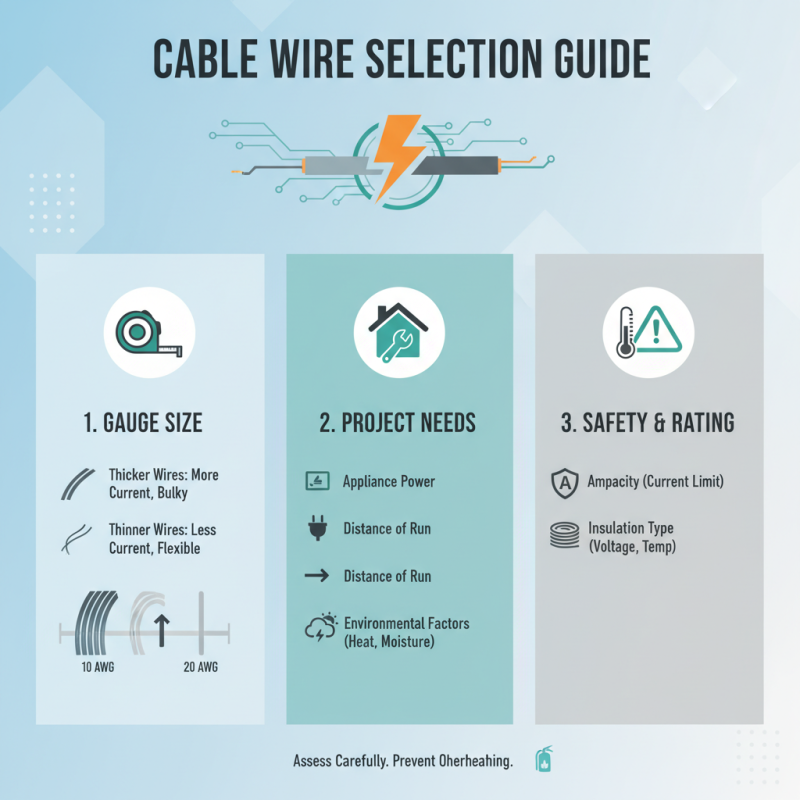
Choosing the right cable wire for your electrical needs can be daunting. Many factors come into play. Gauge size matters. Thicker wires handle more current but are bulky. Thinner wires are easier to work with but can overheat. Assess the needs of your project carefully.
Think about insulation types. Different insulations, such as PVC and rubber, protect wires differently. PVC is more common, while rubber offers better flexibility. However, rubber may wear down faster. Remember, the cable's environment also impacts its lifespan.
Tips: Always check the wire's temperature rating. High temperatures can cause failures. If you’re unsure, consult a professional. Don’t skip safety features. Failing to consider grounding options can lead to hazards. Review your choices. A wrong selection can lead to costly repairs.
Comparing Copper and Aluminum Wire: Pros and Cons
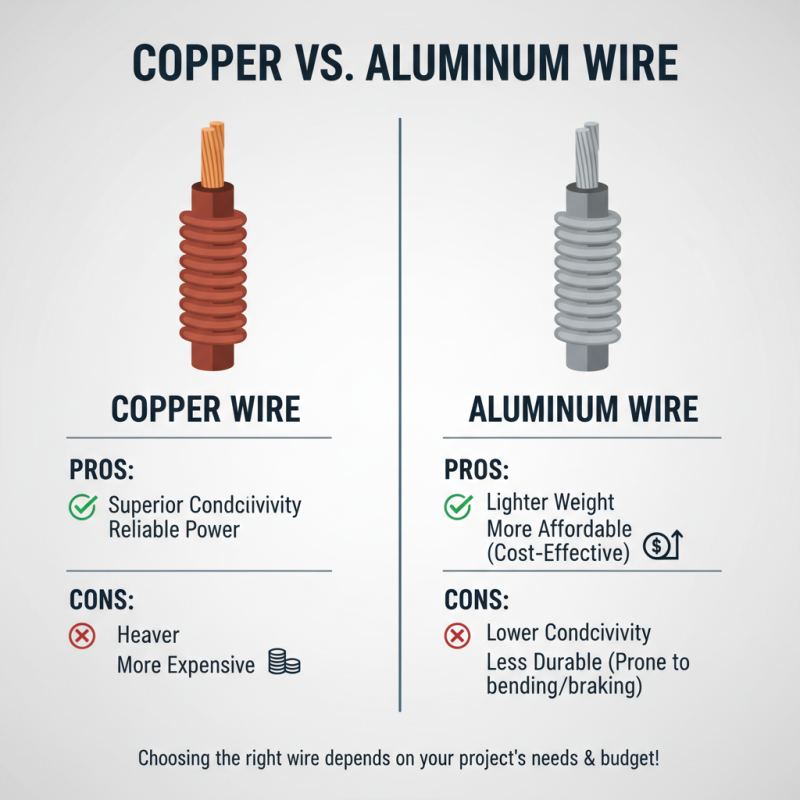
When choosing between copper and aluminum wire, both materials have their unique attributes. Copper wire is known for its superior conductivity. It performs well in various applications, providing reliable power delivery. However, copper is heavier and more expensive than aluminum. This can be a drawback for larger projects where budget constraints are significant.
On the other hand, aluminum wire is lighter and generally more cost-effective. It’s easier to install, especially in overhead wiring. Nonetheless, aluminum has a lower conductivity compared to copper. Over time, it can also face issues like oxidation, which may affect performance. Ensuring proper connections is crucial for safety, as improper handling can lead to failures.
In many cases, choice depends on specific projects. Evaluating the wire's conductivity, weight, and cost-effectiveness is key. Some may prioritize initial costs, while others focus on longevity and reliability. Each choice comes with its implications and requires careful consideration to meet electrical needs effectively.
Application-Specific Cable Wire Types for Residential Projects
When selecting cable wire types for residential projects, application specificity is crucial. Different needs arise from various installations. For example, NM cable, commonly known as Romex, is widely used for general wiring needs in homes. It includes two insulated conductors and a ground wire. This makes it ideal for interior lighting and outlets. However, it's not suitable for wet areas, highlighting its limitations.
Another popular choice is UF cable, designed for outdoor and underground usage. This cable is moisture-resistant, making it perfect for outdoor lighting and running power to sheds. A report by the National Electrical Manufacturers Association shows that nearly 30% of homeowners experience issues due to improper wire selection. These statistics point to the importance of understanding the environment before installation.
Additionally, homeowners often overlook the significance of gauge size. Thicker wires can handle greater loads, reducing the risk of overheating. For instance, a 12-gauge wire is recommended for lighting circuits. Yet, many overuse 14-gauge wire, not understanding the implications. Using the correct gauge is essential for safety and efficiency. Deciding on cable types and sizes requires reflection on specific project needs, reducing errors and enhancing safety.
Safety Standards and Regulations for Electrical Cable Wires
When choosing electrical cable wires, safety standards are paramount. These regulations help ensure that the wiring used in homes and businesses can withstand wear and tear. For example, cables should be rated for the specific application, whether it’s residential or industrial. This rating determines factors like temperature tolerance and adequate load capacity.
Consider the importance of proper insulation. This feature prevents electrical shocks and fire hazards. Different insulation materials are suited for different environments, like moisture-prone areas or high-heat settings. It’s vital to match the cable type to your specific needs.
Awareness of safety protocols is critical. Local codes often dictate requirements for cable installation methods. Inadequate understanding can lead to dangerous situations. So, review local guidelines before proceeding with any electrical projects. Reflecting on these components can significantly contribute to safer installations.
Best Cable Wire Types for Your Electrical Needs
This chart illustrates the various cable wire types used in electrical applications, comparing their prevalence based on electrical needs. Copper cables are the most common, followed by aluminum and fiber optic options. Understanding these types helps in selecting the right cables to ensure safety and compliance with regulations.