China Best PVC Steel Wire Hose Manufacturers?
Choosing a Chinese Pvc Steel Wire Hose manufacturer takes more than comparing prices or factory photographs. Buyers need to assess wire reinforcement, PVC formulation, wall thickness, and production consistency. A clear product specification makes supplier comparisons more meaningful. Small differences matter.
The industry context is substantial, but broad plastics figures need careful interpretation. PlasticsEurope’s Plastics – the Fast Facts 2024 reports global plastics production of 413.8 million tonnes in 2023. That figure covers many applications; it does not measure hose production or demand. It does, however, underline why material traceability and documented quality checks deserve attention. For reinforced hose, ask manufacturers how they control steel-wire spacing, bonding, pressure performance, and batch variation. Request test records tied to the specific model, rather than relying on general claims.
This guide examines China’s leading manufacturers through practical criteria: product range, technical documentation, manufacturing capability, export experience, and responsiveness to custom requirements. ISO 1307 provides dimensional and tolerance guidance for rubber and plastics hoses, but it is not a complete certification of hose performance. Buyers should check which standards and tests actually apply to their intended use. Be cautious of polished claims without supporting evidence. Even a capable factory can have gaps in its public documentation, and that deserves a follow-up question, not an automatic rejection.
What Is a PVC Steel Wire Hose?
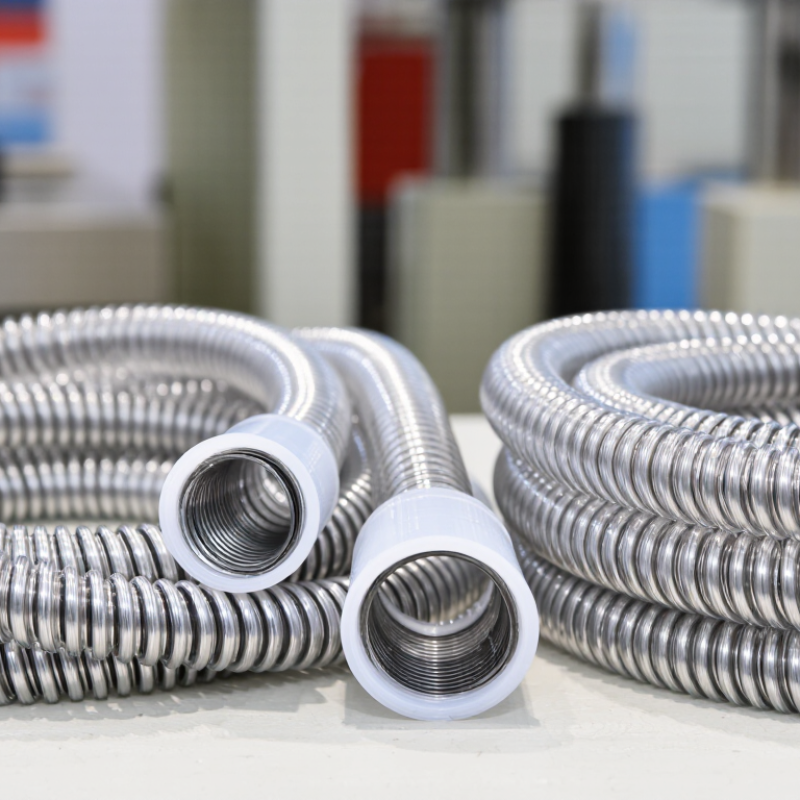
A PVC steel wire hose is a flexible tube made from polyvinyl chloride, reinforced with a helical steel wire. The wire usually sits within the transparent or colored PVC wall, forming a visible spiral. It helps the hose resist collapsing when conveying liquids under suction. The PVC provides a smooth inner surface and makes the hose easier to handle than many rigid pipes. Not magic.
In use, the hose may carry water, light chemicals, powders, or other materials, depending on its construction and rating. A clear wall can help operators spot flow, trapped air, or buildup. But clarity alone does not prove suitability. Check the stated working pressure, vacuum rating, temperature range, and chemical compatibility before selecting one. A hose that looks sturdy may still kink if bent too tightly.
Selection should match the actual job, not just the connection size. Consider the fluid, operating temperature, pressure changes, and minimum bend radius. Inspect the wire for damage and the PVC for cracks, hardening, or discoloration. It is tempting to judge quality by appearance alone; that can overlook important limits. Ask for test data and product specifications, and treat unclear ratings as a reason to pause.
How Are PVC Steel Wire Hoses Made?
China Best PVC Steel Wire Hose Manufacturers?
How Are PVC Steel Wire Hoses Made?
PVC steel wire hose production begins with PVC resin and selected additives blended into a consistent compound. The formulation depends on flexibility, temperature, pressure, and the material being conveyed. Poor mixing can cause uneven color or soft patches. Small details matter.
The compound is extruded into an inner tube, then cooled enough to hold its shape. A winding machine wraps steel wire around the tube in a spiral. Wire spacing and tension need close control; gaps or excessive tension may affect the hose’s strength and flexibility. There is a trade-off here, and it is easy to overlook.
Next, an outer PVC layer is extruded over the reinforcement, enclosing the wire. The hose is cooled, cut to length, and checked for dimensions, surface defects, and visible wire displacement. Pressure or leak tests may also be used, depending on the product specification. A clean surface is useful, but it cannot prove uniform reinforcement by itself. Inspections matter.
China Best PVC Steel Wire Hose Manufacturers? - How Are PVC Steel Wire Hoses Made?
A practical guide to typical PVC steel wire hose construction, manufacturing steps, and specification checks. Production methods and limits vary by hose design and manufacturer.
| Stage or dimension | What it involves | Typical materials or checks | Why it matters |
| 1. Inner tube extrusion | PVC compound is heated and extruded through a die to form the hose’s inner wall. | PVC formulation is selected for the intended fluid, flexibility, and service conditions. Check the bore for a smooth, continuous surface. | The tube forms the fluid-contacting layer and contributes to the hose’s dimensions and compatibility. |
| 2. Steel-wire reinforcement | A steel wire is formed into a helix around or within the PVC tube. The exact placement depends on the construction method. | Check wire continuity, helix spacing, and secure positioning. Wire diameter and pitch are design-specific. | The helix helps the hose resist collapse under vacuum and retain its shape during bending. |
| 3. Outer-layer application | A PVC cover is applied over the reinforced assembly, commonly by extrusion, to hold the construction together and form the outside surface. | Inspect for even coverage, exposed wire, surface defects, and consistent wall appearance. | The cover protects the reinforcement and contributes to abrasion resistance and handling characteristics. |
| 4. Cooling and sizing | The extruded hose is cooled and pulled through production equipment at a controlled rate before being cut to length. | Measure internal diameter, outside diameter, wall consistency, and cut length against the purchase specification. | Controlled cooling and sizing help maintain dimensional consistency along the hose. |
| 5. Finished-hose inspection | Finished lengths are visually inspected and tested according to the product specification and applicable requirements. | Possible checks include dimensions, flexibility, vacuum performance, pressure performance where specified, and appearance. Test methods and acceptance limits should be agreed in advance. | Testing verifies that the hose meets its declared application and performance requirements. |
| Key buying specifications | Define the intended use before comparing suppliers or requesting samples. | Specify bore and length, working temperature, fluid compatibility, vacuum or pressure duty, bend requirements, and any required test documentation. | A suitable hose depends on the complete application; no single construction is best for every use. |
Note: Dimensions, temperature limits, pressure ratings, vacuum ratings, and test criteria are product-specific. Confirm values using the manufacturer’s current technical data and agreed test documentation.
Which Properties Define Hose Quality and Performance?
Hose quality is more than a clear wall and a shiny steel spiral. The PVC compound affects flexibility, abrasion resistance, and performance across temperature changes. Ask for the recommended working temperature and pressure, not just a maximum burst figure. These numbers describe different conditions. A hose that looks sturdy may still flatten when bent too sharply.
Check the wire spacing and how evenly it sits inside the wall. Consistent reinforcement helps the hose resist kinking and vacuum collapse during use. Wall thickness should remain even, especially near the ends, where fittings can create stress. Look for a stated minimum bend radius and test the hose in the position your system requires.
Details matter here. Clear material can help workers spot flow or contamination, but transparency alone proves little. Reliable manufacturers should provide specifications and batch inspection records. Pressure, leakage, and dimensional checks are useful evidence. Still, paperwork cannot replace a real fit test.
Even experienced buyers can focus too much on headline pressure ratings. I have found that checking flexibility after installation often reveals issues a sample inspection misses. Admit the limits. The best choice depends on the fluid, working conditions, and connection method.
Where Are PVC Steel Wire Hoses Commonly Used?
China Best PVC Steel Wire Hose Manufacturers?
Where Are PVC Steel Wire Hoses Commonly Used?
PVC steel wire hoses are commonly used for water transfer in agriculture, construction, and general industry. On farms, they connect pumps to tanks or irrigation lines and help move water across uneven ground. UNESCO’s 2021 World Water Development Report estimates that agriculture accounts for about 69% of global freshwater withdrawals. That figure describes water use, not hose sales, but it shows why reliable water-transfer equipment matters. On construction sites, reinforced hoses can support pump suction and dewatering, where a hose may face mud, movement, and fluctuating pressure. In factories, they can convey water or compatible liquids between equipment. The steel helix helps resist collapse under suction. It does not make every PVC hose suitable for every chemical, temperature, or pressure.
Tips: Check the hose’s working pressure, vacuum rating, temperature range, and fluid compatibility before installation. Keep bends broad, and inspect for exposed wire, cracks, or soft spots. A hose that looks sturdy may still kink.
Applications vary by hose construction and manufacturer specifications. For potable water, food processing, or chemical transfer, verify that the exact hose is rated for that service; do not assume general-purpose PVC is appropriate. In practice, the fitting and clamp matter too. A small leak can waste water or interrupt a pump, and that detail is easy to overlook.
Where PVC Steel Wire Hoses Are Commonly Used
These hoses are commonly used for suction and discharge applications where a rigid steel-wire helix helps resist collapse. The chart lists application categories, not usage volume or market share. Suitability depends on the hose’s formulation and specifications.
How to Evaluate PVC Steel Wire Hose Manufacturers in China?
How to Evaluate PVC Steel Wire Hose Manufacturers in China?
A capable supplier should show more than a polished catalogue. Ask for hose construction drawings, wire diameter, reinforcement spacing, and compound specifications. Then compare these details with your operating pressure, temperature, fluid, and bend radius. Small gaps matter. A hose that kinks around a tight machine connection may fail long before its stated service life.
Request recent batch-level test records, not only a sample certificate. ISO 1402:2021 describes hydrostatic testing for hose assemblies, while ISO 8033 covers adhesion testing between hose components. Ask how the factory records pressure results, dimensional checks, and wire placement. Grand View Research estimated the global industrial hose market at USD 12.76 billion in 2023, with projected growth through 2030. That market estimate signals broad demand, not proof that an individual supplier can meet your specification.
Check whether sample results match production batches, and request traceable material records. A factory visit can reveal practical details: wire-feed consistency, clean storage, and calibrated pressure gauges. Verify export experience and response times with references from comparable applications. Price deserves scrutiny. An unusually low quote may reflect thinner reinforcement or less testing, but that is not always obvious from photographs. I would still validate the first delivery independently; paperwork can look complete while leaving important details unclear.