A partner you can trust
Choosing the best Rubber Track Tractor starts with the work it must do, not the most impressive specification sheet. A machine pulling a heavy implement across wet fields has different needs from one tending crops in narrow rows. Track width, operating weight, horsepower, and hitch capacity all affect performance. So does the soil beneath the tracks.
Look closely at how a tractor handles ordinary tasks. Can the operator see the implement clearly? Are daily service points easy to reach? A muddy undercarriage can turn routine maintenance into a frustrating job. Ask about replacement-track costs, parts availability, warranty coverage, and nearby dealer support. These details may matter more over several seasons than a small difference in advertised horsepower. Specifications help, but they do not tell the whole story.
There is no single best model for every farm. That answer depends on acreage, attachments, terrain, transport needs, and budget. Compare machines in a realistic configuration, and request a demonstration on similar ground when possible. Watch for turning behavior, vibration, traction, and comfort during a full work cycle. Small clues count. Be cautious of broad claims about fuel savings or reduced soil impact; results vary with conditions and operation. Even careful comparisons can miss something. The best choice is usually the tractor that fits your workload, can be serviced reliably, and remains affordable to own—not simply the one with the biggest numbers.
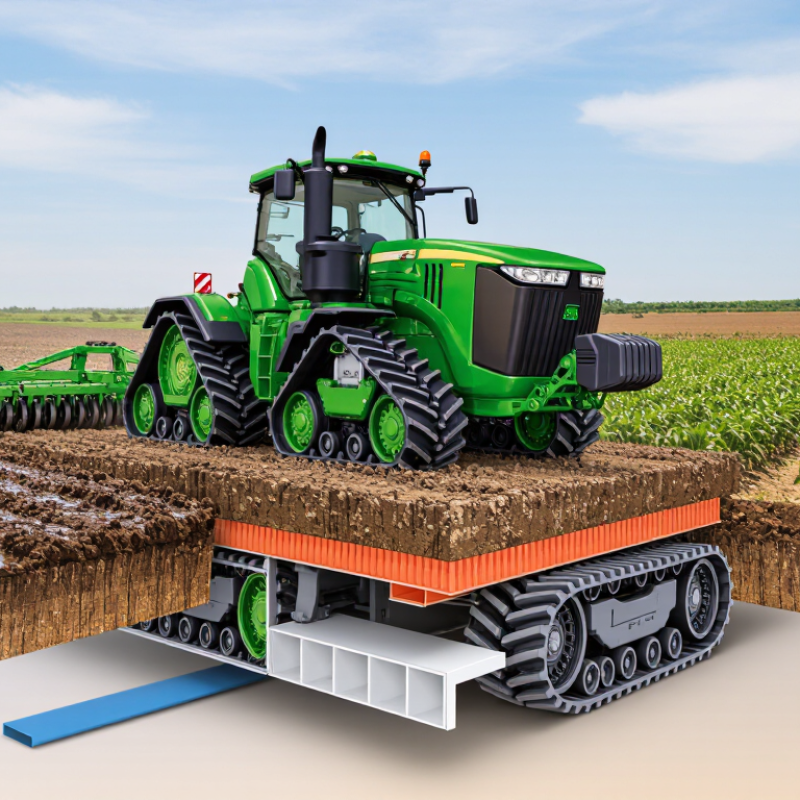
A rubber track tractor replaces conventional rear tires with continuous rubber belts wrapped around an undercarriage. Inside each track, drive wheels move the belt while rollers support its weight and an idler keeps it aligned. The engine supplies power to the drive system, turning the tracks and moving the machine. Simple idea. The parts still need careful adjustment.
Because the belts spread the tractor’s weight across a larger contact area, it can exert less pressure on soft soil than a comparable wheeled machine. The broad footprint also helps maintain traction on damp fields and uneven ground. In the cab, an operator may notice steadier movement over ruts, though comfort depends on speed, terrain, and suspension. Rubber tracks do not make every surface harmless; sharp stones and rough concrete can accelerate wear.
Track tractors are often chosen for fieldwork where soil protection and consistent pulling force matter. Their practical advantage depends on correct track tension, suitable operating speed, and regular checks for cuts or embedded debris. A loose track may wander; an overtight one can strain components. I used to think the track itself explained most performance differences. That is incomplete: weight, implement setup, soil moisture, and maintenance matter just as much. Inspect the undercarriage before demanding work, especially after muddy days.
Rubber track tractors perform best where traction and flotation matter more than road speed. On damp loam, soft headlands, or rolling fields, their continuous tracks spread machine weight across a longer footprint. That can help maintain traction while reducing surface rutting. University of Minnesota Extension guidance notes that as much as 80 percent of soil compaction may occur during the first equipment pass. The figure is a useful warning, not a promise that tracks prevent compaction: wet soil and heavy axle loads can still damage the root zone.
They are especially useful for planting, spraying, and hauling on fields that turn slick after rain. Tracks can also steady a tractor on gentle slopes, where wheel slip wastes fuel and leaves scuffed soil. But “best” depends on the work. USDA Natural Resources Conservation Service guidance identifies soil moisture and load as important compaction factors, so a tracked machine is not a license to enter saturated ground. Check the field after a test pass. Look for deep impressions, smeared soil, and uneven crop residue. Tracks also need careful tension checks and can be less convenient on long paved transfers. Mud helps reveal the limits.
Comparing rubber track tractor models starts with the work they will actually do. A machine used on wet clay needs different traction and flotation from one crossing firm, dry fields. Track width and contact length affect how weight is spread across the soil. Wider tracks can reduce ground pressure, but they may not suit narrow gates or transport limits. Measure your tightest access point before comparing specifications.
Match engine output and hydraulic capacity to your implements, not just to a headline horsepower figure. Check the tractor’s rated flow against the attachment’s requirements, and ask whether that flow is continuous or auxiliary. Bring your heaviest implement details to a dealer. A short test in the yard can reveal sluggish controls, poor sightlines, or a seat that becomes uncomfortable after an hour. Small things matter.
Inspect the undercarriage closely. Look for uneven tread wear, damaged guide lugs, and packed soil around rollers. Ask what routine track tension checks involve and how often the manual recommends them; conditions change the schedule. Repair costs can vary, so request local parts and service estimates alongside the purchase price. I would not choose a model from paper specifications alone. That is easy to get wrong. A demonstration on similar ground is more useful, though even one afternoon cannot predict every season or soil condition.
How to Match Track Design and Tractor Size to Your Work
Match the track footprint to the ground first. On wet clay or loose topsoil, wider tracks spread machine weight and can reduce rutting. They may feel less nimble in tight rows. For gravel, firm lanes, or mixed surfaces, a moderate-width track with a durable tread can balance grip and steering. Check lug depth and spacing: aggressive lugs may bite into soft ground but disturb finished turf. Inspect the site after rain, too. Dry ground can hide trouble.
Choose tractor size around the heaviest regular task, not an occasional one. Match engine output and hydraulic flow to your implements, then check rated capacity and transport width. An undersized tractor may struggle with a loaded scraper; an oversized one can add cost and ground pressure without improving the job. Test it loaded. If possible, drive across a representative patch and watch for slipping, soil displacement, and awkward turning. Track tension and undercarriage condition also affect performance, so include them in routine checks. There is no perfect formula; soil changes, and actual work can expose a poor match. Small details matter.
The best rubber track tractor is not always the one with the lowest purchase price. Compare total ownership costs over the years you expect to keep it. Include financing, depreciation, fuel, track wear, scheduled servicing, and likely repairs. Iowa State University Extension’s 2024 machinery cost estimates separate ownership expenses from operating expenses—a useful way to structure your comparison. Ask dealers for service intervals and replacement-track pricing in writing. Then check those figures against your acreage, soil conditions, and annual hours.
Fuel prices can shift the calculation. The U.S. Energy Information Administration reported an average U.S. retail diesel price of $4.21 per gallon in 2023. That is a market benchmark, not your tractor’s fuel bill; estimate consumption using your own workload. USDA’s 2023 Farm Production Expenditures report put total U.S. farm production expenses at $451.9 billion, a sector-wide figure that underscores why unplanned costs matter. Real costs vary. Request a sample service schedule, repair-rate details, and a written estimate of travel charges. Ask how quickly the dealer can supply common track parts during planting or harvest, and whether loaner equipment is available. A spreadsheet still misses things. Mud, sharp turns, and frequent road travel can change wear rates, so leave room for uncertainty rather than treating one estimate as a promise.
This content is restricted to site members. If you are an existing user, please log in. New users may register … LEARN MORE “Lighting Power & Control-Signal Cable”
We are here to help. You can contact us or create an account online to have access to special products, technical specifications and our new online quote tool.
ELECTRO CABLES
9 Riverside Drive
P.O. Box 276
Trenton, Ontario
CANADA K8V 5R5
N.A. Toll Free: 888-ELECTRO
(1-888-353-2876)
World: 613-394-4896
Fax: 613-394-4101
Email: sale@machinecables.com
We manufacture cables that are certified by the Canadian Standards Association (CSA), listed by Underwriters Laboratories and/or listed by Intertek (ETL).
Our quality management system is registered to ISO 9001: 2015. Our team is dedicated to consistently providing quality service and products to our customers.

© 2025 ELECTRO CABLES • SITE BY SNAP 360•