Electro Cables
Login

Top 10 Boat Ratchet Straps for Safe Boat Transport?

Safe boat transport depends on more than choosing the strongest strap. Fit, working load limit, anchor points, and proper tension all matter. A strap that looks sturdy may still be unsuitable for a particular boat or trailer. Check its stated rating and the manufacturer’s guidance before loading.

This guide compares ten Boat Ratchet Straps for common transport needs, from small fishing boats to heavier hulls. It considers webbing width, hook style, ratchet operation, corrosion resistance, adjustment, and rated capacity. Numbers matter. So does fit. Choose straps that lie flat over the hull, avoid sharp edges, and connect to sound tie-down points. Use bow and stern restraints when recommended. Follow the boat and trailer makers’ instructions. Recheck the straps after a short drive; webbing can settle, and looseness is easy to miss.

No strap can correct a poor setup. Replace webbing that is cut, frayed, heat-damaged, or weakened by sun exposure. Retire hardware that bends or fails to lock. The best choice is not always the most expensive or the one with the highest rating. It should match your load, attachment points, and routine, with a suitable safety margin. One detail is easy to overlook: excessive tension may stress the boat or its fittings. Tighten steadily, inspect the setup, and take one final walk-around before departure.
Top 10 Boat Ratchet Straps for Safe Boat Transport?

What Boat Ratchet Straps Are and How They Work

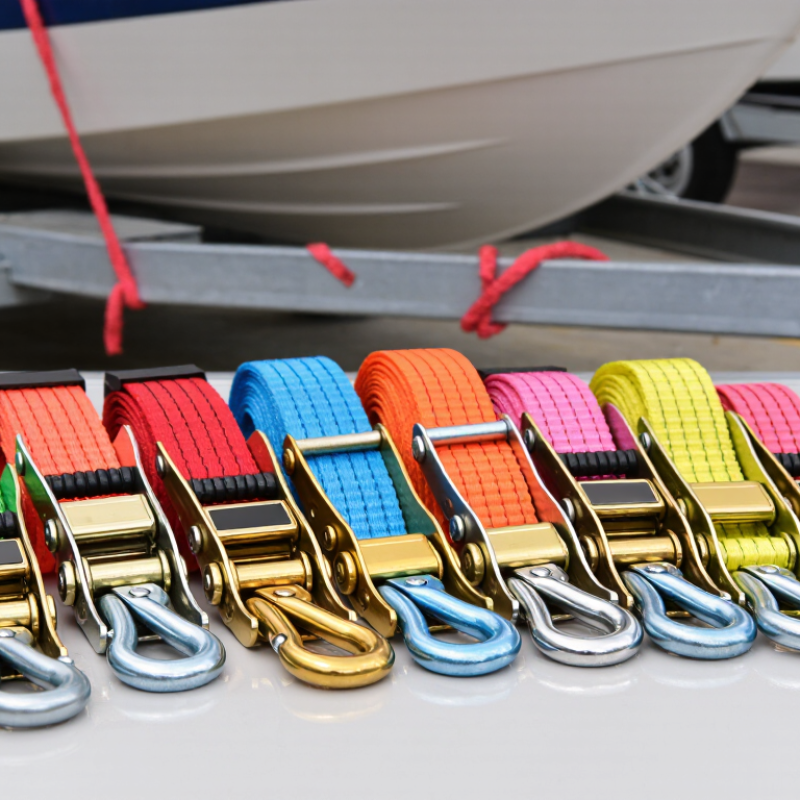
Boat ratchet straps are woven webbing restraints used to hold a boat firmly against its trailer during transport. A typical strap has a hook at each end and a ratchet assembly with a handle, spool, and release lever. The webbing passes through the spool; pumping the handle winds it tighter and reduces slack. The ratchet’s teeth help keep the spool from turning backward under tension.

In use, a strap usually crosses the boat and attaches to secure points on the trailer. The exact route depends on the hull and trailer, so follow their instructions rather than guessing. Keep the webbing flat, clear of sharp edges, and away from hot exhaust parts. A soft protective pad can help prevent rubbing on a gelcoat surface. Snug, not crushed. Excessive tension can stress fittings or damage the boat.

Check each strap for fraying, cuts, rust, or a sticky release before loading. After tightening, tug the boat gently and make sure the hooks cannot slip free. Recheck tension after a short stretch of driving, since webbing can settle and loosen. I would not assume a strap is sound just because its ratchet clicks; that sound tells little about hidden wear. Replace damaged gear, and use straps rated for the load and intended tie-down points.

How to Choose Ratchet Straps for Boat Transport

Choosing ratchet straps for boat transport starts with the boat and trailer, not the buckle. Check the vessel and trailer guidance for suitable tie-down points, then choose straps with a clearly stated working load limit. Do not confuse that rating with breaking strength. Strap width and length matter too: a wide strap can spread pressure, while excess length can leave loose webbing flapping in the wind. Measure before buying. For a wet launch ramp or long trip, inspect the webbing for fraying, cuts, stiff spots, or damaged stitching. Sunlight and salt can quietly weaken materials over time.

Protect the hull where straps pass over it. A soft sleeve or clean padding helps prevent scuffs, but it must not hide damage or let the strap slip. Tighten until the boat is held firmly against the trailer; more force is not automatically safer. Too much tension can stress a hull or fitting. Not more tension. Keep ratchets away from sharp edges, and make sure hooks sit fully on solid attachment points. After a short drive, stop somewhere safe and check for movement, slack, or rubbing. That extra check may feel fussy, but boats can settle against their supports. I would rather recheck a strap than assume it stayed tight.

Top 10 Boat Ratchet Straps by Use and Key Features

Boat ratchet straps work best when matched to the boat’s shape and trailer attachment points. Standard polyester straps suit routine transport because they resist stretching and hold tension well. Wide-webbing straps spread pressure across heavier hulls. Look for padded sleeves where webbing crosses a finished surface. Small detail. It matters.

For a practical top-ten selection, consider standard polyester, wide webbing, hull-protective sleeves, soft-loop ends, bow tie-downs, transom straps, stern tie-downs, long-reach straps, compact short straps, and corrosion-resistant hardware. Soft loops can protect suitable fixed attachment points from metal hooks. Bow and transom straps help limit fore-and-aft movement; over-hull straps secure the boat down to the trailer. Choose lengths that leave the ratchet clear of the hull and trailer frame.

Check the label for working load limit, not just breaking strength, and follow the trailer and boat makers’ instructions. Tighten until the boat is secure, but do not crush fittings or deform the hull. Inspect webbing for cuts, fraying, UV damage, and salt buildup before each trip. Rinse hardware after coastal use. After driving a short distance, stop somewhere safe and check tension; straps can settle, even when they seemed tight at departure.

How to Position and Tighten Boat Straps Safely

Position each stern ratchet strap from a solid transom tie-down point to the trailer frame, pulling slightly outward and downward. Attach the bow independently to the winch post or a rated bow eye. Straps should lie flat against the hull, clear of sharp edges, drains, and propellers. Keep them flat. A twisted strap can wear unevenly and may be harder to inspect.

Tighten until the boat cannot shift, but do not crush padding or distort the hull. Check the ratchet, hooks, stitching, and trailer anchors before travel. FMCSA cargo-securement rules, 49 CFR §393.102, set commercial-transport benchmarks of 0.8 g forward and 0.5 g rearward and sideways. They also require aggregate tie-down working load limits of at least half the cargo weight. These figures are not a substitute for your boat and trailer manuals, but they show why restraint needs to resist movement in several directions. Recheck tension after a short drive; straps can settle, and guessing is not a great inspection method.

Tips: Use transom straps on both sides and a separate bow restraint. Protect contact points with clean padding. Do not rely on the winch alone. Stop if a strap slips, frays, or loosens, then reposition and retighten it.

Top 10 Boat Ratchet Straps for Safe Boat Transport? — How to Position and Tighten Boat Straps Safely

Selection note: These are practical strap styles and tie-down setups, not a universal product ranking. Webbing width alone does not determine strength. Check each strap’s sewn label for its working load limit (WLL), inspect it before use, and follow the boat and trailer manufacturers’ instructions.

# Strap or setup Common width Position and suitable use Safe-use points
1 Pair of transom ratchet straps Often 1½–2 in Connect the boat’s designated transom tie-down eyes to suitable rear trailer frame anchors, one on each side. Keep the straps clear of propellers and sharp edges. Tighten evenly; do not use the straps to pull the boat into position.
2 Bow secondary tie-down Often 1–2 in Use a rated strap between the bow eye and an appropriate trailer anchor as a secondary restraint. Do not treat it as a replacement for the winch line or the required safety chain. Follow the trailer and boat manufacturers’ guidance.
3 Midship tie-down pair Often 1½–2 in Use only where the boat or trailer maker provides or approves suitable attachment points and a restraint path. Avoid routing straps over unsupported fittings, windshields, rails, or other fragile parts. Do not crush or distort the hull.
4 Compact ratchet strap Often 1 in May suit a light boat or short tie-down span when the strap’s labeled WLL is adequate for the load and setup. Do not assume a narrow strap is suitable just because the boat is small; verify the rating and the anchor points.
5 Wide-webbing ratchet strap Often 2 in A common option for trailer tie-downs when its hooks, webbing, WLL, and length match the application. A wider strap is not automatically stronger than another strap. Base selection on the complete labeled assembly and its condition.
6 Strap with coated hooks Commonly 1–2 in Useful when compatible hooks can connect securely to the trailer’s designated anchors. Confirm each hook is fully engaged and cannot slip off. A coating does not make an unsuitable anchor safe.
7 Strap with soft-loop extensions Commonly paired with 1–2 in straps Can provide a connection around an approved attachment point where a metal hook should not contact the boat. Use only rated loops and approved attachment points. Keep the loop away from sharp corners and check that it cannot slide free.
8 Strap with a protective sleeve Varies by strap Useful where webbing may rub against a smooth, compatible contact area during transport. A sleeve can reduce abrasion but cannot make a sharp edge safe. Reroute the strap or use suitable edge protection where needed.
9 Long-reach ratchet strap Commonly 1½–2 in For a longer distance between approved boat and trailer attachment points, provided the labeled rating and length are suitable. Keep excess webbing secured so it cannot flap or snag. Avoid twisted webbing and make sure the ratchet is accessible for inspection.
10 Short-reach ratchet strap Commonly 1–2 in For close, compatible attachment points where a long strap would leave excessive loose webbing. Leave enough webbing for correct ratchet engagement, and close and secure the handle after tightening.

Before travel: Center and support the boat as specified by the trailer manufacturer; connect straps only to designated points; remove slack and tighten until secure without deforming the hull; close and secure each ratchet handle; and recheck the tie-downs after a short initial drive and during the trip. Replace straps with cuts, fraying, damaged stitching, distorted hardware, or unreadable capacity labels.

How to Inspect and Maintain Boat Ratchet Straps

Before each trip, inspect every boat ratchet strap in good light. Run your fingers along the webbing and look for cuts, fraying, melted spots, stiff patches, or severe fading. Check the stitching near the hooks and buckle; loose threads can signal weakened seams. Open and close the ratchet. It should move smoothly, lock firmly, and show no cracks or heavy corrosion. A strap can look usable and still be compromised. When its history is unclear, replace it rather than guess.

Tips: Clean off grit with mild soap and water, then let straps dry fully before storage. Keep them loosely coiled in a dry place, away from sunlight and sharp edges. Never knot damaged webbing or sew a load-bearing repair at home.

During loading, position straps as directed by the boat and trailer instructions. Tighten them enough to prevent movement, but not so hard that they distort the hull or press on fragile fittings. Recheck tension after a short drive, and inspect again after rough roads or rain. This step is easy to skip when the launch ramp is busy. That is exactly when a quick check matters. Replace straps with damaged hooks, buckles, or stitching; maintenance cannot restore lost strength.

Lighting Power & Control-Signal Cable

This content is restricted to site members. If you are an existing user, please log in. New users may register … LEARN MORE “Lighting Power & Control-Signal Cable”