Electro Cables
Login

China Top Mud Bricks Machine Suppliers for Global Buyers

For global buyers, choosing a reliable Mud Bricks Machine supplier involves more than comparing factory prices. Chinese manufacturers offer different machine designs, capacities, and automation levels. Each option suits specific soil conditions, brick sizes, and project scales. Experience shows that a machine producing attractive samples may still struggle with uneven moisture. Small details matter. Power supply, mold strength, spare parts, and operator training can affect daily output.

This guide examines leading Chinese suppliers serving international construction and agricultural projects. It focuses on practical evidence, including factory experience, product specifications, quality controls, and export support. Buyers should request recent production videos, technical drawings, sample bricks, and clear performance data. Ask how suppliers test soil before recommending a machine. Confirm warranty terms, installation guidance, replacement parts, and response times. A confident supplier should explain limitations, not only advantages. That builds trust.

Independent verification remains important. Not every attractive website represents consistent manufacturing quality. Some factories communicate efficiently but provide weak documentation. That weakness deserves attention. Buyers should compare total costs, including molds, packaging, freight, customs procedures, installation, and maintenance. Local service availability may also influence long-term reliability. Results vary. Even well-reviewed suppliers can disappoint when requirements remain unclear. This introduction provides a careful starting point for identifying China’s top Mud Bricks Machine suppliers, while encouraging practical questions and realistic expectations. The final decision should reflect tested performance, transparent communication, and the buyer’s actual operating environment.

China Top Mud Bricks Machine Suppliers for Global Buyers

Mud Brick Machines: Types, Functions, and Global Applications

China Top Mud Bricks Machine Suppliers for Global Buyers

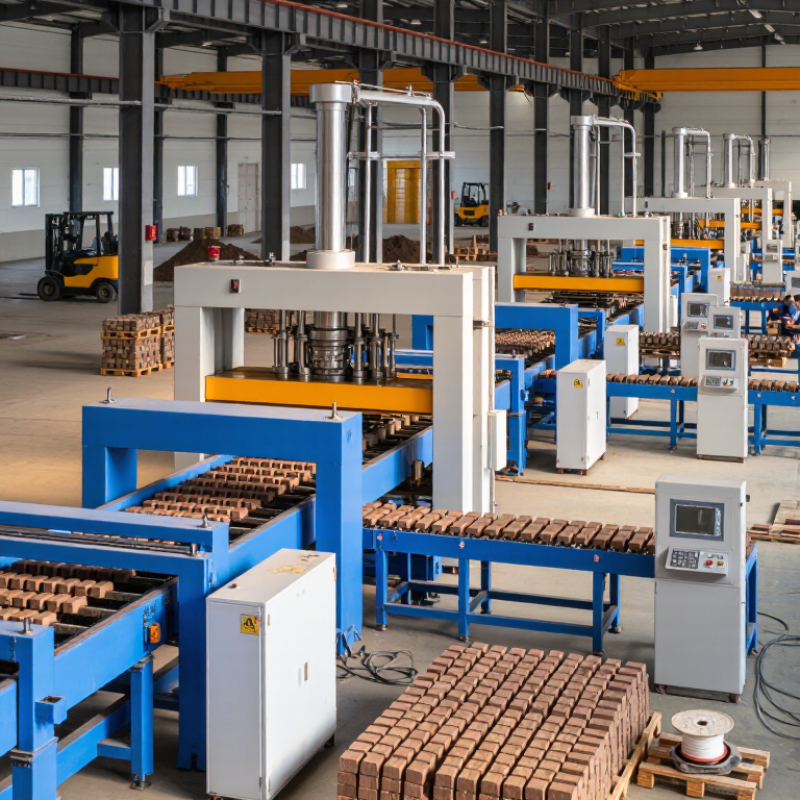
Mud brick machines now serve more than traditional adobe construction. Common types include manual presses, hydraulic presses, and fully automatic production lines. Manual models suit small rural projects with limited power. Hydraulic machines deliver denser blocks and more consistent dimensions. Automatic lines combine soil mixing, feeding, pressing, stacking, and curing control.

Their functions vary by brick design. Some produce adobe units, while others make compressed earth blocks or interlocking bricks. Proper soil grading remains essential. Too much clay causes cracking, while excessive sand weakens the block. UN-Habitat estimates that about 1.6 billion people lack adequate housing, supporting demand for affordable local materials. Meanwhile, the 2023 Global Status Report for Buildings and Construction states that buildings account for roughly 37% of global energy-related and process CO2 emissions. Lower-energy earth construction may help, but only with careful moisture protection and quality testing.

Tips: Test several soil samples before selecting a machine. Check block strength after curing, not immediately after pressing. Experienced operators also inspect corners, feed consistency, and mold wear daily. In dry regions, compressed earth blocks can support housing, schools, farm buildings, and boundary walls. In humid climates, raised foundations, wide roof overhangs, and suitable stabilization become necessary. Machine output figures can look impressive. Real production is often lower because soil preparation, maintenance, and curing interrupt the schedule. That gap deserves honest planning.

China Top Mud Bricks Machine Suppliers for Global Buyers - Mud Brick Machines: Types, Functions, and Global Applications

Machine Type Operating Principle Typical Capacity Power or Input Requirement Common Block Formats Suitable Materials Main Functions Typical Global Applications
Manual Lever-Press Machine A hand-operated lever applies mechanical pressure to compact prepared soil in a mould. Approximately 300–800 blocks per day, depending on soil preparation and labour. Human operation; no electricity is normally required. Small to medium solid or interlocking blocks; dimensions depend on the mould. Moist subsoil, sand-clay mixtures, and soil with a small stabiliser content. Basic compaction, moulding, and demoulding for low-volume production. Rural housing, community buildings, emergency shelters, and small construction projects.
Hydraulic Compressed-Earth-Block Machine A hydraulic cylinder compresses measured soil inside a mould at controlled pressure. Approximately 800–3,000 blocks per day for small and medium production lines. Commonly driven by an electric motor; hydraulic power varies by machine configuration. Solid, hollow, and interlocking blocks with interchangeable mould options. Selected soil, sand, clay, and stabilised earth mixtures. Controlled compaction, consistent block density, and repeatable moulding. Residential walls, schools, clinics, boundary walls, and sustainable building programmes.
Mechanical Toggle-Press Machine A toggle, eccentric, or flywheel mechanism transfers mechanical force to the mould. Approximately 1,000–4,000 blocks per day, depending on automation and mould size. Usually powered by an electric motor; manual feeding may still be required. Standard solid blocks, interlocking blocks, and selected paving shapes. Moist earth mixes and soil-cement blends prepared to a controlled moisture level. Repeated pressing, fast cycle operation, and medium-volume production. Small commercial buildings, housing developments, farm buildings, and public works.
Automatic Earth-Block Production Line Integrated equipment handles batching, mixing, feeding, pressing, and block transfer. Often 3,000–10,000 or more blocks per day, depending on line layout and working hours. Three-phase electrical supply is commonly required; exact voltage and power depend on configuration. Multiple block sizes, hollow blocks, interlocking blocks, and special mould profiles. Processed soil, sand, clay, water, and optional cement or lime stabilisers. Automated batching, mixing, pressing, palletising, and production monitoring. Large housing projects, infrastructure programmes, commercial production, and export-oriented facilities.
Adobe Brick Moulding Machine Forms relatively wet earth mixtures into moulds; the bricks are then air-dried rather than fired. Capacity varies widely, commonly about 500–2,000 bricks per day for small production equipment. Manual or motor-assisted operation; drying requires open space and suitable weather conditions. Traditional rectangular adobe bricks and project-specific mould sizes. Clay-rich earth, sand, water, and natural fibre additives where local practice requires them. Wet forming, shaping, and preparation of sun-dried masonry units. Traditional housing, restoration work, earthen architecture, and dry-climate construction.
Stabilised Soil-Block Machine Compacts earth mixed with a measured stabiliser to improve strength, dimensional stability, and moisture resistance. Approximately 1,000–5,000 blocks per day, depending on press type and material handling. Manual, hydraulic, or electric operation; a mixer and soil sieve are commonly used upstream. Solid or interlocking compressed-earth blocks, with optional hollow-core designs. Graded soil, sand, water, and cement or lime stabilisers selected through soil testing. Proportioning, compaction, dimensional control, and production of more durable earth blocks. Urban housing, schools, public buildings, water-management structures, and humid-region projects.
Interlocking Mud-Block Machine Presses shaped blocks with projecting and recessed profiles that fit together during wall construction. Approximately 800–4,000 blocks per day, depending on the number of cavities and production cycle. Available in manual, hydraulic, and electric configurations. Interlocking solid or hollow blocks designed to reduce mortar use. Compressed earth, soil-cement, and other tested stabilised soil mixtures. Profiled moulding, accurate block alignment, and reduced dependence on thick mortar joints. Affordable housing, rural construction, disaster-recovery projects, and self-build programmes.
Mobile or Trailer-Mounted Block Machine A compact press and material-handling system is transported between construction sites. Typically 500–3,000 blocks per day, depending on setup time, labour, and site conditions. May use manual operation, a small engine, or a local electrical supply. Project-specific solid, hollow, or interlocking blocks. Locally sourced soil and stabilised earth prepared near the building site. On-site block production, lower transport demand, and flexible deployment. Remote communities, temporary construction camps, rural roads, and decentralised housing projects.

Note: Capacity, block dimensions, power requirements, and material ratios are indicative ranges for common equipment categories. Actual performance depends on soil grading, moisture content, stabiliser dosage, mould size, operator skill, curing conditions, and local construction standards.

China’s Leading Mud Brick Machine Suppliers and Product Categories

China’s leading mud brick machine suppliers serve several practical product categories. Manual and semi-automatic presses suit small workshops with limited electricity. Hydraulic interlocking block machines offer stronger, repeatable compression for housing projects. Fully automatic lines add mixers, conveyors, molds, and stacking systems. Mobile units can work near rural construction sites, reducing transport costs.

Product selection should follow soil conditions, production volume, and local building requirements. The Global Alliance for Buildings and Construction reported that buildings and construction created about 37% of global energy-related emissions in 2022. This supports interest in lower-energy earthen materials, but mud bricks are not automatically sustainable. Soil testing, controlled moisture, curing space, and suitable stabilization remain essential. A machine cannot correct poor soil.

Suppliers should provide compression data, mold dimensions, cycle times, spare-parts lists, and test videos. Buyers should request independent samples, not only catalog claims. I would also verify electrical standards and after-sales response before payment. Small details matter.

Tips: Test local soil before choosing a machine. Compare hourly output under real operating conditions. Ask whether operators need special training. The World Bank and UN-Habitat continue to identify affordable housing as a major global challenge, yet production targets can be misleading. A high-output line may fail when maintenance skills are limited. Choose dependable operation over impressive numbers.

Mud brick machines are commonly offered in manual, hydraulic, automatic interlocking, and continuous extrusion categories. The chart presents indicative rated output levels commonly associated with these machine types; actual capacity depends on brick size, soil composition, moisture content, mold configuration, and operating conditions.

How to Evaluate Chinese Mud Brick Machine Manufacturers

Evaluating Chinese mud brick machine manufacturers requires more than comparing online prices. A reliable supplier should explain the machine’s pressure range, mold design, clay moisture tolerance, and expected output. Ask for test bricks made with soil similar to yours. A smooth demonstration brick may hide poor performance with coarse sand or uneven moisture. Request production videos, technical drawings, and a written specification sheet.

Visit the factory when possible, or arrange a live video inspection. Check welding quality, hydraulic hoses, electrical cabinets, and spare parts storage. The workshop should look organized, but appearance alone is not proof.

Ask how many machines have reached overseas sites and speak with recent buyers. Practical references reveal delays, training quality, and maintenance problems more clearly than brochures. I learned this late.

A professional manufacturer should provide installation guidance, operating manuals, safety instructions, and responsive after-sales support. Confirm the warranty scope, replacement-part prices, delivery schedule, and export documentation before payment. Check whether the machine can meet local electrical requirements. Do not accept vague promises such as “high capacity” without measured figures and working conditions. Factory output also depends on soil preparation, operator skill, curing space, and weather. A lower purchase price may become expensive after repeated mold changes or long service delays. Leave room for uncertainty, and record every technical agreement in writing.

Quality Standards, Certifications, and Customization Options

Global buyers evaluating mud brick machines should inspect quality evidence, not polished product photos. A dependable supplier provides material specifications, production tolerances, inspection records, and test results for finished bricks. Ask how clay moisture, sand ratio, and compaction pressure are controlled during ordinary production. Small variations matter. A sample brick should show consistent edges, density, and handling strength after curing.

Certifications need careful reading. ISO 9001 can indicate documented quality processes, but it does not guarantee machine performance. Electrical safety documents should match the destination market and the machine’s actual configuration. For CE-regulated shipments, request the declaration, risk assessment, and technical file details. Other markets may require different electrical, import, or workplace standards. Verify certificate numbers with issuing bodies when possible. A copied PDF is not enough.

Customization may include mold dimensions, hydraulic pressure, automation level, voltage, guarding, and conveyor layout. Provide target brick size, hourly output, local power supply, and raw-material test data before quotation. Suppliers should explain what changes affect price, maintenance, and delivery time. Request a trial using your soil. This step can expose weak assumptions. It is easy to overestimate output when moisture changes or operators need training. A written acceptance checklist, spare-parts list, and remote support plan improve accountability. Some specifications remain unclear until testing. That is worth admitting early.

Pricing, Export Procedures, Installation, and After-Sales Service

China’s mud brick machine suppliers serve buyers seeking lower-cost, lower-energy masonry production. GlobalABC’s 2023 Buildings report states that buildings and construction created 37% of global energy-related emissions in 2022. This supports interest in soil-based materials, but machine efficiency still needs verification. Pricing varies with capacity, automation, moulds, motor type, and packing. A serious quotation should separate EXW, FOB, and CIF prices. It should also list spare parts, export packing, documentation, and commissioning fees. Low prices can hide expensive installation work.

Export procedures require careful HS-code classification, commercial invoices, packing lists, certificates of origin, and destination-country conformity documents. The World Bank’s 2023 Logistics Performance Index compares 139 economies and shows why customs reliability affects delivery planning. Buyers should request loading photos and verify container dimensions before payment. Installation needs a level concrete foundation, stable electricity, screened soil, correct moisture, and curing space. In practice, soil testing is often underestimated. That mistake can reduce brick strength.

Tips: Ask for a complete landed-cost estimate, not only the machine price. Require a video test using your soil sample. Confirm warranty length, remote troubleshooting, spare-parts availability, and technician response times in writing. A useful service package includes manuals, operator training, electrical diagrams, and recommended maintenance intervals. Installation support should explain mould alignment, lubrication, pressure adjustment, and safe lockout procedures. ISO 12100 principles can guide machinery risk assessment, but local safety rules still apply. Some buyers focus heavily on output claims. That can be a costly oversight. Testable performance matters more than impressive brochures.

Lighting Power & Control-Signal Cable

This content is restricted to site members. If you are an existing user, please log in. New users may register … LEARN MORE “Lighting Power & Control-Signal Cable”