A partner you can trust
China’s warehouse sector is expanding, while industrial land and construction costs remain difficult to control. The National Bureau of Statistics reported that China’s logistics industry continued growing in 2023, supported by manufacturing and e-commerce demand. More storage capacity is needed, but larger buildings are not always the answer.
A properly engineered Mezzanine Storage Rack can convert unused vertical space into practical inventory levels. Picture cartons stored above a picking aisle, with steel stairs, guardrails, and forklifts working below. Grand View Research identifies warehouse automation as a fast-growing global market, with demand driven by space efficiency and operational productivity. However, that report does not measure mezzanine racks directly. This distinction matters.
The best Chinese supplier is not necessarily the cheapest factory. It should demonstrate verified load calculations, material certificates, welding controls, surface treatment records, and installation experience. MHI’s 2024 Annual Industry Report shows that supply-chain leaders continue investing in technology and efficiency, but equipment selection still requires site-specific judgment. A rack designed for light cartons may fail operationally under pallet loads. An attractive quotation can hide weak decking, unclear tolerances, or incomplete safety accessories.
Buyers should compare suppliers through drawings, reference projects, factory audits, and independent inspections. Ask about seismic conditions, fire protection, floor capacity, access equipment, and local building requirements. Chinese manufacturers may offer strong customization and competitive production capacity. Yet quality varies between suppliers. That is the uncomfortable part.
This guide examines how to identify China’s best Mezzanine Storage Rack suppliers through engineering evidence, manufacturing experience, transparent pricing, and dependable after-sales support. The final choice should fit the warehouse, not merely the brochure.
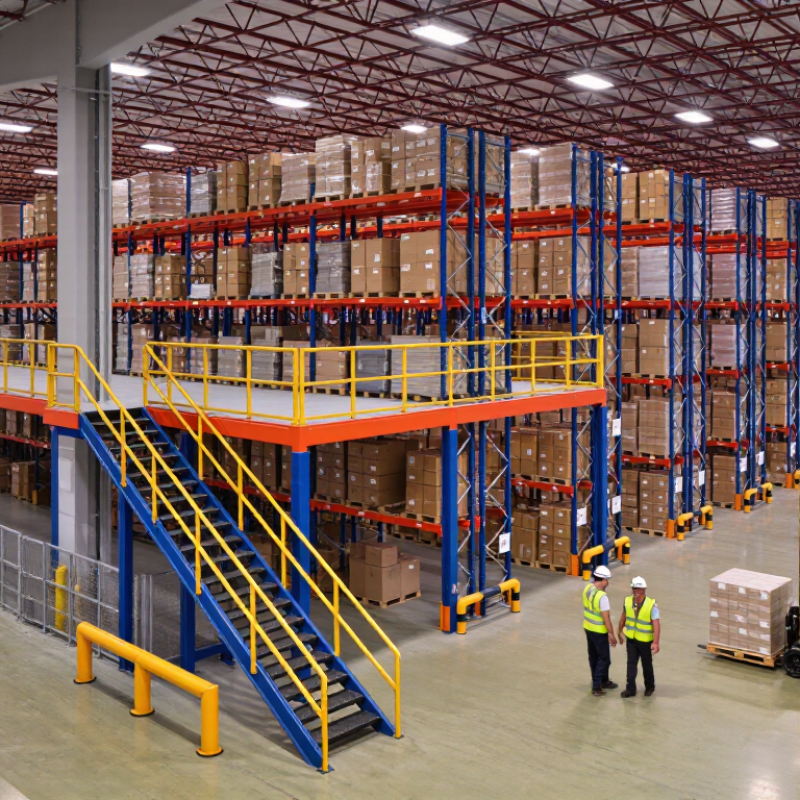
A mezzanine storage rack system is an elevated platform built above existing warehouse space. It combines steel rack frames, beams, decking, stairs, and safety barriers. This design creates a second storage level without expanding the building footprint. The lower area can store pallets or equipment. The upper deck may hold cartons, spare parts, or slow-moving inventory. It works well where ceiling height is available and floor space is limited. However, a tall building alone does not guarantee suitability.
A reliable design starts with accurate measurements and a clear load plan. Engineers should review slab strength, rack spacing, aisle widths, forklift movement, and emergency access. Guardrails, toe boards, gates, and stable stairways protect workers and products.
A qualified supplier should provide structural drawings, load ratings, material details, and installation guidance. In practice, warehouse conditions often differ from original drawings. That small mistake matters. A site inspection can reveal uneven floors, hidden pipes, or restricted vehicle paths before installation begins.
Tips: Measure stored items, not only empty cartons. Keep heavy goods on lower levels when possible. Check every load label after layout changes. Budget for inspection and maintenance, because steel systems still need attention.

Evaluating Chinese mezzanine rack suppliers requires more than comparing prices. Request detailed drawings, steel grades, load calculations, and welding procedures. A reliable supplier should explain column spacing, deck capacity, stair design, and guardrail protection clearly. Ask for recent project references with similar floor heights and loads. Photos help, but stamped drawings and inspection records provide stronger evidence.
Visit the factory when possible. Check cutting equipment, welding quality, powder coating, and finished dimensions. Measure a few components yourself. Small errors can create serious installation problems. Request material certificates and independent load testing for critical projects. Confirm whether the supplier understands your local building, fire, seismic, and workplace requirements. Compliance documents should match the actual product, not a generic template.
Communication also matters. Use one approved drawing revision and record every change. Clarify packaging, delivery terms, installation support, spare parts, and warranty response times. A very low quotation may exclude engineering or site assistance. That mistake is expensive. No supplier is perfect, including carefully audited ones. I would keep a contingency for design changes and damaged parts. Evaluate response speed, technical honesty, and after-sales responsibility alongside manufacturing capacity.
When selecting China mezzanine storage rack suppliers, evaluate qualifications before comparing prices. A reliable supplier should provide valid business registration, production capability, and documented engineering experience. Ask for project references with similar span, platform height, and loading requirements. Factory audits can reveal welding areas, steel storage, coating controls, and inspection routines. Photos alone are not enough.
Product standards matter more than attractive catalogs. Request structural calculations signed by qualified engineers, including column loads, beam deflection, bracing, stairs, handrails, and floor loading. Confirm the steel grade and material traceability. Depending on the destination market, relevant requirements may include EN 15512, FEM guidance, or local building and fire codes.
ISO 9001 can support process reliability, but it does not prove every rack is safe. Check each certificate’s scope, date, and issuing body.
Demand dimensional inspection records, weld inspection results, coating thickness readings, and load-test evidence where appropriate. A small sample assembly may expose loose connections or poor decking alignment. Supplier communication also matters. Technical answers should include drawings, tolerances, anchor details, and installation limits. Some suppliers respond quickly but avoid difficult questions. That is a warning sign. No evaluation is perfect; even a strong audit may miss problems during peak production. Independent inspection before shipment remains worthwhile, especially when the rack supports workers, forklifts, or valuable inventory.
Pricing should be compared by specification, not by the headline quotation.
Steel grade, platform load, decking, stairs, guardrails, and surface treatment can change the final cost. In practical sourcing reviews, I check whether installation hardware, export packing, and documentation are included. A low quote can still be expensive. The World Bank’s commodity data also shows why steel-linked pricing can change during long negotiations. Buyers should request a fixed validity period and a clear adjustment formula.
Customization is valuable when ceiling height, column spacing, or forklift routes are unusual.
It also creates engineering risk. MHI’s 2024 Annual Industry Report found that 55% of supply chain leaders planned to increase technology investment within two years. That pressure favors adaptable storage systems, but customization should include stamped drawings, load calculations, and independent safety review. Ask for sample layouts. Do not accept attractive 3D images as structural proof.
Delivery depends on more than factory capacity.
UNCTAD’s Review of Maritime Transport 2023 states that over 80% of global trade by volume moves by sea. Port congestion, container availability, and customs documents can affect the schedule. Compare production lead time, loading date, shipping term, and replacement-part support separately. A supplier offering 20 days may only mean fabrication time. That distinction is easy to miss. I would also verify steel certificates, weld inspections, packing photos, and a pre-shipment checklist before releasing the balance.
Selecting the best mezzanine storage rack supplier requires more than comparing prices. Start with your warehouse conditions: ceiling height, floor capacity, pallet sizes, forklift routes, and expected load weight. An experienced supplier should request these details before suggesting a design. If they offer a standard layout immediately, ask more questions.
Review engineering drawings, load calculations, material specifications, and installation procedures. Reliable suppliers can explain beam deflection, column spacing, deck types, stair placement, and guardrail protection in clear language. Request evidence of quality inspections and relevant safety certifications. Speak with previous customers, if possible. A real warehouse reference can reveal delivery delays or weak after-sales support.
Tips: Ask for a site survey and a written quotation. Check whether the quote includes design changes, transport, installation, inspection, and maintenance guidance. Clarify production lead times and how damaged components are handled. Request sample welds or coating details when quality is difficult to judge from photographs.
Do not choose only by the lowest offer. I once saw a cheap proposal ignore aisle clearance, creating daily forklift delays. That mistake was expensive to correct. Still, even detailed documents need review. Measure your warehouse independently, confirm every critical dimension, and let a qualified professional verify the final structure before installation.
| Evaluation Dimension | Recommended Benchmark | What to Check with the Supplier | Why It Matters for Your Warehouse | Priority |
|---|---|---|---|---|
| Load Capacity | Confirm the design load for each deck, bay, and upright frame in kilograms. | Request structural calculations, load tables, and drawings showing uniformly distributed loads and point loads. | Insufficient capacity can cause excessive deflection, equipment damage, or structural failure. | High |
| Clear Height | Allow clearance for the stored load, handling equipment, sprinklers, lighting, and building services. | Ask for a site-specific layout based on floor-to-ceiling height and the required number of storage levels. | Correct vertical planning prevents interference with fire-protection systems and improves usable storage volume. | High |
| Decking Selection | Select steel panels, plywood, grating, or another deck type according to load, access, and fire requirements. | Verify deck thickness, span capability, slip resistance, fire-rating requirements, and replacement availability. | The deck affects load distribution, worker safety, maintenance cost, and compatibility with stored goods. | High |
| Material Quality | Use documented structural steel grades and traceable material certificates. | Check steel grade, thickness tolerance, welding procedures, coating specifications, and batch traceability. | Consistent materials help the rack maintain its rated performance and service life. | High |
| Safety Standards | The design should comply with applicable local building, rack-safety, fire, and occupational-safety requirements. | Request compliance documents, engineering calculations, inspection records, and details of required safety accessories. | Compliance reduces operational risk and helps avoid approval, insurance, and liability problems. | High |
| Guardrails and Toe Boards | Provide edge protection at exposed platform sides, stairs, ramps, and loading areas where required. | Confirm guardrail height, mid-rail arrangement, toe-board dimensions, gates, and loading-zone protection. | Edge protection helps prevent people, cartons, and equipment from falling from elevated platforms. | High |
| Access System | Match stairs, ladders, lifts, conveyors, or pallet gates to the traffic and handling method. | Review stair width, landing size, handrails, pallet-transfer points, and pedestrian movement routes. | Safe and efficient access directly affects picking speed, congestion, and employee ergonomics. | High |
| Layout Flexibility | The system should accommodate future changes in bay width, deck level, aisle arrangement, or storage type. | Ask whether beams, panels, stairs, and accessories can be repositioned or expanded without replacing the main structure. | Adjustable systems reduce future capital expenditure when inventory or workflows change. | Medium |
| Warehouse Integration | Coordinate the rack with columns, doors, docks, forklifts, conveyors, HVAC, lighting, and fire systems. | Require a dimensioned CAD layout and an interface review with other warehouse contractors. | Early coordination minimizes site conflicts, redesigns, installation delays, and unusable space. | High |
| Surface Protection | Choose a coating suitable for indoor humidity, temperature, chemical exposure, and expected abrasion. | Confirm pretreatment, powder-coating or galvanizing process, coating thickness, color specification, and touch-up method. | Appropriate corrosion protection improves appearance and extends the service life of the structure. | Medium |
| Manufacturing Quality Control | Use documented inspection procedures for dimensions, welds, holes, coating, packaging, and final assembly. | Request inspection checklists, sample inspection reports, quality-control photographs, and corrective-action procedures. | Quality control reduces installation problems and ensures that delivered components match approved drawings. | High |
| Installation Capability | Installation should be performed or supervised by trained personnel using approved methods. | Verify installation plans, anchor requirements, leveling procedures, torque controls, and site safety arrangements. | Correct installation is essential for stability, alignment, load performance, and warranty validity. | High |
| Engineering Documentation | Obtain drawings, bill of materials, load signs, anchoring details, manuals, and maintenance instructions. | Check that documents are project-specific, dimensionally consistent, and available in the required language and units. | Complete documentation supports approval, installation, inspection, training, and future modifications. | High |
| Lead-Time Planning | Evaluate the full timeline from approved drawings and deposit through production, shipping, and installation. | Request a milestone schedule covering engineering approval, manufacturing, inspection, packing, delivery, and site work. | Reliable scheduling helps coordinate warehouse shutdowns, labor, equipment rental, and inventory relocation. | Medium |
| Packaging and Export Readiness | Components should be protected against moisture, impact, misidentification, and loss during international transport. | Review packing lists, labels, container-loading plans, corrosion protection, and spare-parts packaging. | Proper export packaging reduces transit damage and simplifies receiving and installation. | Medium |
| Warranty and Spare Parts | The contract should define coverage, exclusions, response time, replacement parts, and corrective-action responsibilities. | Ask for written warranty terms and confirm the availability of beams, panels, connectors, fasteners, and safety accessories. | Clear after-sales support lowers downtime and makes future repairs or expansions easier. | Medium |
| Total Cost of Ownership | Compare structure, decking, accessories, engineering, packing, freight, installation, inspection, and maintenance costs. | Request an itemized quotation with Incoterms, taxes, exclusions, optional items, and estimated installation requirements. | The lowest purchase price may not provide the lowest installed or long-term operating cost. | High |
| Supplier Verification | Select a supplier with verifiable manufacturing capability, relevant project experience, and stable technical support. | Review factory audit results, project references, production capacity, certifications, quality records, and communication process. | Independent verification helps reduce the risk of inconsistent quality, missed deadlines, and weak after-sales service. | High |
This content is restricted to site members. If you are an existing user, please log in. New users may register … LEARN MORE “Lighting Power & Control-Signal Cable”
We are here to help. You can contact us or create an account online to have access to special products, technical specifications and our new online quote tool.
ELECTRO CABLES
9 Riverside Drive
P.O. Box 276
Trenton, Ontario
CANADA K8V 5R5
N.A. Toll Free: 888-ELECTRO
(1-888-353-2876)
World: 613-394-4896
Fax: 613-394-4101
Email: sale@machinecables.com
We manufacture cables that are certified by the Canadian Standards Association (CSA), listed by Underwriters Laboratories and/or listed by Intertek (ETL).
Our quality management system is registered to ISO 9001: 2015. Our team is dedicated to consistently providing quality service and products to our customers.

© 2025 ELECTRO CABLES • SITE BY SNAP 360•