A partner you can trust
China has become an important base for electric bicycle production, supplying frames, motors, batteries, and complete bikes to global markets. The opportunity is growing. Grand View Research estimated the global e-bike market at USD 43.32 billion in 2023 and projected a 10.3% compound annual growth rate from 2024 to 2030. This broad market figure includes many bike types, not just mountain models, so it should not be mistaken for an Electric Mountain Bike sales forecast.
For riders, the appeal is tangible: electric assistance can make steep climbs more manageable and extend time on rugged trails. But a strong specification sheet is only part of the story. Motor response, battery range, suspension performance, frame durability, and after-sales support all shape the riding experience. Even small details matter, such as how a bike handles loose gravel or whether a battery can be serviced conveniently.
This guide introduces 10 Chinese manufacturers associated with the Electric Mountain Bike sector. It considers product focus, engineering capabilities, manufacturing experience, and international market presence, rather than treating “top” as a guaranteed ranking. Company claims and model specifications can change, and publicly available information is not always equally detailed. That deserves scrutiny. Readers should verify current specifications, certifications, warranty terms, and local service arrangements before choosing a supplier or bike. Numbers help, but trail performance still needs real-world testing.
What Defines an Electric Mountain Bike Manufacturer in China
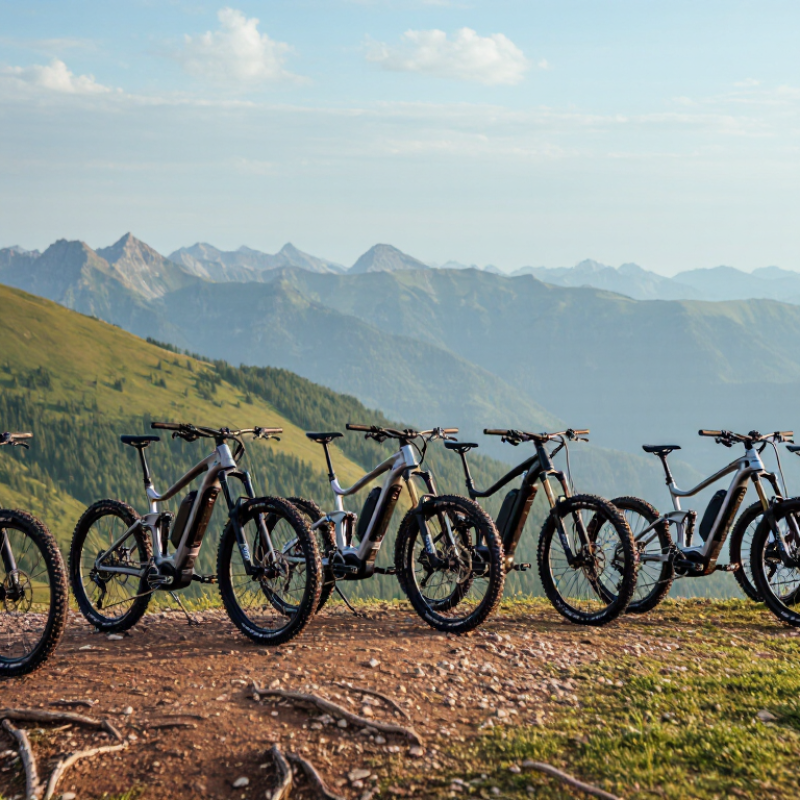
An electric mountain bike manufacturer does more than fit a motor onto a bicycle. It must coordinate frame design, suspension, battery placement, braking, and electrical systems. On a rocky descent, poor weight balance becomes obvious; a spreadsheet will not reveal every handling problem. Real trail testing matters.
China Bicycle Association’s 2023 industry report recorded about 42.28 million electric bicycles produced in China. That figure shows the depth of the country’s production base, not how many units were electric mountain bikes. A capable manufacturer should explain its own testing process, including frame fatigue checks, water-resistance assessments, and repeated brake tests under load. Ask how defects are traced from parts to finished bikes.
Production scale is useful, but it is not proof of trail expertise. A small detail, such as cable routing near a moving suspension arm, can affect reliability. Battery and motor integration should also leave room for service access, not just a clean showroom appearance. There is no perfect checklist, and I would not pretend otherwise. Buyers should compare test records, sample builds, and after-sales procedures before judging a supplier.
China’s electric mountain bike manufacturing industry has shifted from adapting existing bicycle designs to developing integrated electric platforms. Early models often paired familiar frames with motors and batteries. Over time, manufacturers refined frame geometry, motor placement, wiring, and battery protection. The change is visible in details: cleaner cable routing, sturdier battery mounts, and suspension designed around the added weight.
Production methods have also become more specialized. Automated welding and precision machining can improve consistency, while battery and motor testing helps identify problems before assembly is complete. Yet technology alone does not guarantee a dependable bike. Water resistance, connector durability, and heat management still require careful testing, especially for bikes used on muddy climbs or rough trails. The progress is real, but uneven.
The industry’s next stage depends on matching performance claims with practical evidence. A useful evaluation looks beyond motor output to braking under load, range on steep terrain, and access to replacement components. These details matter to riders and retailers alike. Some specifications remain difficult to compare across products, and that deserves more attention. Not every improvement is obvious. Reliable manufacturing is built through repeatable checks, honest documentation, and feedback from real riding conditions.
Identifying a leading Chinese electric mountain bike manufacturer takes more than comparing motor wattage or frame appearance. Check whether the company can explain its design choices, component sources, and quality-control process. Ask for battery capacity, charging time, motor assistance behavior, and testing records. Clear answers matter.
A useful assessment includes practical details. Inspect welds, cable routing, tire clearance, and suspension adjustment. Request examples of durability testing on frames and electrical systems, plus records showing how production batches are checked. Confirm that replacement parts and technical support are available after purchase. A polished sample is not enough; consistency across units can be harder to judge.
Tips: Ask for a specification sheet, warranty terms, and a sample inspection plan. If possible, test a bike on a short climb and a rough path. Note braking feel, shifting, and battery display accuracy. One ride cannot prove long-term reliability, and factory claims still need independent verification. Some details may remain uncertain, so record what you checked and what the supplier has not yet demonstrated.
China’s electric mountain-bike sector includes manufacturers with different strengths. A frame specialist focuses on geometry, weld quality, and fatigue testing. Small details matter. A motor-focused producer develops drive units for steep climbs and controlled assistance. A battery specialist concentrates on cell selection, pack protection, and reliable charging. These capabilities can overlap, so product comparisons need careful reading.
A suspension-oriented manufacturer tunes fork and rear-shock combinations for rough trails. A component integrator coordinates brakes, displays, and control systems. A high-volume factory prioritizes repeatable assembly and stable output. An export-focused producer adapts specifications to buyer needs and provides clearer documentation. A custom-build workshop offers more flexibility, though lead times may vary. Not every option is better.
Other makers emphasize lightweight frames for easier handling, or durable utility designs suited to frequent use. One manufacturer may excel at paint finish; another may have stronger quality checks. Buyers should ask about motor support, replacement parts, warranty terms, and testing procedures. A polished showroom sample is not enough. These profiles describe different production strengths, not a ranking, and a supplier’s real performance still depends on the specific model.
The profiles below describe common electric mountain bike product segments and manufacturing considerations, not verified specifications for individual companies. They are not a ranked list, and actual models vary by manufacturer and market.
| Profile | Product Focus | Common Configuration | Typical Buyer | Key Considerations |
|---|---|---|---|---|
| 01 | Entry-level hardtail e-MTB | Front suspension; commonly 27.5- or 29-inch wheels; hub or mid-drive motor options. | New riders and recreational trail users. | Check frame fit, braking performance, and whether the motor system suits the intended terrain. |
| 02 | Full-suspension trail e-MTB | Front and rear suspension; geometry and travel vary by model and intended riding style. | Riders seeking more comfort and control on rough trails. | Assess suspension design, service support, and total bike weight. |
| 03 | All-mountain e-MTB | A trail-oriented full-suspension format designed to balance climbing and descending. | Experienced recreational riders on varied terrain. | Confirm component durability and suitability for the rider’s local trails. |
| 04 | Cross-country e-MTB | Often a lighter, efficiency-focused hardtail or short-travel full-suspension design. | Riders prioritizing distance, climbing, and faster-paced trails. | Compare riding position, gearing, battery capacity, and system weight. |
| 05 | Fat-tire electric off-road bike | Wide tires intended to increase contact area on loose or soft surfaces; models may be rigid or suspended. | Riders on sand, snow, gravel, or mixed recreational routes. | Wide tires do not replace appropriate trail equipment; check clearance and handling. |
| 06 | Mid-drive e-MTB platform | Motor located at the crank area; assistance can work through the bicycle’s selected gears. | Riders who value a natural pedaling feel and varied- terrain performance. | Check drivetrain compatibility, service access, and replacement-part availability. |
| 07 | Hub-drive e-MTB platform | Motor integrated into a wheel hub; configuration and assistance characteristics vary by model. | Value-focused buyers and riders using moderate trails or mixed routes. | Confirm wheel serviceability, motor rating, and local rules for e-bike classification. |
| 08 | Removable-battery e-MTB | Battery can be removed for charging or storage; voltage and capacity are model-specific. | Users who need flexible charging or indoor battery storage. | Verify battery compatibility, charger specifications, and replacement availability. |
| 09 | Integrated-battery e-MTB | Battery housed within or along the frame for a more integrated appearance. | Buyers who prefer a streamlined frame design. | Check how the battery is accessed and whether authorized service is available. |
| 10 | Export-oriented OEM/ODM e-MTB range | Configurations may be adapted for different distributors and markets; specifications are project-specific. | Importers, distributors, and private-label buyers. | Verify applicable testing, documentation, quality controls, warranty terms, and local compliance. |
Note: Product categories and component descriptions are general market information. Motor power limits, speed limits, labeling, and certification requirements vary by destination market; confirm current local regulations and model-specific documentation before purchase or import.
China’s leading electric mountain bike manufacturers differ most in how they balance motor response, battery integration, and trail durability. A useful technology comparison looks beyond peak power. Check whether pedal assistance responds smoothly to pressure, and whether the display gives clear battery and riding data. Battery placement matters, too. A compact, well-protected pack can keep weight centered, but it may be harder to remove for charging. Small details count.
Product ranges reveal another difference. Some factories focus on hardtails for mixed paths, while others build full-suspension bikes with longer-travel forks and stronger rear triangles. Look closely at frame materials, weld consistency, cable routing, and the fit of suspension pivots. These details are visible. They do not prove long-term reliability, though. A polished finish can hide a weak testing process.
Production capability is more than factory size. Ask how incoming components are checked, how torque settings are recorded, and whether finished bikes receive functional and road tests. Photos of an assembly line are useful, but limited evidence. That comparison is imperfect. Public specifications can also omit test methods, so buyers should request clear documentation. A high output claim means little if quality checks vary between batches.
This content is restricted to site members. If you are an existing user, please log in. New users may register … LEARN MORE “Lighting Power & Control-Signal Cable”
We are here to help. You can contact us or create an account online to have access to special products, technical specifications and our new online quote tool.
ELECTRO CABLES
9 Riverside Drive
P.O. Box 276
Trenton, Ontario
CANADA K8V 5R5
N.A. Toll Free: 888-ELECTRO
(1-888-353-2876)
World: 613-394-4896
Fax: 613-394-4101
Email: sale@machinecables.com
We manufacture cables that are certified by the Canadian Standards Association (CSA), listed by Underwriters Laboratories and/or listed by Intertek (ETL).
Our quality management system is registered to ISO 9001: 2015. Our team is dedicated to consistently providing quality service and products to our customers.

© 2025 ELECTRO CABLES • SITE BY SNAP 360•