Electro Cables
Login

Why Choose the Right Outdoor Power Cable for Your Needs?

When it comes to outdoor projects, choosing the right outdoor power cable is essential. This cable connects tools and appliances to a power source. The wrong type can lead to accidents or equipment failure. It's crucial to understand your specific needs.

Consider factors like voltage capacity and exposure to the elements. Outdoor power cables must withstand extreme weather conditions. They should be durable and flexible enough for easy handling. Many people overlook these essentials, leading to potential safety hazards.

Reflect on your past choices. Did you prioritize cost over quality? The right outdoor power cable can make a significant difference in performance and safety. Let’s explore how to select the best one for your outdoor endeavors.

Why Choose the Right Outdoor Power Cable for Your Needs?

Understanding the Importance of Outdoor Power Cables

Outdoor power cables are crucial for many applications. They connect tools, lighting, and devices in various environments. Understanding their importance can prevent dangerous situations. According to industry reports, improper cable use leads to 30% of electrical accidents. Selecting the right cable minimizes risks.

When choosing an outdoor power cable, consider the environment. Cables must withstand weather and temperature changes. A report from the National Electrical Contractors Association highlights that UV exposure can degrade materials over time. Additionally, moisture can lead to shorts. Many users overlook these factors, leading to premature failure.

Inadequate insulation is another common issue. It can cause electrical leaks and overheating. The International Electrotechnical Commission notes that around 25% of power cable failures relate to insulation problems. Users should prioritize cables with robust insulation to enhance safety and longevity. Proper selection isn't just about performance; it can be a matter of safety.

Why Choose the Right Outdoor Power Cable for Your Needs?

Cable Type Wire Gauge (AWG) Max Voltage (V) Max Current (A) Uses
SJOOW 12 600 20 Light duty outdoor equipment
SOOW 10 600 30 Heavy duty outdoor equipment
SJTW 14 300 15 General outdoor use
SJEOW 16 300 10 Light duty tools and appliances
H05VV-F 3x1.5 300 10 Light duty appliances

Key Factors to Consider When Choosing Outdoor Power Cables

When choosing outdoor power cables, several key factors come into play. The environmental conditions your cables will face significantly influence their performance and longevity. Temperature fluctuations, moisture exposure, and UV rays can degrade cable quality. A report by the International Electrotechnical Commission (IEC) suggests that about 30% of cable failures are due to improper insulation materials in outdoor applications. This highlights the importance of using cables specifically designed for outdoor environments.

Another critical consideration is impedance and capacity. Cabling that can't handle the electrical load can lead to overheating. Research indicates that using cables with appropriate gauge size prevents a 10% loss in electrical efficiency. A misleading assumption is that thicker cables always equate to better performance. Incorrect gauge selection can lead to operational inefficiencies or equipment failure. Ensure you assess your specific power requirements carefully.

Finally, longevity matters — choosing cables with higher durability ratings can result in lower long-term costs. It’s reported that high-quality outdoor cables can last up to 25 years, if properly installed. However, nearly 20% of users overlook maintenance and installation practices. This lack of attention can lead to premature cable replacement. Exploring these factors thoughtfully can heavily influence reliability and safety.

Outdoor Power Cable Selection: Key Factors to Consider

Types of Outdoor Power Cables and Their Applications

Why Choose the Right Outdoor Power Cable for Your Needs?

When it comes to outdoor power cables, choosing the right type is crucial. Various types suit different applications, such as garden lighting, power tools, or electrical installations. For instance, flexible cords are great for temporary setups, while heavy-duty cables are preferred for permanent installations. According to recent industry reports, over 70% of outdoor electrical failures result from inadequate cable selection.

Too often, users select cables based solely on appearance. However, factors like insulation type, weather resistance, and voltage rating are critical. Most outdoor cables feature insulation designed to withstand extreme temperatures. This is vital for maintaining performance and safety, especially in harsh climates. Users must understand their power needs and environmental conditions.

**Tip:** Always check the cable's rating before purchase. Ensure it's designed for outdoor use.

Another key point is cable length and gauge. Thicker cables handle more current but are less flexible. If a cable is too long or too thin for your equipment, voltage drop can become an issue. This affects performance and can lead to equipment damage.

**Tip:** Measure your distance and check gauge recommendations based on your equipment.

Purchasing outdoor power cables warrants careful consideration. Understanding various types and their applications can save time and prevent safety hazards. Making informed choices will lead to better results in outdoor projects.

Common Mistakes to Avoid in Selecting Outdoor Power Cables

Selecting the right outdoor power cable can significantly impact safety and efficiency. Many users make common mistakes when choosing cables. One of the frequent errors is underestimating the voltage rating. According to industry reports, a significant percentage of electrical failures occur due to using cables with insufficient voltage ratings. This oversight can lead to overheating and potential hazards.

Another mistake is neglecting the cable's insulation type. Outdoor cables require robust insulation to withstand harsh weather conditions. Reports indicate that cables with inadequate insulation can degrade over time, resulting in power loss and safety risks. Users often overlook this aspect, leading to premature cable failure.

Lastly, selecting the wrong length is a common oversight. Cables that are too short may stretch to reach a power source, creating potential strain. On the other hand, excessively long cables can cause voltage drops, reducing efficiency. A study found that a 10% voltage drop could adversely affect performance, particularly in high-demand applications. These details underscore the importance of careful consideration when choosing outdoor power cables.

Maintenance Tips for Prolonging the Life of Outdoor Power Cables

Why Choose the Right Outdoor Power Cable for Your Needs?

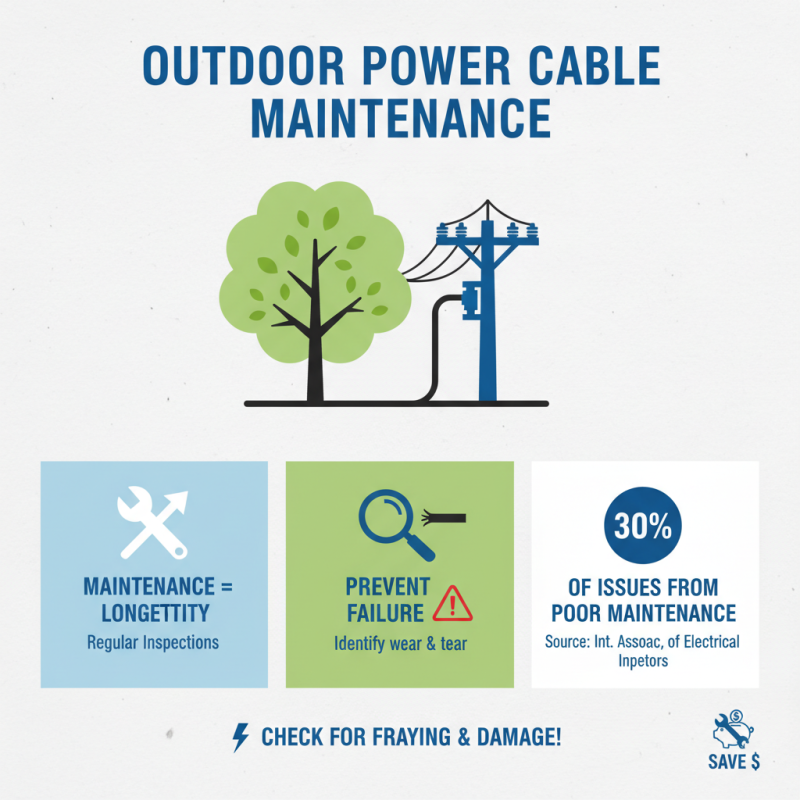
When it comes to outdoor power cables, maintenance is key for longevity. Regular inspections can help identify wear and tear before it leads to failure. According to the International Association of Electrical Inspectors, around 30% of power cable issues arise from poor maintenance practices. Checking for signs of fraying or damage could save you from costly repairs or replacements.

Proper storage is another crucial factor. Outdoor cables should be stored in a cool, dry place. This prevents moisture damage, which affects insulation. In fact, the National Electrical Manufacturers Association states that moisture-related issues contribute to nearly 10% of outdoor cable failures. Additionally, avoiding sharp bends or kinks when handling cables can prevent internal damage, ensuring they perform well over time.

Using protective coverings or conduit can shield cables from UV rays and animal bites. Simple steps like these can significantly enhance durability. However, many neglect to take these precautions. With around 20% of outdoor cables failing prematurely due to environmental exposure, taking proactive measures can make a substantial difference. A little attention can go a long way in maintaining your outdoor power cables.

Lighting Power & Control-Signal Cable

This content is restricted to site members. If you are an existing user, please log in. New users may register … LEARN MORE “Lighting Power & Control-Signal Cable”