A partner you can trust
Choosing a supplier for Welded Stainless Steel Pipe is not just a price comparison. The right partner should understand how material grade, dimensions, wall thickness, and service conditions affect performance. A pipe intended for a clean-water line may face different demands from one used in a demanding industrial process. Details matter.
Ask suppliers for clear product specifications and documents that match the order. Depending on the application, these may include material test reports, heat or batch traceability, dimensional inspection results, and details of applicable manufacturing standards. Check that the stated grade and tolerances align with your design requirements. If a supplier’s documentation is vague, request clarification before comparing quotes. A polished brochure is not proof.
Practical checks can reveal more than sales claims. Discuss production capacity, lead times, packaging, and how the supplier handles defects or order changes. Review sample records where available, and confirm that inspection arrangements suit the project. When possible, speak with customers who have purchased similar pipe for comparable uses. One reference is helpful, but it may not tell the whole story.
No checklist catches everything. Supplier reliability also shows in ordinary communication: specific answers, realistic delivery dates, and prompt notice when plans change. Be cautious of unusually low prices without a clear explanation; they may reflect differences in grade, testing, or service. The best choice is not always the largest manufacturer. It is the supplier whose evidence, capabilities, and communication fit your actual requirements. Verify the details, and leave room to reassess assumptions.
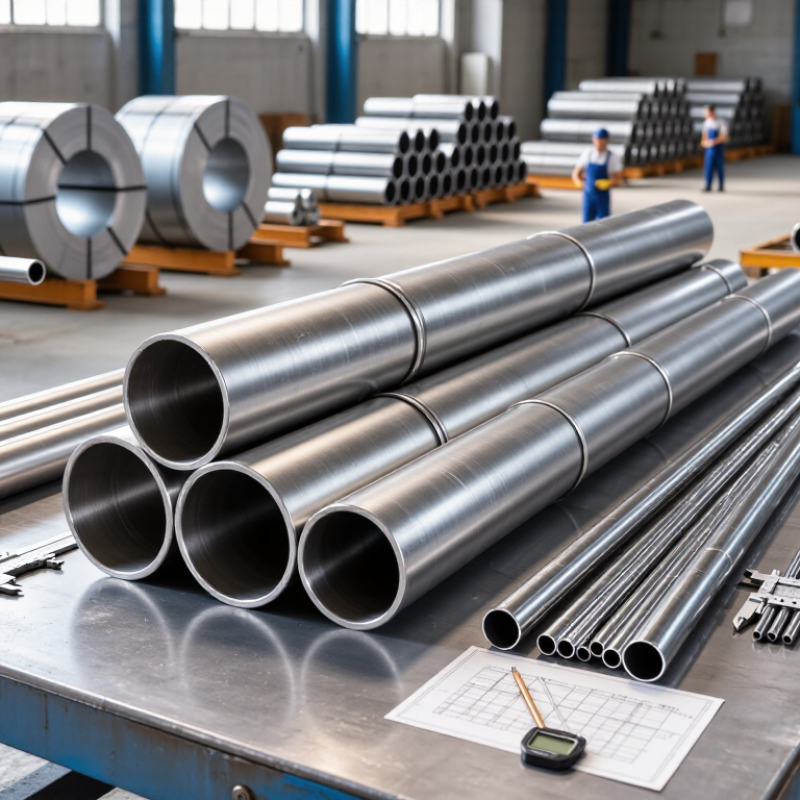
Choosing a welded stainless steel pipe supplier begins with a clear specification. State the outside diameter, wall thickness, pipe length, and required quantity. Include the service environment, such as food processing, coastal exposure, or high-temperature use. These details affect material selection and production controls.
Specify the stainless steel grade and surface finish carefully. A polished surface may suit visible installations, while a standard mill finish can reduce cost. Mention the welding process, dimensional tolerance, and applicable testing requirements. Request documents for chemical composition, mechanical performance, weld inspection, and pressure testing. Reliable suppliers should explain how each result is verified.
Do not overlook connection details. Define bevel angles, end preparation, threading, or special cutting requirements. Packaging also matters when pipes may face moisture during transport. In practical purchasing, small omissions often create expensive changes later. A first specification is rarely perfect. Review it with engineers, installers, and quality staff before requesting quotations. Ask suppliers to identify unclear points instead of accepting vague assumptions. That conversation can reveal whether their technical team understands your application. Be specific. Avoid unnecessary complexity.
When choosing welded stainless steel pipe suppliers, study their experience before comparing prices. Ask how long they have produced welded pipe for your required diameter, wall thickness, and service environment. A supplier experienced with food processing may not understand high-temperature chemical applications. Request recent project examples, production photographs, and customer references with similar requirements.
Certifications can reveal how seriously a supplier controls quality. Check whether the factory maintains a current quality management certificate, material testing procedures, and documented welding qualifications. Verify the certificate numbers with the issuing organization when possible. Ask for heat numbers, weld inspection reports, dimensional records, and test results for each batch. These documents should connect the raw coil to the finished pipe. Clear traceability matters.
Do not trust certificates alone. They may confirm a system, not every shipment. Visit the facility if the order is important. Observe storage conditions, weld monitoring, surface finishing, and final inspection. Experienced staff should explain how they handle porosity, uneven seams, contamination, and rejected material. A vague answer is a warning sign. I once assumed a long operating history meant consistent quality; that assumption was too simple. Production teams change, equipment ages, and procedures can weaken. Ask how the supplier trains inspectors and reviews mistakes. Reliable suppliers usually provide specific answers, not polished promises.
When choosing welded stainless steel pipe suppliers, inspect how each pipe is made, not only the polished sample. A dependable supplier should explain coil preparation, edge forming, welding, heat treatment, and sizing clearly. Ask whether operators monitor weld alignment and heat input during production. These details affect corrosion resistance, dimensional accuracy, and service life. Request process records for the exact grade and pipe size you plan to purchase. A capable factory can show traceability from incoming steel to final inspection. Look closely.
Quality control should combine skilled judgment with measurable checks. Inspectors may use visual examination, dimensional gauges, hydrostatic testing, and non-destructive testing when appropriate. Ask how weld defects are classified and corrected. Review mill certificates, test reports, calibration records, and inspection release procedures. Independent inspection can add confidence for critical applications, but it should not replace supplier accountability. In my experience, small inconsistencies often appear at cut ends or welded seams. A supplier may pass routine checks yet struggle with unusual wall thicknesses. That possibility deserves honest discussion.
Tips: Visit the facility if possible, and observe storage conditions, labeling, and weld inspection stations. Confirm that stainless coils are protected from carbon-steel contamination. Ask for a sample inspection plan before placing a large order. Compare reported tolerances with your drawings, not generic catalog claims. Clarify how nonconforming pipes are segregated and documented. Keep communication technical and written. Good evidence beats confident promises.
| Assessment Area | What to Verify | Useful Evidence or Checks | Warning Signs |
|---|---|---|---|
| Applicable product standard | Confirm the pipe standard, grade, dimensions, end finish, and inspection requirements match the purchase specification. Common references include ASTM A312/A312M for stainless steel pipe and EN 10217-7 for welded stainless steel pressure purposes. | Request a written standards-and-requirements checklist, with the applicable edition and any agreed supplementary requirements identified. | The supplier quotes only a grade name or nominal size without confirming the governing product standard and order requirements. |
| Strip and material control | Check that incoming stainless steel strip is identified by grade, heat or cast number, thickness, and applicable material specification before forming. | Review material test certificates, incoming inspection records, and the system used to maintain identification through production. | Material records cannot be linked to finished pipe, or mixed-grade stock is handled without clear identification. |
| Forming and longitudinal welding | Ask how strip edges are prepared, formed, aligned, and welded. Welding methods can include TIG (GTAW), plasma, laser, or high-frequency processes; suitability depends on the grade, dimensions, and product requirements. | Review documented welding procedures, equipment maintenance and setup controls, operator qualifications where applicable, and in-process monitoring records. | There is no controlled welding procedure, weld parameters are not monitored, or weld appearance is treated as the only acceptance check. |
| Heat treatment and surface finishing | Determine whether solution heat treatment, pickling, or other finishing is specified for the grade and application. Requirements should follow the applicable standard and purchase order rather than a one-size-fits-all claim. | Where required, check heat-treatment charts or batch records, furnace controls, and finishing-process records. Confirm the specified surface condition and cleanliness. | The supplier cannot explain whether the ordered condition is as-welded or heat-treated, or cannot provide records for specified processing. |
| Weld and product inspection | Verify the tests and inspection methods required by the selected standard and order. Depending on requirements, these may include hydrostatic testing or an allowed nondestructive electric test, plus specified visual or other examinations. | Request inspection procedures, test equipment calibration records, acceptance criteria, and traceable results for the ordered batch. Confirm any requested third-party inspection in advance. | The supplier claims every pipe receives a particular test but cannot show records, or treats different test methods as interchangeable without checking the specification. |
| Chemical composition and grade verification | Confirm the grade through material documentation and required chemical analysis. Positive material identification (PMI) can be useful when specified or risk-appropriate, but it does not replace all required laboratory tests or material certificates. | Compare the certificate’s heat number and reported chemistry with the order; check PMI method, sampling plan, and instrument calibration when PMI is required. | Certificates are generic, heat numbers do not match markings, or PMI is presented as proof of every mechanical and manufacturing requirement. |
| Dimensions and visual condition | Check outside diameter, wall thickness, length, straightness, ends, and surface condition against the ordered tolerances and applicable standard. | Review calibrated measurement tools, sampling frequency, inspection results, and agreed criteria for surface defects and end preparation. | Measurements are recorded without units or tolerances, or the supplier relies only on a visual check for dimensional acceptance. |
| Traceability and documentation | Ensure finished pipe can be traced to its material heat and production or inspection records, with markings and documents consistent with the order. | Agree on required inspection documents before production, such as material test certificates, test reports, dimensional records, and traceability details. | Pipe markings are missing or inconsistent, or documents are supplied without batch-specific identification. |
| Quality system and corrective action | Assess whether the supplier has controlled procedures for inspection, nonconforming product, corrective action, and record retention. A quality-system certificate can support this review but does not itself certify each pipe. | Review relevant audit or certification scope, sample inspection records, nonconformance handling, and examples of corrective-action follow-up. | Quality documents are unavailable, corrective actions are not tracked, or a management-system certificate is offered as a substitute for product inspection evidence. |
Note: Inspection, testing, heat treatment, and documentation requirements vary by product standard, grade, dimensions, service conditions, and purchase order. Confirm acceptance criteria in the contract before production.
Choosing a welded stainless steel pipe supplier requires more than checking a catalog. Compare grade, outside diameter, wall thickness, weld quality, and surface finish. Ask for mill certificates, dimensional reports, and hydrostatic test records. For corrosive service, confirm the steel grade matches temperature, pressure, and media conditions. A polished surface may look attractive, but it cannot replace correct metallurgy. I have seen projects delayed because a visually perfect pipe had incomplete documentation. Evidence matters.
Request comparable quotations. Each quote should state material grade, tolerance, length, packing, inspection, and applicable taxes. A low price can hide thinner walls, limited testing, or costly freight. Compare the cost per usable meter, not only the unit price. Also check payment terms, quotation validity, and charges for custom sizes. Supplier experience is useful here. Ask how they handled similar orders, including nonconforming pieces. Their response often reveals more than a sales sheet. Still, past success is not proof of future consistency.
Delivery terms deserve the same attention as specifications. Confirm production time, stock availability, dispatch location, carrier responsibility, and replacement procedures. Request a written schedule with inspection and packaging dates. Stainless pipe can arrive with dents, wet packing, or damaged caps if handling is careless. Small detail. Define acceptance criteria before shipment. I would also allow contingency time, even when the promised date seems firm. My own comparisons have sometimes favored a cheaper offer too quickly. That was not always wise. Reliable supply means traceable quality, transparent pricing, and delivery commitments that can be checked.
Compare product specifications, pricing, and delivery terms using a consistent evaluation framework. The anonymous figures below are indicative procurement benchmarks for standard welded stainless steel pipe orders and are not associated with any specific company or brand.
How to read the chart: A higher specification score indicates stronger compliance with requirements such as ASTM A312 or equivalent standards, grade 304/316 availability, dimensional tolerances, surface finish, mill test certificates, and traceability. The price index uses the lowest quoted price as the baseline, while delivery performance reflects the estimated lead time for a standard order.
Choosing a welded stainless steel pipe supplier requires more than comparing prices. Ask for recent customer references from projects using similar pipe grades, diameters, and service conditions. Contact at least two references directly. Ask whether deliveries arrived on time, certificates matched the material, and weld quality stayed consistent. A short video call can reveal more than a polished testimonial. Request production photos, inspection records, and sample mill certificates before placing a large order.
The contract should define every measurable detail. Include steel grade, outside diameter, wall thickness, length tolerance, welding method, surface finish, testing requirements, packaging, and delivery dates. Specify which documents must accompany each shipment, such as chemical analysis and pressure-test reports. Payment terms and remedies for shortages or nonconforming pipes also deserve clear wording. Vague phrases like “premium quality” create problems later. Have a qualified engineer review technical clauses and an appropriate professional review commercial terms.
After-sales support shows how a supplier behaves when things go wrong. Confirm the contact person, response time, claim procedure, and replacement policy before signing. Ask how they handle rust marks, ovality, damaged ends, or missing documents. A reliable supplier should investigate with inspection photos and traceability records, not simply blame storage conditions. No supplier is perfect; one delayed shipment may happen. However, repeated silence is different. Test the support process with a practical question before purchase, and record every agreement in writing.
This content is restricted to site members. If you are an existing user, please log in. New users may register … LEARN MORE “Lighting Power & Control-Signal Cable”
We are here to help. You can contact us or create an account online to have access to special products, technical specifications and our new online quote tool.
ELECTRO CABLES
9 Riverside Drive
P.O. Box 276
Trenton, Ontario
CANADA K8V 5R5
N.A. Toll Free: 888-ELECTRO
(1-888-353-2876)
World: 613-394-4896
Fax: 613-394-4101
Email: sale@machinecables.com
We manufacture cables that are certified by the Canadian Standards Association (CSA), listed by Underwriters Laboratories and/or listed by Intertek (ETL).
Our quality management system is registered to ISO 9001: 2015. Our team is dedicated to consistently providing quality service and products to our customers.
© 2025 ELECTRO CABLES • SITE BY SNAP 360•