How to Choose the Best EV Ultra Cable for Your Electric Vehicle Charging
Electric vehicles (EVs) are rapidly transforming the automotive landscape. By 2030, it's expected that over 30% of cars sold globally will be electric, according to a report by BloombergNEF. As EV adoption increases, the demand for efficient charging solutions grows too. Here, the EV ultra cable comes into play.
Choosing the right EV ultra cable can significantly enhance charging speed and efficiency. The right cable ensures optimal performance during peak charging periods. However, many consumers remain unaware of the key factors influencing cable selection. Reports indicate that improper cable choices can reduce charging efficiency by up to 20%.
With so many options available, it can be overwhelming. Not all cables meet the high standards required for rapid charging. It’s crucial to consider compatibility, length, and power rating. Reflecting on these aspects can help in making an informed decision. Ultimately, investing in the right EV ultra cable is essential for maximizing your electric vehicle's potential.
Understanding EV Ultra Cables: Key Features and Specifications
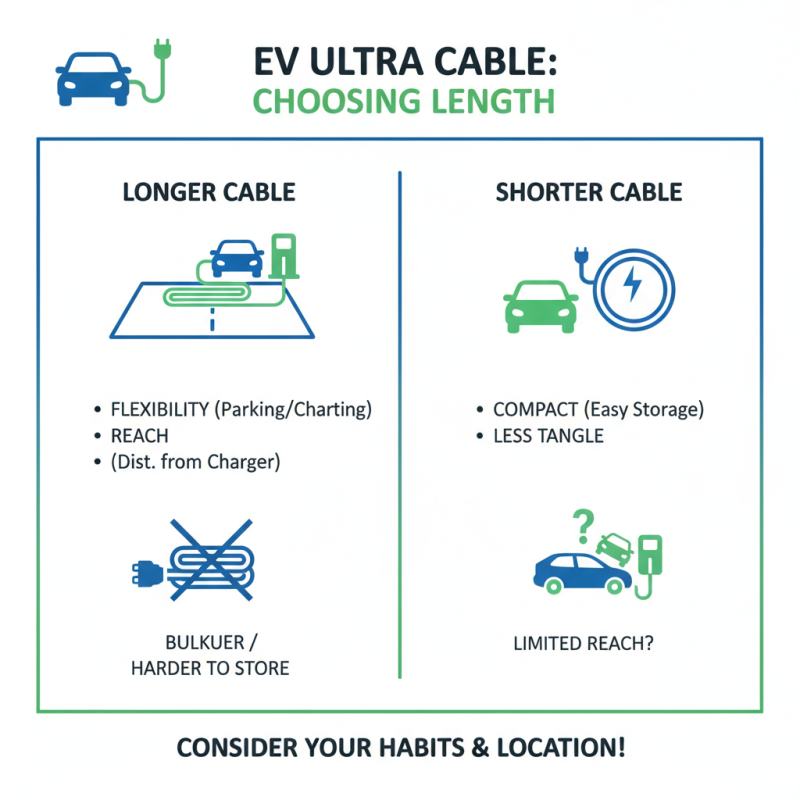
When selecting an EV ultra cable, understanding its key features is vital. The cable's length is one of the most crucial aspects. A longer cable offers flexibility in parking and charging spaces. However, a longer cable can be bulkier and harder to manage. Think about your parking habits and usual charging locations when deciding on the length.
Another important feature is the amperage rating. Cables come in different levels, typically 16A to 32A. Higher amperage charges your vehicle faster, but ensure your home’s electrical system can handle it. Compatibility with your EV model is essential as well. Some cables lack the necessary connectors, limiting their usability. Consider the power source and specific requirements of your vehicle before making a choice.
While durability matters, not all cables are created equal. Higher quality materials resist wear and tear but might come at a cost. Reflect on how often you plan to use the cable. Frequent users might lean towards more robust options. It's also worth considering portable versus stationary cables. Each type has its pros and cons, influenced by lifestyle and charging needs. The right choice should fit seamlessly into your routine while considering potential challenges.
Identifying Your Electric Vehicle's Charging Needs
When selecting an EV ultra cable, understanding your electric vehicle's charging needs is paramount. Each vehicle model has specific requirements for charging speed and compatibility. The average EV battery capacity is around 60 kWh, which typically requires a Level 2 charger for faster charging. According to the U.S. Department of Energy, charging at home can take anywhere from 4 to 8 hours with a Level 2 charging station, depending on the power output and battery size.
Consider the charging port type on your EV. Most modern electric cars use the Type 2 connector in North America and Europe. Experts recommend checking the charging power your vehicle can accept. Many vehicles can handle up to 11 kW, while others might only support 3.7 kW. This discrepancy can lead to disappointments if you don't match your charging cable with your vehicle's capabilities. A poorly chosen cable may not provide optimal charging speeds, leading to longer waiting times.
Additionally, assess your daily driving habits. If you frequently travel long distances, a high-capacity cable could be beneficial. Some reports suggest that nearly 40% of EV owners struggle with inadequate home charging solutions. Addressing this gap is essential. Failing to invest in the right cable might hinder your charging experience. Choosing an ultra cable aligned with your specific needs can mitigate these issues.
How to Choose the Best EV Ultra Cable for Your Electric Vehicle Charging - Identifying Your Electric Vehicle's Charging Needs
| Vehicle Model |
Max Charging Power (kW) |
Cable Type |
Cable Length (m) |
Recommended Use |
| Model A |
7.2 |
Type 2 |
5 |
Home Charging |
| Model B |
11 |
CCS |
3 |
Public Fast Charging |
| Model C |
22 |
Type 2 |
10 |
Workplace Charging |
| Model D |
50 |
CHAdeMO |
7 |
Public Super Charging |
Comparing Different Types of EV Ultra Cables Available
When selecting the best EV ultra cable, understanding different types can be crucial. There are several options. Each type has unique features. Some cables support fast charging, while others may not. Look for those with higher amp ratings. This ensures quicker charging times.
Consider the cable's length as well. Shorter cables are typically easier to handle. Longer cables offer flexibility for larger vehicles or varied parking setups. However, longer cables can be bulkier and more difficult to store. Weight is also an important factor. Lightweight cables are easier to carry, but durability matters too.
Different materials can affect performance. Rubber cables are more flexible, while PVC options are often less expensive. It's wise to balance cost and performance. Some users may prefer portability, while others may want robustness. Reflect on your charging habits. Choose a cable that suits your lifestyle. There is no one-size-fits-all solution. So, think carefully about what features you need most.
Assessing Compatibility with Charging Stations
When selecting an EV ultra cable, compatibility with charging stations is crucial. Many charging stations use different outlet types and configurations. Identifying the type of connection your vehicle needs is essential. Not all cables fit all chargers. This can lead to frustration during charging.
Check the plug type on your car first. Then, look at the charging station specifications. Some stations offer rapid charging, while others are slower. It's important to find a cable that supports your vehicle’s charging capabilities. Consider the length of the cable as well. A longer cable can provide flexibility but may also lead to increased resistance.
Not all users have the same experience. Some may find their cables incompatible at certain stations. Researching local charging infrastructure is wise. Sometimes, users might expect to find charging points everywhere. However, this is not always the case in practice. Adapting to local conditions can save time and energy in the long run. Having a well-suited cable on hand can make a big difference.
Evaluating Durability and Safety Standards of EV Ultra Cables
When choosing an EV ultra cable, safety and durability are paramount. Look for cables that meet industry safety standards. Cables should endure extreme temperatures and resist wear from daily use. The materials used in the cable's construction play a crucial role. High-quality insulation protects against electric shocks and environmental damage.
Consider the cable's length. A longer cable offers flexibility for parking arrangements. However, a longer cable may be less durable if it drags on the ground. Evaluate the connectors too. They should fit snugly without excessive force. Loose connections can lead to overheating and malfunctions.
Tips: Always check for certifications. Cables with recognized safety marks are less likely to pose risks. Regularly inspect your cable for wear and tear. Frayed edges or exposed wires indicate it's time for a replacement.
Keep in mind, some cables may not handle heavy usage well. You might find yourself needing to replace them often. Invest in a cable that balances cost and reliability. It’s worth spending a bit more for peace of mind.
Durability and Safety Standards of EV Ultra Cables