Electro Cables
Login

How to Choose the Best Galvanized Pipe Manufacturer in China?

Choosing the right Galvanized Pipe Manufacturer in China requires more than comparing prices. A supplier may offer impressive photos, fast replies, and attractive certificates. These details help, but they do not prove consistent production quality. In practice, reliable decisions come from checking evidence at several stages. Review steel grades, zinc coating thickness, pipe dimensions, welding quality, and test reports. Ask how these specifications are measured and recorded. Small details matter.

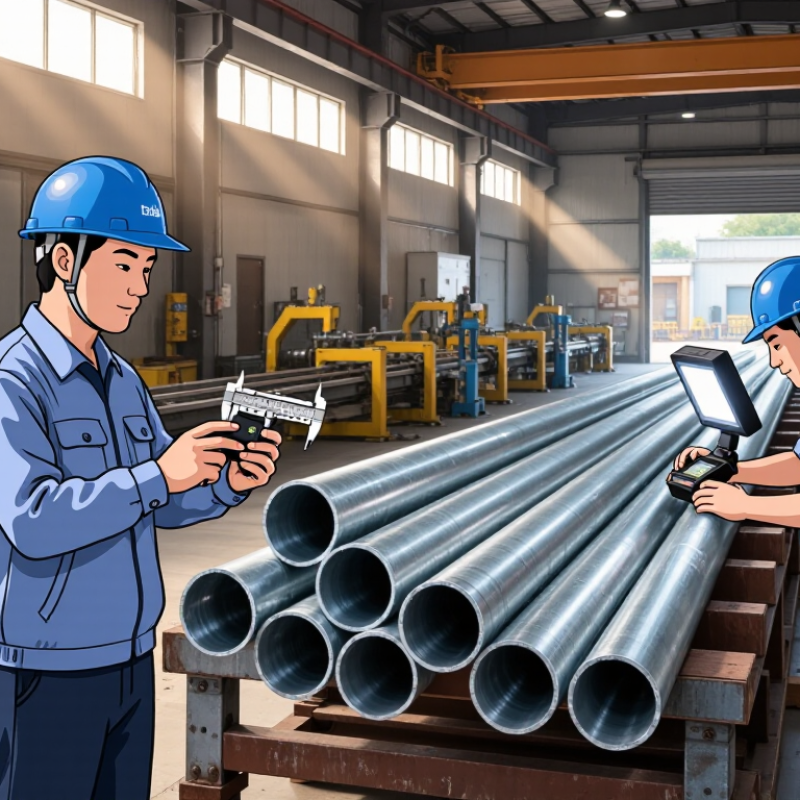
Experience also changes the evaluation process. An experienced buyer usually requests samples before approving a large order. Examine the pipe surface under clear light. Look for uneven galvanizing, exposed steel, rough welds, or damaged threads. Measure the outside diameter and wall thickness with suitable tools. A factory should explain its inspection procedure without avoiding specific questions. It should also provide traceable production records and realistic delivery information. No checklist is flawless. Even careful buyers can miss a problem when communication is rushed.

A dependable manufacturer welcomes factory audits, video inspections, and independent testing. It should discuss packaging, loading methods, storage conditions, and after-sales support clearly. References from similar projects can reveal whether promises match actual performance. Consider the supplier’s production capacity, export experience, and response during technical disagreements. The lowest quotation may become expensive after rejected pipes, delays, or rework. The best choice is not always the largest factory or the cheapest one. It is the partner that consistently supports documented quality, transparent communication, and practical project requirements.#+#+#+#+
How to Choose the Best Galvanized Pipe Manufacturer in China?

Define Required Pipe Size, Wall Thickness, Steel Grade, and Application

Choosing the best galvanized pipe manufacturer in China starts with a precise specification, not a supplier’s sales promise. Define the required pipe size, outside diameter, nominal bore, and wall thickness. These details affect flow, pressure resistance, weight, and installation space. State the steel grade and applicable standard, such as ASTM, EN, or another recognized specification. Your application matters too. Water distribution, scaffolding, greenhouse structures, and industrial piping require different performance levels.

Ask manufacturers to confirm dimensional tolerances, zinc coating thickness, threading quality, and surface condition. For outdoor use, stronger corrosion protection may be necessary. Request mill certificates, coating test reports, and batch traceability documents. Experienced suppliers should explain how their steel grade suits your working temperature, pressure, and connection method. A small sample can reveal rough threads, uneven galvanizing, or poor pipe straightness. It is easy to overlook these defects during online purchasing.
Tips: Prepare a specification sheet before requesting quotations. Include size, wall thickness, steel grade, length, end finish, quantity, and application. Compare technical replies, not only prices. Ask whether testing is performed in-house or by an independent laboratory. Do not assume a heavier pipe always performs better; excessive weight can increase costs without solving the actual engineering need. My own review habit would include checking several batches, because one attractive sample may not represent consistent production.

Match Standards: GB/T 3091, ASTM A53, EN 10255, and ISO 1461

Choosing a galvanized pipe manufacturer in China requires more than comparing prices. Start with the required standard.

GB/T 3091 ASTM A53 EN 10255 ISO 1461

GB/T 3091 covers welded steel pipes for low-pressure fluid service. ASTM A53 covers steel pipe for mechanical and pressure applications, including galvanized grades. EN 10255 addresses non-alloy steel tubes suitable for welding and threading. ISO 1461 focuses on hot-dip galvanized coating requirements for fabricated iron and steel products.

These standards are not interchangeable.

A supplier may show a general ISO certificate while missing ASTM test results or GB/T dimensional controls. Ask for heat numbers, mill test certificates, weld inspection records, and coating-thickness reports. Request samples from the same production line. Check zinc adhesion near threads, ends, and weld seams. Small details often expose weak process control.

The World Steel Association reported about 1.89 billion tonnes of crude steel production in 2023. This huge volume makes traceability more important, not less.

Tips:

Build a comparison table with standard, steel grade, diameter tolerance, wall thickness, zinc coating, and test method. Confirm whether ISO 1461 applies to the finished pipe or only fabricated components. Also verify gauge calibration and independent inspection access.

A certificate can look convincing. It can still be incomplete. Do not rely only on factory photographs or a single successful sample.

One practical weakness remains: buyers sometimes define standards after production begins, creating avoidable disputes. Clear purchase specifications should come before the deposit.

Check Zinc Coating: ISO 1461 Requires 45–85 μm by Steel Thickness

How to Choose the Best Galvanized Pipe Manufacturer in China?

Zinc coating thickness is a practical test of a galvanized pipe manufacturer’s quality. ISO 1461 links the required coating thickness to the steel thickness. For many steel categories, minimum average coating values range from about 45 μm on thinner steel to 85 μm on steel thicker than 6 mm. Local minimum values may be lower, so buyers should check both results carefully.

Ask the manufacturer for the steel grade, wall thickness, galvanizing method, and inspection records. A reliable factory should explain how it controls bath temperature, immersion time, surface preparation, and cooling. These details affect coating adhesion and appearance. A certificate alone is not enough.

Request recent test data from production batches. Use a calibrated magnetic thickness gauge during inspection, and measure several points around the pipe. Check the outside surface, ends, weld areas, and threaded sections. Uneven zinc often appears near edges or difficult-to-clean areas. Look for bare spots, heavy runs, peeling, and excessive ash.

Do not accept a single reading.

In practical sourcing, small mistakes can become expensive. A supplier may quote “hot-dip galvanized” without clearly stating the measured thickness. That wording needs clarification. The inspection plan should also define sampling numbers and acceptance limits before production begins. I would still review the data independently, because even a professional report can contain missing readings or confusing units. Reliable communication matters as much as attractive surface appearance.

ISO 1461 Minimum Zinc Coating Thickness by Steel Thickness

According to ISO 1461, the required galvanized coating thickness increases with the thickness of the steel article. The chart compares the minimum local coating thickness with the minimum mean coating thickness, measured in micrometres (μm).

Audit Factory Capacity, Testing Equipment, Traceability, and Certifications

How to Choose the Best Galvanized Pipe Manufacturer in China?

Choosing a galvanized pipe manufacturer in China requires more than comparing prices. Begin with a factory audit. Check production lines, coil storage, furnace capacity, and daily output records. A reliable facility should explain how it handles urgent orders without weakening quality control. Walk through the workshop, not just the showroom. Look for organized material flow, maintained equipment, and trained operators.

Testing equipment reveals a manufacturer’s technical discipline. Ask to see zinc coating thickness gauges, tensile testing machines, bend testers, and dimensional inspection tools. Request recent test reports linked to specific batch numbers. Check whether inspectors test pipe diameter, wall thickness, surface condition, and coating adhesion. Small details matter. A bright surface alone proves little.

Traceability should continue from steel coils to final bundles. Each pipe should connect to heat numbers, production dates, inspection records, and packing labels. Confirm whether the factory can provide samples from previous batches for independent testing. Certifications also require careful review. Verify issuing organizations, certificate scope, expiration dates, and whether documents match the actual production site. Some factories display certificates for another facility. That is a warning sign.

Experience improves judgment, but audits can still miss problems. I would not rely on one visit or one perfect sample. Production pressure may change results later. Ask difficult questions, record the answers, and compare them with physical evidence. A manufacturer that admits limitations may be more dependable than one promising everything.

Compare MTCs, Third-Party Tests, MOQ, Lead Times, and Total Cost

Choosing the best galvanized pipe manufacturer in China requires more than comparing prices. Start with the MTC, or Mill Test Certificate. It should identify the steel grade, zinc coating, dimensions, heat number, and test results. Match these details with your purchase specification. A neat certificate is not enough. Ask if the document is traceable to the production batch. In one project, a coating value looked acceptable until the batch number failed to match the packing list. That small mismatch mattered.

Third-party testing can confirm tensile strength, coating thickness, chemical composition, and dimensional accuracy. Choose a laboratory with suitable technical competence and request a sampling plan before production. MOQ affects cash flow, storage, and risk. A low MOQ may cost more per pipe, while a high MOQ can trap money in slow-moving inventory. Lead times also need practical checking. Ask about production days, inspection time, loading schedules, and possible delays during busy periods. Get each promise in writing.

Compare total cost, not only the unit price. Include testing, packaging, inland transport, port charges, finance costs, and potential replacement expenses. A cheaper quotation can become expensive after rework or delayed delivery. Request a detailed pro forma invoice and a realistic production timeline. I would still keep a small contingency. Even careful suppliers can miss a shipment window, and buyers sometimes underestimate customs or site-storage delays. Price is useful, but evidence is safer.

How to Choose the Best Galvanized Pipe Manufacturer in China? - Compare MTCs, Third-Party Tests, MOQ, Lead Times, and Total Cost

Evaluation Dimension Entry-Level Supplier Profile Standard Export Supplier Profile Project-Qualified Supplier Profile Recommended Verification
Material Test Certificate (MTC) Mill certificate may be available; heat number traceability should be confirmed. EN 10204 Type 3.1 certificate normally supplied with chemical and mechanical results. EN 10204 Type 3.1 as standard; Type 3.2 inspection can be arranged for critical projects. Match the heat number, pipe batch, steel grade, dimensions, yield strength, tensile strength, elongation, and chemical composition.
Galvanizing Standard Standard may be stated generally as “hot-dip galvanized”; coating requirement may be unclear. Specification commonly references ASTM A53/A53M for pipe and ASTM A123/A123M or ISO 1461 for zinc coating. Coating mass or thickness, appearance, repair limits, sampling method, and acceptance criteria are defined in the purchase order. Require the exact applicable standard and minimum coating requirement for each pipe size and wall thickness.
Third-Party Inspection Usually not included; inspection is arranged only when requested. Pre-shipment inspection can normally be arranged at the buyer’s cost. Routine access for independent inspection, loading supervision, and document review is normally available. Use an independent inspection body to verify quantity, dimensions, coating, marking, packing, and MTC consistency.
Typical Inspection Cost Often excluded from the quotation. Approximately USD 250–600 per inspection day, excluding travel or special testing. Approximately USD 400–900 per inspection day when additional sampling, reporting, or witness testing is required. Obtain a written quotation from the inspection body; charges vary by scope, location, and testing requirements.
Mechanical and Dimensional Tests Basic dimensional checks and visual inspection may be included. Tensile, yield, elongation, wall thickness, outside diameter, length, straightness, and visual checks are commonly documented. Testing plan is linked to the purchase order, applicable standard, heat number, and sampling frequency. Confirm test methods and tolerances against ASTM, EN, ISO, or the project specification rather than relying on a generic report.
Minimum Order Quantity (MOQ) Approximately 5–20 metric tons for regular sizes; mixed sizes may be restricted. Approximately 20–50 metric tons, often with a minimum quantity per size or specification. Approximately 50–100 metric tons for project production, with better planning for multiple sizes and lots. Confirm MOQ by size, schedule, coating class, steel grade, and whether partial-container or mixed-loading orders are accepted.
Production Lead Time Approximately 15–25 calendar days after deposit and specification approval. Approximately 25–40 calendar days, depending on size mix and galvanizing capacity. Approximately 35–60 calendar days when custom testing, multiple sizes, or inspection hold points are required. Ask for a milestone schedule covering raw-material allocation, forming, welding, galvanizing, inspection, packing, and loading.
Shipping Preparation Standard bundles and basic steel strapping. Bundled pipes with size labels, bundle numbers, protective end caps where specified, and packing list. Detailed bundle plan, moisture-control requirements, export markings, photographic loading record, and document cross-check. Verify bundle weight, maximum lifting weight, container utilization, corrosion protection, and destination-country marking rules.
Illustrative Product Price USD 720–900 per metric ton, depending on steel price, size, wall thickness, and coating. USD 760–960 per metric ton, typically including more documentation and process control. USD 820–1,050 per metric ton, reflecting project testing, traceability, and inspection requirements. Treat these as planning ranges only; request comparable quotations using the same Incoterm, specification, quantity, and delivery port.
Estimated Non-Product Costs Freight, documentation, testing, inspection, and possible rework may add approximately USD 80–220 per metric ton. Freight, inspection, testing, banking, and documentation may add approximately USD 70–180 per metric ton. Additional inspection, laboratory testing, special packing, and project administration may add approximately USD 100–250 per metric ton. Calculate landed cost using product price + inland freight + ocean freight + insurance + inspection + duties + port charges + handling.
Indicative Landed-Cost Range Approximately USD 800–1,120 per metric ton before destination taxes and duties. Approximately USD 830–1,140 per metric ton before destination taxes and duties. Approximately USD 920–1,300 per metric ton before destination taxes and duties. The lowest unit price is not always the lowest total cost; include delay risk, rejection risk, reinspection, and replacement freight.
Best Fit Small trial orders, standard sizes, non-critical applications, and price-sensitive projects. Regular commercial projects requiring reliable documentation, balanced cost, and standard inspection. Infrastructure, industrial, utility, or contractual projects with strict traceability and acceptance requirements. Select the profile that meets the project risk level, not simply the lowest quoted price.
Cost comparison note: The price and lead-time figures above are realistic planning benchmarks, not fixed quotations. Actual values vary with steel coil prices, pipe diameter, wall thickness, zinc coating requirement, order volume, Incoterms, inspection scope, destination, and freight rates.

Lighting Power & Control-Signal Cable

This content is restricted to site members. If you are an existing user, please log in. New users may register … LEARN MORE “Lighting Power & Control-Signal Cable”