
How to Choose the Best Hot Melt Coating Machine?
Choosing the right Hot Melt Coating Machine can determine whether a production line delivers smooth rolls or expensive defects. The decision affects coating weight, adhesive stability, web tension, energy use, and operator safety. A machine may look impressive in a showroom. Yet, it can perform poorly with your actual adhesive, substrate, or production speed.
Dr. Edward M. Petrie, a recognized adhesive technology author, offers a practical principle: “The best coating process is the one that consistently meets the specification.” That idea should guide every comparison. Buyers need more than a high output figure. They should examine melt temperature control, pump accuracy, slot-die or roll-coating design, cleaning access, and compatibility with pressure-sensitive or reactive hot melt adhesives. Ask for a live trial using your own film, foil, paper, or nonwoven material. Small details matter. A 2°C temperature drift can change viscosity and coating uniformity.
Experience also exposes weaknesses that brochures often hide. Check how quickly the machine reaches operating temperature. Inspect the first and last meters of a coated roll. Look for edge build-up, pinholes, streaks, and uneven gloss. Request maintenance records, spare-parts availability, training support, and verified safety systems. The cheapest option may create hidden costs through scrap, downtime, and frequent manual adjustments.
No single machine suits every factory. I would not choose equipment based on speed alone. That shortcut sounds efficient, but it can become expensive. A reliable selection balances material behavior, production goals, floor space, service capability, and future expansion. This guide explains those factors clearly, helping manufacturers compare options with evidence rather than attractive promises.
What Is a Hot Melt Coating Machine?
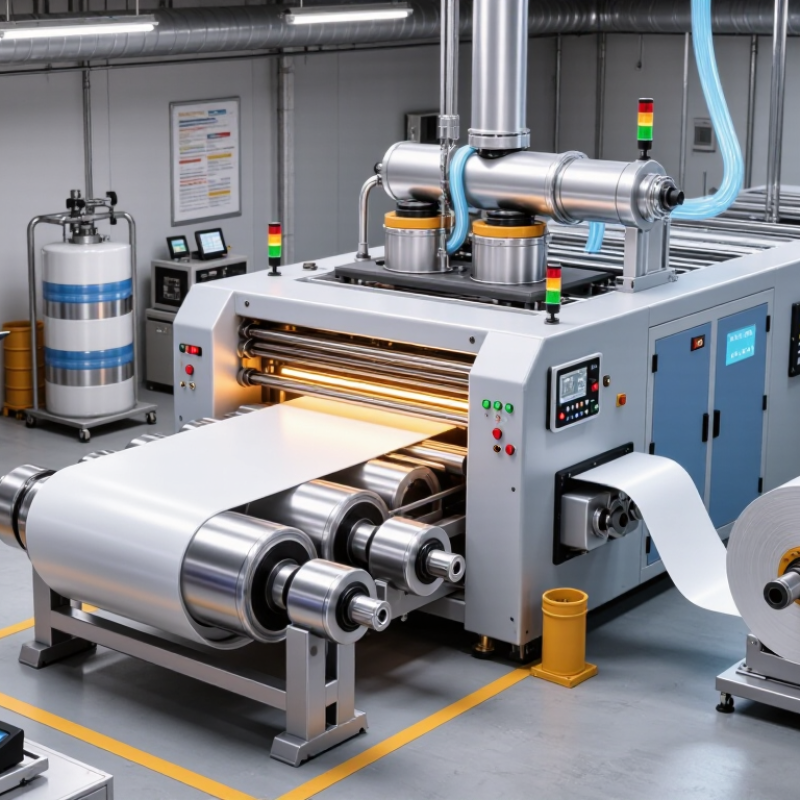
A hot melt coating machine applies adhesive without using water or solvent as the main carrier. The adhesive is heated until it becomes fluid. A pump then moves it through a coating head. The head places a controlled layer onto paper, film, foil, fabric, or another substrate.
The machine usually includes a heating tank, temperature controls, a metering pump, and a slot die or roller. Some systems also contain unwinding, laminating, cooling, and rewinding sections. These parts work together at a carefully managed speed. Coating weight, web tension, and adhesive temperature directly affect the final product. A small temperature change can create uneven edges or weak bonding.
This is where choosing the machine becomes practical. A wider coating width is not automatically better. The adhesive type, production speed, substrate thickness, and required coating weight must match the equipment. In real production, operators often discover that heating time was underestimated. That mistake can reduce output and increase waste. I have also seen specifications look impressive while cleaning access remains poor. Easy maintenance matters. A machine should provide stable temperature control, accurate dosing, guarded moving parts, and clear operating data. Before purchase, request coating trials with your actual materials. Measure adhesion, surface appearance, and coating consistency. One test may reveal problems that a sales sheet cannot show.
How to Choose the Best Hot Melt Coating Machine? - What Is a Hot Melt Coating Machine?
| Selection Dimension | What to Evaluate | Typical Technical Data | Why It Matters |
|---|---|---|---|
| Coating Method | Choose between slot-die, roll, spray, or contact coating according to the adhesive and product structure. | Slot-die coating provides a controlled, uniform coating layer and is widely used for continuous web production. | The coating method affects layer uniformity, achievable speed, material waste, and compatibility with the substrate. |
| Coating Width | Match the effective coating width with the finished product width and required edge tolerance. | Common industrial configurations range from approximately 300 mm to more than 2,000 mm. | A suitable width prevents excessive trimming, reduces adhesive waste, and supports the required production format. |
| Production Speed | Consider the target line speed, adhesive open time, substrate behavior, and downstream converting process. | Many continuous hot melt coating lines operate from tens of meters per minute to several hundred meters per minute. | Higher speed can increase output, but the adhesive must melt, coat, and bond consistently within the available process time. |
| Coating Weight | Specify the required adhesive mass per unit area and the acceptable variation across the web. | Typical hot melt adhesive coating weights may range from about 5 to 150 g/m², depending on the application. | Coating weight directly influences bond strength, flexibility, material consumption, and finished-product cost. |
| Adhesive Viscosity | Check the adhesive supplier’s recommended application temperature and viscosity range. | Hot melt adhesives commonly have application viscosities from several hundred to several thousand mPa·s. | Viscosity determines pump selection, die performance, coating stability, and the amount of heat required for processing. |
| Operating Temperature | Select a heating and temperature-control system that matches the adhesive’s safe processing window. | Many hot melt adhesives are applied at approximately 100°C to 200°C; the exact range depends on formulation. | Accurate temperature control helps prevent poor wetting, adhesive degradation, charring, and unstable coating quality. |
| Heating Zones | Evaluate independent temperature zones for the tank, hose, pump, manifold, and coating head. | A multi-zone system commonly includes separate control for the adhesive reservoir, transfer line, and coating die. | Independent zones reduce temperature fluctuations and help keep the adhesive within its recommended processing range. |
| Melting Capacity | Calculate adhesive consumption from coating weight, web width, line speed, and operating hours. | Melting capacity is commonly specified in kilograms per hour and should include operating headroom above the calculated demand. | Adequate capacity prevents adhesive shortages, production interruptions, and excessive residence time in the heated tank. |
| Metering and Pumping | Choose a gear pump or another metering system compatible with adhesive viscosity and required flow accuracy. | A positive-displacement gear pump is commonly used when stable and repeatable adhesive flow is required. | Consistent metering supports uniform coating weight and makes speed-based automatic flow adjustment possible. |
| Substrate Compatibility | Test the machine with the actual film, foil, paper, nonwoven, textile, foam, or composite substrate. | Important variables include surface energy, porosity, thickness, web tension, and heat sensitivity. | Substrate properties affect adhesion, coating appearance, dimensional stability, and the risk of thermal damage. |
| Web Handling | Review unwinding, tension control, guiding, laminating, cooling, and rewinding requirements. | Closed-loop tension control and automatic web guiding are useful for maintaining stable alignment and wrinkle-free processing. | Stable web handling is essential for consistent coating position, accurate lamination, and reliable roll quality. |
| Control System | Look for recipe management, temperature monitoring, speed synchronization, alarms, and production data recording. | A programmable control system can coordinate line speed, pump output, heating zones, and coating parameters. | Automation improves repeatability, shortens setup time, and helps operators identify process deviations quickly. |
| Safety Features | Confirm guarding, emergency stops, over-temperature protection, pressure relief, insulation, and hot-surface warnings. | High-temperature components should be insulated or guarded, with protective shutdown functions for abnormal conditions. | Hot melt systems operate at elevated temperatures and pressures, so safety provisions protect operators and equipment. |
| Cleaning and Maintenance | Assess access to the tank, filter, pump, hose, manifold, and coating head for routine cleaning. | Replaceable filters, accessible heated components, and clear maintenance procedures simplify scheduled servicing. | Proper maintenance reduces nozzle blockage, contamination, downtime, and variations in coating quality. |
| Energy Efficiency | Compare insulation quality, heating control, standby settings, and heat recovery opportunities. | Well-insulated tanks, hoses, and dies reduce heat loss and help maintain stable operating temperatures. | Efficient thermal management can lower energy consumption and improve temperature stability during production. |
| Validation Testing | Request trials using the actual adhesive, substrate, coating weight, line speed, and finished-product requirements. | Testing should measure coating uniformity, peel or bond strength, appearance, blocking, and aging performance. | Application trials provide evidence that the machine can meet performance requirements before full-scale installation. |
Note: The technical ranges shown are general industry guidelines rather than fixed machine specifications. Final machine selection should be based on the adhesive manufacturer’s data sheet, the actual substrate, required coating weight, production speed, and application test results.

Our quality management system is registered to ISO 9001: 2015. Our team is dedicated to consistently providing quality service and products to our customers.