A partner you can trust
Choosing a Paper Food Box Machine is a production decision, not a simple equipment purchase. The right line must match your box sizes, board grades, output targets, and available floor space. FAO’s Global Forest Products Facts and Figures 2022 reports approximately 401 million tonnes of paper and paperboard production worldwide that year. That scale shows the breadth of the material supply chain, but it does not guarantee that every board will run well on every machine.
Start with the boxes you actually sell. A compact takeaway carton and a deep meal box place different demands on feeding, creasing, forming, and bonding. Ask suppliers to demonstrate your own board and designs, not just a standard sample. Check rated output against expected real-world output, including changeovers and routine stops. Small details matter: a difficult-to-adjust guide can slow an entire shift. No machine fits every line.
The ten tips ahead focus on practical checks: forming method, size range, automation, operator training, maintenance access, spare parts, energy use, and after-sales support. For boxes intended for food contact, confirm that the board, inks, adhesives, and finished packaging are suitable for their intended use. Request written specifications and trial results; marketing claims alone are weak evidence. A machine may look impressive during a short demonstration. Daily performance is the harder test. Compare total operating costs, not only the purchase price, and leave room to question assumptions before signing.
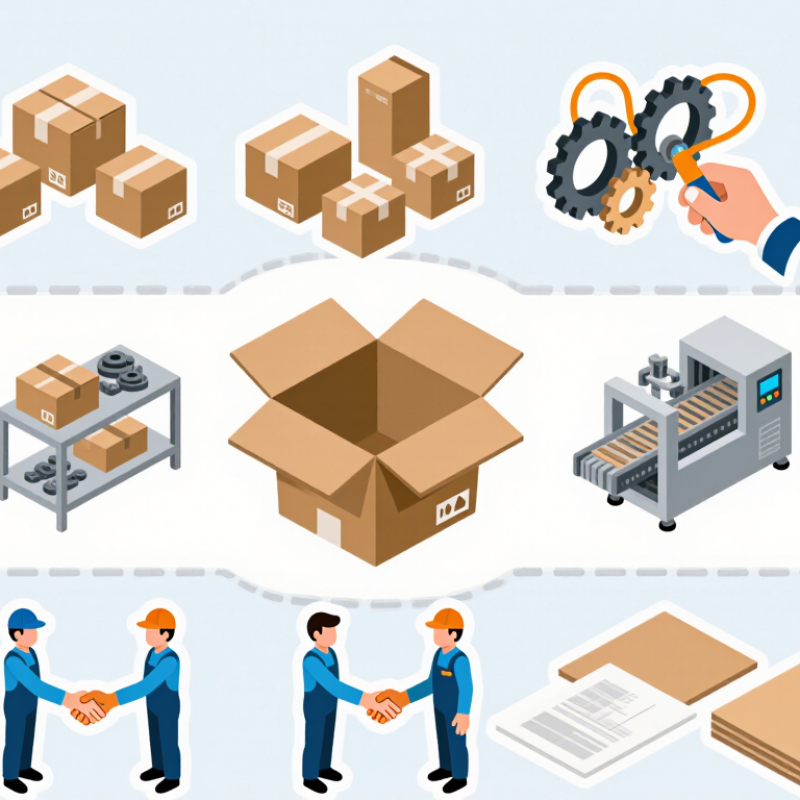
A machine should be chosen around the box you plan to make, not just its advertised speed. A 200 g/m² sheet may suit a small takeaway tray or light pastry carton, while a larger lidded meal box often needs more stiffness. But grammage alone does not predict performance. Fiber type, moisture, coatings, and grain direction can all change how a sheet feeds and folds.
Ask suppliers to run your actual board through feeding, creasing, forming, and gluing tests. Watch for curled blanks, cracked folds, and corners that spring open. Fit matters. A machine set up for thin stock may struggle to pull heavier board consistently; excess pressure can also mark or crush the crease. Check the machine’s stated range, then confirm it with samples at the low and high ends, such as 200 and 400 g/m². Test both.
Box style matters just as much. A shallow open tray uses different crease patterns from a deep container with locking flaps, even when both use the same board grade. Bring dielines and finished-size samples when discussing tooling and changeover time. In practice, a heavier sheet can feel safer, yet it may slow feeding or require more forming pressure. That trade-off is easy to underestimate. Record rejects and fold quality during a realistic run, not only during a brief demonstration.

A paper food box machine may be rated at 80 boxes per minute, but that figure means little unless it applies to your required box size. A small, shallow tray can run faster than a deep takeaway box with multiple folds. Check the rated output for the exact dimensions and design you plan to produce. That number matters. Ask whether the stated rate assumes a particular paper weight, coating, or feeding setup.
Treat the rating as a starting point, not a daily promise. Paper curl, blank alignment, glue application, and operator adjustments can all slow production. Real production differs. Request a trial using your own box blanks or an agreed equivalent. Run it long enough to reveal minor jams, then count acceptable finished boxes—not just machine cycles—over a timed period. A short demonstration can look impressive, yet hide interruptions.
Compare the expected good-box rate with your shift target and allow room for setup, cleaning, and size changes. If you need several box sizes, ask how long each changeover takes and whether tooling must be replaced. Record the trial’s box dimensions, material, run time, stoppages, and rejected pieces. The result may be lower than the headline rating. That is useful information, even if it complicates the purchase decision.
A paper food box machine shapes packaging, but it does not make the box compliant by itself. Under FDA 21 CFR 176.170, paper and paperboard used with aqueous or fatty foods must meet requirements for the intended conditions of use. Check whether the finished box suits the food, temperature, and contact time. A dry pastry and a hot, oily meal are not the same test.
For EU sales, Regulation 1935/2004 sets general rules for materials that contact food, including safety and traceability requirements. Paper can look clean. That proves little. Ask for specifications and supporting documents for the paper, coatings, inks, and adhesives, then confirm which tests apply in your target market. Some paper requirements may also depend on national rules. Do not treat a supplier’s general statement as proof for every box design.
When comparing machines, inspect glue placement and forming consistency. Run samples using the actual packaging materials, then check seams, odor, and visible transfer after realistic food-contact conditions. Keep batch records. A neat sample is reassuring, but it can hide variation across a full production run. Testing takes time, and the right test plan may need specialist review.
| Tip | What to Check | Practical Selection Guidance | Evidence to Request |
|---|---|---|---|
| 01 | Food-contact compliance | Confirm that the intended paperboard, coatings, inks, adhesives, and other food-contact components are suitable for the specific food type and conditions of use. Check FDA 21 CFR 176.170 where applicable, and the EU framework requirements in Regulation (EC) No 1935/2004 for EU-market use. | Material specifications, supplier declarations, applicable test reports, and a clear description of the intended food types, contact conditions, and market. |
| 02 | Box size and forming range | Match the machine’s stated forming range to the box dimensions you actually need. Confirm whether dimensions refer to the flat blank, internal box dimensions, or finished external dimensions. | Machine drawings, sample boxes, and a written specification of supported blank and finished-box dimensions. |
| 03 | Paperboard and coating compatibility | Check the permitted board grammage, thickness, stiffness, and coating type. Grease-resistant or moisture-resistant treatments can affect folding, sealing, and forming performance. | Documented material range and successful forming trials using the intended paperboard construction. |
| 04 | Box design and forming method | Verify that the machine supports the required box style, such as a folding carton or a formed container, and that its tooling matches the blank layout and closure design. | Approved sample, tooling layout, and confirmation that the proposed machine can produce the specified design. |
| 05 | Output rate and production conditions | Compare rated output with the required production volume. Ask how the stated rate changes with box size, board properties, operator intervention, and stoppages. | Acceptance-test results using the intended box and material, with the test conditions and output rate recorded. |
| 06 | Sealing and closure consistency | Assess whether the machine produces repeatable folds and closures. For glued designs, confirm adhesive application control and compatibility with the packaging construction. | Inspection criteria and samples checked for closure, alignment, adhesive placement, and visible defects. |
| 07 | Changeover and tooling | Consider how easily operators can switch between box sizes or designs. Check the time, tools, adjustments, and replacement parts required for a changeover. | Changeover procedure, tooling list, and a demonstration using two representative box formats where possible. |
| 08 | Hygienic design and cleanability | Inspect product-area surfaces, guards, access points, and dust-management provisions. The machine should support the facility’s documented cleaning and contamination-control procedures. | Cleaning instructions, maintenance access details, and a review of the machine against the site’s hygiene requirements. |
| 09 | Inspection and traceability support | Look for practical ways to identify production runs and investigate defects, such as recording material lots, machine settings, inspection results, and maintenance events. | Available records or system functions for production parameters, material-lot identification, and quality checks. |
| 10 | Service, safety, and lifecycle cost | Review guarding, emergency stops, operator training, spare-parts availability, maintenance needs, energy use, and support arrangements. Compare total operating cost rather than purchase price alone. | Risk and safety documentation, maintenance schedule, recommended spare-parts list, training plan, and warranty terms. |
Compliance note: FDA 21 CFR 176.170 addresses components of paper and paperboard in contact with aqueous and fatty foods under specified conditions of use; it is not a blanket approval of a packaging machine or every paperboard construction. Regulation (EC) No 1935/2004 sets general EU requirements for food-contact materials, including that they must not transfer constituents to food in amounts that could endanger health, cause an unacceptable change in food composition, or impair its organoleptic characteristics. Verify the applicable requirements for the material, food, use conditions, and destination market; machine selection alone does not establish compliance.
When evaluating a paper food box machine, ask how its hazards are identified, not just whether it has guards. ISO 12100 offers a useful risk-assessment framework: identify hazards, estimate and evaluate risks, then reduce them. Look at the machine during feeding, forming, cutting, cleaning, and maintenance. Pinch points near rollers can be easy to overlook. Small details matter.
Ask for a hazard assessment that matches the machine’s actual configuration. A guard shown in a brochure may not protect an operator reaching across a loading area. Check access doors, interlocks, emergency stops, and procedures for clearing jams. Test these with trained staff, using realistic tasks and safe conditions. A stop button is not a substitute for preventing access to dangerous movement.
Risk reduction should begin with safer design, followed by suitable guards and clear instructions. Review how operators isolate energy before maintenance, and whether cleaning requires reaching near blades or heated parts. Documentation helps, but it can miss workarounds that develop on busy shifts. Watch the machine run; ask operators what feels awkward. No assessment stays perfect when equipment or tasks change, so record concerns and revisit them after modifications.
A paper food box machine should be judged by usable output, not its advertised speed. Track scrap as a percentage of sheets fed, then separate startup rejects from ongoing defects. A skewed feeder or blunt die can quietly turn good board into trim waste. The U.S. EPA’s 2018 materials report found that 68.2% of paper and paperboard was recycled. That is not a machine scrap benchmark, but it shows why material losses deserve close attention. Ask suppliers to run your board grade and box design, then record rejects across a full production shift.
Measure electricity per thousand accepted boxes, not per hour; fast output can hide high energy use. The U.S. Department of Energy’s motor-systems sourcebook estimates motor-driven systems use about 64% of industrial electricity. Check idle draw, compressor demand, and the effect of stop-start cycles. Small differences matter. Time changeovers with an operator switching between actual jobs, including die changes, settings, and first-piece approval. A short demonstration may miss the slow part. Then test again. Compare annual service costs using quoted labor rates, routine parts, response times, and the cost of planned downtime. Keep the assumptions visible. I would not trust a low service estimate without a parts list; it is an easy detail to overlook.
Compare scrap rates, energy use, changeover time, and estimated annual service costs across three example machine configurations.
How to read this chart: Each metric uses its own vertical scale and unit, so compare each line across configurations—not between different lines. Figures are illustrative planning estimates, not industry averages; request comparable production-trial and service data from suppliers before purchasing.
This content is restricted to site members. If you are an existing user, please log in. New users may register … LEARN MORE “Lighting Power & Control-Signal Cable”
We are here to help. You can contact us or create an account online to have access to special products, technical specifications and our new online quote tool.
ELECTRO CABLES
9 Riverside Drive
P.O. Box 276
Trenton, Ontario
CANADA K8V 5R5
N.A. Toll Free: 888-ELECTRO
(1-888-353-2876)
World: 613-394-4896
Fax: 613-394-4101
Email: sale@machinecables.com
We manufacture cables that are certified by the Canadian Standards Association (CSA), listed by Underwriters Laboratories and/or listed by Intertek (ETL).
Our quality management system is registered to ISO 9001: 2015. Our team is dedicated to consistently providing quality service and products to our customers.

© 2025 ELECTRO CABLES • SITE BY SNAP 360•