How to Choose the Best Zirconium Ring in 2026?
Choosing a Zirconium Ring in 2026 means looking beyond a dramatic black finish. The right choice should suit your hand, daily routine, and expectations for care. Zirconium is used in jewelry for its distinctive appearance and corrosion resistance, but “zirconium” alone does not describe every ring’s construction. Ask how the metal is finished, whether the surface is oxidized, and what the maker recommends if it becomes scratched. Small details matter.
Reliable sources help, but they need context. The USGS Mineral Commodity Summaries 2025 discusses zirconium mineral supply; it does not grade finished rings or verify a retailer’s claims. Commercial market reports, including Grand View Research’s zirconium market analysis, describe industry trends rather than comfort, fit, or durability on your finger. That distinction is easy to miss. A growing market is not proof of a better ring.
For a practical comparison, check the sizing options, inner profile, finish, maker’s specifications, warranty, and resizing or return policy. Look closely at the product photographs: a matte black surface feels visually different from a polished one, especially beside a watch or wedding band. If possible, try a sample ring before ordering. A product page can be incomplete, and I would not treat confident marketing language as independent evidence. This guide focuses on the questions that make a Zirconium Ring easier to assess, so your decision rests on verifiable details—not just color or price.
Understanding Zirconium and Its Properties in Rings
Zirconium is a metal, not cubic zirconia, the gemstone-like material often used in jewelry. The Royal Society of Chemistry lists zirconium’s density at about 6.52 grams per cubic centimeter and its melting point at 1,855°C. That high melting point sounds impressive, but it does not mean a ring cannot scratch. Everyday wear still matters.
Zirconium resists corrosion and forms a protective oxide layer when exposed to air. Black zirconium rings get their color from a deliberately grown surface oxide; the dark appearance is not necessarily present throughout the metal. A sharp impact may mark or damage that finish, so inspect the ring under bright light and ask how the maker handles refinishing. The U.S. Geological Survey’s Mineral Commodity Summaries 2025 tracks zirconium mineral concentrates as an industrial commodity, a useful reminder that ring material begins in a broader metals supply chain—not as a ready-made jewelry alloy.
Fit matters, too. Zirconium is relatively dense, so compare the ring’s width and thickness with a similar ring before choosing. Ask for the exact material grade and care guidance; “zirconium” alone does not explain every manufacturing or finish detail. I would not assume every dark ring wears alike. That needs checking.
How to Choose the Best Zirconium Ring in 2026
Understanding zirconium’s density can help you compare how heavy a ring may feel against other metals.
Zirconium has a density of about 6.52 g/cm³—heavier than titanium but lighter than gold or platinum. Density is a guide to material weight, not a measure of scratch resistance or comfort. Ring alloys and finishes can differ from pure-metal values.
Defining Your Needs for Style, Comfort, and Daily Wear
How to Choose the Best Zirconium Ring in 2026?
Defining Your Needs for Style, Comfort, and Daily Wear
Start with the look you will still enjoy on an ordinary Tuesday. Zirconium rings may have a natural metallic finish or a dark, oxidized surface. Black zirconium can look striking, but hard abrasion may reveal lighter material beneath the dark oxide layer. That matters. Ask how the finish is made and what care it needs. I would not treat “scratch-resistant” as “scratch-proof”; that distinction is easy to overlook.
Comfort depends on more than the ring’s weight. Compare narrow and wide bands, and notice whether the inside edge feels smooth against your finger. A slightly rounded interior may feel better during typing or gripping a steering wheel. Fit is personal. Hands can swell with heat, so try a ring later in the day if possible. For daily wear, consider contact with weights, tools, or rough surfaces, and remove the ring when those activities could cause damage. Zirconium is corrosion-resistant, but that does not make every finish immune to wear. Sizing options may also be limited, so confirm them with a qualified jeweler before buying. I might favor a bold finish at first, then choose a simpler one after considering my routine. The right choice is the one you can wear comfortably, not just admire in a display case.
Comparing Zirconium Colors, Finishes, and Designs
How to Choose the Best Zirconium Ring in 2026?
Comparing Zirconium Colors, Finishes, and Designs
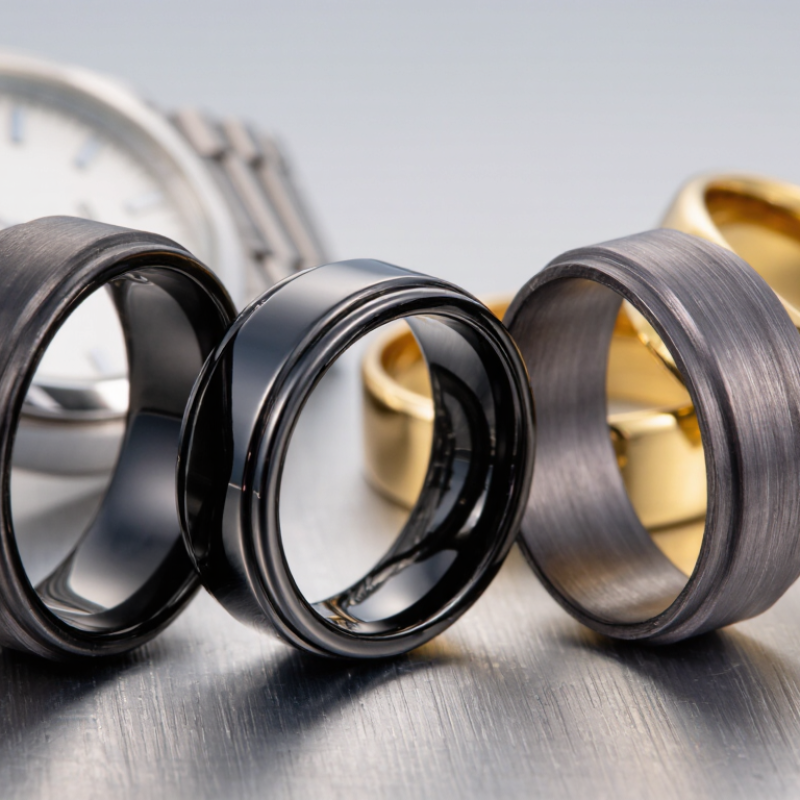
Zirconium rings usually come in natural gray or treated black. Gray has a soft, metallic look that suits brushed or polished finishes. Black creates stronger contrast, especially beside a silver-toned inlay. A glossy finish catches light, while a matte or brushed surface feels more understated. It may also show fewer small smudges. Black coatings can wear or mark with hard impacts, so ask how the finish is made and cared for. Details vary.
Design affects daily comfort as much as appearance. A narrow band feels lighter, while a wider ring can feel snugger across the finger. Rounded inner edges may help a ring slide on more comfortably. Inlays add visual contrast, but seams and materials can change cleaning needs. Zirconium rings may be difficult to resize, so confirm sizing before ordering. It is an easy detail to overlook.
Tips: Compare finishes in natural daylight, not only under shop lighting. Check the ring’s width and inner profile against a ring you already wear. Ask about finish care and sizing options. I would choose a design for ordinary days, not just photographs. A striking finish can still feel too bold after a week.
Evaluating Ring Quality, Sizing, and Seller Standards
A zirconium ring can look flawless in a product photo and still feel wrong after a full day. Check the seller’s material description: solid zirconium, coated metal, and black-oxidized zirconium are not interchangeable. Ask for the ring’s stated width, thickness, finish, and care instructions. Ask for proof. A clear specification sheet is more useful than a vague “scratch-proof” claim.
Check the fit before you order.
Sizing deserves a real check. Measure a ring you already wear on the same finger, then compare its inner diameter with the seller’s chart. Fingers can swell in heat, so test the fit at a comfortable time of day. Slight movement is normal; painful pressure is not.
The USGS Mineral Commodity Summaries 2025 estimates about 1.5 million metric tons of zirconium mineral concentrate production worldwide in 2024. That figure describes raw industrial material, not jewelry-grade rings, so it cannot verify a seller’s product claims. Request details about composition and finish instead.
Seller standards matter after checkout, too. The National Retail Federation’s 2024 Retail Returns Landscape estimated a 16.9% return rate across retail, not jewelry specifically. Still, it is a useful reminder to read return windows and resizing terms before ordering. Check whether the ring can be exchanged after wear, and whether polishing or surface marks affect eligibility. I would not rely on a “hypoallergenic” label alone; ask what the ring is made from and how the finish is applied. A careful seller should answer plainly.
Matching Your Final Choice to Your Budget and Care Needs
Your budget should cover more than the ring’s listed price. Compare the metal, finish, comfort, and return policy before paying extra for decorative details. Black zirconium gets its color from a treated surface, and deep wear may reveal lighter metal underneath. Ask what the warranty covers, especially for finish damage. Small details matter. A ring that fits well and suits daily routines may be better value than a heavier design with features you rarely notice.
Care needs affect the real cost, too. Zirconium is durable, but no ring is immune to scratches or impact. Wash it with mild soap and water, then dry it with a soft cloth. Skip abrasive cleaners, which can mark the finish. If you work with tools or lift heavy weights, taking the ring off may help prevent damage. It can feel inconvenient; that is worth considering honestly. Also ask whether the ring can be resized, since many zirconium designs cannot be adjusted like traditional precious-metal rings. A clear care guide and realistic warranty terms are useful signs of a thoughtful purchase.