A partner you can trust
Choosing the right Chemical IBC Tank is a safety decision, not merely a purchasing decision. These containers often hold corrosive acids, solvents, additives, and sensitive liquid ingredients. A failed valve can turn a controlled transfer into a costly spill. That detail matters.
Grand View Research estimates that the global intermediate bulk container market was valued at approximately USD 17.5 billion in 2023. Its report also projects continued growth through 2030, driven by industrial chemicals, food processing, and pharmaceutical logistics. This expansion increases product choice, but it can also encourage rushed comparisons. The cheapest tank may create higher cleaning, leakage, or disposal costs later.
A reliable selection process should begin with chemical compatibility. Review the Safety Data Sheet, concentration, temperature range, density, and storage duration. Polyethylene tanks suit many liquids, while stainless steel options may provide stronger resistance, heat tolerance, and cleaning performance. However, material names alone are not enough. Liner construction, gasket composition, valve design, and weld quality can change the outcome.
Transport requirements also deserve careful attention. The UN Recommendations on the Transport of Dangerous Goods and ISO 16103 provide important guidance for approved IBC packaging and reusable plastic IBCs. Check the tank’s UN marking, certification scope, stacking limits, filling ratio, and inspection history. Ask for traceable test records.
A spreadsheet cannot capture every hazard.
Real operating conditions matter. Forklift impact, outdoor exposure, repeated washing, and awkward discharge points may reveal weaknesses that specifications hide. Consultation with a qualified packaging engineer or chemical safety professional strengthens the decision. Some choices remain uncertain. That is precisely why every Chemical IBC Tank should be reviewed against the actual chemical, handling process, and transport route before approval.
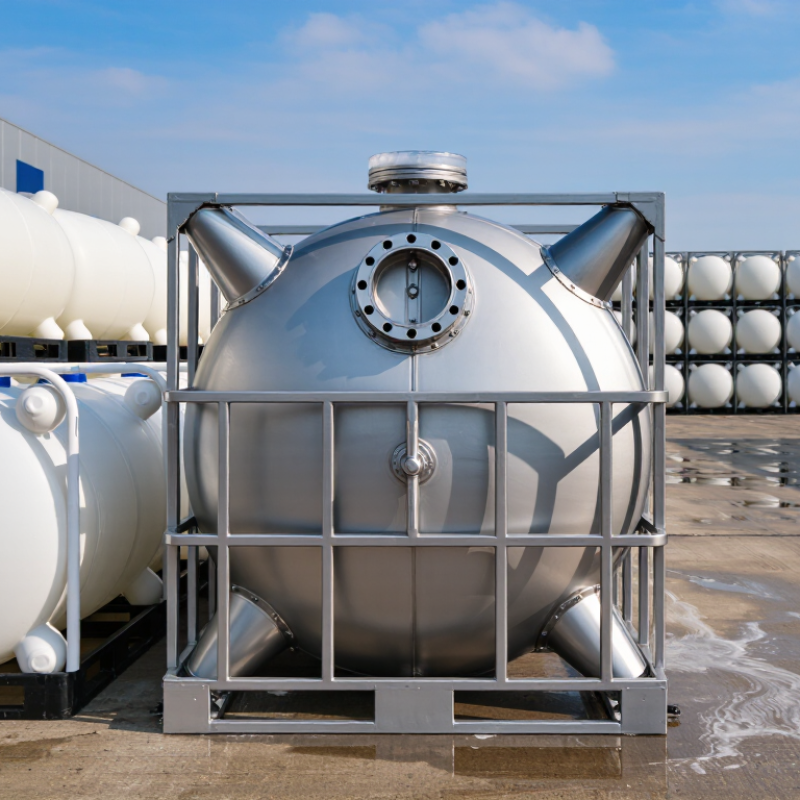
Choosing the right chemical IBC tank starts with the liquid, not the container price. An IBC tank usually combines a durable inner bottle, a protective metal cage, and a pallet base. High-density polyethylene is common because it resists many industrial liquids. However, resistance depends on concentration, temperature, exposure time, and additives. Always check a compatibility chart and request written confirmation from the tank supplier.
I have found that application details often reveal problems early. Water-treatment chemicals may require corrosion-resistant fittings and secure outdoor storage. Cleaning solutions need reliable valves, tight caps, and easy inspection points. Coatings and liquid additives may need controlled temperature and gentle handling to prevent separation. A tank for short-distance transfer can differ from one used for repeated filling, warehouse storage, or road transport. Small details matter.
Before selecting a tank, inspect the outlet design, gasket material, lifting points, and label area. Confirm the working capacity, not only the advertised volume. Leave expansion space when temperature changes are possible. A practical inspection should check cracks, dents, discoloration, valve damage, and unclear markings. Do not reuse a tank automatically. A container that held one chemical may react badly with another, even when it looks clean. This is where experience can be imperfect; field assumptions are not a substitute for compatibility data, safety documentation, and trained handling procedures.

How to Choose the Right Chemical IBC Tank?
Matching tank materials to chemicals requires more than checking a compatibility chart. Chemical concentration, temperature, storage time, and agitation can change the result. A material that performs well at room temperature may weaken under heat. It may also absorb the chemical slowly.
High-density polyethylene suits many acids, alkalis, and water-based chemicals. However, certain solvents can cause swelling, softening, or stress cracking. Fluoropolymer liners can provide stronger resistance for aggressive substances. Stainless steel may handle some chemicals well, but chlorides can create corrosion risks. Material selection must include the tank body, outlet valves, seals, gaskets, and protective fittings.
Every component matters. Especially the gasket.
Review the chemical’s safety data and technical specifications before choosing a tank. Check concentration ranges, maximum operating temperature, and expected contact duration. Ask the tank supplier for documented compatibility information, not general promises. For unfamiliar mixtures, a small-scale immersion test can reveal swelling, discoloration, or brittleness. This step takes time, but replacing a failed tank costs more.
A practical review should also consider cleaning procedures and outdoor exposure. Ultraviolet light, repeated filling, and mechanical handling may reduce service life. Compatibility charts are useful, but they are not final answers. They often simplify real conditions. That limitation deserves attention. A careful decision connects verified chemical data with the actual storage environment.
| Chemical or Chemical Group | Typical Concentration / Condition | HDPE | Polypropylene (PP) | PVDF | 316L Stainless Steel | Carbon Steel | Recommended Selection Notes |
|---|---|---|---|---|---|---|---|
| Hydrochloric Acid | Up to approximately 35%, ambient temperature | Excellent | Excellent | Excellent | Poor | Poor | Use a fluoropolymer-lined valve and compatible gasket. Avoid stainless steel and carbon steel for direct contact. |
| Sulfuric Acid | Up to approximately 50%, ambient temperature | Good | Good | Excellent | Poor | Poor | Compatibility changes significantly with concentration and temperature. Confirm the exact grade before use. |
| Nitric Acid | Dilute solutions, ambient temperature | Good | Good | Excellent | Conditional | Poor | Strong oxidizing conditions require careful review. PVDF is often preferred for demanding service. |
| Sodium Hydroxide | Up to approximately 50%, ambient temperature | Excellent | Excellent | Excellent | Conditional | Conditional | HDPE and PP are commonly selected. Hot, concentrated caustic service requires a separate engineering check. |
| Sodium Hypochlorite | Commercial bleach solutions, ambient temperature | Excellent | Excellent | Excellent | Poor | Poor | Chloride-containing oxidants can cause pitting and stress corrosion in metals. Prefer a polyethylene tank and compatible non-metallic fittings. |
| Hydrogen Peroxide | Up to approximately 35%, ambient temperature | Good | Good | Excellent | Conditional | Poor | Use clean, passivated equipment. Avoid contamination from iron, copper, brass, and other catalytic metals. |
| Acetic Acid | Dilute to glacial service, ambient temperature | Good | Good | Excellent | Conditional | Poor | Stainless steel performance improves in some dilute services but can be inadequate in hot or concentrated acid. |
| Ethanol and Isopropanol | High-purity liquids, ambient temperature | Good | Conditional | Excellent | Excellent | Conditional | Check the tank design for flammable-liquid service, grounding, ventilation, and applicable transport regulations. |
| Toluene and Xylene | Aromatic solvents, ambient temperature | Poor | Poor | Good | Excellent | Good | Aromatic solvents may swell or permeate polyethylene and polypropylene. Metal or fluoropolymer-lined construction is generally safer. |
| Diesel Fuel and Mineral Oils | Ambient temperature | Conditional | Poor | Excellent | Excellent | Good | Use only a polyethylene grade specifically approved for hydrocarbons; inspect for swelling, permeation, and seal compatibility. |
The ratings are general guidance for common industrial conditions and are not a substitute for chemical-specific compatibility testing or approval by a qualified engineer. Actual performance may vary with formulation, impurities, temperature, pressure, stress, and contact time.
Selecting a chemical IBC tank starts with capacity, not price. A 1,000-litre tank may reduce handling and transport costs. However, its filled weight can exceed one metric tonne. Check forklift limits, floor loading, aisle width, and delivery access before ordering. Grand View Research’s 2024 market assessment identifies 1,000-litre IBCs as a dominant commercial format, but market popularity does not prove process suitability.
Material compatibility needs practical testing. Compare the chemical’s concentration, temperature, density, and storage duration with the tank liner and gasket materials. ISO 16103:2021 and the UN Recommendations on the Transport of Dangerous Goods reference performance tests, including stacking, leakproofness, and drop resistance. A tank can pass a specification sheet and still fail after repeated cleaning. That detail deserves attention. Design also matters: choose top or bottom discharge based on viscosity, grounding needs, and cleaning access. Avoid fittings that create hidden residue zones.
Tips: Ask the supplier for compatibility evidence, test certificates, and a documented inspection history. Confirm the UN marking when transport regulations apply. Leave headspace for thermal expansion. Do not assume identical chemicals behave identically; additives can change seal performance. A simple site trial may reveal awkward valve reach, unstable stacking, or slow drainage before the full purchase.
How to Choose the Right Chemical IBC Tank?
How to Evaluate Handling, Storage, and Transportation Conditions
Handling conditions should guide your IBC tank choice. Check the liquid’s density, viscosity, temperature, and chemical compatibility against the tank materials. A 1,000-liter container may seem practical, but its filled weight can exceed one metric ton. Confirm that forklifts, ramps, floors, and loading bays can safely support it. Use clear labels and secure closures. A tank can look sound while its valve or gasket is already weakening.
Storage conditions deserve equal attention. Keep the IBC on a level, stable surface with suitable secondary containment. Protect it from direct sunlight, freezing temperatures, heat sources, and impact from moving equipment. Ventilation matters when vapors may accumulate. Review the safety data sheet and follow the supplier’s storage limits. In practice, operators sometimes focus on the container and overlook the surrounding warehouse. That mistake can become expensive.
Tips: Inspect the tank, valve, frame, and pallet before every move. Check for cracks, swelling, stains, or loose fittings. During transportation, prevent shifting with approved restraints, keep closures upright, and avoid stacking unless the design allows it. Verify local transport requirements before shipment. Do not assume a previously used IBC remains compatible with a new chemical. Record inspection dates, fill levels, and temperature exposure. Short records help.
Handling, storage, and transportation reference values for a commonly used 1,000 L chemical IBC configuration.
Reference values shown are commonly used planning figures: a 1,000 L nominal IBC capacity, an approximately 1,200 × 1,000 mm footprint, a 1.2 m UN drop-test height for applicable Packing Groups II and III, and a 24-hour UN stacking test. Actual limits depend on the chemical, IBC design, approval marking, and applicable regulations.
Choosing the right chemical IBC tank starts with evidence, not appearance.
Ask for the tank’s standard, certification number, material grade, and manufacturing date. For regulated transport, check the required UN marking and confirm it matches the chemical’s density, vapor pressure, and packing group. A certificate should be traceable to an accredited inspection body, not a loose PDF. Verify pressure testing, leak testing, and closure performance with current records. Standards differ by region. Confirm them with a competent compliance professional.
Chemical compatibility still needs a practical review. Ask whether the inner bottle, gasket, valve, and cage tolerate the exact substance and temperature range.
I once treated a familiar chemical as low-risk; gasket data proved otherwise. A useful reminder.
Maintenance is part of selection, not an afterthought.
Request an inspection schedule covering valves, seals, cage welds, labels, and forklift pockets. Look for dents, whitening, swelling, rust, or chemical residue during every receiving check. Keep cleaning records and document repairs with dates, parts, and inspector names.
If a tank cannot be cleaned safely, its low purchase price becomes irrelevant. Total cost includes purchase, delivery, storage, cleaning, testing, replacement parts, and downtime. Compare expected service life, not just the quotation.
A reusable tank may reduce waste, yet repeated handling can increase inspection and logistics costs. Calculate cost per safe use across realistic cycles.
Leave room for mistakes. A damaged valve, delayed certificate, or failed compatibility check can stop a shipment and disrupt production.
This content is restricted to site members. If you are an existing user, please log in. New users may register … LEARN MORE “Lighting Power & Control-Signal Cable”
We are here to help. You can contact us or create an account online to have access to special products, technical specifications and our new online quote tool.
ELECTRO CABLES
9 Riverside Drive
P.O. Box 276
Trenton, Ontario
CANADA K8V 5R5
N.A. Toll Free: 888-ELECTRO
(1-888-353-2876)
World: 613-394-4896
Fax: 613-394-4101
Email: sale@machinecables.com
We manufacture cables that are certified by the Canadian Standards Association (CSA), listed by Underwriters Laboratories and/or listed by Intertek (ETL).
Our quality management system is registered to ISO 9001: 2015. Our team is dedicated to consistently providing quality service and products to our customers.
© 2025 ELECTRO CABLES • SITE BY SNAP 360•