How to Choose a Portable Ring Light?
A Portable Ring Light can make a face look clearer on a video call, but brightness alone does not guarantee flattering light. Size, distance, color temperature, and diffusion all affect the result. Adobe’s 2022 Future of Creativity study estimated that 165 million people joined the creator economy worldwide between 2020 and 2022, bringing its total to 303 million. The study measures creator growth, not ring-light sales; it does, however, show why practical tools for filming and photography matter to a growing audience.
Choosing well means matching the light to real use. A traveler may value a folding frame and USB power, while a makeup artist may need adjustable color settings and a stable stand. Check the clamp or tripod, brightness controls, battery life, and whether the light leaves sharp reflections in glasses. If possible, test it at the distance you expect to use. A small light can feel harsh. It happens.
E-E-A-T also means being careful with claims. Market estimates differ, and a ring light’s advertised brightness may not describe how it performs on your desk. No verifiable, attributable quotation from a named Portable Ring Light industry expert was provided for this introduction. Rather than invent a quote, this guide focuses on measurable features and practical checks. Its recommendations should be weighed against your camera, room, and budget. A little trial and error is normal.
Define Your Lighting Needs and Compare Illuminance in Lux at a Set Distance
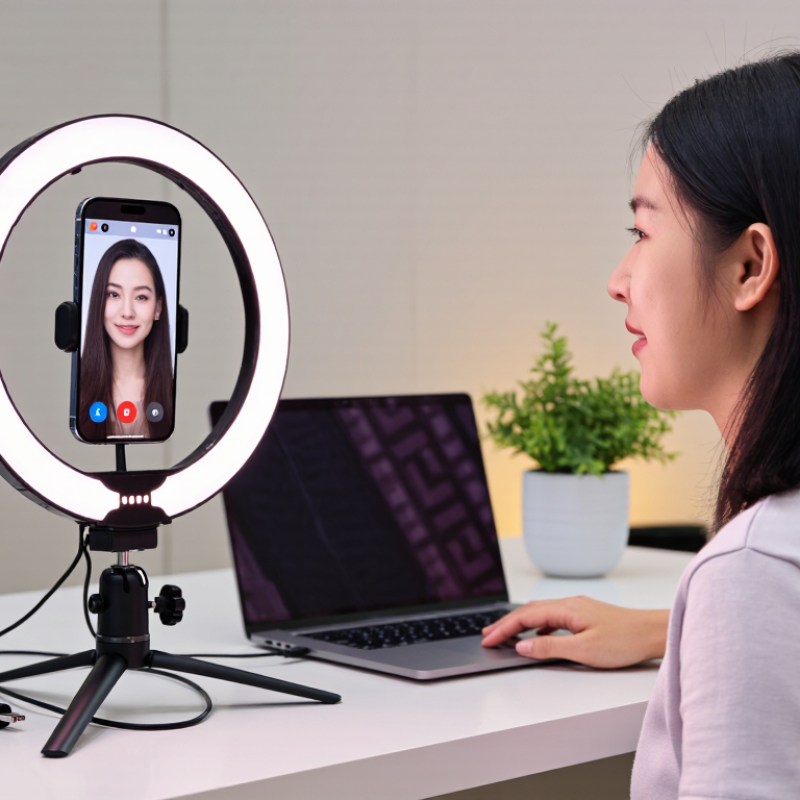
A portable ring light should match the work you actually do. For video calls, soft light on your face may matter more than a strong beam across a room. For close-up crafts or product photos, you may need brighter, more even illumination. Consider where you will use it, how far it will sit from your face, and whether you can plug it in. Small details count.
Compare illuminance in lux at a stated distance, such as 500 lux at 50 centimeters. A lux figure without distance is difficult to judge because light levels drop as the lamp moves farther away. If two lights list measurements, check that both use the same distance and similar test conditions. A light meter can help you compare them at home. Keep it level with your subject, then repeat the reading in the same room. Room lighting can skew the result.
Numbers are useful, but they are not the whole picture. A high reading may feel harsh on bare skin, while a lower setting may look more natural through a diffuser. Try the light at your usual working distance, with the brightness you would actually use. Check for shadows under your eyes and reflections in glasses. I still find color and comfort harder to compare from specifications alone. Personal judgment matters.
Choose Ring Diameter, Weight, and Mounting for Your Setup
Ring diameter affects both coverage and portability. A compact 8- to 10-inch light can suit a phone camera on a desk, where the subject sits close. For a wider shot or greater distance, a larger ring may spread light more evenly across the face. Check the usable lighting area, not just the outside measurement; housings can make rings look bigger than their lit surface. Small is convenient. But it can leave hard shadows under the eyes.
Weight includes more than the light itself. Add the phone holder, cable, stand, and any battery you plan to carry. A light that feels fine in your hand may make a thin tabletop tripod wobble. I would check the stand’s stated load limit and test the setup at the height you expect to use. That detail is easy to overlook. It is also a little tedious.
Mounting should match where and how you film. A desk clamp saves space, while a floor stand gives more height but takes longer to pack. Check whether the phone holder fits your device and lets you switch between portrait and landscape orientation. USB power is handy near a desk, though a cable can tug at a lightweight stand. There is no perfect combination; even a stable setup may feel awkward to carry.
Check Color Accuracy: CRI (Ra) 90+ and TLCI 90+ for Video
A portable ring light should make faces look natural, not merely bright. Check its color accuracy ratings: CRI (Ra) 90+ and TLCI 90+ are useful targets for video. CRI estimates how faithfully a light shows colors compared with a reference source. TLCI is designed to assess how colors are likely to appear on camera. Both ratings can help keep skin tones and clothing from looking dull or oddly tinted.
Tips: Check the ratings in the product specifications, then test the light with your camera. Hold a red shirt or a familiar makeup shade near your face. Look for believable color, not just a pleasing preview on the light’s display.
Numbers need context. Camera settings, room lighting, and screen calibration can all change what you see. A high rating does not guarantee perfect results in every setup. I’ve found that mixed lighting can still add a green or orange cast, especially near windows or warm desk lamps. Try the ring light at your usual distance and brightness, and compare a short test clip before recording. Small differences matter. If the light has adjustable color temperature, check that skin still looks natural across its range; the coolest setting may feel crisp but can make a face look pale.
Match the Color Temperature Range, Commonly 2700–6500 K, to Your Setting
How to Choose a Portable Ring Light?
Match the Color Temperature Range, Commonly 2700–6500 K, to Your Setting
A portable ring light with a 2700–6500 K range can adapt to warm rooms and cooler daylight. Around 2700–3200 K gives skin a warmer look under household lamps. A setting near 5000–6500 K can feel more neutral beside a bright window. These numbers describe color appearance, not brightness or color accuracy. Check whether the light changes smoothly or only offers a few fixed steps; that small detail affects how easily it blends with your room.
Tips: Match the light to the strongest nearby source, then check your face on camera. For a desk lit by a yellow lamp, try a warmer setting. Near a window, test a cooler one. Move the light slightly if your skin looks washed out. Keep the phone’s automatic white balance in mind, too; it may shift colors while you adjust the lamp.
Treat the listed range as a starting point, not a promise of perfect results. Some compact lights may look uneven at their warmest or coolest settings. I would test a few temperatures using the same camera and background. Watch for gray-looking whites or orange skin. If your room has mixed lighting, turning off one competing lamp can help more than changing the ring light repeatedly.
Compare Dimming, Power Options, and Battery Runtime at Rated Brightness
When choosing a portable ring light, compare dimming range, power input, and runtime under the same conditions. A smooth dimmer helps when a face looks washed out near the window, while stepped settings can make small brightness changes frustrating. Check whether the listed brightness is measured at maximum output, and whether color temperature changes when you dim. They are not always independent controls.
Power options shape where the light works. USB-C can simplify charging, while a built-in battery avoids a cable during a quick video call. Compare battery capacity in watt-hours when available, not just milliamp-hours; the latter can hide differences in battery voltage. The U.S. Department of Energy’s Energy Saver guidance says LEDs use at least 75% less energy than incandescent lighting. That broad comparison is useful context, but it cannot predict a particular ring light’s runtime.
Treat runtime at rated brightness as the key figure. A light advertised for several hours may reach that number only at a low setting. Ask whether the test used maximum brightness, a fully charged battery, and continuous operation. Then compare the answer with your actual use: a bright desk setup drains power faster than a soft fill light. Small detail. Big difference. Real runtime can still vary with battery age and temperature, so leave a little margin.