How to Choose the Right Sealing Rings in 2026?
Choosing the right Sealing Rings in 2026 is not just a matter of matching a diameter. The ring must suit the fluid, temperature, pressure, movement, and groove where it will operate. A material that performs well in clean water may swell or harden when exposed to oil, cleaning chemicals, or repeated heat cycles. Even small installation details matter. A twisted ring or sharp groove edge can lead to early leakage.
Start with the equipment’s operating conditions, then check material compatibility and dimensional requirements against reliable manufacturer documentation. Consider whether the seal faces static pressure or repeated motion, and whether pressure changes quickly. Ask suppliers for current technical data, temperature limits, and test information relevant to your application. If the equipment is critical, consult a qualified sealing specialist and verify the choice through an appropriate test or controlled trial. Do not rely on a catalogue description alone. A neat datasheet can feel reassuring, but it cannot represent every operating cycle or installation mistake. That part deserves thought.
This guide explains the key factors behind a practical selection, including elastomer type, hardness, design, and maintenance needs. It also highlights common trade-offs: a lower purchase price may not mean lower lifetime cost, while a premium material is not automatically the best fit. Small differences matter. The right choice is the one supported by clear requirements, sound evidence, and careful checking—not guesswork.
Understanding Sealing Rings and Their Function
A sealing ring is a shaped component that helps prevent fluids or gases from escaping between joined surfaces. It usually works by compressing against a groove and creating continuous contact around the joint. In a static connection, such as a pipe fitting, the parts stay still. In a moving assembly, the ring must also tolerate friction and repeated movement. Its performance depends on more than the material. Groove shape, surface finish, pressure, and installation all matter.
Small details matter.
Choosing the right ring starts with its working conditions.
Check the temperature range, the fluid or gas involved, and the pressure the seal must withstand. Also consider whether the joint moves, vibrates, or faces frequent start-and-stop cycles. An elastomer that suits water may not suit oil or cleaning chemicals, so verify compatibility with reliable technical data.
Measure the groove carefully; a ring that is too loose may leak, while one that is over-compressed can wear or deform. In practice, selection is not always tidy: real equipment may see temperature swings or imperfect surfaces. Those conditions deserve attention, not guesswork.
Identifying Operating Conditions and Performance Requirements
A sealing ring should be selected for the real duty cycle, not just the fluid name. Record the fluid’s full composition, concentration, and cleaning agents; small changes can affect compatibility. Note normal and peak temperatures, including brief startup or shutdown spikes. Capture operating pressure, pressure reversals, shaft speed, vibration, and whether the seal may run dry. A quiet steady-state reading can hide the worst condition.
The U.S. Department of Energy’s Improving Pumping System Performance sourcebook estimates that pumping systems account for nearly 20% of global electricity use. That figure is a useful reminder: leakage and excess friction matter beyond the seal itself.
For each application, check the ring material against the fluid and temperature, then verify dimensions, squeeze, and extrusion gaps against the relevant design standard. Pressure pulses matter. So does the housing’s surface finish. A ring that fits on paper may still fail when a hot, low-viscosity fluid reaches it.
I would also record what is uncertain. Is the maximum temperature measured or assumed? Are chemical concentrations stable? These questions deserve another look. A catalog limit is not a complete design basis, and real equipment rarely behaves perfectly. Use documented operating data and inspection history where available, then specify acceptance checks for leakage, wear, and installation damage.
Comparing Ring Materials and Design Types
How to Choose the Right Sealing Rings in 2026?
Comparing Ring Materials and Design Types
Material choice starts with the fluid, temperature, and movement involved. Nitrile rubber often suits oil-based systems, while EPDM handles water and weather exposure well. Fluorocarbon materials tolerate many fuels and higher temperatures, but they are not universal solutions. Check chemical compatibility against the actual fluid and operating conditions. A seal that works in a warm test can harden or swell in service. Small details matter.
Design affects how a ring sits and moves. A standard O-ring is compact and works in many static joints and some moving applications. X-rings can reduce twisting in certain reciprocating assemblies, though groove dimensions still matter. Lip-style seals are designed to control fluid along a moving shaft. They may be unsuitable for a simple static joint. Measure the groove, consider pressure and motion, and confirm the manufacturer’s technical data. I have seen selection focus too much on material; fit is just as important.
Tips: Inspect the old ring for flattening, cracks, or swelling, but do not copy its size blindly. Record fluid, temperature, pressure, and movement before choosing. When conditions are uncertain, test a sample. Not always convenient, but worthwhile.
Checking Dimensions, Fit, and Equipment Compatibility
How to Choose the Right Sealing Rings in 2026?
Checking Dimensions, Fit, and Equipment Compatibility
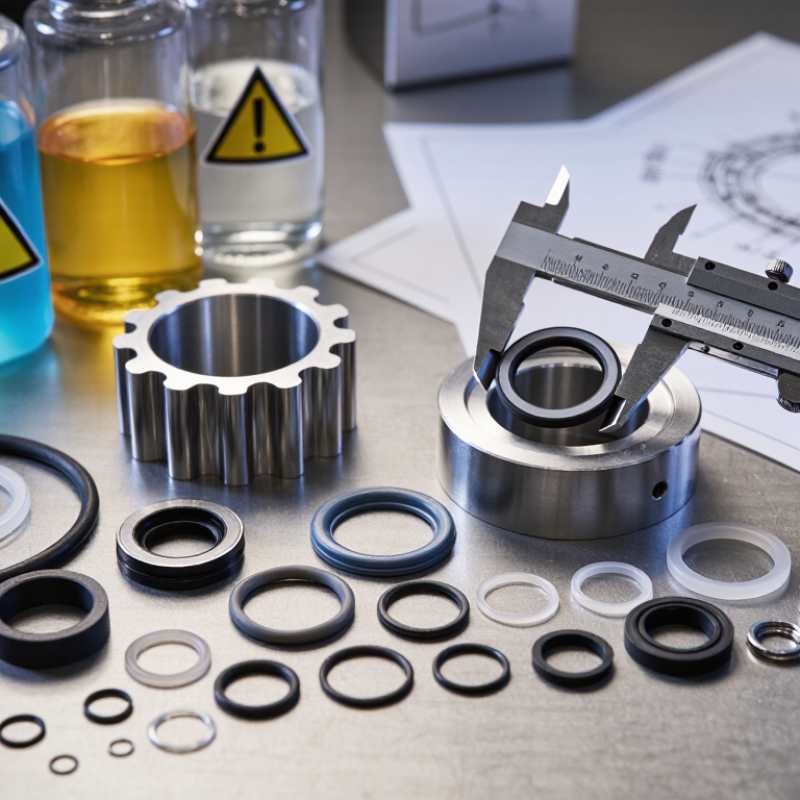
Choosing a sealing ring starts with measurement, not appearance. Check its inside diameter and cross-section, then compare them with the equipment groove and shaft or bore. Use calipers where possible, and confirm measurements against equipment drawings. A ring that looks close may twist, stretch, or leave too little compression. Tiny differences matter.
Fit also depends on operating conditions. Identify the fluid, temperature range, pressure, movement, and cleaning chemicals before choosing a material. Compatibility charts can help, but follow equipment documentation for final selection. Inspect the groove for scratches, burrs, corrosion, or trapped debris. Even the right ring can fail in a damaged seat. Avoid twisting or sharply stretching it during installation. A clean-looking fit can still leak.
Tips: Photograph the old ring beside a ruler before removal, but measure the groove separately. Use only a compatible lubricant. After assembly, perform a controlled leak check under normal operating conditions. If the old ring is flattened, its original dimensions may be misleading; measure the equipment, not just the worn seal.