How to Choose the Right Wire and Cable for Your Project?
Choosing the right wire & cable for your project is crucial. The right selection ensures safety and efficiency. With numerous options available, understanding them is essential. Different projects require specific wire & cable types, each with unique features.
Consider factors like voltage, current ratings, and environmental conditions. Each of these elements affects performance. For instance, outdoor projects need cables that resist weather damage. In contrast, indoor installations focus on flexibility and space.
It can be overwhelming to make the best choice. Manufacturers often provide extensive specifications. However, these details can be confusing. Take the time to research and ask experts when needed. Reflect on past experiences with wire & cable choices. This can guide you in making informed decisions.
Understanding Wire and Cable Types for Your Project Needs
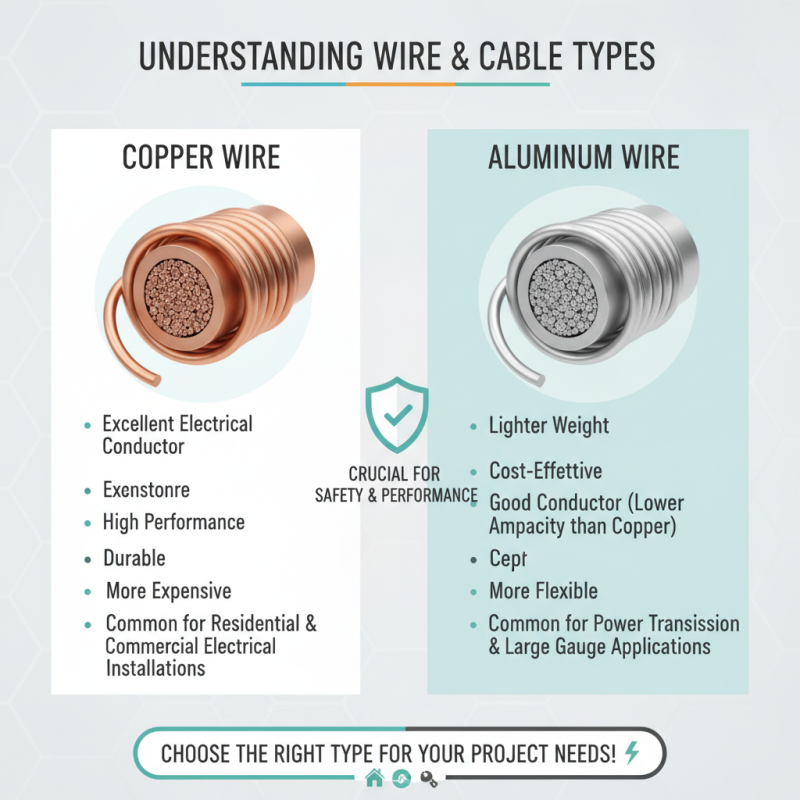
When embarking on a project, understanding wire and cable types is crucial. Different projects require different specifications. Whether it's for electrical installations or DIY projects, the right choice can affect performance and safety. Copper and aluminum wires are common options. Copper is an excellent conductor, while aluminum is lighter and more cost-effective.
Tips: Always check the wire gauge. A thicker wire can handle more current. Consider insulation materials as well. PVC is common but can melt under high temperatures. Teflon offers better thermal resistance but at a higher cost.
Choosing the right wire or cable also involves assessing the environment. Indoor and outdoor projects require different materials. For instance, outdoor cables are designed to withstand moisture and UV rays. Pay attention to certifications. Using certified products ensures safety and quality.
Tips: Look for signs of damage before installation. Frayed wires or cracked insulation can lead to failure. Don't ignore the labels; they provide valuable information. Always prioritize safety when working with electricity.
Key Factors to Consider When Selecting Wire and Cable
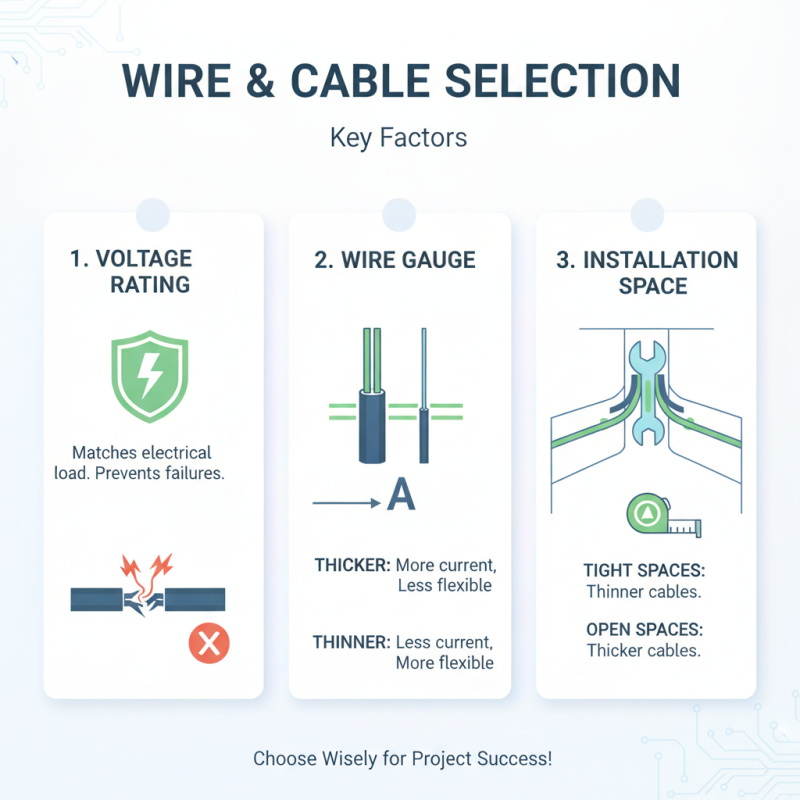
Choosing the right wire and cable is crucial for any project. Start by considering the wire's voltage rating. This determines how much electrical load it can handle. If you exceed this, failures may occur. Next, consider the wire gauge. Thicker wires carry more current but can be less flexible. Think about the installation space. For tight spaces, thinner cables might be necessary.
Temperature rating is another key factor. Wires can overheat if not rated for the project's environment. Check if insulation is suitable for your needs. This ensures safety and durability. Moreover, consider whether outdoor conditions might impact the chosen materials.
Conductors are also vital. Copper is a common choice, but aluminum is lighter and often cheaper. Reflect on your project’s specific requirements when making these choices. A miscalculation can lead to serious issues. Take the time to match the right materials with your actual needs for a successful outcome.
Evaluating Voltage and Current Requirements for Optimal Performance
When evaluating voltage and current requirements for your project, it's essential to assess the load your wire and cable will carry. According to the National Electrical Code (NEC), selecting the right wire gauge is crucial. For example, a 12 AWG wire can safely handle 20 amps at 120 volts. This rating is critical for preventing overheating and ensuring efficient performance.
Over and underestimating the voltage and current can lead to failures. If the wire gauge is too small, it may not handle the current, which can cause damage. Conversely, oversizing the wire can be costly and unnecessary. A report by the Institute of Electrical and Electronics Engineers (IEEE) emphasizes the importance of proper sizing to minimize energy losses.
Understanding the unique demands of your project is vital. Consider factors like distance and environmental conditions. For instance, longer runs require thicker wire to compensate for voltage drop. Inadequate knowledge in this area can lead to future complications, affecting overall system reliability. Balancing performance, safety, and cost will enhance your project's success.
How to Choose the Right Wire and Cable for Your Project? - Evaluating Voltage and Current Requirements for Optimal Performance
| Cable Type |
Voltage Rating (V) |
Current Rating (A) |
Wire Gauge (AWG) |
Application |
| Thhn/Thwn Wire |
600 |
15 |
14 |
Indoor/Outdoor Wiring |
| Romex Cable |
120 |
20 |
12 |
Residential Wiring |
| Low-Voltage Wire |
12 |
5 |
18 |
Landscape Lighting |
| Coaxial Cable |
75 |
N/A |
N/A |
Signal Transmission |
| SJOOW Cable |
300 |
20 |
12 |
Outdoor Power |
Assessing Environmental Conditions and Material Durability
When selecting wires and cables, assessing environmental conditions is crucial. Factors such as temperature, moisture, and exposure to chemicals can significantly impact durability. For example, the National Electrical Manufacturers Association (NEMA) states that over 30% of early cable failures stem from environmental factors. This emphasizes the need for materials suited to specific settings.
Material durability is equally important. Cables exposed to outdoor elements require robust insulation. The American Wire Gauge (AWG) standards guide the selection of suitable wire sizes for different applications. It’s vital to consider the tensile strength and resistance to abrasion of materials. Many cables cannot withstand extreme environments, leading to performance issues. A report by the International Electrotechnical Commission highlights that 20% of electrical failures are linked to inadequate material choices.
Moreover, keep in mind that not all cables perform equally under stress. Conducting thorough research and understanding the limitations of materials can prevent costly mistakes. Consulting technical data sheets and industry reports often reveals insights that may align with project needs. Decisions without this analysis can lead to unexpected failures, wasting both time and resources.
Identifying Compliance Standards and Safety Regulations
When selecting wire and cable for your project, compliance standards and safety regulations are crucial. These guidelines ensure that the materials used are not only effective but also safe for both users and the environment. Key standards include IEC, NEC, and UL, among others. Understanding these standards can be complex. Misinterpretation could lead to serious safety hazards.
In many cases, the right wire can vary depending on the application. For instance, residential wiring differs from industrial settings. Using the wrong type of wire could pose risks. It’s essential to consult available resources and seek expert advice if you're uncertain. For example, wires meant for outside use need specific insulation to withstand harsh weather.
Moreover, staying updated on the latest regulations is vital. Compliance can change frequently, reflecting advancements in technology and safety protocols. Regularly reviewing standards can prevent costly mistakes. Always double-check specifications to ensure alignment with your project's needs. Even experienced professionals make oversights. It’s not just about meeting the minimum requirements; prioritizing safety should be the goal.
Wire and Cable Compliance Standards by Type