A partner you can trust
Treatment plants turn invisible infrastructure into visible protection: clear water at the kitchen tap, cleaner rivers, and safer reuse. Yet “treatment plant” describes several distinct systems, not one standard design. A drinking-water plant removes particles and microbes from source water. A municipal wastewater plant treats sewage before discharge or reuse. Industrial facilities address process-specific contaminants, while desalination plants remove salts from seawater or brackish water.
The need is substantial. The WHO and UNICEF Joint Monitoring Programme reported that 2.2 billion people lacked safely managed drinking water in 2022; 3.5 billion lacked safely managed sanitation. These figures describe service gaps, not simply a shortage of buildings. A plant’s performance also depends on its source water, treatment stages, operators, and maintenance. The stakes are tangible.
Columbia environmental engineer Dr. Kartik Chandran is a leading wastewater-treatment researcher whose work explores recovering useful resources from wastewater. His research reflects a valuable principle: wastewater can be more than a disposal problem. This guide compares the top types of Treatment Plant, including drinking-water, municipal wastewater, industrial wastewater, desalination, and water-reuse facilities. It will explain what each plant treats, which core processes it uses, and where its limits matter. The equipment differs. No single system fits every community or industry. The best choice depends on water quality, local needs, and the intended end use.
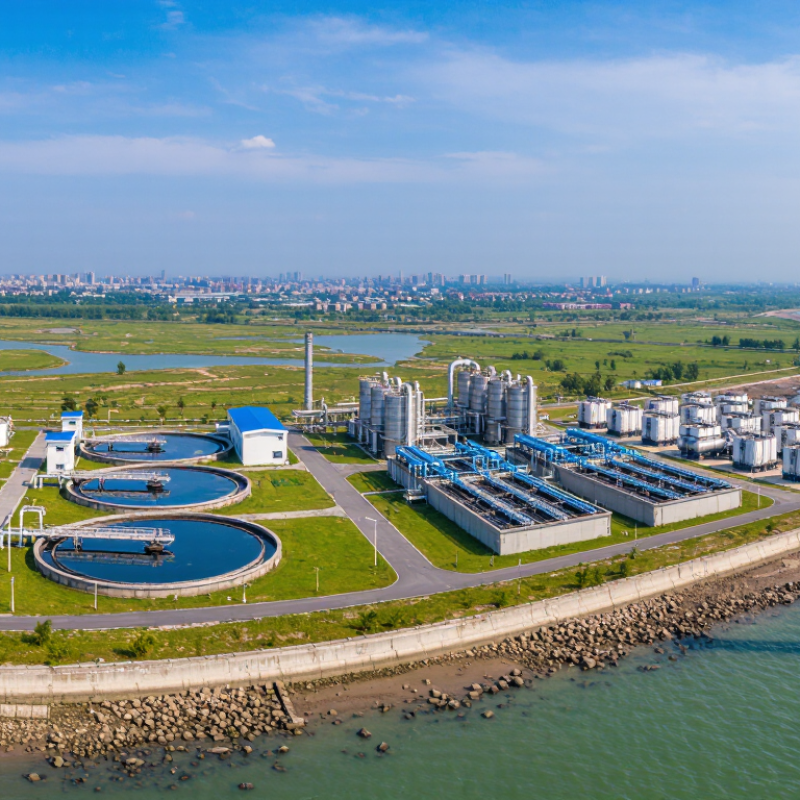
Municipal wastewater plants collect sewage from homes, then remove solids, organic waste, and harmful microorganisms before discharge or reuse. The work is easy to overlook. It happens behind concrete tanks, screened channels, and quiet control rooms. Yet treatment performance varies, and a pipe connected to a plant does not guarantee that every wastewater flow is safely treated.
UN-Water’s Progress on Wastewater Treatment: 2024 Update reports that 58% of domestic wastewater was safely treated worldwide in 2022. That leaves a substantial share without verified safe treatment. The figure is a global estimate, not a measure of every town or facility, and monitoring gaps matter. The WHO and UNICEF Joint Monitoring Programme also estimated that 3.5 billion people lacked safely managed sanitation in 2022. These indicators describe related, but different, challenges. For plant operators, reliable sampling, maintenance, and transparent reporting are as important as adding treatment capacity. A missed test or overloaded settling tank can change what actually reaches a river. The headline number is useful, but it should prompt a closer look at local data.

Among the main types of treatment plants, drinking-water plants face a critical step: disinfection. Before chlorine or ultraviolet light can work reliably, operators must reduce particles that cloud the water. Turbidity measures this cloudiness in nephelometric turbidity units (NTU). WHO recommends keeping turbidity below 1 NTU before disinfection. Lower is often better. Fine particles can shield microorganisms from disinfectants, and suspended matter can reduce ultraviolet transmission. Water that looks clear may still exceed the target.
Treatment often combines coagulation, flocculation, settling, and filtration. Operators measure turbidity at key points, especially after filtration and before disinfection. A rising reading may signal filter breakthrough, unsettled particles, or a sudden change in raw water. Teams can adjust treatment, clean filters, or hold water while checking results. One reading is only a snapshot. Sampling location, instrument condition, and changing flow all matter. Even careful monitoring can miss a brief spike between tests. The 1-NTU benchmark supports effective disinfection, but it cannot prove that every pathogen has been removed.
Industrial wastewater treatment plants are best understood as process trains, not single machines. Their stages are selected around contaminants, flow swings, reuse goals, and discharge requirements. A food processor may need screens, equalization tanks, biological treatment, and disinfection. Grease and sudden washdown flows can upset biology if operators overlook them. Small details matter.
Metal-finishing wastewater often needs a different route. Operators may adjust pH, precipitate dissolved metals, then separate solids with settling or filtration. Textile plants can face color, salts, and variable organic loads, so oxidation or membrane steps may be considered. These are options, not recipes; bench tests and pilot runs help reveal how a stream actually behaves. Sampling across production shifts gives a truer picture.
A reliable train also includes flow meters, alarms, sludge handling, and routine lab checks. Treatment performance can drift when chemical doses or production schedules change. Designers should match each unit to measured influent data and a clearly defined effluent target. In practice, the “right” sequence sometimes needs revision after startup. That can be costly.
A seawater reverse osmosis plant commonly uses about 3–4 kWh of electricity per cubic metre of produced water. That figure is a useful benchmark, not a promise. Pumps force seawater through fine membranes under high pressure, while energy-recovery equipment captures some pressure from the concentrated brine. Every cubic metre has a cost.
Actual use depends on seawater salinity, temperature, membrane condition, and the share of incoming water recovered as fresh water. Colder water can require more pressure. Fouling can raise it further. Operators watch pressure differences, flow rates, and product-water conductivity; small changes may signal that filters or membranes need attention.
The number also depends on what the accounting includes. Some figures cover the main reverse-osmosis process, while others include intake pumping, pretreatment, and post-treatment. Those boundaries matter when comparing plants. A site log may show a tidy average, yet hide seasonal peaks or maintenance downtime. Check the measurement period and plant conditions before treating 3–4 kWh/m³ as a dependable design value.
Typical electricity use per cubic metre of water treated
Seawater reverse osmosis typically uses about 3–4 kWh per m³. Brackish-water reverse osmosis and conventional municipal water treatment generally use less. Actual energy use varies with water quality, plant design, and system boundaries.
Decentralized treatment plants bring wastewater treatment closer to the homes and businesses they serve. They can include individual septic systems, shared cluster systems, or compact treatment units. For a rural neighborhood beyond sewer lines, a cluster system might collect wastewater through short local pipes, treat it nearby, and return treated water to the ground. Small systems, real infrastructure.
The U.S. Environmental Protection Agency’s 2002 report, The Case for Decentralized Wastewater Treatment, estimated that decentralized systems served about 25 percent of the U.S. population. The EPA also says roughly one in five U.S. households relies on septic systems. These figures describe different measures, but both show how much sanitation depends on local solutions. In practice, each site needs careful assessment of soil, groundwater, system capacity, and where treated water will go.
Local treatment can avoid the cost of extending long sewer mains, especially where homes are spread far apart. But “local” does not mean maintenance-free. Tanks need inspection and pumping, and operators must track treatment performance. A unit may appear fine while a blocked filter or failing drain field develops out of sight. That gap deserves attention: good design matters, but consistent upkeep is what keeps a small system dependable.
| Treatment plant or system type | Typical scale and setting | How it treats wastewater | Key advantages | Important considerations |
|---|---|---|---|---|
| Septic tank with soil dispersal | Individual homes and small properties outside sewer service areas. | Solids settle in a tank; anaerobic processes partially break down organic matter. The effluent receives further treatment as it passes through suitable soil. | Simple, widely used, and does not require a centralized sewer connection or continuous mechanical aeration. | Requires periodic tank inspection and sludge removal. Soil conditions, groundwater depth, setbacks, and maintenance affect performance. |
| Cluster or community septic system | Several homes or a small community sharing treatment and, where appropriate, a dispersal area. | Collects wastewater from multiple properties for shared primary treatment, followed by soil dispersal or additional treatment. | Can serve properties that cannot each support an individual soil system and may simplify professional monitoring. | Needs a responsible operator, clear maintenance arrangements, suitable land, and reliable agreements among users. |
| Sequencing batch reactor (SBR) package plant | Small communities, institutions, and developments without access to a municipal sewer. | Treats wastewater in timed cycles in a tank, typically including aeration, settling, and decanting. The process can remove organic matter and, when configured and operated for it, nutrients. | Combines several treatment stages in a compact layout and can accommodate changing flows through cycle control. | Requires electricity, controls, trained operation, and attention to flow variation and equipment maintenance. |
| Extended-aeration activated sludge plant | Small towns, campgrounds, schools, and other sites with a shared wastewater collection network. | Air supports microorganisms that consume organic pollutants; a clarifier separates biological solids from treated water. | A well-established biological process that can provide consistent secondary treatment when properly operated. | Aeration uses energy, and operators must manage sludge, equipment, and process conditions. |
| Moving-bed biofilm reactor (MBBR) | Compact community or institutional plants, including upgrades where space is limited. | Microorganisms grow on suspended carrier media in an aerated tank; downstream separation removes suspended solids. | Biofilm growth can provide substantial biological treatment in a relatively compact reactor. | Needs aeration and suitable screening to retain carrier media; final solids separation and routine process checks remain important. |
| Constructed wetland | Rural communities and sites with suitable land and appropriate climate and water conditions. | Wastewater moves through planted beds or shallow wetland cells, where filtration, microbial activity, and settling contribute to treatment. | Can use relatively simple equipment and may blend with the landscape while supporting habitat values. | Generally needs more land than compact mechanical plants. Design must account for climate, hydraulic loading, vegetation, and mosquito control where relevant. |
| Membrane bioreactor (MBR) | Space-constrained developments or communities requiring high-quality effluent for further treatment or reuse. | Combines biological treatment with membrane filtration to separate treated water from suspended solids. | Produces low-solids effluent and can reduce the space needed compared with some conventional layouts. | Higher energy and maintenance needs are common; membranes require monitoring and periodic cleaning or replacement. |
System performance and suitability depend on local regulations, wastewater characteristics, site conditions, design, and ongoing operation. Treatment levels and discharge or reuse requirements should be confirmed with the relevant authorities.
This content is restricted to site members. If you are an existing user, please log in. New users may register … LEARN MORE “Lighting Power & Control-Signal Cable”
We are here to help. You can contact us or create an account online to have access to special products, technical specifications and our new online quote tool.
ELECTRO CABLES
9 Riverside Drive
P.O. Box 276
Trenton, Ontario
CANADA K8V 5R5
N.A. Toll Free: 888-ELECTRO
(1-888-353-2876)
World: 613-394-4896
Fax: 613-394-4101
Email: sale@machinecables.com
We manufacture cables that are certified by the Canadian Standards Association (CSA), listed by Underwriters Laboratories and/or listed by Intertek (ETL).
Our quality management system is registered to ISO 9001: 2015. Our team is dedicated to consistently providing quality service and products to our customers.

© 2025 ELECTRO CABLES • SITE BY SNAP 360•