
A partner you can trust
Buying Steel Slotted shelving for international operations requires more than comparing prices. The wrong choice can create unstable frames, wasted warehouse space, and expensive replacement work. Global buyers must examine material thickness, slot design, load capacity, surface treatment, packaging, and supplier consistency. These details become critical when products cross oceans and pass through different warehouse conditions.
Warehouse storage consultant David E. Smith explains, “A rack is only dependable when its design, load, and installation work together.” This practical view should guide every purchasing decision. A low quotation may hide thinner steel, weaker beams, poor coating quality, or unclear testing records. It may also exclude brackets, braces, anchors, or export packaging. Small omissions matter.
This guide presents ten buying tips for Steel Slotted systems used in warehouses, workshops, archives, and retail backrooms. It considers both technical performance and everyday usability. Buyers will learn how to verify dimensions, compare real load ratings, assess corrosion resistance, and review supplier documentation. The discussion also covers customization, assembly requirements, spare parts, and after-sales support.
Experience shows that product photographs are not enough. A neat image cannot prove structural reliability. Ask for drawings, material specifications, inspection records, and sample measurements. Independent verification is even better when the order is large. No checklist is perfect. Even experienced buyers can overlook floor conditions or future expansion.
Careful purchasing reduces surprises. It also creates a safer, more adaptable storage investment.
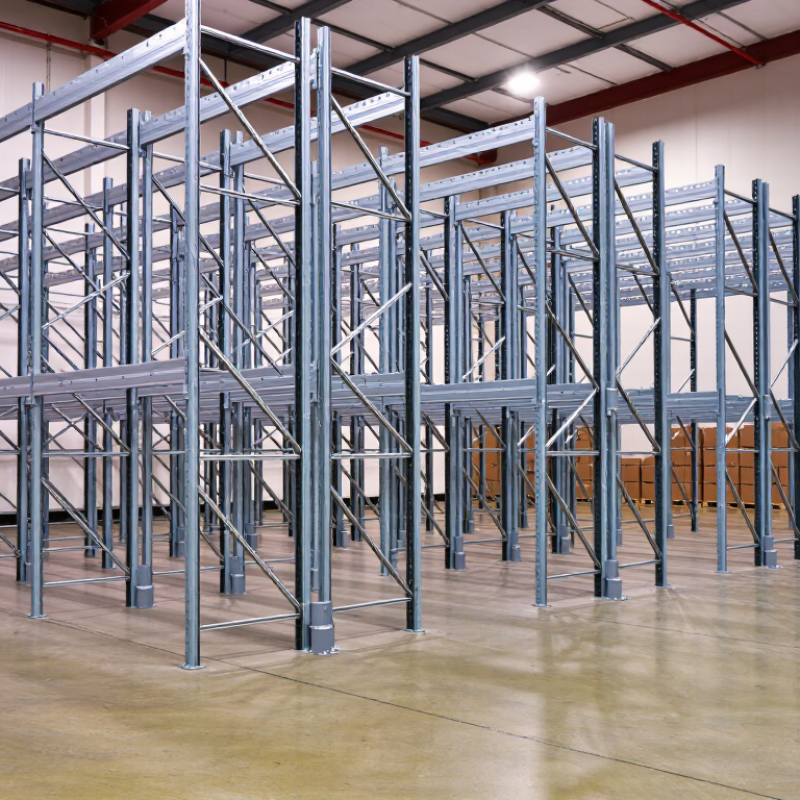
Steel slotted racks use perforated steel uprights, horizontal beams, and adjustable shelves. Slots allow shelf heights to change without cutting or welding. Some systems use bolts, while others use clips. They are not automatically boltless. This detail affects installation time and load stability.
Typical applications include warehouses, retail backrooms, archives, workshops, and light manufacturing areas. E-commerce fulfillment also drives demand for flexible storage. The U.S. Census Bureau reported that e-commerce represented 16.1% of total U.S. retail sales in 2024.
Small-parts storage benefits from adjustable levels and visible product access. A 2.4-meter rack can hold cartons above eye level, while lower shelves support picking bins.
Material quality needs closer attention. World Steel Association data recorded about 1.89 billion tonnes of crude steel production worldwide in 2023. That figure shows scale, not guaranteed rack quality.
Buyers should verify steel grade, coating thickness, shelf capacity, weld quality, and corrosion resistance. Galvanized finishes suit humid areas better than ordinary painted steel. Load ratings must reflect evenly distributed weight, not one heavy box. That assumption is often missed.
Floor flatness, anchoring, seismic exposure, and local safety standards also require checking. In practice, a cheaper rack may become expensive after damaged packaging, difficult assembly, or unstable shelves.

Begin with your inventory, not the rack catalogue. Record pallet sizes, carton weights, turnover rates, and picking frequency. Measure clear floor space, ceiling height, aisles, doors, and sprinkler clearance. A rack that fits a drawing may fail beside a fire exit or loading bay.
MHI’s 2024 Annual Industry Report found that 55% of supply-chain professionals expected technology investment to increase. That pressure also affects storage planning. Fast-moving goods need accessible levels, while reserve stock can use higher positions. Do not guess the load rating. Calculate the weight per shelf, then include pallets, handling impact, and uneven loading. A safety margin matters.
Select steel slotted racks with adjustable beams and clearly documented dimensions. Check upright thickness, shelf span, connection design, and corrosion protection. The rack depth should support the load without excessive overhang. Keep aisles wide enough for the actual handling equipment, not only a hand trolley. The 2023 World Bank Logistics Performance Index highlights reliability as a key logistics factor; unstable storage layouts can weaken that reliability. I have seen buyers focus on price and later discover unusable corners. That mistake is expensive.
Ask the supplier for material specifications, inspection records, and installation guidance. Verify measurements in millimetres, confirm load capacity per level, and reassess after adding bins or dividers. Something may still be overlooked.
10 Steel Slotted Rack Buying Tips for Global Buyers
Material choice starts with load reality. World Steel Association’s 2024 World Steel in Figures reports global crude steel output near 1.9 billion tonnes. That scale does not guarantee consistent rack quality. Ask for the steel grade, yield strength, thickness tolerance, and batch test records. Cold-formed steel can reduce weight, but thin sections may buckle around bolt holes. Check it physically.
Coating deserves equal attention. The NACE IMPACT study estimates global corrosion costs at about 3.4% of global GDP. For dry warehouses, powder coating may provide a clean, durable surface. Humid, coastal, or chemical areas need stronger systems, such as galvanized steel or a specified multi-layer coating. Use ISO 12944 exposure categories to match protection with the environment. A bright finish can still hide poor edge coverage. Inspect cut ends, welds, and slot corners closely.
Structural design controls daily safety. Compare upright profiles, beam connectors, bracing, base plates, and adjustable slot spacing. Confirm rated loads for each level, not only the whole bay. Review deflection limits and anchoring requirements with a qualified engineer. Request dimensional drawings and independent test evidence. Measure one sample before approving a full shipment. It takes minutes. I would also recheck damaged coating after installation, because transport scratches are easy to overlook.
How to read this chart: The scores are indicative planning ratings from 0 to 5, not certified load ratings. Bolted adjustable racks generally provide strong structural flexibility, while powder-coated racks offer good indoor corrosion protection. Hot-dip galvanized racks are usually better suited to humid or outdoor environments, but the final choice should be confirmed against load tables, coating specifications, local standards, and installation conditions.
10 Steel Slotted Rack Buying Tips for Global Buyers
Check Safety Features, Standards, and Installation Requirements
Safety begins before the rack arrives. Confirm the rated load for each beam level and the complete bay. Check the floor. It must support the combined rack and inventory weight. Inspect upright thickness, beam connectors, locking pins, and corrosion protection. Require column guards near forklifts. Keep aisle widths compatible with the selected handling equipment. Do not guess.
The U.S. Bureau of Labor Statistics reported 1,032 fatal work injuries in transportation and material-moving occupations during 2023. This figure is not rack-specific, but it shows why impact protection and traffic planning matter. Ask for calculations based on ANSI MH16.1, EN 15635, or the applicable national standard. Requirements differ by installation country. Confirm seismic design where relevant. Verify anchor type, embedment depth, slab strength, and permitted floor tolerances. Installation drawings should show bay spacing, load plaques, and clearance zones.
Before acceptance, inspect every pallet for broken boards and unstable loads. Train operators to report bent frames immediately. Schedule documented inspections, especially after impacts or layout changes. HSE guidance HSG76 recommends systematic control of storage and handling risks. A common weakness remains incomplete installation records. A rack may look straight while anchors are loose or beams are incorrectly seated. Photograph each completed bay, retain torque and inspection records, and use an independent competent person when local rules require it. Small oversights become expensive.
When buying steel slotted racks globally, evaluate the supplier beyond catalog prices. Request factory audit records, material certificates, welding samples, coating data, and load-test reports. Check whether drawings show upright thickness, slot spacing, beam profiles, and allowable loads. The World Steel Association reported about 1.88 billion tonnes of crude steel production in 2024, but regional costs still vary sharply. Therefore, compare quote validity, steel grade, packaging, freight, insurance, duties, and installation expenses.
Customization should solve a measured warehouse problem, not hide weak engineering. Provide clear bay dimensions, floor conditions, pallet weights, forklift clearances, corrosion exposure, and local design requirements. Ask for revised drawings before production. MHI’s 2024 Industry Report found that 83% of supply-chain leaders considered technology and innovation highly important, while 55% planned higher investment. That supports better digital documentation, but not every supplier delivers it reliably. I would request serial-number traceability and a complete bill of materials.
After-sales support deserves a written service level. Confirm response times, replacement-part availability, inspection guidance, and remote troubleshooting procedures. UNCTAD’s Review of Maritime Transport 2024 highlighted continuing disruption risks in global shipping, making spare-part planning essential. Keep several critical beams and connectors locally when downtime is expensive. The cheapest offer may be reasonable. It may also exclude engineering reviews, spare parts, or unloading support. A practical evaluation sheet should score quality, landed cost, customization control, delivery resilience, and service evidence separately.
| No. | Buying Dimension | What to Evaluate | Practical Benchmark or Reference Data | Documents or Questions to Request | Potential Risk Sign |
|---|---|---|---|---|---|
| 1 | Supplier Capability | Check production equipment, quality-control procedures, export experience, and ability to maintain consistent dimensions across batches. | Prefer suppliers that can provide factory photos, process descriptions, inspection records, and at least two recent export references without relying only on catalog claims. | Ask for business registration, factory audit information, production capacity per month, quality manual, and a sample approval process. | Unclear manufacturing location, inconsistent specifications, or refusal to provide samples and inspection evidence. |
| 2 | Steel Grade and Thickness | Verify the steel grade, thickness tolerance, profile shape, slot geometry, and resistance to bending during loading. | Common light- to medium-duty systems use approximately 0.8–2.0 mm steel, but the required thickness depends on span, shelf depth, load, and safety factor. | Request material certificates, thickness-measurement records, cross-section drawings, and the permitted thickness tolerance. | The quoted thickness is nominal only, or the supplier cannot identify the steel grade or tolerance. |
| 3 | Load Capacity and Safety | Compare shelf capacity, bay capacity, deflection limits, connection strength, stability, and the effect of evenly distributed versus concentrated loads. | Typical light-duty shelf ratings may range from about 50–150 kg per level; medium-duty designs may reach approximately 150–500 kg per level when properly engineered. | Request load-test results, engineering calculations, assembly instructions, anchoring guidance, and a written definition of uniformly distributed load. | A load rating is provided without shelf dimensions, test conditions, safety factor, or installation requirements. |
| 4 | Surface Finish and Corrosion Protection | Evaluate powder coating, galvanized finish, coating thickness, adhesion, edge coverage, and suitability for humidity or corrosive environments. | Indoor powder-coated racks are generally suitable for dry storage; galvanized or higher-protection finishes are more appropriate for humid, coastal, or semi-outdoor conditions. | Ask for coating type, color reference, coating-thickness range, adhesion test method, salt-spray data where relevant, and packaging protection. | Visible thin spots, sharp uncoated edges, poor adhesion, or a generic statement that the product is “rustproof.” |
| 5 | Dimensions and Customization | Confirm width, depth, height, shelf spacing, slot pitch, upright section, bracing, accessories, and compatibility with local storage conditions. | Common modular heights are approximately 1,800–2,400 mm, widths 600–1,200 mm, and depths 300–600 mm, but the final design should follow the actual load and room layout. | Provide a dimensioned drawing, 3D file if needed, tolerance table, accessory list, prototype approval terms, and tooling charges for non-standard parts. | Custom dimensions are accepted verbally but are absent from the purchase order or approved drawing. |
| 6 | Total Landed Cost | Compare product price with packaging, inland transport, freight, insurance, duties, taxes, port charges, inspection fees, and installation. | For international procurement, landed cost can be materially higher than factory price; request both per-unit and per-container calculations using the same Incoterm and quantity. | Request a detailed quotation showing currency, Incoterm, packing method, carton or pallet count, gross weight, volume, payment fees, and quotation validity. | An unusually low price excludes freight, accessories, packaging, testing, or mandatory destination charges. |
| 7 | MOQ, Lead Time, and Logistics | Review minimum order quantity, sample timing, production lead time, loading efficiency, packaging dimensions, and replenishment capacity. | Indicative production lead times are often 20–45 days after drawing approval and deposit, excluding transit and customs; actual timing varies by customization and season. | Ask for a production schedule, sample lead time, carton dimensions, container-loading plan, shipping marks, and written delay-notification procedure. | Lead time starts before final approval, or the supplier gives no committed shipping date or packaging specification. |
| 8 | Inspection and Compliance | Set measurable acceptance criteria for dimensions, welds, coating, hardware, labeling, load performance, quantity, and packaging condition. | Use pre-production sample approval and pre-shipment inspection; inspection scope should be risk-based and agreed before production begins. | Request a quality plan, inspection checklist, sampling level, non-conformity process, product labels, safety instructions, and applicable local compliance evidence. | The supplier relies on visual inspection only and cannot define measurable pass-or-fail criteria. |
| 9 | Payment and Contract Protection | Balance cash-flow requirements with protection against specification changes, late delivery, shortages, and non-conforming goods. | A common commercial structure is a deposit with the balance linked to shipment or inspection, but the exact terms should reflect supplier risk and order size. | Include approved drawings, tolerance requirements, warranty terms, liquidated-damage wording where appropriate, dispute venue, and document requirements in the contract. | Payment is requested to an unrelated account, or the supplier will not include specifications and remedies in the contract. |
| 10 | Warranty and After-Sales Support | Evaluate spare-part availability, replacement policy, technical response time, assembly support, claim handling, and warranty exclusions. | A clearly written 12-month warranty is common for many commercial rack products, subject to correct assembly, stated loading, indoor use, and normal maintenance. | Request an installation manual, parts list, spare-component pricing, claim-response target, photo or video evidence requirements, and replacement lead time. | Warranty coverage is verbal, excludes most practical failures, or requires the buyer to return bulky goods at its own cost. |
Note: Cost ranges, dimensions, capacities, lead times, and warranty periods are indicative purchasing references only. Final values should be confirmed through approved drawings, test conditions, destination regulations, and the signed purchase agreement.
This content is restricted to site members. If you are an existing user, please log in. New users may register … LEARN MORE “Lighting Power & Control-Signal Cable”
We are here to help. You can contact us or create an account online to have access to special products, technical specifications and our new online quote tool.
ELECTRO CABLES
9 Riverside Drive
P.O. Box 276
Trenton, Ontario
CANADA K8V 5R5
N.A. Toll Free: 888-ELECTRO
(1-888-353-2876)
World: 613-394-4896
Fax: 613-394-4101
Email: sale@machinecables.com
We manufacture cables that are certified by the Canadian Standards Association (CSA), listed by Underwriters Laboratories and/or listed by Intertek (ETL).
Our quality management system is registered to ISO 9001: 2015. Our team is dedicated to consistently providing quality service and products to our customers.

© 2025 ELECTRO CABLES • SITE BY SNAP 360•