A partner you can trust
Choosing the right Bucket Filling Machine manufacturer in China requires more than comparing prices. Production speed matters, but so do filling accuracy, container handling, cleaning access, and after-sales support. A reliable supplier should explain how its machine performs with different bucket sizes, viscosities, lids, and production environments. It should also provide test videos, technical drawings, factory information, and verifiable customer references.
Packaging automation engineer Dr. Arun Mehta offers a practical reminder: “A filling machine is only as dependable as its testing, maintenance design, and operator training.” This point deserves attention. A polished brochure cannot replace a real material trial. Ask manufacturers to fill your actual product, inspect weight variation, and measure changeover time. Small details matter. A poorly positioned nozzle can create splashes, product waste, or messy bucket rims.
This article reviews China’s top 10 Bucket Filling Machine manufacturers through practical criteria, including engineering experience, customization capability, component quality, factory transparency, and global service. The ranking is not absolute. A company strong in high-speed paint filling may not suit thick adhesives or food-grade materials. That distinction is easy to miss. Buyers should compare machines against their own workflow, not against impressive specifications alone.
Some information may change as manufacturers update models, certifications, and service networks. Therefore, readers should confirm current documents directly with each supplier. A careful shortlist saves more than money. It reduces installation delays, rejected products, and avoidable production interruptions.
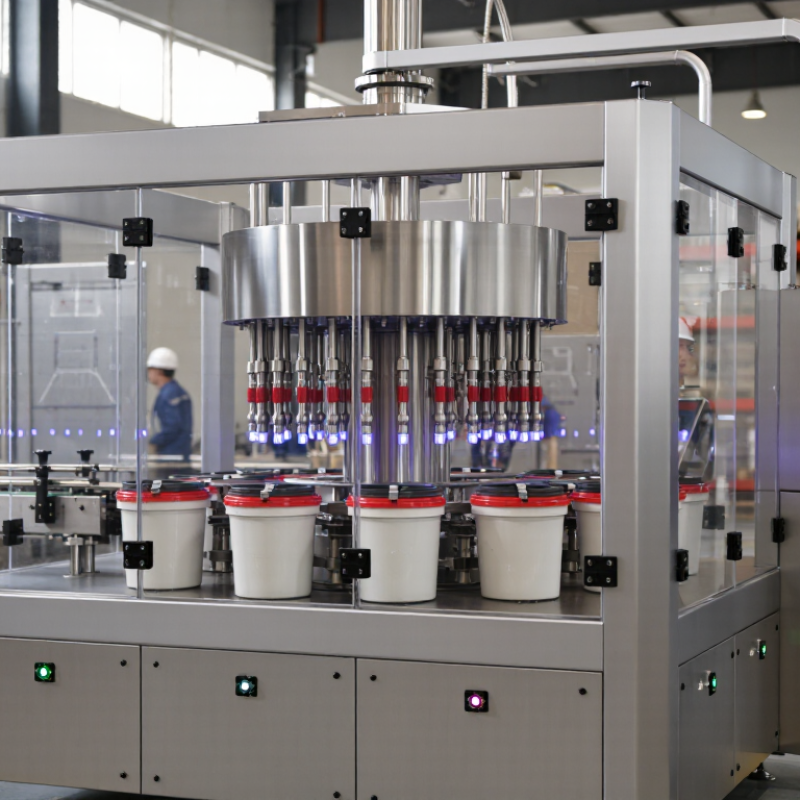
Bucket filling machines in China are built for different products, container sizes, and production speeds. Volumetric fillers suit liquids with stable density, while net-weight fillers improve accuracy for changing batch conditions. Piston systems handle thicker products, such as sauces, creams, and adhesives. Powder applications usually need auger or vacuum-assisted filling equipment.
Typical output ranges from 10 to 60 buckets per minute. Small semi-automatic units often operate near 10–20 buckets per minute. Fully automatic lines may reach 40–60 buckets per minute with stable materials and synchronized conveyors.
Speed depends on bucket size, filling volume, viscosity, foaming, and operator loading. A 20-liter bucket of thin liquid behaves differently from a dense paste. Faster is not always better.
Stainless steel 304 is common for general production, while 316 offers stronger resistance in demanding environments. Coated carbon steel can reduce costs for non-corrosive materials. Food-grade seals and smooth welds support easier cleaning.
During factory evaluation, request a live test using your actual buckets and product. Check fill tolerance, nozzle drip, changeover time, guarding, and spare-part access. A machine rated at 60 buckets per minute may deliver less in daily operation. That difference deserves careful review.
China’s top ten bucket filling machine manufacturers cover a broad product range. Their equipment handles paint, chemicals, lubricants, food, and other viscous liquids. Common formats include single-head, multi-head, piston, servo, and weighing fillers. Typical lines fill 5–25 litre buckets at 200–800 units per hour. Higher-capacity systems can exceed 1,000 buckets hourly, but actual output depends on viscosity, lid placement, and cleaning time.
Grand View Research estimates that the global packaging machinery market will continue growing through 2030. PMMI reports also show strong automation demand, especially for labor-saving and traceable production lines. Chinese suppliers increasingly offer stainless-steel frames, PLC control, automatic capping, palletizing, and remote diagnostics. Their export markets include Southeast Asia, the Middle East, Africa, South America, and Eastern Europe. Many factories support customized voltage, language settings, and container sizes. Yet capacity claims need careful checking. “Up to” figures are not production guarantees.
Tips: Ask for a recorded factory test using your real product and bucket. Check filling accuracy, changeover time, spare-part availability, and service response. Request export references from a similar climate and market. ISO 9001 certification can support process reliability, but it does not replace a site audit. I would also inspect rejected buckets beside finished pallets. Small leaks are easy to overlook.
Anonymized comparison of representative Chinese bucket filling machine manufacturers by product range, production capacity, technical configuration, and export coverage.
| Rank | Anonymous Manufacturer | Primary Machine Types | Typical Bucket Size | Approx. Filling Speed | Estimated Annual Production Capacity | Suitable Products | Automation and Technical Features | Common Export Markets | Typical Compliance Documentation |
|---|---|---|---|---|---|---|---|---|---|
| 1 | Manufacturer A | Automatic bucket fillers Lid pressers Palletizing lines | 1–25 L | 8–20 buckets/min | 80–120 complete lines/year | Paint, coatings, adhesives, construction chemicals, lubricants | Servo-driven dosing, PLC control, automatic lid placement, check weighing, conveyor integration | Europe, Southeast Asia, the Middle East, North America | CE documentation, electrical schematics, factory acceptance testing, material certificates on request |
| 2 | Manufacturer B | Net-weigh fillers Gross-weigh fillers Container handling systems | 5–30 L | 6–16 buckets/min | 60–100 complete lines/year | Powders, granules, dry mortar, mineral products, chemical powders | Load-cell weighing, dust extraction interface, automatic tare correction, recipe storage | Central Asia, Africa, South America, Southeast Asia | CE option, user manuals, risk assessment, FAT and SAT support |
| 3 | Manufacturer C | Viscous liquid fillers Servo piston fillers Capping systems | 1–20 L | 10–30 buckets/min | 90–140 complete lines/year | Sealants, silicone, grease, paste, thick lubricants, putty | Anti-drip nozzles, heated hoppers, piston or gear-pump dosing, automatic cap tightening | North America, Europe, Australia, the Middle East | CE documentation, food-contact options where applicable, GMP-oriented documentation |
| 4 | Manufacturer D | Paint filling lines Automatic lid fitting Pallet wrappers | 3–25 L | 8–18 buckets/min | 50–90 complete lines/year | Architectural coatings, emulsions, water-based paints, inks | Color-coded recipe management, automatic bucket indexing, level or weight filling, barcode option | Europe, Southeast Asia, Africa, Latin America | CE option, machine layout drawings, commissioning records, spare-parts list |
| 5 | Manufacturer E | Semi-automatic fillers Manual-assisted lines Small-batch systems | 1–25 L | 3–10 buckets/min | 120–180 machines/year | Powders, granules, liquids, pastes, agricultural inputs | Compact frame, operator-assisted bucket positioning, digital weighing, quick product changeover | South Asia, Africa, the Middle East, domestic Chinese market | Electrical test reports, operation manuals, optional CE-related technical files |
| 6 | Manufacturer F | High-speed powder fillers Dust-controlled systems Bag and bucket integration | 5–30 L | 10–25 buckets/min | 70–110 complete lines/year | Dry mortar, cement additives, fertilizers, food powders, industrial minerals | Auger or gravity dosing, dust hood, automatic bag or bucket detection, remote diagnostics option | Asia-Pacific, Africa, the Middle East, Eastern Europe | CE option, dust-control documentation, equipment validation records |
| 7 | Manufacturer G | Chemical filling lines Corrosion-resistant fillers Safety enclosures | 1–25 L | 5–15 buckets/min | 40–75 complete lines/year | Detergents, industrial chemicals, solvents, agricultural chemicals | Stainless-steel or coated contact parts, fume extraction interface, interlocked guarding, spill-control tray | Middle East, Southeast Asia, Latin America, Africa | CE documentation, safety data support, material certificates, factory inspection records |
| 8 | Manufacturer H | Robotic bucket lines Case packers Palletizing systems | 1–20 L | 12–35 buckets/min | 35–65 integrated lines/year | Paint, lubricants, chemical products, food and non-food viscous products | Industrial robot palletizing, vision inspection, automatic case packing, line monitoring, OEE tracking | Europe, North America, Australia, East Asia | CE option, robot safety documentation, software backups, FAT and SAT protocols |
| 9 | Manufacturer I | Explosion-protected fillers Flammable-liquid systems Grounding systems | 1–25 L | 5–14 buckets/min | 30–60 complete lines/year | Solvent-based coatings, inks, lubricants, combustible liquids | Grounding and bonding, protected electrical components, pneumatic actuation, enclosed filling area | Europe, the Middle East, Southeast Asia, South America | Project-specific hazardous-area documentation, CE option, electrical test records |
| 10 | Manufacturer J | Custom turnkey lines Multi-format fillers End-of-line automation | 0.5–30 L | 5–25 buckets/min | 45–85 complete lines/year | Liquids, powders, granules, pastes, coatings, construction materials | Modular tooling, automatic format changeover, PLC/HMI control, checkweigher, labeling and palletizing options | Europe, North America, Africa, Asia-Pacific, Latin America | CE option, layout and utility drawings, validation documents, operator training materials |
Bucket filling performance depends on measurement discipline, not attractive brochures. A practical specification is ±0.5% filling tolerance, verified across the full working range. OIML Recommendation R 61 emphasizes controlled weighing performance for automatic gravimetric filling instruments. Load cells should sit beneath a stable platform, away from vibration and product impact.
Servo control improves repeatability during filling and valve closure. It also allows operators to adjust speed near the target weight. The result is less overshoot, especially with thick liquids or granular materials. PMMI’s 2024 State of the Industry report highlights automation as a key response to labor shortages and production pressure. Yet automation alone cannot correct poor calibration. Small errors remain.
This matters in real production. A 20-kilogram bucket with a ±0.5% tolerance allows only ±100 grams. That margin disappears quickly when a load cell drifts, a conveyor shakes, or material bridges inside the hopper. Deloitte’s 2024 Smart Manufacturing Survey reported that 86% of manufacturers view smart manufacturing as important for competitiveness. Data logging supports that goal by recording weight, batch, temperature, and operator adjustments.
I would still question any machine claiming ±0.5% without test records. Ask for repeated trials, not one perfect sample. Check empty-bucket variation, product temperature, and refill behavior. Servo settings may look precise, but neglected sensors can quietly weaken accuracy. Calibration needs a schedule. It cannot be an afterthought.
China Top 10 Bucket Filling Machine Manufacturers?
Compliance Metrics: CE, ISO 9001, IP65 Protection, and Food-Grade Design
When evaluating China’s leading bucket filling machine manufacturers, compliance should outweigh polished catalogs. A CE mark indicates conformity with applicable European safety requirements, but it is not proof of every performance claim. Ask for the Declaration of Conformity, risk assessment, and recent testing records. Documents should match the exact machine model.
ISO 9001 certification shows that a manufacturer operates a documented quality management system. It does not guarantee perfect equipment. During a factory audit, inspect calibration records, welding consistency, and spare-part controls. Small details matter. A loose sensor cable can disrupt filling accuracy and create costly downtime. Real production references are more reliable than attractive brochures.
IP65 protection helps shield electrical enclosures from dust and low-pressure water jets. It does not make the entire machine waterproof. Check enclosure seals, cable glands, and washdown procedures on site. For food-grade design, product-contact parts should normally use suitable stainless steel, hygienic welds, and easy-to-clean surfaces. Ask for material certificates and inspect dead corners around valves and nozzles. Some suppliers provide compliant materials but overlook cleaning access. That gap deserves careful review. A practical acceptance test should measure fill-weight variation, dust exposure, cleaning time, and emergency-stop response before shipment.
IEC 60529 ingress-protection ratings used alongside CE, ISO 9001, and food-grade design checks
Indicates conformity with applicable European Union health, safety, and environmental requirements. It is supported by a Declaration of Conformity and technical documentation.
Defines requirements for a quality management system, including controlled processes, corrective action, and continual improvement.
The first digit 6 means dust-tight protection; the second digit 5 means protection against water jets from any direction.
Supplier verification should cover suitable contact materials, hygienic construction, cleanable surfaces, and relevant food-contact documentation.
Reference values are standard-based and are not company-specific certification claims.
When comparing China’s top bucket filling machine manufacturers, price should never stand alone. A basic machine may cost less, yet require extra molds, sensors, or stainless-steel upgrades. Request an itemized quotation with installation, testing, packaging, and shipping clearly separated. In my purchasing experience, vague quotations often create the highest final cost. Ask for production samples using your actual bucket size and product viscosity.
Lead time also needs practical verification. Many suppliers quote 30 to 45 days, but electrical components or customized filling heads can extend delivery. Confirm the drawing approval date, factory testing date, and spare-parts availability. A video inspection helps, although it cannot replace an in-person audit. I have underestimated commissioning time before. That mistake affected a seasonal launch.
After-sales service directly influences return on investment. Compare remote troubleshooting hours, technician response times, warranty coverage, and training materials. Check whether common parts can be purchased locally or shipped within one week. A cheaper machine may lose money during repeated stoppages. Calculate ROI using output per hour, labor savings, filling accuracy, maintenance cost, and expected downtime. For example, reducing overfilling by three grams across 100,000 buckets can create meaningful savings. Still, projected ROI is not guaranteed. Product changes, operator habits, and unstable utilities can weaken the result. Reliable buyers test references, review acceptance records, and keep a written service agreement.
This content is restricted to site members. If you are an existing user, please log in. New users may register … LEARN MORE “Lighting Power & Control-Signal Cable”
We are here to help. You can contact us or create an account online to have access to special products, technical specifications and our new online quote tool.
ELECTRO CABLES
9 Riverside Drive
P.O. Box 276
Trenton, Ontario
CANADA K8V 5R5
N.A. Toll Free: 888-ELECTRO
(1-888-353-2876)
World: 613-394-4896
Fax: 613-394-4101
Email: sale@machinecables.com
We manufacture cables that are certified by the Canadian Standards Association (CSA), listed by Underwriters Laboratories and/or listed by Intertek (ETL).
Our quality management system is registered to ISO 9001: 2015. Our team is dedicated to consistently providing quality service and products to our customers.
© 2025 ELECTRO CABLES • SITE BY SNAP 360•