A partner you can trust
Laser cutting is no longer a niche process for sheet metal shops. It supports rapid prototyping, repeat production, and intricate profiles across automotive, electronics, machinery, and construction. Grand View Research’s Laser Cutting Machines Market report estimated the global market at approximately US$5.26 billion in 2023 and projected continued growth through 2030. That figure describes equipment, not finished parts. Still, it signals rising investment in the technology behind modern fabrication.
For buyers, a capable supplier must offer more than a powerful laser. Material grade, thickness, kerf width, edge quality, flatness, and batch consistency all affect whether a part fits during assembly. A clean-looking sample is useful. Inspection records are better. Ask about cutting capacity, fiber-laser equipment, deburring, bending, welding, and quality-control procedures. ISO certification can offer useful context, but it does not replace part-specific checks or clear communication about tolerances.
This guide introduces ten Chinese manufacturers of Laser Cut Parts and explains what buyers should compare before requesting a quote. Company capabilities can change, and public profiles do not always reveal production limits or inspection methods. That is a real limitation. Treat the list as a starting point, then verify drawings, samples, lead times, and documentation directly with each supplier. The right choice depends on your material, order volume, finish requirements, and delivery schedule—not simply the lowest price.
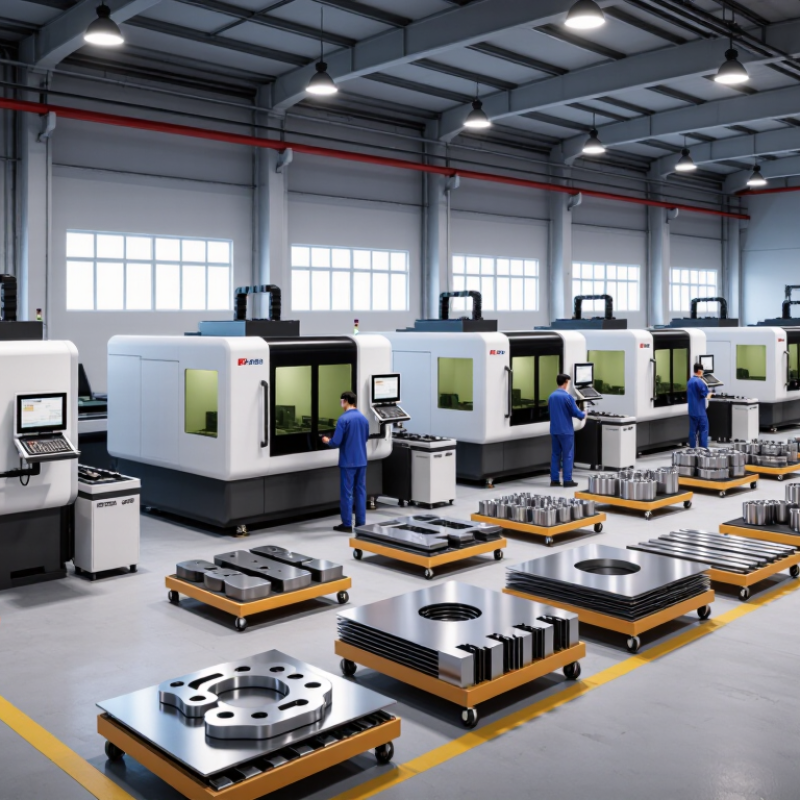
China’s laser-cut parts industry ranges from focused job shops to factories that also bend, weld, and finish components. This mix supports products such as electrical enclosures, machine guards, brackets, and decorative panels. Common materials include mild steel, stainless steel, and aluminum, though suitable thickness depends on the machine, cutting settings, and part geometry. Small details matter.
A dependable supplier should review drawings, confirm tolerances, and flag features that may distort during cutting. Look beyond a clean sample: inspect edge burrs, hole positions, flatness, and consistency across a batch. Ask how parts are measured and whether inspection records can be provided. These checks make comparisons more useful than relying on quoted price alone.
Lead times depend on material availability, nesting efficiency, finishing requirements, and current production load. Short runs may suit prototyping, while repeat orders need stable settings and clear revision control. A low quote can conceal extra work, such as deburring or correcting fit. Even a precise laser cannot resolve an unclear drawing; buyers and manufacturers sometimes need to revisit assumptions before production starts.
When comparing Chinese laser-cut parts manufacturers, look beyond the quoted price. Ask for material certificates, incoming inspection records, and a sample report listing thickness, kerf width, burr height, and positional tolerance. Check the cut edge under consistent lighting, rather than judging it from a polished product photo. Small details matter. I would not treat one perfect sample as proof of stable production.
Capacity is another filter, but machine count alone proves little. The International Federation of Robotics reported 276,288 industrial robot installations in China in 2023, equal to 51% of global installations (World Robotics 2024). This reflects a strong automation ecosystem, not the quality of any individual supplier. Ask how operators monitor nozzle condition, assist-gas pressure, and first-piece approval. Request a trial using your actual material grade and thickness, then compare measured parts with the drawing. Review scrap rates, delivery records, and corrective actions across several months. Some records may be incomplete. That matters. Check subcontracted finishing separately, and clarify who owns inspection responsibility after parts leave the cutting cell. A tidy audit can miss variation between shifts.
Use this weighted scorecard to compare suppliers consistently. It ranks evaluation criteria, not individual manufacturers; verify all supplier-specific claims directly.
| No. | Evaluation Criterion | Suggested Weight | What to Evaluate | Evidence to Request |
|---|---|---|---|---|
| 1 | Cutting Capability and Process Fit | 15% | Whether the supplier’s laser-cutting processes, equipment, and production setup suit the specified material, part geometry, and order volume. | A capability list, sample parts, equipment details, and confirmation that the proposed process matches the drawing and material specification. |
| 2 | Dimensional Quality and Inspection | 14% | How the supplier interprets tolerances and verifies critical dimensions. Feasible tolerances depend on material, thickness, geometry, and process conditions. | Inspection plans, sample measurement reports, calibrated measuring-equipment records, and agreement on drawing revisions and acceptance criteria. |
| 3 | Material Traceability | 12% | Ability to supply the specified material grade, thickness, and condition, and to trace incoming material through production where required. | Material certificates or inspection records, purchase specifications, lot identification procedures, and confirmation of approved substitutions. |
| 4 | Quality Management and Corrective Action | 12% | Documented controls for production, nonconforming parts, root-cause analysis, and corrective action. Certification should be checked for scope and validity. | Relevant quality-system certificates, process-control records, nonconformance procedures, and an example of a corrective-action report with confidential details removed. |
| 5 | Engineering Support and DFM Review | 10% | Ability to identify manufacturability concerns, clarify ambiguous drawings, and discuss nesting, kerf, edge condition, and downstream operations before production. | A sample design-for-manufacturing review, drawing clarification workflow, and documented approval process for engineering changes. |
| 6 | Lead Time and Delivery Control | 10% | Whether quoted lead times cover material sourcing, cutting, finishing, inspection, and packing, and whether schedule risks are communicated promptly. | A milestone-based production schedule, stated assumptions, capacity confirmation, and shipment or delivery updates for trial orders. |
| 7 | Finishing and Secondary Operations | 9% | Availability and control of required secondary work, such as deburring, bending, welding, coating, or assembly, whether performed in-house or through approved partners. | Process descriptions, finish specifications, inspection criteria, and clarity about which operations are subcontracted. |
| 8 | Quotation Transparency and Total Cost | 7% | Clarity on material, setup, cutting, finishing, packaging, tooling if applicable, shipping, and other charges; the lowest unit price alone may not represent the lowest total cost. | An itemized quotation, minimum-order terms, pricing assumptions, and a written process for approving cost changes. |
| 9 | Communication and Documentation | 6% | Responsiveness, technical clarity, version control, and ability to provide consistent order and inspection documentation. | A documented point of contact, response expectations, drawing-revision controls, and sample order records or inspection documents. |
| 10 | Packaging, Export, and Shipment Readiness | 5% | Packaging appropriate to part size, finish, and transport conditions, plus the ability to prepare agreed shipping and export documentation. | Packaging proposal, labeling details, shipping terms, and a checklist of documents required for the destination market. |
| Total Suggested Weight | 100% | Adjust weights to match project requirements and risk priorities. | ||
Suggested scoring: Rate each criterion from 1 (insufficient evidence) to 5 (strong, verified evidence), multiply the rating by its weight, and compare suppliers using the same drawings, specifications, and quotation assumptions.
China’s laser-cut parts sector includes high-volume factories and smaller shops built for custom work. The ten profiles are best compared by capabilities, not marketing claims. Look for evidence of cutting capacity, material range, inspection methods, and delivery consistency. A clean sample edge tells part of the story. It does not prove repeatability across a full production run.
The profiles span distinct strengths: thin-sheet precision, heavy-plate processing, stainless steel, aluminum, electrical enclosures, appliance panels, automotive components, rapid prototypes, export orders, and integrated cutting with bending or welding. Buyers should check sample parts for burrs, heat discoloration, and hole accuracy. Ask how operators verify dimensions and control changes between batches. These details reveal more than a machine list.
Scale is relevant, but not decisive. The International Federation of Robotics reported that China installed 276,288 industrial robots in 2023, representing 51% of global installations. This points to a strong automation base, not proof that every supplier uses automated inspection or achieves identical tolerances. Rankings also depend on part geometry, material thickness, and order size. A supplier suited to long runs may be a poor fit for frequent design changes.
China’s leading laser-cut parts manufacturers differ less by machine count than by process control. Compare laser source power, bed size, nesting software, and inspection capacity. Ask whether a supplier can cut your actual drawing, not just a showroom sample. A sharp edge on a 2 mm stainless-steel bracket tells little about its consistency on thicker plate.
Material range matters. Carbon steel, stainless steel, aluminum, and copper each respond differently to heat and assist gas. Request sample parts with measured dimensions, edge condition, and material certificates. Check whether production records link each batch to its material and inspection results. Small details matter.
ISO 9013:2017 classifies thermal-cut surface quality and geometric tolerances; ask which relevant quality range the supplier can hold, and how it verifies it. A certificate alone is not proof of stable output.
Market growth is context, not a quality guarantee: Grand View Research’s Laser Cutting Machines Market report estimated the global market at USD 5.3 billion in 2023, with projected growth through 2030. That suggests rising investment, but not equal capability among factories. Compare first-article inspection reports, repeat-order consistency, and documented corrective actions. Some suppliers may quote tight tolerances without clarifying measurement methods. Push for specifics. Ask for the inspection instrument, sampling frequency, and acceptance criteria before placing a large order.
Choosing a laser-cut parts manufacturer takes more than comparing hourly rates. Start with your drawing: confirm the material grade, thickness, tolerances, surface finish, and expected quantity. Ask how the shop checks dimensions and handles burrs or heat discoloration. A clean sample matters. So does a clear explanation of how it was made.
Tips: Request a first-article sample before approving a full run. Check hole positions with calipers, inspect cut edges under bright light, and ask for material documentation. Small details reveal a lot.
Also review the manufacturer’s equipment range and production process. A shop should explain where its tolerances become difficult, rather than promise that every feature is easy. Ask about nesting, scrap control, packaging, and realistic lead times. If your design may change, find out how revisions affect setup costs. One thing is easy to overlook: a part can match the drawing and still be awkward to assemble. Share how it fits into the finished product, then ask whether the shop sees any risks. I would not treat the lowest quote as the best value; unclear inspection steps can cost more later. A short technical discussion often tells you more than a polished sales page.
This content is restricted to site members. If you are an existing user, please log in. New users may register … LEARN MORE “Lighting Power & Control-Signal Cable”
We are here to help. You can contact us or create an account online to have access to special products, technical specifications and our new online quote tool.
ELECTRO CABLES
9 Riverside Drive
P.O. Box 276
Trenton, Ontario
CANADA K8V 5R5
N.A. Toll Free: 888-ELECTRO
(1-888-353-2876)
World: 613-394-4896
Fax: 613-394-4101
Email: sale@machinecables.com
We manufacture cables that are certified by the Canadian Standards Association (CSA), listed by Underwriters Laboratories and/or listed by Intertek (ETL).
Our quality management system is registered to ISO 9001: 2015. Our team is dedicated to consistently providing quality service and products to our customers.

© 2025 ELECTRO CABLES • SITE BY SNAP 360•