A partner you can trust
China has become an important manufacturing base for industrial plastics equipment, including Rotomolding Machines. Demand is expanding across water tanks, kayaks, medical products, agricultural containers, and infrastructure components. Grand View Research’s 2024 rotational molding market analysis identifies packaging, transportation, and construction as major application areas. It also reports continued market growth through the decade, although estimates differ between research firms.
The China market includes established exporters, specialized engineering companies, and younger manufacturers with competitive pricing. This mix makes supplier selection difficult. A low quotation can hide slower heating cycles, uneven wall thickness, or limited after-sales support. Small details matter. Check burner control, mold compatibility, cooling performance, PLC systems, and energy consumption. Installation training matters too.
This guide examines ten Chinese manufacturers using practical criteria. These include production experience, machine configuration, automation capability, export records, customization, certifications, and service responsiveness. Reports from MarketsandMarkets and Grand View Research commonly emphasize automation, energy efficiency, and lightweight plastic production as important industry trends. However, public market data rarely confirms every supplier’s actual installed base. That limitation deserves attention.
The ranking is therefore a research-based starting point, not an official industry verdict. A factory visit, reference call, and sample-production test remain valuable. Watch the cycle. Measure the result. A reliable manufacturer should explain technical choices clearly, provide traceable documentation, and support the machine after delivery. Some suppliers may appear less visible online yet perform strongly in regional markets. That is why this list should be reviewed carefully before any purchasing decision.
What Is Rotomolding and How Do These Machines Work?
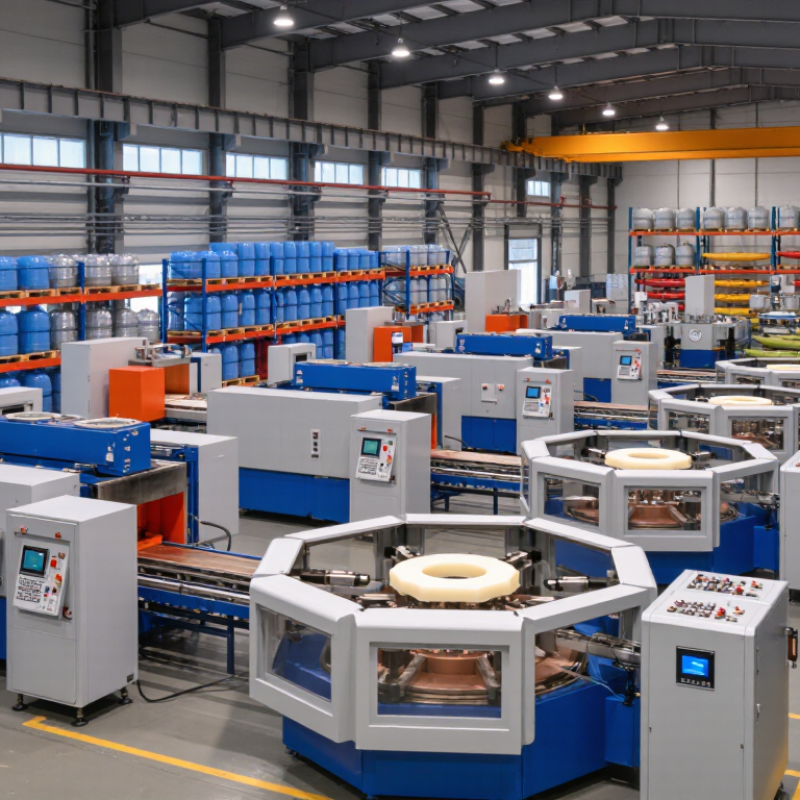
Rotomolding, or rotational molding, produces hollow plastic parts without high-pressure injection. It is often used for tanks, bins, kayaks, playground components, and protective housings. The process starts with plastic powder inside a hollow metal mold. The mold rotates around two axes while entering a heated chamber. Heat melts the powder, and rotation spreads it across the inner walls. The result is usually one seamless shell.
A typical machine includes a heating oven, rotating arms, cooling equipment, and a control system. An operator sets rotation speed, oven temperature, heating time, and cooling duration. These settings need testing. Too much heat can create bubbles, while poor cooling may cause warping. The mold leaves the oven and receives air or water cooling. The plastic solidifies against the mold surface. Then workers open the mold and remove the part carefully.
For a China-based manufacturer shortlist, buyers should inspect more than machine appearance. Ask for temperature records, trial-run videos, wall-thickness data, and maintenance instructions. Check weld quality, safety guards, electrical components, and emergency stops. A reliable supplier should explain cycle limits honestly and provide usable spare-parts support. A perfect cycle is not guaranteed. Small changes in powder moisture, mold design, or ambient temperature can affect results. This is where practical testing matters.
Rotational molding is a plastics manufacturing process in which polymer powder is placed inside a hollow mold, heated while the mold rotates on two axes, and then cooled before the finished part is removed. The chart shows a typical cycle-time profile for a medium-sized rotomolded part.
Typical reference values: actual cycle times depend on polymer type, part thickness, mold material, heating method, machine size, and cooling efficiency. Heating is usually the longest stage because the mold and polymer must reach the required processing temperature uniformly.
Evaluating China’s top rotomolding machine manufacturers starts with evidence, not a polished showroom.
Fortune Business Insights estimates the global rotational molding market reached USD 5.47 billion in 2023. Its report projects USD 8.31 billion by 2032.
Growth creates more supplier choices, but rankings reveal little. Ask each manufacturer for a witnessed factory acceptance test using your mold, resin weight, and production cycle. Measure oven recovery, arm speed, cooling time, and energy consumption. Record readings independently.
A controller display is not proof.
Review engineering depth through drawings, load calculations, electrical schematics, and calibration records. The frame should remain rigid during rotation. Temperature sensors should show stable readings across the oven. Request sample parts, then inspect wall thickness, bubbles, warpage, and pigment dispersion. ISO 9001 supports process control, but it does not guarantee machine performance.
Check traceable component records, remote diagnostics, spare-part lead times, and technician training. MarketsandMarkets forecasts growth from USD 6.1 billion in 2023 to USD 8.4 billion by 2028.
Therefore, compare lifecycle costs, not only purchase prices. Include kilowatt-hours per part, rejected parts, maintenance hours, and cooling-water use.
A low quotation may hide expensive downtime. A common field failure occurs when the mold interface is never clarified. That mistake is avoidable.
Still, no audit predicts every failure; tie staged payments to tested results and document technical objections in writing.
China’s top 10 rotomolding machine manufacturers represent different strengths rather than one universal standard. One focuses on compact machines for water tanks and small industrial parts. Another develops shuttle systems with accessible loading areas and practical mold changes. A third profile emphasizes carousel equipment for higher production volumes. Its controls may reduce operator movement, but training still matters.
A fourth manufacturer is known for custom ovens and larger chambers. This suits bulky playground equipment, yet factory space can become a serious constraint. A fifth supplies electric heating systems, which may offer cleaner temperature control. Energy savings should be verified through measured production data.
The sixth profile combines PLC automation with recipe storage and remote diagnostics. Useful features can become weaknesses when interfaces are poorly designed.
The seventh manufacturer supports molds, cooling systems, and installation as one package. That broader service can simplify commissioning. The eighth focuses on reinforced frames for demanding industrial components. Weld quality and long-term alignment deserve close inspection. A ninth profile serves export projects and provides multilingual technical documents. Documentation is valuable, although translation quality is not always consistent. The tenth develops flexible machines for research, short runs, and customized products. These units may be easier to adapt, but their output can be limited.
Buyers should compare heating uniformity, cooling time, safety systems, spare-part access, and verified customer references before choosing a supplier. Photos are not enough. Factory visits reveal more.
China’s top ten rotomolding machine manufacturers should be compared by machine type, not brochure claims. Shuttle machines suit large tanks and short production runs. Carousel systems support multiple molds and steadier output. Rock-and-roll machines handle long, narrow parts. Clamshell designs save floor space, but they may limit mold size.
Mordor Intelligence estimates the global rotational molding market could grow from about USD 5.1 billion in 2024 to USD 6.7 billion by 2029. This growth increases demand for efficient heating, accurate cooling, and repeatable wall thickness. Buyers should check oven capacity, arm loading, mold stations, PLC controls, and gas or electric consumption. A useful test uses the buyer’s own mold, powder weight, and cycle target.
Production capability needs closer inspection. Ask for hourly output, maximum part dimensions, temperature uniformity, and cooling performance under continuous operation. A carousel may offer higher throughput, yet a shuttle can provide better flexibility for oversized products. Energy data should include the complete cycle, not only burner ratings. That detail is often missed. The Plastics Industry Association’s manufacturing data also highlights the importance of automation and labor efficiency across plastics production. Still, published figures can feel too clean. Factory trials, maintenance records, and operator feedback reveal weaknesses that specifications often hide.
| Reference Profile | Typical Machine Type | Common Machine Configuration | Typical Mold Envelope | Typical Load Capacity | Typical Cycle Range | Key Features | Production Capability | Best-Fit Applications |
|---|---|---|---|---|---|---|---|---|
| Profile 01 | Shuttle Machine | Single arm, one oven, one cooling station | Approximately 1.5–3.0 m diameter or equivalent | 300–800 kg per arm | 25–60 minutes | Flexible mold changeover, independent heating and cooling control, suitable for large parts | Low-to-medium volume; generally 8–25 cycles per 24 hours, depending on part size | Water tanks, waste containers, kayaks, agricultural tanks, and custom industrial parts |
| Profile 02 | Carousel Machine | Three-arm or four-arm rotating platform | Approximately 1.0–2.5 m diameter per arm | 150–500 kg per arm | 20–50 minutes | Continuous movement between loading, heating, cooling, and unloading stations | Medium-to-high volume; approximately 20–60 cycles per 24 hours across multiple arms | Storage bins, pallets, toys, furniture components, and medium-sized hollow products |
| Profile 03 | Independent-Arm Carousel | Three or four independently controlled arms | Approximately 1.5–3.5 m diameter per arm | 300–1,000 kg per arm | 25–60 minutes | Independent arm speed, rotation ratio, oven dwell time, and cooling time | Medium-to-high volume with mixed product sizes and shorter changeover interruptions | Automotive components, large containers, industrial housings, and multi-size product lines |
| Profile 04 | Rock-and-Roll Machine | Two-axis arm with rocking and rolling movement | Long parts up to approximately 4–8 m | 200–800 kg per mold | 30–75 minutes | Designed for elongated molds, controlled rocking angle, and reduced tooling complexity for long products | Low-to-medium volume; output depends strongly on part length and wall-thickness requirements | Pipes, road barriers, kayaks, playground slides, and long agricultural products |
| Profile 05 | Clamshell Machine | Single oven with hinged or split-door mold access | Approximately 1.0–2.5 m diameter | 100–400 kg per mold | 20–55 minutes | Compact layout, accessible mold loading, relatively low initial equipment footprint | Low-to-medium volume; suitable for short production runs and frequent mold changes | Small tanks, containers, traffic products, toys, and prototype production |
| Profile 06 | Large Shuttle Machine | Heavy-duty shuttle arm with large oven chamber | Approximately 3.0–5.0 m diameter or equivalent | 800–2,000 kg per arm | 35–90 minutes | High-capacity structure, reinforced drive system, programmable temperature profiles | Low-to-medium volume for oversized products; high output per finished unit | Large septic tanks, industrial tanks, marine products, and heavy-duty containers |
| Profile 07 | Compact Carousel Machine | Three-arm platform for small and medium molds | Approximately 0.6–1.8 m diameter per arm | 50–250 kg per arm | 15–40 minutes | Compact footprint, simplified maintenance, fast loading and unloading operations | Medium-to-high volume for small parts; multiple molds can run during one production cycle | Small bins, sports products, children’s products, packaging components, and accessories |
| Profile 08 | Automated Carousel Line | Multi-arm system with automated material handling and controls | Approximately 1.0–3.0 m diameter per arm | 150–700 kg per arm | 20–55 minutes | PLC-based recipes, temperature logging, automatic transfer, alarms, and production traceability | High volume with improved repeatability and reduced manual handling | Standardized containers, logistics products, utility parts, and repeat production programs |
| Profile 09 | Electric Rotomolding Machine | Electric servo-driven arms and electric heating system | Approximately 0.8–2.5 m diameter per arm | 100–600 kg per arm | 18–50 minutes | Precise motion control, reduced hydraulic oil usage, lower routine maintenance requirements | Medium-to-high volume where repeatability, energy monitoring, and clean operation are priorities | Technical parts, medical or sanitary products, consumer goods, and precision-controlled components |
| Profile 10 | Custom Multi-Station System | Engineered layout with multiple ovens, cooling zones, or dedicated stations | Project-specific; approximately 1.0–5.0 m or larger | 200–2,000 kg per arm | 20–90 minutes | Customized automation, integrated trimming or demolding, recipe management, and factory-line integration | Medium-to-high volume for defined product families; scalable according to station count | Automotive, infrastructure, industrial equipment, large tanks, and contract manufacturing |
How to Choose the Right Chinese Rotomolding Machine Supplier
China offers many rotomolding machine manufacturers, but the lowest quotation rarely tells the full story. Choose a supplier with proven engineering experience, stable production records, and transparent technical documents. Ask for machine drawings, heating specifications, cooling methods, and expected cycle times. A reliable supplier should explain how the oven maintains even temperatures across large molds. Request factory photos or a live video inspection. Check welding quality, control cabinets, insulation, and safety devices closely.
Tips: Compare at least three suppliers. Ask for customer references. Review warranty terms. Confirm spare-parts availability. Request a sample production test. Measure wall thickness and product weight after molding. Small details matter.
Professional communication is another strong signal. The supplier should understand your polymer, mold size, product shape, and annual output. Vague answers may create expensive delays later. Discuss installation, operator training, maintenance schedules, and remote support before signing an agreement. Verify relevant quality systems and export documents, but do not accept certificates without checking their validity. A factory may look impressive online and still lack practical process control. That possibility deserves attention. No supplier is perfect. A careful buyer should record weaknesses, not only attractive promises. Reliable decisions come from test results, clear contracts, and evidence gathered over time.
This content is restricted to site members. If you are an existing user, please log in. New users may register … LEARN MORE “Lighting Power & Control-Signal Cable”
We are here to help. You can contact us or create an account online to have access to special products, technical specifications and our new online quote tool.
ELECTRO CABLES
9 Riverside Drive
P.O. Box 276
Trenton, Ontario
CANADA K8V 5R5
N.A. Toll Free: 888-ELECTRO
(1-888-353-2876)
World: 613-394-4896
Fax: 613-394-4101
Email: sale@machinecables.com
We manufacture cables that are certified by the Canadian Standards Association (CSA), listed by Underwriters Laboratories and/or listed by Intertek (ETL).
Our quality management system is registered to ISO 9001: 2015. Our team is dedicated to consistently providing quality service and products to our customers.

© 2025 ELECTRO CABLES • SITE BY SNAP 360•