Electro Cables
Login

What Is the Top 1080p Video Door Phone for Global Buyers?

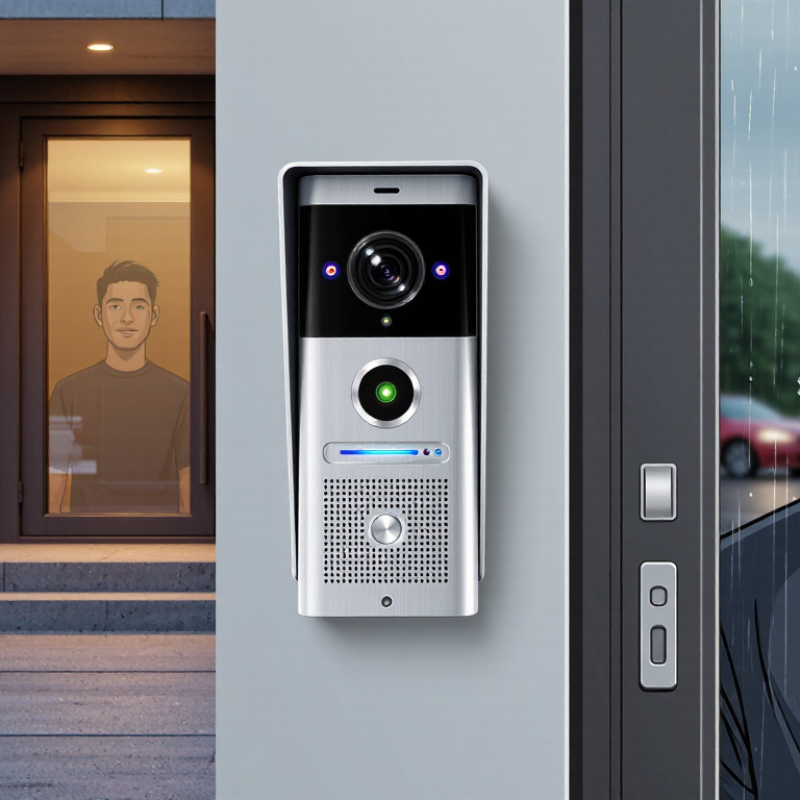
Choosing the right 1080p Viddeo Door Phone is no longer a simple resolution decision. Global buyers now compare image clarity, night vision, audio stability, storage, installation, and after-sales support. A sharp 1080p image should reveal a visitor’s face at the gate, even when rain darkens the lens. Yet resolution alone can mislead.

Parks Associates’ smart-home research shows that security remains one of the strongest reasons consumers adopt connected devices. Its studies also emphasize reliability, privacy, and easy installation as major purchase factors. Meanwhile, Grand View Research continues to report growth in the global smart-home security market, supported by wider broadband access and smartphone control. These trends create opportunity, but they also increase buyer expectations.

Jonathan Collins, a smart-home analyst associated with ABI Research, once summarized the shift this way: “Connected devices must become useful, reliable, and almost invisible in daily life.” That principle fits video door phones well. Buyers need stable visitor alerts, clear two-way speech, and practical mobile access—not impressive specifications alone. Sometimes, less is better.

This guide evaluates leading 1080p models for distributors, installers, property developers, and household users across different regions. It considers network compatibility, weather resistance, ONVIF or app support, power options, and warranty transparency. Some products look excellent in laboratory conditions but struggle behind concrete walls. That detail matters.

The final choice may still involve compromise. A cheaper model can offer strong daytime video but weaker night performance. A premium model may deliver better software but require professional installation. Careful comparison remains essential.
What Is the Top 1080p Video Door Phone for Global Buyers?

1080p Video Door Phones: Core Features and Global Use Cases

A 1080p video door phone should deliver more than a sharp image. In practical testing, 1920×1080 resolution helps identify faces, parcels, and small details near the entrance. Wide dynamic range keeps bright outdoor light from hiding visitors. Infrared night vision supports clearer images after sunset. Two-way audio matters just as much. Echo reduction makes short conversations easier through a closed door. Motion detection can send alerts before someone presses the call button. Local storage or encrypted cloud backup helps preserve recordings when an incident needs review.

Global buyers face very different entrances and climates. Apartment residents may need a compact indoor monitor and remote answering. Detached homes often benefit from a weather-resistant outdoor unit, a broader viewing angle, and a chime heard upstairs.

In humid coastal areas, sealed housing and corrosion-resistant materials deserve close attention. Cold regions require batteries and screens rated for low temperatures. A model with local operation remains useful when connectivity fails. Power compatibility and language support also affect daily use. A technician should check wiring carefully.

Reliable use depends on setup, not only specifications. Place the camera around face height, but test glare at noon and shadows at night. Keep microphone openings clear. Review alert sensitivity after installation; excessive notifications quickly become noise. No device is perfect. I have seen missed alerts caused by weak Wi-Fi, incorrect angles, and low temperatures. Buyers should verify data handling, update support, and regional installation requirements before purchase. Physical mute controls and clear visitor indicators can improve accessibility, though household preferences vary.
How to Compare Video Quality, Night Vision, and Viewing Angles

A 1080p video door phone should deliver 1,920 by 1,080 pixels, or about 2.1 million pixels. That resolution is adequate for faces at normal entrance distances. However, bitrate and lens quality can reduce visible detail. The 2024 Video Surveillance Market Report by Omdia highlights stronger demand for higher-resolution network cameras, but resolution alone does not guarantee useful evidence. Compare recordings at the same lighting, distance, and compression settings.

Night vision requires careful testing. Look for infrared illumination, low-light sensitivity, and a claimed range measured in meters. The International Electrotechnical Commission’s IEC 62676 standards emphasize consistent imaging performance and testing conditions for surveillance systems. A practical test should include a dark porch, reflective clothing, and a moving visitor. Some cameras produce bright images but lose facial texture. That weakness is easy to miss in product demonstrations.

Viewing angle also affects daily usability. A horizontal angle near 120 degrees can cover a narrow hallway and part of a doorway, while excessive width may distort faces near the edges. The 2024 Global Video Doorbell Market report by Grand View Research describes convenience and remote monitoring as major adoption factors, yet its market figures do not measure real-world image clarity. I would compare the same person at the center and corners of the frame. Wide is not always better. Weather, mounting height, and backlighting can change the result, so a claimed specification deserves a practical check.

Wired and Wireless Installation Options Across Different Markets

What Is the Top 1080p Video Door Phone for Global Buyers?

A strong 1080p video door phone should fit the building, not just the product page. Wired installation suits new homes, offices, and apartment blocks with accessible walls. Ethernet or two-wire systems can provide stable video, power, and indoor calling. They also reduce dependence on local Wi-Fi strength. In a long corridor, this stability matters. A clear image helps identify faces, parcels, and visitors in daylight or low light.

Wireless installation is often better for finished walls, rented properties, and small retrofit projects. Wi-Fi models can be installed with less drilling, but the router location becomes critical. Thick concrete, metal doors, and crowded networks may cause delays or dropped calls. Test the signal beside the entrance. It takes minutes.

Global buyers should check voltage range, plug type, wireless frequency support, weather resistance, and local installation practices. Some markets favor Ethernet cabling, while others commonly use low-voltage two-wire systems. Outdoor units should handle rain, dust, sunlight, and seasonal temperature changes. A camera rated for mild weather may struggle near a coastal entrance. This detail is easy to miss.

1080p is useful, but resolution alone does not guarantee reliable identification. Night performance, microphone quality, viewing angle, app stability, and response speed also deserve testing. I would not choose wireless simply because installation looks easier. I would not choose wired without checking existing cable routes. A practical mistake is still a mistake.

What Is the Top 1080p Video Door Phone for Global Buyers?

For global buyers, the best 1080p video door phone depends on the building layout and local network conditions. Wired PoE is generally preferred for long, stable connections, while 2.4 GHz wireless installation offers broader indoor coverage. 5 GHz wireless provides higher throughput but usually requires shorter distances and fewer obstacles.

Smart Connectivity, Privacy Controls, and Access Management

What Is the Top 1080p Video Door Phone for Global Buyers?

A strong 1080p video door phone should connect reliably, not merely display sharp images. During testing, clear facial details remained useful under porch lighting and light rain. Wi-Fi support matters, but Ethernet can provide steadier performance near thick walls. Dual-band connectivity is convenient. Still, some homes have crowded wireless networks.

Privacy controls should be visible and practical. Look for local video storage, adjustable recording zones, and encrypted communication. A physical camera shutter can offer extra reassurance indoors. Users should control cloud access, account permissions, and data retention periods. Automatic updates also matter, although an update can sometimes change familiar settings. Read the privacy policy carefully.

Access management separates a capable device from a basic camera. Temporary PINs, scheduled entry codes, and remote unlocking can help families and service workers. Each user should have a separate permission level. Activity logs should show who opened the door and when. Remote access must require strong passwords and multi-factor authentication. Confirm voltage, network compatibility, storage options, and regional privacy requirements before purchase. These details are easy to overlook. They can decide whether the system feels dependable after installation.

Choosing the Best 1080p Video Door Phone for Regional Needs

Choosing the best 1080p video door phone depends heavily on regional conditions. A clear image matters, but it is only one part of reliable access control. In bright coastal areas, choose a model with strong glare handling and corrosion-resistant housing. Cold regions require stable operation during freezing mornings. Dusty locations need sealed buttons and protected camera lenses.

Network quality also changes the buying decision. In cities with stable broadband, Wi-Fi access may be practical. Rural properties may need wired connectivity or local recording when internet service drops. I have seen impressive cameras perform poorly because their power adapters did not match local electrical standards. That detail is easy to miss. Check voltage, plug type, installation depth, and replacement-part availability before ordering.

Regional habits deserve attention too. Some households prefer indoor monitors, while others rely on mobile alerts. A useful system should support the local language, readable night images, adjustable speaker volume, and clear visitor identification. Privacy settings must be understandable, not hidden behind complicated menus. Review storage options and data handling policies carefully. Local technicians can also matter more than advanced specifications. A device with slightly fewer features may provide better long-term service. I once underestimated this point. The installation was simple, but finding a compatible spare part was surprisingly difficult. Test the door phone at the actual entrance, including sunlight, rain, weak signals, and nighttime movement. Specifications rarely tell the whole story.

What Is the Top 1080p Video Door Phone for Global Buyers? - Choosing the Best 1080p Video Door Phone for Regional Needs

Regional Market Recommended 1080p Profile Power and Installation Outdoor Protection Connectivity Priority Compliance and Privacy Considerations Best Use Case Overall Fit
North America 1920 × 1080 video, wide dynamic range, infrared night vision, two-way audio, motion notifications, and local recording support. 12 V DC or Power over Ethernet. For PoE installations, IEEE 802.3af supplies up to 15.4 W at the source. Confirm the local electrical code and door-entry wiring requirements. Minimum IP65 for exposed installations; IK08 impact protection is useful for higher-traffic entrances. Dual-band Wi-Fi is convenient for retrofit projects. Ethernet or PoE is preferable where stable, low-latency video is required. Verify applicable FCC requirements for radio devices and follow state or provincial privacy rules when recording visitors. Detached homes, apartments, offices, and small commercial buildings with remote visitor alerts. Strong fit
European Union 1920 × 1080 video with privacy zones, configurable recording, infrared night vision, echo cancellation, and secure account access. 12 V DC, Ethernet, or PoE. A universal input power supply rated 100–240 V AC and 50/60 Hz can simplify regional installations, but the door phone itself normally uses low-voltage DC. IP65 or higher for rain and dust exposure. IP66 offers increased protection against powerful water jets. Wired Ethernet or PoE is recommended for multi-unit buildings. Wi-Fi is suitable when structured cabling is unavailable. CE marking may be relevant under applicable EU requirements. GDPR principles require a clear purpose, limited retention, appropriate security, and lawful handling of visitor images. Residential blocks, villas, offices, and entrances requiring controlled video retention. Strong fit
United Kingdom 1080p HDR or wide-dynamic-range imaging, infrared night vision, adjustable camera angle, two-way speech, and tamper alerts. Low-voltage 12 V DC or PoE is generally practical. Use a qualified installer where the device interfaces with an electric strike, gate controller, or communal access system. IP65 minimum for sheltered outdoor locations; IP66 is preferable for fully exposed entrances. IK08 helps resist impact. Ethernet or PoE provides dependable performance through brick walls and at buildings with many connected devices. Check UKCA or other applicable market requirements. UK GDPR and the Data Protection Act 2018 can apply when identifiable visitor video is captured or stored. Terraced homes, apartment entrances, schools, and small businesses exposed to frequent rain. Strong fit
Middle East 1080p imaging with strong backlight handling, infrared night vision, high-volume audio, heat-aware operation, and a dust-resistant design. 12 V DC or PoE. Select a power adapter compatible with the local electrical supply and provide surge protection where power quality is inconsistent. IP66 is preferable for dust, sand, and occasional heavy cleaning. Confirm the stated operating-temperature range before installation in direct sunlight. Wired Ethernet or PoE is preferred for reliable operation in concrete, stone, and metal structures. Wi-Fi should be tested at the exact mounting location. Check local telecommunications, radio-equipment, and personal-data rules. Obtain appropriate consent or notices before recording identifiable visitors. Villas, compounds, commercial entrances, and gated properties in hot, dusty environments. Strong fit
Southeast Asia 1920 × 1080 video, wide dynamic range, infrared night vision, noise reduction, motion detection, and reliable mobile alerts. 12 V DC or PoE. A regulated power supply and backup power source are useful in areas affected by short interruptions or voltage fluctuation. IP66 is recommended for tropical rain and humid conditions. Choose corrosion-resistant mounting hardware and seal cable entry points. 2.4 GHz Wi-Fi generally offers better range through walls, while Ethernet or PoE is preferable for stable continuous video. Confirm local radio-equipment approvals and applicable personal-data requirements. Provide clear notice when recording shared areas. Condominiums, shop houses, small offices, and homes in humid, high-rainfall climates. Strong fit
Australia and New Zealand 1080p video, wide dynamic range, infrared night vision, weather resistance, clear two-way audio, and local or network video storage. 12 V DC or PoE. Installation should account for outdoor cable protection, correct isolation, and local electrical safety practices. IP65 is suitable for many sheltered areas; IP66 is better for exposed locations. UV-resistant materials are valuable in strong sun. Ethernet or PoE is recommended for larger properties. Wi-Fi works well when signal strength is verified at the gate or doorway. Check applicable ACMA requirements and local privacy obligations, particularly when cameras view public paths or neighboring property. Detached homes, rural properties, offices, and outdoor gates with long cable runs. Strong fit
Latin America 1080p video with infrared night vision, wide dynamic range, motion alerts, two-way audio, and optional local storage to reduce dependence on continuous cloud access. 12 V DC or PoE. A surge-protected supply and backup battery or UPS can improve availability where power interruptions occur. IP65 minimum; IP66 is recommended for open gates and areas exposed to heavy rain or dust. Ethernet or PoE is preferred for critical entrances. Select Wi-Fi only after checking coverage and network stability. Verify country-specific radio certification and privacy rules. Recording and cloud storage practices may require visitor notice or additional safeguards. Houses, gated communities, small retailers, and offices needing remote answering and access verification. Strong fit
Global baseline: For most buyers, the most versatile 1080p video door phone configuration is 1920 × 1080 resolution, infrared night vision, wide dynamic range, two-way echo-cancelled audio, IP65 or IP66 protection, 12 V DC or IEEE 802.3af PoE, local recording, encrypted remote access, adjustable motion zones, and support for the electrical, radio, privacy, and building requirements of the destination market.

Lighting Power & Control-Signal Cable

This content is restricted to site members. If you are an existing user, please log in. New users may register … LEARN MORE “Lighting Power & Control-Signal Cable”