
A partner you can trust
Global buyers comparing Evbox Charging Stations need more than a headline price. They must consider charging speed, site power, connector options, network management, and local service support. A busy highway stop has different needs from a hotel car park or a small workplace. Still, no single charger fits every route.
The International Energy Agency’s Global EV Outlook 2024 reported more than four million public charging points worldwide at the end of 2023. Public fast-charger numbers grew by about 55% that year. These figures show why buyers should assess future demand, not just today’s vehicle mix. IEA Executive Director Fatih Birol captured the broader shift with the words, “The growth of electric cars is unstoppable.” That trend makes reliable, scalable charging equipment increasingly important.
This guide examines leading EVBox charging options through practical buyer criteria: power output, installation needs, user access, and operating features. Product availability and specifications can vary by market, so confirm current details with the manufacturer or an authorized supplier. A datasheet cannot show how smoothly a charger will serve drivers at 6 p.m. on a rainy day. That matters. The strongest choice is not always the most powerful model; it is the one that fits the site, the grid, and the people using it. I’ll also note where public information leaves room for doubt, because a polished product page is not the same as proven performance.
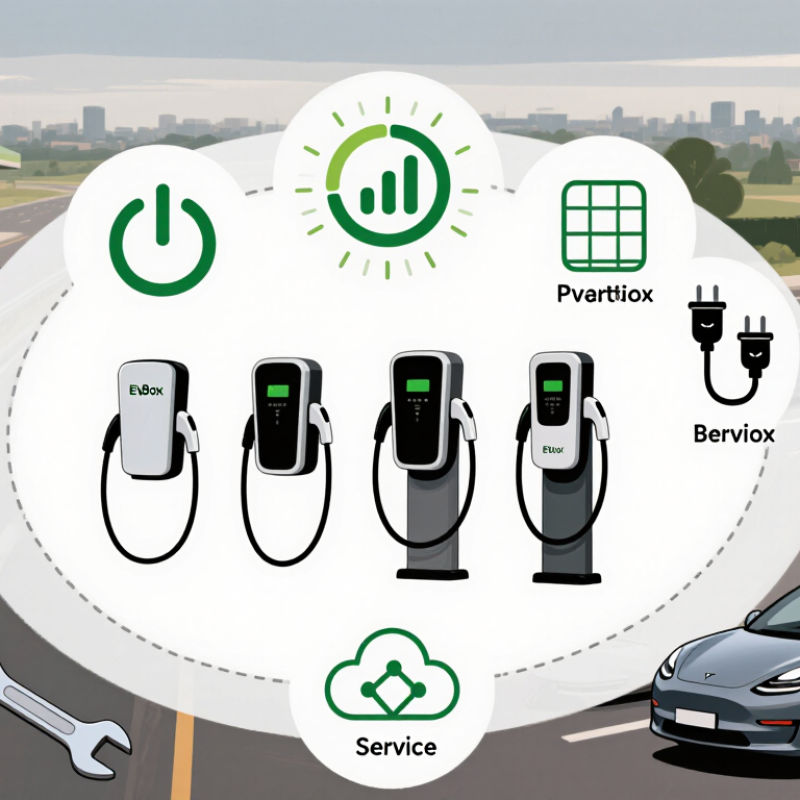
EV charging providers shape the market through more than hardware. Their role includes site planning, network software, payment access, and maintenance across different regions. The International Energy Agency’s Global EV Outlook 2024 reports that public charging points grew by 40% in 2023, reaching about 4 million worldwide. Public fast chargers grew faster, by 55%. That growth makes reliability essential. A broken charger beside a highway can matter more to a driver than a large network map.
For global buyers, practical evaluation starts at the site: expected vehicle traffic, grid capacity, climate, and repair access. A coastal location may need stronger corrosion protection; a busy depot may need several high-power units and smart load management. The IEA figures show expansion, but they do not reveal uptime or user experience. That gap matters. Buyers should compare independently verified reliability data, service response times, connector compatibility, and software integration—not just rated power. No single setup fits every market. Even good forecasts can miss local constraints.
EV charging stations generally fall into two groups: AC units for longer parking and DC units for faster charging. AC stations suit homes, workplaces, and hotel car parks, where vehicles may remain plugged in for hours. DC stations convert power inside the charger and can deliver energy more quickly, making them useful along highways and at busy fleet depots. Small details matter.
Core features include connector compatibility, power output, load management, and network connectivity. Smart load management can share available site capacity across several vehicles, reducing the chance that chargers compete for power during peak periods. Buyers should also check whether the station supports remote monitoring and clear fault reporting. These features sound ordinary, but poor software can make a reliable unit frustrating to operate.
The International Energy Agency’s Global EV Outlook 2024 reports that public charging points worldwide grew by more than 40% in 2023, while fast chargers grew by 55%. That growth highlights the need to match charger type to location, grid capacity, and expected dwell time. A highway site may benefit from high-power DC equipment; a workplace often does not. The distinction is not always neat. Actual charging speed can also vary with vehicle limits, temperature, and battery condition, so headline power figures deserve careful reading.
For homes, a compact AC charging station can make overnight charging simple without taking over a garage wall. Look for adjustable power, a durable cable, and clear status lights you can read at a glance. A unit with scheduled charging can suit households that prefer to charge outside busy hours. Check the home’s electrical capacity before choosing a model; the highest rated output is not always the most practical option. Small detail. Cable reach matters.
Businesses often need stations that serve visitors, staff, or both. Networked models can support access control, usage reports, and multiple charging points. For fleets, prioritize dependable daily operation, simple driver access, and load management that shares available power across vehicles. A depot with several cars returning at once has different needs from a small office with two employee spaces. The fit is not always obvious. A site review can reveal awkward cable routes, limited power, or parking spaces that are too tight.
Tips: Match the charger to the vehicle connector and local electrical setup. Ask an electrician to assess installation needs and future capacity. For shared sites, test the payment or access process before opening chargers to drivers. Keep a little spare capacity in your plan; expansion can be harder than expected.
Common rated output levels for home, workplace, destination, and rapid charging.
These are representative charger ratings, not guaranteed vehicle charging speeds. Actual power depends on the vehicle, charger, and site electrical capacity.
A charging station is useful only when its connector, power output, and local supply match the vehicle. AC charging commonly uses Type 1 or Type 2 connectors, depending on the market. For DC fast charging, CCS1 and CCS2 are widely used in different regions. Connector shape matters. So does communication between the vehicle and charger.
Power ratings can be misleading. A 22 kW AC unit may deliver less if the car’s onboard charger accepts only 11 kW. DC stations often range from around 50 kW to 350 kW, but battery temperature and charge level affect actual speed. A cold battery may charge slowly, even at a high-rated station. Check the vehicle’s supported connector and maximum charging rate before comparing equipment.
Regional compatibility also involves more than plugs. Grid voltage, frequency, installation capacity, and local certification requirements can differ. A site assessment can reveal whether a building needs electrical upgrades before installation. Ask suppliers to confirm connector options, operating ranges, and documented regional approvals in writing. Product sheets are helpful, but they can leave out installation limits. That is an easy detail to miss.
Compare charging stations against the site they will serve, not a brochure’s headline power. A depot with overnight parking needs a different mix from a highway stop with quick turnover. Map daily vehicle arrivals, dwell time, available grid capacity, and expected expansion. Then check connector compatibility, output range, weather protection, network functions, and local maintenance coverage. Small details matter.
The International Energy Agency’s Global EV Outlook 2024 reports more than four million public charging points worldwide in 2023. That was about 40% growth in one year. The report also notes that fast-charger numbers grew 55%. These figures show rapid infrastructure growth, but not uniform demand. Compare load management, uptime reporting, payment options, and remote diagnostics with your own site data. Ask for measured performance, not only rated output.
Request total-cost estimates covering installation, software, service, spare parts, and energy losses. Confirm who responds when a unit fails and how quickly common parts can be replaced. A polished specification sheet can still hide a thin service plan. That is easy to overlook. For cross-border projects, verify electrical configuration and data connectivity with local engineers before ordering; one checklist rarely fits every market.
| Top EVBox Charging Stations for Global Buyers - How Global Buyers Can Compare and Select EVBox Stations | ||||||
|---|---|---|---|---|---|---|
| Charging Station Category | Typical Output | Typical Charging Use | Common Installation Setting | Connector and Market Considerations | Site Requirements to Check | Best Fit for Buyers Seeking |
| Residential AC | About 3.7–7.4 kW | Overnight charging, usually over several hours. Actual charging speed depends on the vehicle’s onboard AC charger and the available electrical supply. | Private home garage, driveway, or assigned parking space | Connector type varies by market. Type 2 is common in Europe; Type 1 (J1772) is used for AC charging in North America; GB/T AC is used in China. | Check the home’s electrical capacity, circuit protection, cable reach, mounting location, and local permitting rules. | A straightforward home-charging setup with moderate power and limited site complexity. |
| Workplace AC | About 7–22 kW | Charging during a workday or a multi-hour parking period | Office, business campus, or staff car park | AC connector standards are region-dependent. Confirm connector compatibility and whether access control or usage reporting is required. | Assess the number of parking bays, electrical supply, load management, network coverage, and future expansion needs. | Employers and property operators who want several vehicles to charge while parked for extended periods. |
| Destination AC | About 11–22 kW | Charging during longer visits, such as hotel stays, shopping, or appointments | Hotels, retail locations, public car parks, and visitor facilities | Regional AC connector standards differ. Make connector availability clear to drivers and verify local accessibility requirements. | Review parking duration, user access, signage, weather exposure, cable management, and electrical capacity. | Sites where vehicles typically remain parked for a few hours or longer. |
| Public DC Fast Charging | About 50–150 kW | Shorter public stops; charging time varies with vehicle capability, battery state, temperature, and power sharing. | Urban charging hubs, public car parks, and busy roadside locations | DC connector standards vary by region: CCS2 is widely used in Europe, CCS1 in North America, and GB/T DC in China. Confirm local vehicle compatibility. | Check grid capacity, utility connection timelines, demand charges, payment options, network connectivity, and accessible parking layout. | Operators balancing quicker turnarounds with site power and infrastructure constraints. |
| High-Power DC Charging | About 150–350 kW | High-power charging stops on major routes. A vehicle will only draw power up to its own charging limit and under suitable battery conditions. | Motorway service areas and high-throughput charging hubs | Connector and vehicle compatibility must be checked for the target market. Higher rated station power does not guarantee the same charging speed for every vehicle. | Confirm high-capacity grid access, site engineering, cooling and cable handling needs, grid upgrade costs, and expected peak demand. | Locations with strong grid access and demand for rapid driver turnover. |
| Multi-Point Managed AC or DC Site | Varies by equipment and site; available power may be shared across charging points. | Charging multiple vehicles while managing a site’s overall electrical load | Fleets, workplaces, residential developments, and commercial car parks | Specify connector standards for each target market and confirm that any charging management system supports the intended operating model. | Evaluate simultaneous demand, load balancing, metering, communications, software requirements, maintenance access, and expansion plans. | Buyers planning multiple charging points or phased site growth. |
This content is restricted to site members. If you are an existing user, please log in. New users may register … LEARN MORE “Lighting Power & Control-Signal Cable”
We are here to help. You can contact us or create an account online to have access to special products, technical specifications and our new online quote tool.
ELECTRO CABLES
9 Riverside Drive
P.O. Box 276
Trenton, Ontario
CANADA K8V 5R5
N.A. Toll Free: 888-ELECTRO
(1-888-353-2876)
World: 613-394-4896
Fax: 613-394-4101
Email: sale@machinecables.com
We manufacture cables that are certified by the Canadian Standards Association (CSA), listed by Underwriters Laboratories and/or listed by Intertek (ETL).
Our quality management system is registered to ISO 9001: 2015. Our team is dedicated to consistently providing quality service and products to our customers.

© 2025 ELECTRO CABLES • SITE BY SNAP 360•