Top Food Checkweigher Options for Global Buyers Today?
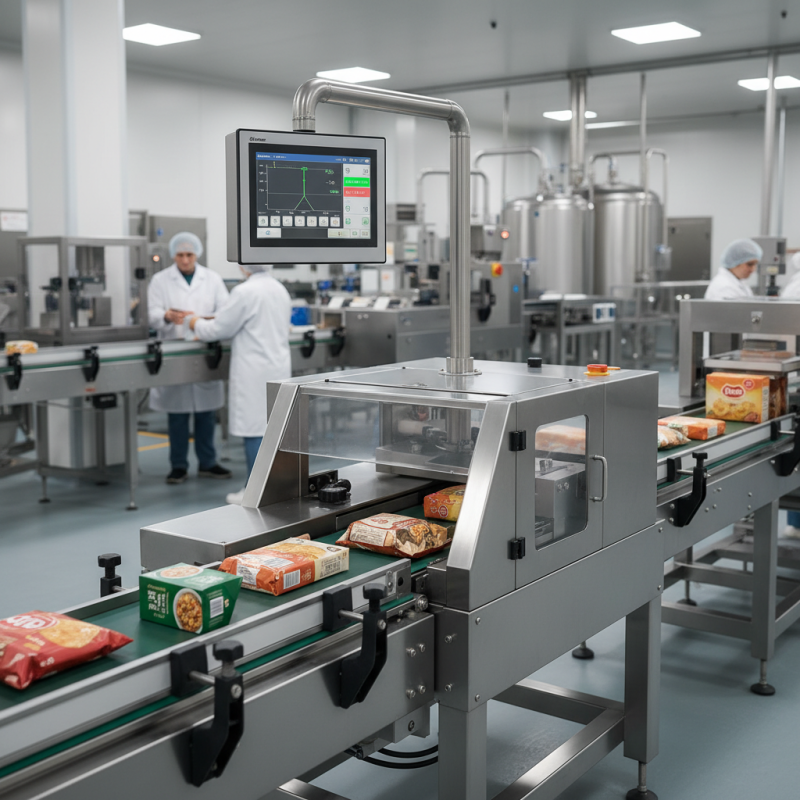
Food Checkweighers play a critical role in the food production industry. They ensure accuracy in packaging and compliance with regulations. Many buyers today seek reliable checkweighers to improve their operations.
The importance of precision in food processing cannot be overstated. A simple weight discrepancy can lead to waste or regulatory issues. The right Food Checkweigher helps prevent these problems efficiently. Manufacturers must choose wisely.
However, not every option on the market meets high standards. Some machines fall short in durability or accuracy. Buyers should carefully evaluate features and reviews. Investing in a reputable Food Checkweigher can enhance quality control.
Overview of Food Checkweighers and Their Importance in the Industry
Food checkweighers play a vital role in the food industry, ensuring accurate product weighing and compliance with regulations. The global market for these systems has been growing steadily, projected to reach USD 1.3 billion by 2025, with a CAGR of around 6.8% from 2020. This growth reflects the increasing need for quality control and waste reduction in food processing. Inaccurate measurements can lead to significant financial losses and regulatory challenges.
In the food sector, precision is non-negotiable. Overfilling or underfilling products can result in customer dissatisfaction and regulatory fines. Recent studies indicate that up to 20% of food products may be incorrectly weighed. This is alarming when considering the impact on consumer trust and brand reputation. Businesses must invest in reliable checkweighers to minimize these risks.
Moreover, the implementation of advanced technologies, such as dynamic checkweighing and integration with production systems, is enhancing operational efficiency. However, many companies still struggle with outdated equipment. As a consequence, the potential for errors increases, undermining product integrity. Continuous improvement and adaptation to new technologies are crucial for maintaining competitiveness in a fast-evolving landscape.
Key Features to Consider When Selecting a Food Checkweigher
When selecting a food checkweigher, several key features should be prioritized. Precision and accuracy are essential. A reliable checkweigher detects weight variations with minimal error. This is crucial for maintaining product quality. Ensure that your choice can accommodate your product's weight range and varying packaging formats.
Speed is another vital factor. A fast checkweigher can boost your production efficiency significantly. Look for models that provide real-time feedback. This ensures immediate adjustments to maintain standards.
Tips: Regular calibration is important. An out-of-calibration machine can lead to costly errors. Also, consider ease of use. A user-friendly interface helps training new staff. Don't overlook the importance of maintenance. Frequent inspections can prevent unexpected downtime.
Top Manufacturers of Food Checkweighers for Global Markets
Food checkweighers play a vital role in ensuring product quality and compliance. Various top manufacturers produce these essential machines for global markets. Their expertise is reflected in the diverse options available today. These devices help prevent overfilling and underfilling, which can lead to significant financial losses and customer dissatisfaction.
Tips for selecting the right machine include understanding your production needs. Consider the speed and accuracy required for your specific products. Evaluate the machine’s adaptability to different packaging types. Not all checkweighers will fit seamlessly into your production line, so pay attention to the footprint and integration capabilities.
It's important to assess the reliability of the manufacturer. Research their industry experience and customer reviews. Reliable manufacturers often provide robust support services. This can be crucial when unexpected issues arise with the machines. Sometimes, the most popular choice doesn't always equate to the best fit for your operation. Reflect on what features truly matter to your business needs.
Innovations in Food Checkweighing Technology
Food checkweighing technology is evolving rapidly, driven by the need for accuracy and efficiency. Innovations in this field address key challenges faced by food manufacturers. Many companies are now utilizing advanced sensors that provide real-time weight measurements. This helps in reducing human error and ensures compliance with regulations.
Some of the latest checkweighers feature user-friendly interfaces that streamline operations. However, integrating these sophisticated systems can be daunting for some companies. It requires proper training and a thorough understanding of the technology. Regular calibration and maintenance are crucial to ensure reliable performance.
The growing emphasis on sustainability and waste reduction is also influencing innovations. Newer models are designed with minimal energy consumption in mind. On the other hand, companies must consider their budget constraints. Balancing cost and quality can be difficult but is necessary for long-term success. Many find themselves reflecting on their priorities when investing in these technologies.
Comparative Analysis of Food Checkweigher Models and Their Applications
Food checkweighers are essential in ensuring product quality and compliance. Various models are available for different applications. Some are designed for high-speed processing, which is crucial for large production lines. These models can handle numerous items per minute while maintaining accuracy. Accuracy is vital. A minor error can lead to financial loss.
Specific checkweigher models excel in handling bulk products, like grains or snacks. They often feature dynamic weighing technology. This allows them to adjust during operations, ensuring that weight discrepancies are minimized. However, not every model fits every product. Some designs might struggle with irregular shapes, losing efficiency. Choosing the right model requires careful analysis.
Environmental factors also play a role. Temperature and humidity can affect weighing accuracy. Some models are better suited for challenging environments. When selecting a checkweigher, consider operational conditions and product types. Balancing efficiency with accuracy can be challenging. Each choice comes with trade-offs, making research essential for optimal selection.