Electro Cables
Login

China Top 10 Noise Meter Manufacturers for Global Buyers

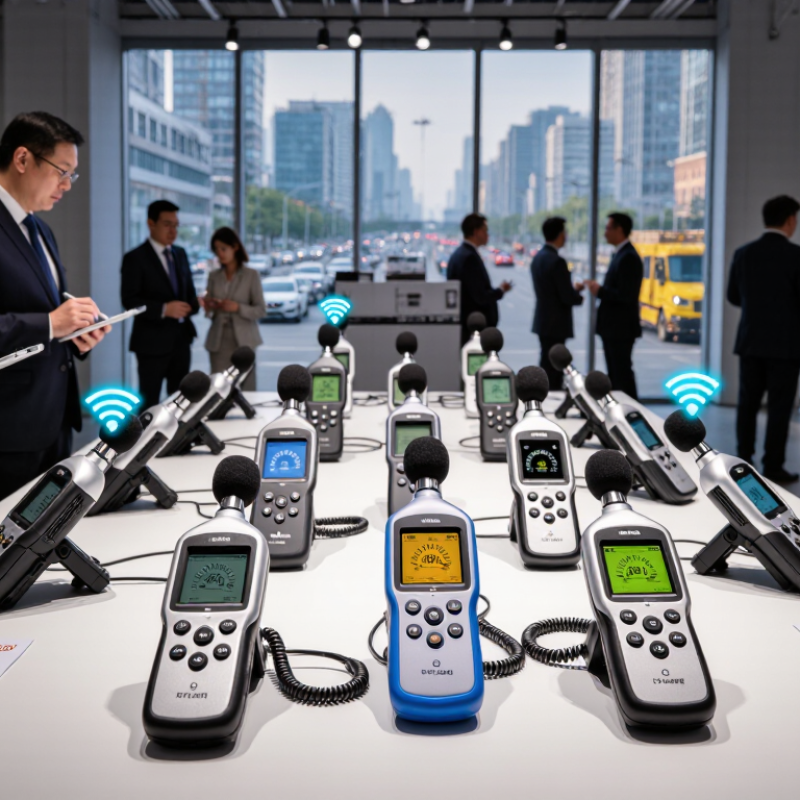
Global demand for reliable Noise Meter equipment is rising as cities measure traffic, construction, factories, and workplace exposure more carefully. Buyers need more than a low purchase price. They need stable calibration, clear software, durable microphones, and dependable after-sales support.

The European Environment Agency’s Environmental Noise in Europe 2020 report estimated that over 113 million Europeans faced harmful road-traffic noise exposure above 55 dB Lden. The World Health Organization also identifies environmental noise as a major public-health concern. These figures explain why accurate sound-level measurement matters in daily procurement decisions. Small errors can affect a factory audit, a building assessment, or a community complaint.

“Noise is not just a nuisance, it is a health hazard,” says Dr. Arline L. Bronzaft, a widely cited environmental-noise researcher. Her statement remains practical for global buyers. A Noise Meter must capture real conditions, not merely produce attractive specifications. China’s leading manufacturers now offer Class 1 and Class 2 instruments, integrating data logging, octave-band analysis, Bluetooth connectivity, and calibration functions. Still, product claims require careful checking. Marketing language can sound stronger than field performance.

This guide reviews China’s top 10 Noise Meter manufacturers for international buyers. It considers technical capability, certifications, manufacturing experience, export service, and application suitability. No ranking is permanent. Testing methods differ, and supplier information can change. Buyers should verify current certificates, calibration traceability, microphone quality, and regional support before placing an order. That extra step may feel slow. It often prevents expensive measurement mistakes.
China Top 10 Noise Meter Manufacturers for Global Buyers

Noise Meter Manufacturing in China: Industry Scope and Product Types

China’s noise meter manufacturing sector serves construction, factories, transport, and environmental monitoring. Grand View Research estimated the global noise monitoring system market at about USD 1.4 billion in 2023, with steady growth expected through 2030. China’s large electronics supply chain supports flexible production, from sensors and preamplifiers to displays, batteries, and data platforms. However, factory scale alone does not prove measurement reliability.

Common product types include handheld sound level meters, integrating-averaging meters, personal noise dosimeters, and fixed environmental monitoring stations. Class 1 instruments support stricter engineering and compliance work, while Class 2 meters suit general surveys and workplace checks. IEC 61672-1 remains an important reference for acoustic performance.

The World Health Organization also links excessive environmental noise with sleep disturbance and cardiovascular risks, increasing demand for continuous monitoring. Product listings can look impressive. Calibration evidence matters more.

Tips: Check IEC 61672 claims, calibration certificates, microphone specifications, frequency weighting, and data export formats. Ask for test results at several sound levels, not only one sample. A practical trial near machinery can reveal wind noise, weak battery life, or unstable Bluetooth connections. Reports often disagree on market size because product categories overlap. That uncertainty deserves attention.
Key Criteria for Evaluating Chinese Noise Meter Manufacturers

China Top 10 Noise Meter Manufacturers for Global Buyers

When evaluating Chinese noise meter manufacturers, measurement credibility should outweigh a low quotation. The IEC 61672 standard separates sound level meters into Class 1 and Class 2 accuracy. Class 1 is preferable for laboratory and regulatory work, while Class 2 suits general surveys. Ask for recent calibration records, test uncertainty, and traceability to an accredited laboratory. ISO/IEC 17025 accreditation adds stronger confidence, but certificates still require careful checking.

Performance should match the buyer’s real environment. The WHO Environmental Noise Guidelines for the European Region recommend keeping night noise below 40 dB Lnight outdoors. NIOSH’s occupational noise criteria use 85 dBA over eight hours, with a 3 dB exchange rate. A suitable manufacturer should explain frequency weighting, time weighting, microphone performance, data logging, and overload limits clearly. Firmware stability and exportable reports matter too. I have seen impressive specifications fail during humid field testing. That risk deserves attention.

Tips: Request a sample unit before ordering. Compare readings against a calibrated reference meter. Check calibration intervals, replacement microphones, battery life, software language, warranty response, and shipping support. Ask whether environmental testing covers temperature, humidity, vibration, and electromagnetic interference. A low price may hide weak after-sales service. No checklist is perfect, but transparent evidence is more valuable than polished promises.

China Top 10 Noise Meter Manufacturers for Global Buyers

Key Criteria for Evaluating Chinese Noise Meter Manufacturers

This buyer evaluation framework highlights the most practical criteria for comparing noise meter manufacturers: measurement compliance, calibration traceability, product reliability, export readiness, customization capability, delivery performance, technical support, and total cost. IEC 61672-1, ISO/IEC 17025, CE, RoHS, IP protection, and documented quality systems are commonly reviewed during international procurement.

China’s Top 10 Noise Meter Manufacturers for Global Buyers

China’s Top 10 Noise Meter Manufacturers for Global Buyers deserve careful evaluation beyond factory scale. Reliable suppliers should demonstrate controlled calibration, stable production, and compliance with IEC 61672 requirements. This standard separates sound level meters into Class 1 and Class 2 accuracy categories. Class 1 instruments suit laboratory and environmental surveys. Class 2 meters often fit routine workplace checks.

Noise exposure remains a serious measurement issue. NIOSH estimates that about 22 million U.S. workers face potentially hazardous noise each year. Its recommended exposure limit is 85 dBA over eight hours, using a 3 dB exchange rate. OSHA uses different enforcement criteria, including a 90 dBA eight-hour permissible exposure limit. These differences matter for global buyers. A meter must support the correct measurement protocol, not simply display loud numbers. Look for A-weighting, C-weighting, time weighting, data logging, and calibration verification. No shortlist is flawless. Factory claims still require independent evidence, sample testing, and after-sales response checks.

Tips: Request calibration certificates linked to recognized laboratories. Test several units at quiet offices and busy workshops. Confirm software language, battery endurance, warranty terms, and export documentation. Do not judge accuracy from screen brightness. A polished interface can still conceal unstable readings. WHO environmental noise guidance also shows why location and duration affect health interpretation. Buyers should record microphone position, distance, weather, and operating conditions. Small omissions can weaken an otherwise professional report.

International Standards, Certifications, and Quality Control

China Top 10 Noise Meter Manufacturers for Global Buyers

International Standards, Certifications, and Quality Control

For global buyers, a noise meter should meet recognized acoustic standards, not only display attractive specifications. IEC 61672-1 Class 1 or Class 2 classification is a key reference for sound level meters. IEC 60942 also matters when checking acoustic calibrators. These standards define accuracy, frequency response, and testing conditions. A supplier should provide valid reports with the exact model and serial range.

Certification paperwork needs careful review. ISO 9001 indicates a documented quality management system, while ISO/IEC 17025 confirms laboratory competence. However, neither certificate proves every product is accurate. Check the certificate scope, issuing body, expiry date, and calibration uncertainty. CE, EMC, and RoHS documents may support access to certain markets, but requirements differ by destination. Details matter.

Quality control should continue beyond final assembly. Reliable factories record microphone sensitivity, frequency response, battery performance, and display function for each batch. Some use reference calibrators before shipment. Others perform temperature, humidity, vibration, and drop tests. Ask for sample inspection records and calibration traceability. A serial-numbered report is more useful than a general promise.

Field experience reveals small weaknesses. Buttons may fail with gloves. Screens can become hard to read in sunlight. Firmware updates may receive less attention than hardware. Buyers should test several samples, compare readings with a trusted reference, and request corrective-action records. No production line is perfect, and honest suppliers can explain their limits.

China Top 10 Noise Meter Manufacturers for Global Buyers - International Standards, Certifications, and Quality Control

Comparative buyer-screening table based on commonly available Chinese production capabilities, international standards, conformity documentation, and quality-control practices. No company or brand names are displayed.

No. Manufacturer Profile Typical Product Focus Target IEC 61672 Class Typical Frequency Range Key Measurement Functions Relevant Standards and Certifications Quality-Control Practices Calibration and Documentation
1 Profile A — Precision Laboratory Supplier Class 1 integrating sound level meters for laboratory and environmental compliance work Class 1 Typically 10 Hz–20 kHz, depending on microphone and analyzer configuration Leq, Lmax, Lmin, peak C, statistical levels, octave and one-third-octave analysis IEC 61672-1; IEC 61672-2; IEC 61260-1 for frequency-band filters; CE and RoHS documentation commonly available Incoming microphone inspection, PCB functional testing, acoustic chamber verification, final sensitivity and frequency-response checks Traceable factory calibration certificate; calibration support normally aligned with ISO/IEC 17025 practices
2 Profile B — Environmental Monitoring Supplier Portable meters for workplace, community-noise, construction, and environmental surveys Class 1Class 2 Commonly 20 Hz–20 kHz Time-weighted SPL, LAeq, LAFmax, LCpeak, dose-related measurements, data logging IEC 61672-1; IEC 61672-2; EMC testing under applicable CE requirements; IP protection tested under IEC 60529 when specified Production sampling plan, display and keypad testing, battery-current testing, microphone preamplifier inspection, 100% power-on verification Individual serial-number report, acoustic calibrator compatibility check, user-adjustable calibration offset control
3 Profile C — Occupational Noise Supplier Personal noise dosimeters and compact meters for industrial hygiene programs Class 2 Typically 20 Hz–8 kHz or 20 Hz–20 kHz Exposure dose, projected dose, TWA, exchange-rate settings, threshold and criterion-level settings IEC 61252 for personal sound exposure meters; IEC 61672-1 for sound level meter functions; CE/RoHS technical files commonly supplied Battery endurance testing, accelerometer and microphone checks, enclosure inspection, firmware version control, functional test before shipment Pre- and post-use acoustic verification procedure; calibration records linked to device serial numbers
4 Profile D — Industrial Acoustic Analyzer Supplier Handheld analyzers for machinery diagnostics, HVAC testing, and production-line troubleshooting Class 1 Typically 10 Hz–20 kHz, with optional extended analysis bands FFT analysis, octave bands, one-third-octave bands, Leq, sound power screening, USB data export IEC 61672-1; IEC 61260-1; ISO 3744 or ISO 3746 may be referenced for sound-power measurement workflows, subject to test setup Frequency-response comparison against reference equipment, connector inspection, software regression testing, data-integrity verification Calibration certificate, firmware revision record, reference microphone data, and measurement software documentation
5 Profile E — Construction and Building-Acoustics Supplier Rugged meters for building sites, infrastructure projects, and temporary outdoor monitoring Class 2 Commonly 20 Hz–20 kHz LAeq, L10, L50, L90, Lmax, date-stamped logging, programmable measurement intervals IEC 61672-1; IEC 61672-2; IEC 60529 ingress-protection rating when claimed; CE and UKCA documentation may be available Drop and vibration screening for selected models, weather-resistant enclosure inspection, battery and memory testing, sampling inspection Calibration verification before dispatch; optional outdoor microphone protection and windscreen documentation
6 Profile F — OEM and Private-Label Supplier Configurable handheld meters and embedded noise-measurement modules for international distributors Class 2Model-dependent Typically 31.5 Hz–8 kHz or 20 Hz–20 kHz SPL, A/C/Z weighting, fast/slow response, peak hold, automatic range, optional Bluetooth or USB transfer IEC 61672-1 testing may be offered by model; CE, RoHS, EMC, and battery transport documents depend on final configuration Approved-sample control, first-article inspection, lot traceability, firmware locking, customized label and packaging inspection Certificate format and language can usually be customized; independent laboratory testing is recommended for regulated markets
7 Profile G — Smart Connected Monitoring Supplier Network-enabled meters, remote monitoring nodes, and cloud-connected acoustic sensors Class 2Sensor-grade Commonly 20 Hz–20 kHz for sound-level channels Continuous LAeq, alarms, scheduled sampling, remote configuration, cellular/Wi-Fi/Ethernet data transmission IEC 61672-1 where applicable; CE/FCC radio and EMC documentation depends on wireless module and target market; RoHS commonly specified Sensor calibration, network stress testing, time-synchronization checks, enclosure sealing inspection, cybersecurity and firmware-update controls Digital calibration record, cloud audit trail, device health report, and optional third-party acoustic verification
8 Profile H — Educational and General-Purpose Supplier Economical meters for training, preliminary surveys, maintenance, and non-regulatory applications Class 2General-purpose Usually 31.5 Hz–8 kHz or 30 Hz–8 kHz A/C weighting, fast/slow response, maximum hold, manual range selection, basic display logging Manufacturer conformity declaration may reference applicable EMC, safety, and RoHS requirements; IEC 61672 compliance must be confirmed model by model Basic sensitivity check, display inspection, button and battery testing, sampling-based final inspection Factory test report typically supplied; accredited calibration should be requested for legal or contractual measurements
9 Profile I — Calibrator and Accessories Supplier Acoustic calibrators, microphones, preamplifiers, windscreens, tripods, and measurement accessories Accessory-focused Common calibrator frequencies include 250 Hz or 1 kHz, depending on model 94 dB and/or 114 dB calibration levels, microphone adaptation, battery-status indication, field verification support IEC 60942 for sound calibrators; IEC 61672-1 compatibility should be confirmed for the connected meter; CE/RoHS documentation commonly available Output-level stability test, frequency verification, adapter fit inspection, battery-load test, environmental-condition checks Calibration certificate with measured output level, frequency, uncertainty information, and traceability statement
10 Profile J — Contract Manufacturing and Export Supplier High-volume portable meters for distributors, retail channels, and project-based procurement Class 2Model-dependent Typically 31.5 Hz–8 kHz or 20 Hz–20 kHz SPL, Leq, Lmax, A/C/Z weighting, data logging, USB export, optional temperature and humidity channels CE/RoHS and product-safety documentation commonly available; IEC 61672 test evidence should be requested rather than assumed Incoming quality control, assembly-line functional testing, lot sampling, barcode traceability, packaging drop testing, pre-shipment inspection Batch test report and commercial inspection report; independent pre-shipment calibration or laboratory testing recommended
Buyer verification note: IEC 61672-1 compliance, CE marking, RoHS status, IP rating, ISO/IEC 17025 traceability, and stated accuracy are model-specific claims. Global buyers should request the exact test report, declaration of conformity, calibration certificate, uncertainty data, serial-number traceability, and applicable user manual before placing an order.

Export Services, Customization, and Buyer Selection Considerations

China’s top noise meter manufacturers increasingly serve global buyers through structured export support, not only factory pricing. Experienced suppliers should provide product specifications, commercial invoices, packing lists, and clear shipping terms. Ask whether manuals are available in your working language and whether cartons protect the microphone during humid sea transport. Small details matter.

Customization can range from a simple logo and color change to firmware, data logging, frequency weighting, microphone cables, and rechargeable battery options. A practical supplier will confirm sampling requirements before production. Request a working sample, calibration report, and video showing the meter in a real testing environment. Check whether calibration comes from a qualified laboratory, especially for workplace or construction measurements. Do not rely on a certificate title alone.

Buyer selection requires more than comparing unit prices. Review response speed, replacement parts, warranty limits, minimum order quantities, and after-sales procedures. Confirm the export team understands your destination’s plug, labeling, packaging, and documentation needs. A polished catalog can hide weak technical support. No supplier gets every detail right. I would test repeatability across several readings and ask difficult questions before placing a large order. Sometimes a slightly higher price buys better sensors, clearer records, and fewer delays. That trade-off deserves careful review.

Lighting Power & Control-Signal Cable

This content is restricted to site members. If you are an existing user, please log in. New users may register … LEARN MORE “Lighting Power & Control-Signal Cable”