
Top Truck Refrigeration Units for Sale
Choosing a Refrigeration Unit Truck is more than comparing prices and horsepower. A unit must hold the required temperature through loading delays, traffic, and frequent door openings. The FAO’s 2019 State of Food and Agriculture estimated that 13.8% of food was lost between harvest and retail. That figure is not a truck-specific measure, but it shows why dependable temperature control matters. Details matter.
For buyers comparing top Truck Refrigeration Units for sale, check cooling capacity at the actual ambient temperature, fuel or electric use, service access, and temperature-recording features. Ask how quickly the unit can recover after doors open. A refrigerated warehouse can look impressive on paper; a hot delivery bay tells a different story. The Global Cold Chain Alliance’s 2020 Global Cold Storage Capacity Report estimated worldwide capacity at about 719 million cubic metres. That scale underscores the cold chain’s importance, though it does not identify the right unit for every route.
Cold-chain researcher Dr. Judith Evans’s work supports a practical buying principle: “Choose temperature control for the product and the journey, not just the truck.” This is a paraphrase, not a verbatim quotation. A careful shortlist should compare published performance data with real operating conditions, then confirm maintenance support and parts availability. A perfect specification sheet cannot prevent every temperature excursion. That is worth remembering. A unit that is easy to inspect and service may prove more useful than one with impressive numbers but limited local support.
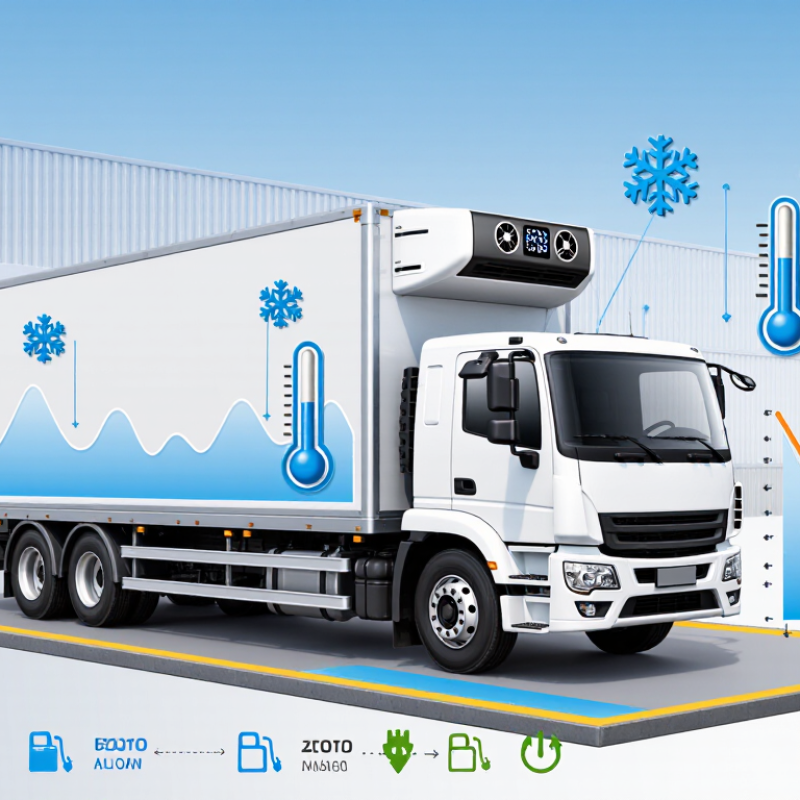
Understanding Truck Refrigeration Units and Their Core Functions
Understanding Truck Refrigeration Units and Their Core Functions
A truck refrigeration unit helps protect temperature-sensitive cargo during transit. Its basic cycle moves heat from inside the cargo area to the outside air. The evaporator absorbs heat inside the box, while the condenser releases it outdoors. A compressor keeps refrigerant circulating through the system. Simple in principle. Demanding in practice.
Many units run from the truck engine, an independent diesel engine, or an electric power source. Some support standby power while the vehicle is parked. The right setup depends on route length, cargo, required temperature range, and how often doors open. A unit can maintain a set temperature, but it is not designed to rapidly cool warm goods. Pre-cooling the cargo space matters. So does loading chilled products carefully, with air gaps around packages. Blocked vents can create warm spots, even when the display looks normal.
For buyers, check cooling capacity under realistic conditions, not just the advertised temperature range. Consider ambient heat, stop frequency, insulation, and service access. Ask how temperature readings are monitored and what maintenance the system needs. Condenser fins packed with dust, for example, can reduce heat transfer. It is easy to focus on purchase price and overlook operating costs. That deserves a second look. No refrigeration unit can compensate for poor door seals or careless loading.
Top Truck Refrigeration Units for Sale - Understanding Truck Refrigeration Units and Their Core Functions
Compare common truck refrigeration system types by power source, operating role, and buying considerations. Temperature examples are typical cargo targets; actual performance depends on the unit, vehicle, insulation, ambient conditions, and load.
| System Type | How It Is Powered | Core Functions | Typical Cargo Use | Key Buying Checks |
|---|---|---|---|---|
| Direct-Drive Unit | Compressor is driven by the truck’s engine through a mechanical or belt-driven system. | Removes heat from the insulated cargo body, circulates cooled air, and helps maintain a selected set point while the vehicle is operating. | Local and regional deliveries, such as chilled food, flowers, and temperature-sensitive supplies. Chilled cargo is commonly transported around 2–8°C, subject to product requirements. | Check engine compatibility, refrigeration capacity, expected stop-and-start duty cycle, cab controls, and service access. Confirm how temperature is maintained when the truck is parked. |
| Self-Powered Unit | Uses a separate engine to drive the refrigeration system independently of the truck’s main engine. | Provides active cooling during transit and can continue operating during deliveries or vehicle stops, depending on configuration and fuel supply. | Medium- and long-distance transport, larger insulated bodies, and routes with frequent stops or extended cooling periods. Frozen products are commonly carried at about -18°C or below when required by the cargo. | Review cooling capacity, fuel use, noise and emissions requirements, maintenance history, operating hours, and the condition of the separate engine and refrigeration components. |
| Electric Standby System | Runs from an external electrical connection while the vehicle is parked; the in-transit power source depends on the system design. | Maintains cargo temperature during stationary periods and can reduce reliance on an onboard engine when a compatible electrical supply is available. | Distribution operations with depots, loading areas, or parking locations equipped with the required electrical connection. | Check voltage and connection requirements, compatibility with the refrigeration unit, available site power, and whether the system provides cooling while driving or only during standby. |
| All-Electric or Battery-Driven System | Uses an electric compressor powered by a vehicle electrical system, battery pack, or other specified electrical source. | Controls cargo temperature without a separate diesel refrigeration engine; system operation and runtime depend on battery capacity, vehicle configuration, and cooling demand. | Urban delivery routes and fleets designed for electric vehicle operation, where charging access and route planning can support the required refrigeration duty. | Verify usable battery capacity, expected runtime at the required set point, charging time, payload impact, electrical compatibility, and performance in hot ambient conditions. |
| Multi-Temperature System | Power source varies by configuration; the system uses separate compartments, evaporators, or control zones. | Maintains different temperature settings in separate cargo areas, allowing chilled and frozen goods to travel in one vehicle when the system is designed for those loads. | Mixed-load deliveries, such as chilled produce in one compartment and frozen goods in another. | Confirm the number of independently controlled zones, partition and door insulation, airflow design, capacity in each zone, and whether the intended temperature combination is supported. |
| Refrigeration Unit with Data Logging | Power source varies; temperature sensors and a recording or monitoring system are added to the refrigeration setup. | Records temperature readings over time and may provide alarms or reports to help operators monitor excursions and document handling conditions. | Food, pharmaceutical, and other temperature-sensitive deliveries that require temperature records or closer monitoring. | Check sensor placement, recording interval, alarm options, data export, calibration records, and whether the monitoring features meet the cargo owner’s requirements. |


Our quality management system is registered to ISO 9001: 2015. Our team is dedicated to consistently providing quality service and products to our customers.