A partner you can trust
A Tee Head Bollard is recognized by its horizontal crosspiece, which gives the post a clear, distinctive profile. That shape can help people identify a barrier or locate a handhold, depending on the installation. Yet appearance is only part of the choice. Material, fixing method, site conditions, and maintenance needs all affect which design is suitable.
Common options include fixed, removable, and surface-mounted Tee Head Bollards. Fixed models are generally chosen where a permanent boundary is needed. Removable versions can provide access when a post must be taken out, while surface-mounted designs may suit locations where digging is difficult. Materials such as steel and stainless steel offer different finishes and upkeep requirements. The right choice depends on exposure, expected use, and the ground beneath the post. Small details matter.
This guide compares the main types and explains where each may be useful. It also considers practical features such as base plates, finish, visibility, and installation. A polished product image cannot show how a bollard will perform on a busy walkway or beside a loading area. Site measurements and a review of the manufacturer’s specifications are essential. No single style fits every location. Some choices may look right at first, then prove inconvenient to maintain. Careful comparison helps property owners, designers, and contractors select a Tee Head Bollard that balances function, durability, and appearance.
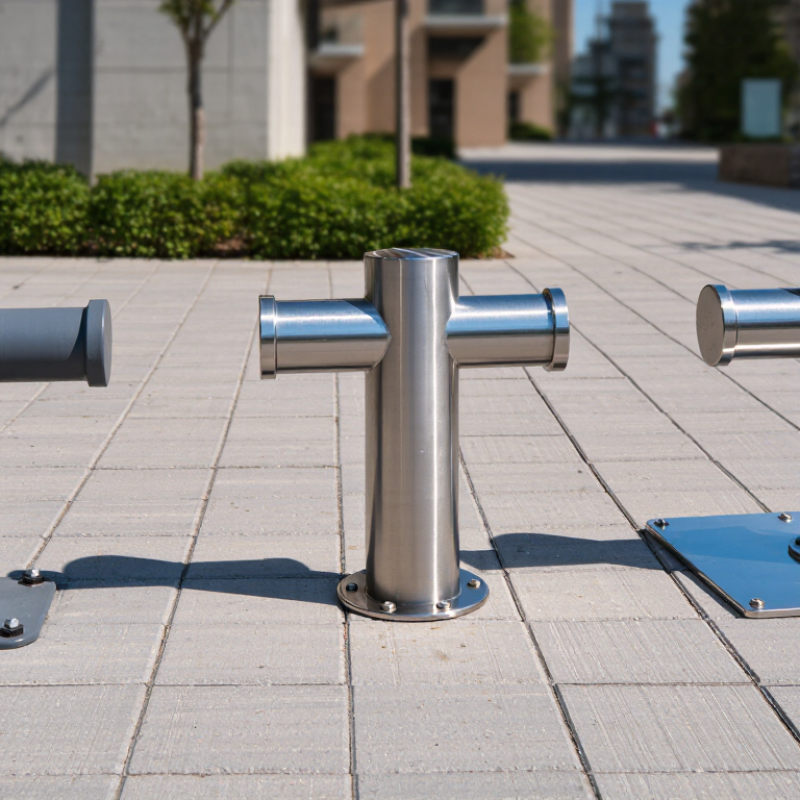
A tee head bollard is identified by its upright post and a horizontal bar across the top. The crossbar creates a clear T shape, making the bollard easy to recognize in a streetscape, parking area, or pedestrian zone. The form is simple. Its proportions can vary: some models have a compact, rounded head, while others use a longer, flatter bar.
That top bar is more than decoration. It can offer a handhold, help people distinguish the post from a plain vertical bollard, and provide a convenient point for linking a chain where the design allows. The post itself is commonly made from metal, with a protective finish chosen for the site’s weather and expected use. Check how it is anchored, too. A strong-looking head cannot compensate for an unsuitable foundation.
Tee head bollards may be fixed in place or designed to be removable, depending on access needs. Their crossbars can also affect spacing: leave enough room for people to pass comfortably and for maintenance equipment to reach the area. Small details matter. A broad bar can catch sleeves or bags in a crowded walkway, and that drawback is easy to overlook on a drawing. Review the actual dimensions and installation conditions before choosing a style.

Tee head bollards are best classified by installation, material, and intended use. Their T-shaped cap can provide a point for attaching a chain, depending on the design. Fixed models are embedded or base-plated for a permanent boundary. Removable models lift from a ground sleeve, allowing occasional access to a driveway or service lane. Some versions hinge down, but confirm this feature for the specific model and site. Small detail, big difference.
Material offers another useful distinction. Coated carbon steel suits many outdoor settings, while stainless steel may be chosen for damp or corrosive environments. Grade and maintenance still matter. Size and wall thickness help distinguish light-duty guidance posts from sturdier units designed for repeated contact. Don’t judge strength by the T-head alone. Check the base, anchoring method, dimensions, and stated impact performance together. Finishes such as paint or galvanizing affect weather resistance and upkeep. In practice, categories can overlap, and product descriptions are not always consistent. That can be frustrating. Compare installation details and intended use before specifying bollards beside a curb, loading area, or pedestrian entrance.
How Tee Head Bollards Are Classified
Tee head bollards can be classified by how they are installed and moved: fixed bollards stay in place, removable bollards can be taken out, and retractable bollards lower into the ground. The 1–3 scale is a qualitative mobility index, not a performance rating. Surface mounting is an installation method that may apply to some fixed designs.
Tee head bollards are commonly made from carbon steel, stainless steel, or cast iron. Carbon steel suits busy walkways and loading areas because it is sturdy and easy to repair. It often receives a protective coating to reduce rust. Stainless steel resists corrosion and works well near coastal air or frequently washed entrances. Its brushed surface also hides light fingerprints better than a mirror polish. Cast iron offers a heavier, traditional appearance, though chips in its finish need attention.
Finish and upkeep Finish affects both appearance and upkeep. Hot-dip galvanizing coats steel with zinc, providing practical protection where rain and road spray are common. Powder coating adds color and a smooth surface; a scratched edge, however, can expose the metal beneath. Brushed stainless steel has a muted grain, while polished steel reflects more light and shows smudges more easily. Small detail. The right choice depends on exposure, cleaning routines, and how visible the bollard should be. I would not choose by appearance alone: a dark coating can look neat on installation day, yet its wear may stand out against pale paving. Check the finish periodically, especially around the base and tee-shaped top.
Tee head bollards combine a vertical post with a crossbar-shaped top, which can offer a clear visual feature or a convenient point for compatible chains. Their best type depends on how often access needs to change, what the surface can support, and the level of impact resistance required. Check the product specifications and site conditions before choosing.
Fixed bollards are anchored permanently into the ground, often in a prepared concrete foundation. They suit entrances, pedestrian edges, and other places where vehicle access should remain restricted. The installation is less flexible, so underground services and drainage need attention before excavation. A careful site check matters.
Removable bollards lift out of a ground socket, allowing occasional vehicle access while keeping the post in place the rest of the time. They can be useful near service routes or shared spaces, but the socket needs regular cleaning. Grit collects there. Surface-mounted designs fasten to existing concrete with anchors, avoiding deep excavation and making installation more straightforward. However, their performance depends on slab thickness, concrete condition, and correct anchoring. That trade-off is easy to overlook. In practice, layouts are rarely as tidy as drawings suggest, so allow room for the bollard, its tee head, and any attached chain.
A tee-head bollard’s crossbar gives users a clear point for attaching a chain, but the mounting style determines where it works best. Fixed, ground-set bollards suit paths, building entrances, and parking edges that need a lasting boundary. Their buried supports resist movement, so they work well where vehicles might brush the perimeter. They are less convenient when access needs to change often. Permanent means permanent.
Removable tee-head bollards fit service lanes or shared spaces that need occasional vehicle access. A ground sleeve holds each post when installed, while removal opens the route. Surface-mounted versions can suit existing concrete where excavation is difficult, though they may be less suitable for frequent impacts. Match the type to the site’s surface, expected contact, and access schedule—not appearance alone. A tidy row can still create awkward turning space.
Tips: Measure vehicle width and turning clearance before setting bollards. Check that chain height is visible and does not obstruct pedestrians. For removable posts, consider where each bollard will be stored when out of its sleeve. Also inspect drainage around sleeves; standing water can complicate upkeep. Site conditions vary, and a choice that looks obvious on a drawing may feel wrong once people use the space.
| Tee Head Bollard Type | Installation | Typical Features | Best-Fit Uses | Key Considerations |
|---|---|---|---|---|
| Fixed, in-ground | Set into a concrete foundation or a prepared ground sleeve. | Permanent post with a T-shaped top; commonly made from steel or cast iron. | Defining pedestrian areas, protecting building edges from routine vehicle access, and marking boundaries. | Requires excavation and a suitable foundation. Do not assume impact-protection performance unless the specific installation has been tested and rated. |
| Removable, socket-mounted | Fits into a ground socket and can be lifted out when access is needed. | Usually secured with a locking mechanism; a flush socket cover can help keep the opening clear when the post is removed. | Service lanes, occasional vehicle access, shared spaces, and routes that sometimes need to remain open. | Choose a socket and lock suited to the site’s exposure and maintenance needs; keep the socket free of debris. |
| Fold-down or hinged | Anchored to a prepared base, with a hinge that lets the post fold down. | Can be lowered for temporary vehicle passage and raised again for everyday access control. | Private driveways, parking bays, and locations where a post needs to be moved without storing it elsewhere. | Check ground clearance, hinge access, locking arrangements, and whether the lowered post could create a trip or vehicle hazard. |
| Surface-mounted | Bolted to an existing concrete slab or other suitable structural surface. | Avoids deep excavation; may be fixed or designed to be removable, depending on the model. | Car parks, paved courtyards, and retrofit projects where below-ground installation is impractical. | Performance depends on the slab, anchors, and installation. Verify substrate condition and underground-service constraints before drilling. |
| Decorative or heritage-style | Typically fixed in-ground; some designs are available with removable fittings. | Emphasizes appearance and can use finishes or materials chosen to suit the surrounding architecture. | Historic districts, civic spaces, landscaped paths, and building entrances where visual consistency matters. | Confirm that the finish suits local weather and maintenance conditions; decorative appearance alone does not indicate vehicle-impact resistance. |
Selection note: Tee head bollard dimensions, materials, foundations, and locking options vary by design and site requirements. Match the installation to the intended function, and consult project specifications where vehicle-impact resistance is required.
This content is restricted to site members. If you are an existing user, please log in. New users may register … LEARN MORE “Lighting Power & Control-Signal Cable”
We are here to help. You can contact us or create an account online to have access to special products, technical specifications and our new online quote tool.
ELECTRO CABLES
9 Riverside Drive
P.O. Box 276
Trenton, Ontario
CANADA K8V 5R5
N.A. Toll Free: 888-ELECTRO
(1-888-353-2876)
World: 613-394-4896
Fax: 613-394-4101
Email: sale@machinecables.com
We manufacture cables that are certified by the Canadian Standards Association (CSA), listed by Underwriters Laboratories and/or listed by Intertek (ETL).
Our quality management system is registered to ISO 9001: 2015. Our team is dedicated to consistently providing quality service and products to our customers.

© 2025 ELECTRO CABLES • SITE BY SNAP 360•