A partner you can trust
Choosing the best Tungsten Carbide Welding Rods requires more than comparing prices or advertised hardness. In field repairs, a rod may perform well on a conveyor scraper but fail on a crusher tooth. The difference often comes from impact, abrasion, heat, and the base metal’s condition. A practical evaluation should examine carbide particle size, binder composition, rod diameter, coating quality, and compatibility with the selected welding process.
The hardest option is not always the most reliable. A coarse carbide grade can resist severe abrasion, while finer particles may provide smoother coverage and better edge control. However, excessive heat can damage carbide structure or increase dilution with the parent metal. That detail is easy to overlook. Welding position, surface preparation, preheating, and travel speed also influence service life. Manufacturer data sheets provide useful starting points, but controlled trials remain important. Real operating conditions can expose weaknesses that laboratory figures hide.
This guide compares popular rod types for mining tools, agricultural wear parts, drilling equipment, and industrial cutting surfaces. It considers hardness, toughness, deposition behavior, working temperature, and repair practicality. The discussion also recognizes an uncomfortable truth: product labels are not always directly comparable. Some specifications emphasize carbide content, while others highlight the alloy matrix. Therefore, buyers should verify test methods, batch consistency, and technical support before selecting a rod. A careful choice can reduce downtime and replacement costs, but only when the welding method matches the job.
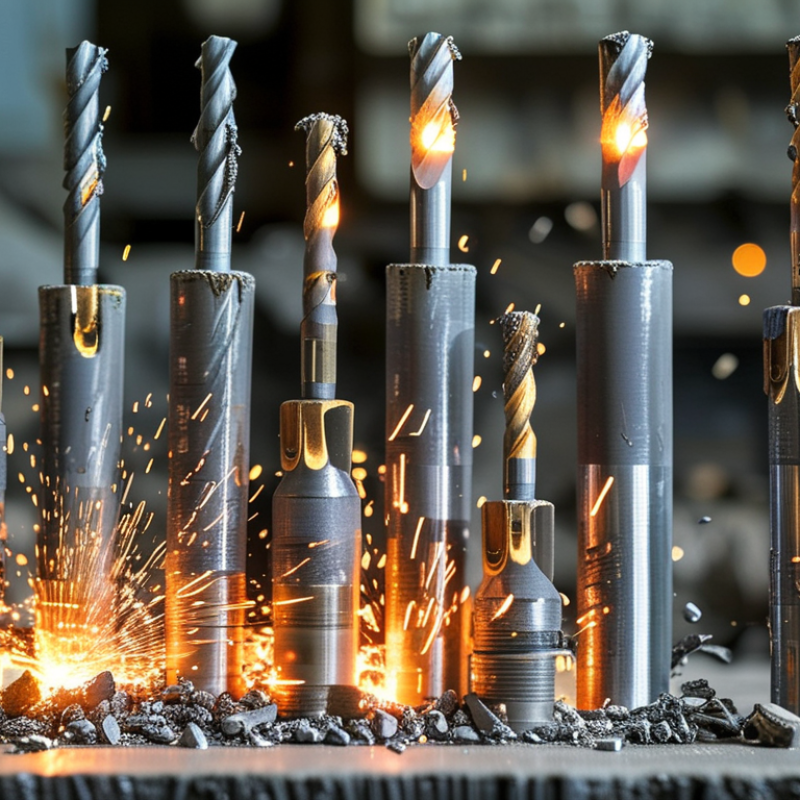
Tungsten Carbide Welding Rods are hardfacing consumables, not ordinary welding electrodes. They contain tungsten carbide particles held in a metallic bonding matrix. During welding or brazing, the matrix melts and anchors the particles to a worn surface. The carbide resists abrasion from sand, stone, soil, and other harsh materials. It is often used on drilling tools, mixer blades, agricultural parts, and mining equipment.
The “top” rod depends on the working conditions. Cast carbide offers strong resistance against sliding wear. Crushed carbide creates a rougher surface that can grip abrasive materials effectively. Particle size also matters. Fine grains suit thinner deposits, while larger grains may survive severe impact better. In practice, surface preparation is critical. Oil, rust, and moisture can weaken bonding. Heat control matters too. Excessive heat may damage the carbide or distort the base metal. I have seen operators focus on hardness alone, then overlook impact resistance. That choice can fail quickly.
Tips: Clean the surface until bright metal appears. Select carbide size according to wear type. Use short, controlled passes. Avoid overheating the rod. Inspect the finished layer for cracks, gaps, and loose particles. Test a small area first when the base material or service conditions are uncertain. Some recommendations remain imperfect because actual wear combines abrasion, impact, heat, and corrosion.
What Are the Top Tungsten Carbide Welding Rods?
How Tungsten Carbide Welding Rods Are Made
Top tungsten carbide welding rods begin with carefully selected tungsten carbide particles. These particles resist abrasion and protect working surfaces. Manufacturers blend them with a metallic binder, often nickel-based or cobalt-based. The exact formula depends on the expected heat, impact, and wear.
The production process requires consistent mixing. Fine powders and carbide granules are combined, pressed, and shaped into rods. Some rods use crushed cast carbide, while others contain sintered carbide particles. Controlled heating then bonds the materials without melting the carbide completely. After cooling, workers cut, straighten, and inspect each rod. Testing may include hardness checks, particle distribution reviews, and bond-strength evaluations. Small defects can reduce service life.
Tips: Match carbide particle size to the job. Coarse particles suit severe abrasion, while finer particles create smoother deposits. Clean the base metal before welding, and avoid excessive heat. A slow, controlled technique usually protects the carbide structure. However, no manufacturing process is flawless. I would still inspect a new batch for cracks, uneven granules, or weak bonding before demanding field performance. These simple checks often reveal problems that a product description cannot show.
| Rod Type | Typical Composition | Common Sizes | Typical Hardness | Recommended Use | Manufacturing and Performance Notes |
|---|---|---|---|---|---|
| Cast Tungsten Carbide Rod | Cast WC particles in a nickel-based or self-fluxing alloy matrix; commonly about 60–70% WC by weight. | Approximately 3–8 mm diameter; custom lengths are common. | WC particles typically about 1,600–2,400 HV; matrix hardness varies by alloy. | Oil and gas wear parts, rock drilling tools, mining components, and agricultural blades. | Made by melting tungsten and carbon to form cast carbide, crushing it into granules, grading the particles, and combining them with a bonding alloy. It offers strong abrasion resistance but can be relatively brittle under impact. |
| Sintered WC Pellet Rod | Sintered spherical or angular WC pellets held in a nickel, iron, or nickel-iron alloy matrix; often about 50–70% WC. | Approximately 3–10 mm diameter or equivalent pellet sizes. | WC pellets commonly about 1,500–2,200 HV. | High-abrasion surfaces where a relatively uniform carbide distribution is required. | Powdered WC is pressed or granulated, sintered, screened, and then incorporated into a metallic rod. Uniform pellet spacing can help produce consistent wear protection. |
| Macrocrystalline WC Rod | Coarse, relatively tough WC particles in a nickel-based or nickel-iron matrix; commonly about 55–70% WC. | Approximately 3–8 mm diameter with coarse carbide grains selected for impact resistance. | Typically about 1,700–2,300 HV for the carbide phase. | Applications combining abrasive wear with moderate impact, such as hardfacing teeth, augers, and drill components. | Larger carbide grains reduce the likelihood of rapid particle loss. The rod is produced by forming, heating, and sizing coarse WC particles with a compatible alloy binder. |
| Fine-Grain WC Rod | Fine WC powder in a nickel-based or cobalt-containing matrix; commonly about 45–65% WC. | Approximately 2–6 mm diameter. | Typically about 1,600–2,200 HV for the carbide phase. | Thin edges, small components, and surfaces requiring a smoother, more continuous deposited layer. | Fine particles can provide more uniform coverage but may wear faster than coarse carbide in severe gouging conditions. Particle size and binder chemistry strongly affect deposition quality. |
| Flexible Composite Rod | WC granules or crushed carbide contained in a flexible nickel or nickel-alloy sheath; WC loading varies by construction. | Commonly supplied in coils or straight lengths from about 2–6 mm diameter. | Carbide phase typically about 1,500–2,400 HV. | Manual oxyfuel hardfacing on irregular profiles, edges, and curved components. | The sheath improves handling and keeps carbide particles together during brazing or hardfacing. It is useful for contour work but requires controlled heating to prevent excessive carbide dissolution. |
| Tubular Carbide-Filled Rod | Metal tube filled with WC powder, granules, or a mixture of carbide and alloying powders. | Approximately 4–12 mm outside diameter, depending on filling and application. | Usually specified by carbide hardness and deposit chemistry rather than one overall rod hardness. | Large-area hardfacing, crusher parts, wear plates, and components repaired by automated equipment. | Manufactured by filling a metallic tube, compacting the contents, sealing or drawing the tube, and cutting it to length. It provides high deposition efficiency and good compatibility with mechanized welding. |
| Typical Manufacturing Sequence for Tungsten Carbide Welding Rods | |||||
| 1. Carbide Formation | Tungsten powder is reacted with carbon at high temperature to produce tungsten carbide. The resulting carbide may be cast, crushed, or milled depending on the required particle structure. | ||||
| 2. Particle Classification | The carbide is screened into controlled particle-size ranges. Coarse particles generally improve gouging resistance, while finer particles provide more uniform coverage. | ||||
| 3. Binder Preparation | A compatible nickel, nickel-iron, iron, or other alloy matrix is selected to wet the carbide and bond the deposit to the base metal. | ||||
| 4. Rod Forming | Carbide particles and binder are assembled by extrusion, pressing, sheath filling, or flexible composite forming. The rod is then cut, dried, or sized as required. | ||||
| 5. Inspection and Packaging | Finished rods are checked for diameter, length, carbide distribution, surface condition, chemical composition, and representative hardness before packaging. | ||||
Note: Values are typical industry ranges. Actual composition, particle size, hardness, deposition temperature, and recommended welding procedure depend on the rod design and the base-metal application.
Tungsten carbide welding rods mainly fall into three practical categories: cast carbide, sintered carbide, and crushed carbide.
Cast tungsten carbide contains angular carbide particles in a nickel-based alloy matrix. It suits abrasive wear from sand, soil, and mineral particles.
Sintered carbide uses harder, more uniform pellets. It can deliver greater impact resistance when bonded correctly.
Crushed carbide offers irregular grain shapes and broad surface coverage.
Rod design also matters. Tubular rods hold carbide granules inside a metallic sheath. Composite rods combine carbide particles with a flexible bonding alloy. Some products use coarse particles, while others use fine grains for smoother deposits. Coarse grades usually resist severe abrasion better. Fine grades can cover narrow edges more evenly. The difference is visible under a workshop microscope.
The U.S. Geological Survey reported global tungsten mine production at about 81,000 metric tons in 2023. That figure reflects tungsten supply, not welding-rod output, but it shows the material’s industrial importance.
Industry testing reports commonly measure hardness, carbide retention, dilution, and impact loss. These tests should guide selection more than catalogue language.
In my experience, the hardest deposit is not always the longest-lasting choice. Poor heat control can loosen excellent carbide. The boundary between types is not always clean. Inspect the grain shape, binder alloy, and recommended welding process before purchasing.
What Are the Top Tungsten Carbide Welding Rods?
When comparing tungsten carbide welding rods, hardness is only the starting point. A harder deposit usually resists scratching and cutting better. However, extreme hardness can reduce impact tolerance. Check the carbide hardness, matrix hardness, and test method before choosing a rod. Values reported in HRA or HV are useful, but they are not directly interchangeable. Small differences in testing can change the result.
Wear resistance depends strongly on the working conditions. Coarse carbide particles often perform well against severe sliding abrasion, such as sand moving across a chute. Fine particles can produce a smoother surface and may resist impact-related loss more effectively. Examine the carbide percentage, particle size, distribution, and bonding matrix. A rod with impressive hardness may still fail if particles detach from the weld.
In field repairs, I inspect the worn part before selecting filler material. Sharp edges, heat, pressure, and repeated impact each demand a different balance. I once chose the hardest deposit for a heavily shocked surface. It resisted abrasion, but small chips appeared after several operating cycles. That result was too simple. Compare laboratory wear data with actual service conditions, welding position, dilution, and preheating requirements. Ask for test details, not just a headline hardness number. Short samples can also reveal cracking, uneven carbide distribution, and poor bonding before production work begins.
Choosing the right tungsten carbide welding rod begins with the type of wear your part will face. Abrasion, impact, and heat require different carbide structures. For example, coarse carbide particles suit severe soil or mineral abrasion. Finer particles can create a smoother, more uniform deposit. However, they may wear faster under heavy impact.
The rod’s binder also matters. Nickel-based binders can resist corrosion, while copper-based binders often provide better flow during brazing. Check the base metal before welding. High-carbon steel may crack if heated too quickly. Preheating, controlled cooling, and careful surface cleaning can improve bonding. In practical repairs, poor preparation causes more failures than the rod itself. I have seen a hard deposit detach because oil remained inside a shallow groove. Small detail. Big consequence.
Tips: Match carbide size to the wear pattern, not just the material name. Confirm the recommended heat range and compatible base metal in the technical datasheet. Use short passes, avoid overheating, and inspect the finished layer for cracks or weak edges. Do not assume the hardest rod is always the best choice. That assumption is easy to make, but impact can fracture an overly hard deposit. Test a small area first when the operating conditions are uncertain.
Relative suitability of common tungsten carbide rod types for different welding applications. Higher scores indicate stronger suitability.
Cast tungsten carbide is commonly selected for severe abrasive wear, while sintered tungsten carbide offers more consistent carbide structure and is often preferred for controlled surfacing. Crushed or granular carbide is useful when a textured, highly wear-resistant overlay is required. For impact-prone applications, choose a tougher matrix and avoid using the hardest carbide option without sufficient support.
This content is restricted to site members. If you are an existing user, please log in. New users may register … LEARN MORE “Lighting Power & Control-Signal Cable”
We are here to help. You can contact us or create an account online to have access to special products, technical specifications and our new online quote tool.
ELECTRO CABLES
9 Riverside Drive
P.O. Box 276
Trenton, Ontario
CANADA K8V 5R5
N.A. Toll Free: 888-ELECTRO
(1-888-353-2876)
World: 613-394-4896
Fax: 613-394-4101
Email: sale@machinecables.com
We manufacture cables that are certified by the Canadian Standards Association (CSA), listed by Underwriters Laboratories and/or listed by Intertek (ETL).
Our quality management system is registered to ISO 9001: 2015. Our team is dedicated to consistently providing quality service and products to our customers.

© 2025 ELECTRO CABLES • SITE BY SNAP 360•