Why Choose Aluminum Profiles for Solar Panel Frames?
Solar panels spend decades outdoors, exposed to wind, rain, heat, and daily temperature changes. Their frames must hold the glass securely while helping installers handle and mount each module. Aluminum Profile For Solar Panel Frame is a common choice because aluminum combines low weight with useful structural strength. It can also be shaped into channels and edges that support the panel’s design. Details matter. A clean corner joint, consistent dimensions, and a suitable surface finish can affect assembly and long-term performance. Yet material choice alone does not guarantee a reliable frame.
This article explores why manufacturers and project designers often select aluminum profiles, including their weight, corrosion behavior, design flexibility, and suitability for production. It also considers practical limits: profile geometry, alloy selection, joining methods, and finish all influence results. A lightweight frame is helpful, but it still needs adequate stiffness and secure connections. There is no single profile that suits every panel or installation. Comparing supplier specifications with the module’s requirements is a sensible starting point, though specifications may not tell the whole story. Real-world performance depends on fabrication quality and operating conditions too. That distinction is easy to overlook. The sections ahead explain the main advantages and trade-offs, so readers can assess aluminum frames with clearer expectations rather than treating the material as an automatic solution.
Role of Frames in Solar Panel Design
Why Choose Aluminum Profiles for Solar Panel Frames?
Role of Frames in Solar Panel Design
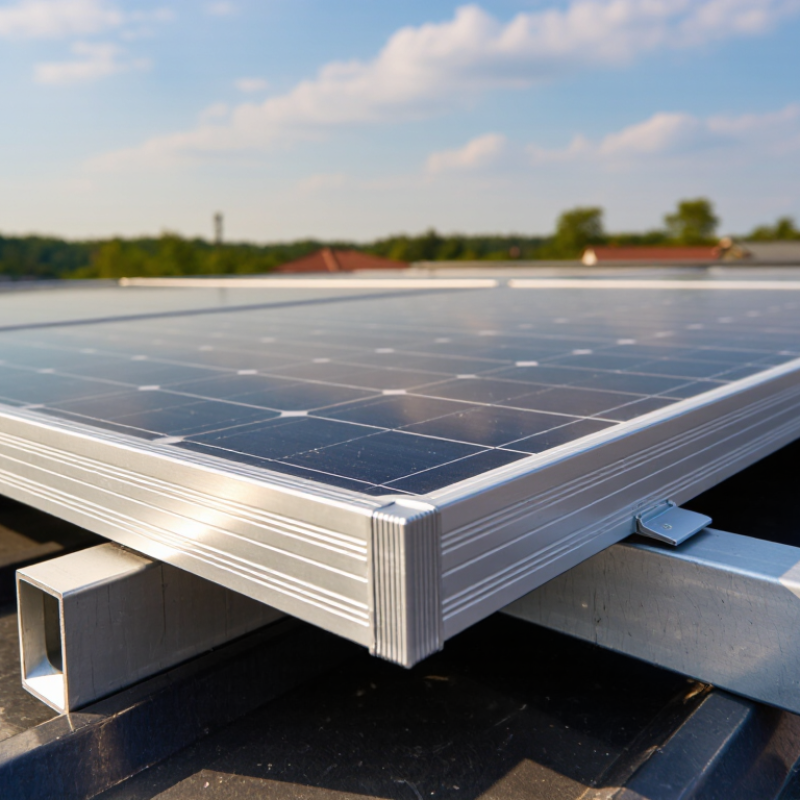
A solar panel frame does more than cover the module’s edges. It supports the glass and cell laminate, protects vulnerable edges, and gives installers firm points for mounting. On a rooftop, clamps grip the frame while wind and snow place changing loads on the panel. Even a small alignment error can create uneven pressure. That matters. A well-designed frame helps distribute forces without obstructing drainage or access to mounting hardware. Its dimensions must match the panel and installation system, not just look sturdy on a drawing.
Aluminum profiles are often chosen because they combine low weight with useful stiffness and resistance to outdoor corrosion. Their shape matters as much as the material: carefully placed ribs can strengthen a profile without adding unnecessary bulk. Designers also need to account for temperature changes, since aluminum expands and contracts as conditions shift. Clamps and clearances should allow for that movement. It is easy to focus on maximum strength alone, but an overly rigid or poorly matched frame may complicate installation. A practical design balances support, fit, and service access, then checks those details against the conditions at the actual site.
Key Properties of Aluminum for Solar Applications
Aluminum suits solar panel frames because it combines low weight with useful structural strength. Installers can handle long rails more easily than heavier steel members. That can reduce lifting effort on rooftops. But the chosen alloy and temper matter; not every profile performs equally under wind, snow, or handling loads.
Its naturally forming oxide layer helps resist corrosion in ordinary outdoor exposure. It is not a guarantee against every environment. Salt spray, trapped moisture, and contact with dissimilar metals can accelerate damage, so drainage paths and compatible fasteners deserve attention. A small detail. A blocked channel can hold water against a joint for days.
Aluminum also conducts heat readily and expands as temperatures rise. Frame designers account for movement with suitable clearances and connection details. Extruded profiles can integrate grooves and fixing channels, reducing separate parts, though overly complex shapes may complicate inspection. Surface finishes can improve appearance and add protection, yet cut edges and damaged areas still need consideration. Even a well-designed frame benefits from periodic checks for loose fasteners, debris, and coating wear. The trade-off is real: lightweight construction helps handling, but it does not excuse undersized sections or careless installation.
Structural Strength, Durability, and Weather Resistance
Aluminum profiles offer a useful balance of strength and manageable weight for solar panel frames. Their shape can be engineered with ribs and channels, adding stiffness without making each rail bulky. That matters. On a rooftop, lighter components are easier to position, but the finished frame still needs to resist wind uplift, snow loads, and panel movement. Profile dimensions and alloy choice should match the project’s load calculations, not guesswork.
Durability depends on more than the metal itself. Aluminum naturally forms a thin oxide layer that helps protect it from corrosion, while suitable surface treatments can improve resistance in wet or coastal conditions. Small details count: water should drain from frame channels, and dissimilar metals at fasteners may need isolation to reduce galvanic corrosion. Thermal expansion also deserves attention, since long rails can shift slightly through daily temperature changes. A careful installer leaves room for that movement. Even so, aluminum is not maintenance-free; scratches, trapped debris, or poor drainage can become weak points over time. The frame is only as dependable as its design and installation.
Why Choose Aluminum Profiles for Solar Panel Frames?
Structural strength, durability, and weather resistance start with the right material.
Why it matters: At about 2,700 kg/m³, aluminum 6063-T5 has roughly 66% lower density than carbon steel at about 7,850 kg/m³. This can help reduce frame weight and simplify handling. Aluminum’s protective oxide layer also helps it resist atmospheric corrosion; actual frame strength and service life depend on profile design, alloy, finish, and installation.
Typical material densities; equal-volume comparison, not an equal-strength frame comparison.
Manufacturing and Installation of Aluminum Frames
Aluminum solar frames start as alloy billets heated and pushed through precision dies. Extrusion forms the rail’s cross-section, including channels for glass, seals, and fasteners. IEA PVPS Trends 2024 estimates that global photovoltaic capacity reached about 1.6 terawatts by the end of 2023. That scale makes consistent production important. Rails are cut to length, drilled or punched, and inspected for straightness and burrs. Small errors matter. A rough cut can damage a seal, while uneven holes can complicate assembly. Anodizing or another suitable finish helps protect exposed surfaces, but finish quality and drainage details still need checking.
During installation, crews align rails before tightening clamps, then apply the specified torque with a calibrated tool. Over-tightening may stress a module frame; loose fasteners can allow movement under wind loads. Installers should check roof geometry, clearances, and dissimilar-metal contact before work begins. Still, a clean extrusion does not guarantee a durable system. Site conditions reveal weak joints and poor water paths. The International Aluminium Institute reports that recycled aluminum production uses about 5% of the energy required for primary aluminum production. Scrap segregation during manufacturing can therefore reduce material waste, though recycled content does not replace quality checks for alloy composition, dimensions, or surface finish.
Limitations and Criteria for Choosing Aluminum Profiles
Aluminum profiles are light and corrosion-resistant, but they are not automatically suitable for every solar panel frame. Thin walls can deform under clamp pressure, especially when installers tighten fasteners unevenly. Check the profile’s alloy, temper, wall thickness, and load data against the panel size and local wind or snow conditions. A profile that feels rigid in hand may still flex across a long span.
Details matter. Look for consistent dimensions, straightness, and clean edges that will not damage cables or seals. Drainage paths should let water escape rather than collect inside the frame. Where aluminum touches stainless steel or another metal, moisture can encourage galvanic corrosion; suitable isolation washers may reduce that risk. Coatings also need consideration: scratches at cut ends can expose bare metal. Inspect those areas.
Thermal movement is easy to overlook. Long rails expand and contract with temperature changes, so mounting slots and joint spacing must allow movement without loosening the assembly. Confirm that clamps fit the profile and distribute pressure across the intended contact area. Ask for test reports and installation limits, not just a strength claim. One awkward point: published figures may not reflect your exact span or exposure, so verify the design rather than assuming a standard profile will work.