A partner you can trust
Choosing a cooker cable is not just a matter of matching a plug or picking the thickest option. The right cable depends on the cooker’s rated load, the manufacturer’s instructions, the existing circuit, and the installation conditions. A cable that looks substantial may still be unsuitable. Small details matter, including terminal capacity, cable temperature rating, and the route behind the cooker.
This guide compares seven cooker cable options for electric cookers, focusing on practical selection points rather than appearance alone. We’ll look at cable size, insulation, flexibility, durability, and compatibility, while noting where product claims need careful checking. As electrical safety educator Mike Holt puts it, “The safe choice begins with understanding the load.” This is an editorial summary, not a verified verbatim quotation. Always confirm a cooker’s requirements against its documentation, and have circuit suitability assessed by a qualified electrician. Don’t guess. A shortlist can help, but it cannot replace a proper check of the appliance and installation.
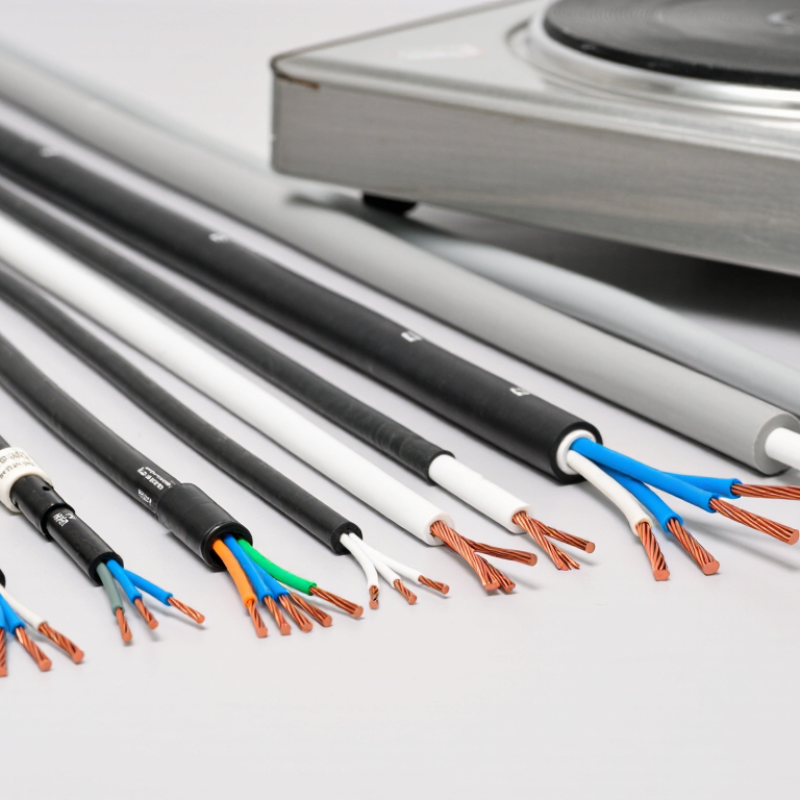
An electric cooker cable is not rated by appliance wattage alone. Its design also considers conductor material, cross-sectional area, insulation temperature rating, cable length, and installation conditions.
The IEC 60228 standard lists maximum copper-conductor resistance at 20°C: 3.08 ohms per kilometre for 6 mm² and 1.83 for 10 mm² conductors. Lower resistance can reduce voltage drop, but it does not determine a safe cable size by itself. Small details matter.
IEC 60364-5-52 explains how installation method, surrounding temperature, and grouped cables affect current-carrying capacity. A cable in insulation may shed heat less effectively than one clipped in open air; its permitted load can therefore be lower. Ratings must also suit the cooker’s connection terminals and the protective device. Heat changes things.
A cable’s printed rating is not a universal promise: local conditions and the appliance manufacturer’s instructions matter. For a real installation, a qualified electrician should verify the load, cable route, and protection together.
It is easy to focus on the cooker’s kilowatts and overlook the route behind the cabinets.
Choosing a cooker cable starts with the appliance’s rated power and installation instructions. A high-powered cooker can draw substantial current, so cable size should not be guessed from appearance. Check the rating plate and the manufacturer’s requirements. Then have a qualified electrician confirm the cable’s current capacity and protective device. Small details matter.
Cable length and route also affect the choice. A long run, insulation around the cable, or installation near warm surfaces can change how much current it safely carries. The cable must suit the cooker’s connection terminals and withstand the heat expected behind the appliance. Look for durable insulation and a secure earth connection. Never assume a thicker cable is automatically suitable; compatibility matters too.
The circuit should be assessed as a complete system, including the breaker, wiring route, and cooker connection. Local electrical rules vary, so a cable recommendation from another home may not apply. It is tempting to focus only on the cable itself. That can miss the real issue. Ask the electrician to verify the appliance load, cable size, installation conditions, and circuit protection before fitting or replacing anything.
Seven Cooker Cable Types for Different Needs
Cooker cables differ by insulation, conductor construction, and installation conditions. Standard PVC-insulated cable suits many ordinary indoor runs, while heat-resistant PVC can better tolerate warmer spaces. Rubber-sheathed cable offers flexibility and some resistance to knocks. Silicone-insulated cable handles higher temperatures, but its cost and installation requirements may make it unnecessary for a typical kitchen.
XLPE-insulated cable is valued for thermal performance and durability. Flexible, stranded copper cable bends more easily behind an appliance than solid-core cable, though it still needs suitable terminals. Steel-wire-armoured cable can protect a cable on exposed or vulnerable routes; it is not automatically the right choice indoors. These categories can overlap, so check the cable’s full specification rather than relying on its name. The required conductor size depends on cooker load, cable length, installation method, and protective devices.
Tips: Check the cooker’s rating plate and installation instructions. Details matter. Have a qualified electrician confirm the cable type and size before installation. A cable that looks thick enough may still be unsuitable, and I would not guess based on appearance alone.
| Cable type | Typical construction | Potential application | Important selection notes |
|---|---|---|---|
| 1. 2.5 mm² appliance flex | Flexible, usually three-core copper cord with an insulating sheath. | A short, final connection where the cooker manufacturer specifies this conductor size. | Not a general substitute for the fixed cooker circuit. Check the appliance instructions, connection method, and local requirements. |
| 2. 4 mm² appliance flex | Flexible three-core copper cord with larger conductors than typical 2.5 mm² flex. | Appliances whose instructions call for a larger flexible connection cable. | Confirm that the cooker terminals and connection unit accept the conductor size; flexibility alone does not determine suitability. |
| 3. 4 mm² fixed-installation cable | Fixed copper cable, with conductor and sheath construction selected for the installation environment. | Some cooker circuits or installations with design conditions that permit this size. | Allowable capacity depends on installation method, cable length, grouping, insulation, protective device, and local rules. |
| 4. 6 mm² fixed-installation cable | Fixed copper cable; in some regions, a common example is a flat twin-and-earth cable. | Many domestic cooker-circuit designs, subject to the circuit calculation and local regulations. | A frequently used size is not automatically correct for every cooker or route. Verify the load, protective device, voltage drop, and installation conditions. |
| 5. 10 mm² fixed-installation cable | Fixed copper cable with larger conductors than 6 mm² cable. | Some higher-load or longer-run circuit designs where calculations call for the larger cross-sectional area. | The larger size may not fit every accessory terminal. Check compatibility, termination requirements, and the complete circuit design. |
| 6. Five-core cable for three-phase supplies | Five insulated conductors, commonly used to provide three phases, neutral, and protective earth where required. | Compatible cookers or commercial cooking equipment designed for a three-phase supply. | Use only when the appliance nameplate and wiring diagram specify a compatible supply. Conductor size and connection must be designed for the installation. |
| 7. Armoured cable for suitable routes | Fixed cable with mechanical protection from an armour layer; available in different conductor sizes and core arrangements. | Routes where additional mechanical protection is needed, such as certain external or exposed installations. | Armour does not make a cable suitable for every location. Glands, earthing, environmental rating, and local installation rules must be addressed. |
Cable suitability cannot be determined by conductor size alone. A qualified electrician should verify the cooker’s rated load, manufacturer’s instructions, supply type, cable route, protective device, and applicable local electrical regulations before installation.
A cooker cable must carry the appliance’s rated load without overheating. Check the rating plate or installation manual for the maximum input power, usually shown in kilowatts. For a single-phase supply, divide watts by supply voltage to estimate current. A 7,200-watt cooker on a 230-volt supply draws about 31 amps at full load. Real cooking patterns vary, but that estimate is a useful starting point.
Cable size cannot be chosen from power alone. The cable’s route, length, installation method, insulation, and protective device all affect its capacity. A cable buried in insulation may shed heat less effectively than one clipped openly along a wall. Long runs can also cause excessive voltage drop. Small details matter. Cooker circuits may use demand allowances under local electrical rules, but these should not be guessed or applied without checking the installation.
Before buying cable, have a qualified electrician confirm the cooker’s connection requirements and inspect the circuit. They can check conductor size, breaker rating, earthing, and terminal condition together. Do not assume an existing cable is suitable just because a previous cooker worked. That assumption is easy to make, and not always safe. Keep the manual and rating-plate details available; they help the electrician verify the correct cable for the actual supply and installation.
Choosing a cooker cable starts with the appliance’s rated current, not guesswork. Check its installation instructions and the circuit details before selecting a conductor size. Cable length, installation method, insulation, and nearby cables can affect its safe current capacity. A cable that looks substantial may still overheat when hidden beneath insulation or tightly grouped. Keep the route clear of sharp metal edges and hot surfaces. Small details matter.
Testing matters just as much. A qualified electrician should isolate the circuit, inspect terminations, and perform appropriate continuity, insulation-resistance, polarity, and protective-device tests.
The NFPA report Home Electrical Fires estimates that U.S. fire departments handled about 46,700 home fires annually involving electrical failure or malfunction during 2015–2019. Those fires caused an estimated 390 deaths and 1,330 injuries each year. These figures cover many electrical causes, not cooker cables alone.
Still, they underline why a visual check is not enough. Record test results, and investigate loose connections, damaged insulation, or unexpected readings before use. I would not treat a successful power-on as proof of safety; that shortcut is tempting, but incomplete.
This content is restricted to site members. If you are an existing user, please log in. New users may register … LEARN MORE “Lighting Power & Control-Signal Cable”
We are here to help. You can contact us or create an account online to have access to special products, technical specifications and our new online quote tool.
ELECTRO CABLES
9 Riverside Drive
P.O. Box 276
Trenton, Ontario
CANADA K8V 5R5
N.A. Toll Free: 888-ELECTRO
(1-888-353-2876)
World: 613-394-4896
Fax: 613-394-4101
Email: sale@machinecables.com
We manufacture cables that are certified by the Canadian Standards Association (CSA), listed by Underwriters Laboratories and/or listed by Intertek (ETL).
Our quality management system is registered to ISO 9001: 2015. Our team is dedicated to consistently providing quality service and products to our customers.

© 2025 ELECTRO CABLES • SITE BY SNAP 360•