7 Cable Conduit Buying Tips for Global Buyers
Choosing cable conduit for international projects is rarely a simple price comparison. A product that performs well in a dry warehouse may fail beside a coastal loading dock. Temperature, moisture, chemicals, vibration, installation methods, and local standards all influence the final decision.
Cable-protection specialist Michael R. Turner offers a practical reminder: “The right conduit protects the cable before anyone notices it.” This idea matters because hidden failures often begin with small oversights. A tight bend can stress conductors. Poor sealing can invite dust and water. An unsuitable material may become brittle under sunlight or soften near heat sources.
This guide presents seven cable conduit buying tips for global buyers. It examines material selection, size, flexibility, ingress protection, fire performance, certifications, and supplier reliability. Each point connects technical specifications with real purchasing conditions, including mixed climates and long-distance shipping. Buyers should check product data carefully, not merely trust attractive photographs or broad marketing claims. That sounds obvious.
Still, specifications can be confusing. A conduit labeled “heavy duty” may not provide the same protection in every market. Testing methods and documentation can differ between suppliers. Confirm wall thickness, operating temperature, bending radius, connector compatibility, and batch consistency before ordering. Request samples when possible. Hold one in your hand. Check its feel.
No buying guide can remove every project risk. However, disciplined comparison can reduce expensive substitutions, installation delays, and premature cable damage. The best decision balances protection, compliance, service life, and total delivered cost—not the lowest quotation alone.
Define Cable Conduit Requirements for Your Installation Environment
Before comparing prices, define the cable conduit’s installation environment. A conduit inside a dry control cabinet faces different risks from one buried outdoors. Record temperature, moisture, sunlight, dust, vibration, and chemical exposure at the site.
Check the cable count, outside diameter, bend radius, and future expansion space. A crowded conduit can trap heat and complicate maintenance. Leave practical room for pulling and replacing cables. For outdoor routes, confirm UV resistance and water protection. In coastal areas, salt exposure may require corrosion-resistant materials. Near machinery, flexible conduit can reduce stress from repeated movement.
Use the required mechanical strength for the route. Heavy vehicle areas need stronger protection than suspended indoor wiring. Review fire performance where the conduit passes through occupied buildings. Also verify the applicable national standards, project specifications, and installation rules before ordering. Requirements vary across markets. Do not assume one certificate suits every destination.
I have seen buyers choose a conduit from a sample room, then discover brittle sections during winter installation. That failure was avoidable. Ask suppliers for temperature ranges, test reports, material details, and dimensional tolerances. Inspect samples under realistic conditions, not just under bright warehouse lights. A small oversight here can become a costly rework problem. Specification sheets help, but they never replace a site-based assessment.
Compare Conduit Materials, Designs, Sizes, and Protection Levels
7 Cable Conduit Buying Tips for Global Buyers
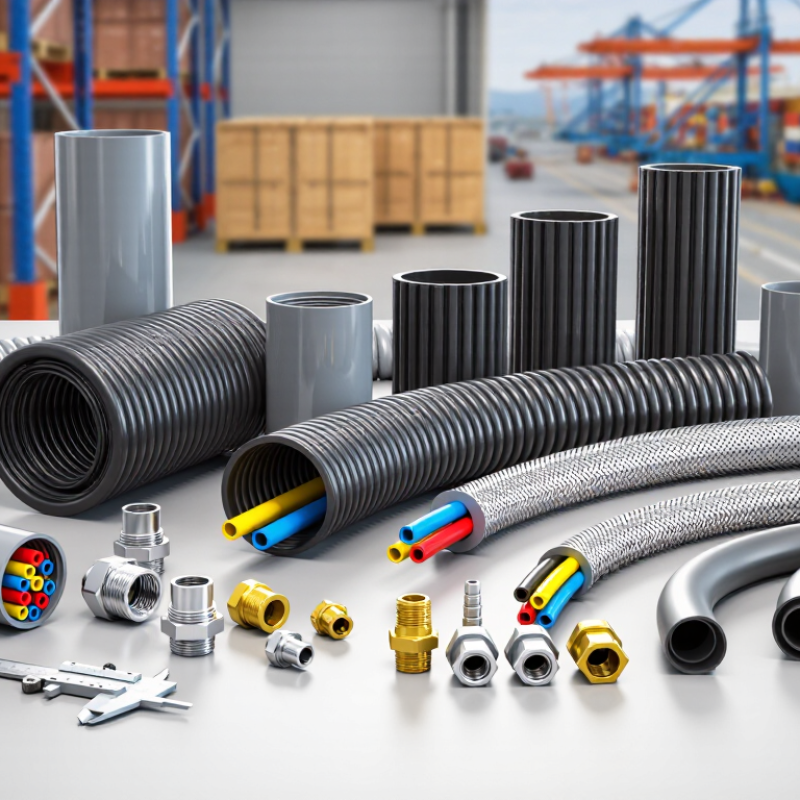
Choosing cable conduit requires more than checking the lowest price. Compare material, design, size, and protection level against the installation environment. Metal conduit offers strong impact resistance and grounding potential. PVC conduit is lightweight, corrosion-resistant, and often easier to cut. Flexible conduit suits moving equipment, although it may provide less mechanical protection. In coastal areas, salt exposure can quickly change the decision.
Tip: Check temperature, UV exposure, moisture, chemicals, and fire requirements before comparing prices. A conduit placed outdoors may need UV resistance and sealed fittings. Indoor control panels may need a different solution. I have seen projects fail because installers measured cable diameter but ignored bending space. That small oversight caused difficult pulling and unnecessary replacement work.
Size affects safety and future maintenance. Avoid filling conduit too tightly, especially when several cables share one route. Leave practical space for pulling, heat dissipation, and possible expansion. Smooth internal walls reduce friction, while corrugated designs improve flexibility. Protection levels also deserve close attention. Look for suitable ingress protection, impact resistance, and compression performance, then verify testing documents from the supplier. A higher rating is not automatically better if installation methods cannot preserve it. Global buyers should confirm dimensions, thread types, documentation, and local compliance before ordering. Comparisons can remain imperfect, but careful questions expose most hidden risks.
7 Cable Conduit Buying Tips for Global Buyers
Compare conduit materials, designs, sizes, and protection levels before selecting a system. For outdoor or wash-down locations, verify the required ingress protection rating under IEC 60529. The chart below compares common water-ingress protection levels from IPX4 to IPX8.
Material
Use PVC or HDPE for lightweight corrosion resistance; use galvanized steel or stainless steel where mechanical strength, heat resistance, or shielding is important.
Design
Select flexible conduit for movement and tight routing, or rigid conduit for long straight runs and stronger physical protection.
Size
Check cable outside diameter, allowable fill, bend radius, pulling length, and future expansion instead of choosing only by nominal conduit diameter.
Protection level
IPX4 protects against splashing water, IPX5 against water jets, IPX6 against powerful water jets, IPX7 against temporary immersion, and IPX8 against continuous immersion under specified conditions.
IPX ratings describe water-ingress protection according to IEC 60529. The “X” means that the dust-protection digit is not specified; select a complete IP code when protection from solid particles is also required.
Check Global Standards, Certifications, and Product Compatibility
7 Cable Conduit Buying Tips for Global Buyers
Check Global Standards, Certifications, and Product Compatibility
Tip 1: Identify the destination market before requesting quotations. Cable conduit requirements differ across regions, industries, and installation environments. Tip 2: Confirm the exact standard edition, not only the standard number. Older documents may no longer support approval. Tip 3: Request certification records, test reports, and product traceability. A printed certificate is not enough.
Tip 4: Check whether certification covers the complete conduit system. Some approvals apply only to specific materials, sizes, or fittings. Tip 5: Compare the conduit with the selected cable. Measure cable outer diameter, bending radius, fill ratio, and pulling tension. A conduit can meet one standard yet still be unsuitable for the cable. Tip 6: Review temperature, moisture, UV, chemical, flame, and impact resistance. A warehouse sample may perform differently beside hot machinery or in constant sunlight.
Tip 7: Ask for compatibility evidence before placing a large order. Request samples, dimensional drawings, installation instructions, and recent test results. An independent inspection can reveal wall-thickness variation or poor fitting alignment. Small details matter. I have seen purchasing teams focus heavily on certification while overlooking bend space and connector sizing. That mistake creates delays during installation. Standards provide a reliable starting point, but they do not replace practical verification. Recheck every document, because assumptions become expensive across borders.
Evaluate Suppliers, Quality Control, Pricing, and Minimum Orders
Global conduit buyers should evaluate suppliers beyond catalogue photos. The International Energy Agency’s Electricity Grids and Secure Energy Transitions report estimates that 80 million kilometres of grids must be added or refurbished by 2040. This demand increases pressure on delivery capacity and quality systems. Ask for factory audits, production photos, worker training records, and recent test reports. Verify material certificates, wall thickness, impact resistance, flame performance, and dimensional tolerances. A polished sample proves little.
Quality control should follow a documented process. Request incoming-material inspection, first-article approval, in-process checks, and final batch testing. Independent inspection can confirm results before shipment. Check whether the supplier provides traceability from resin or steel batches to carton labels. For outdoor conduit, examine ultraviolet exposure data and low-temperature impact results. Some suppliers quote attractive prices while excluding mould fees, packing, testing, or port charges. That is not a real comparison.
Use a total landed-cost sheet. Include unit price, tooling, freight, duties, insurance, rejects, and replacement delays. The World Bank Commodity Markets Outlook regularly highlights volatility in metals and energy prices, so fixed pricing needs a clear validity period. Negotiate price-adjustment rules instead of accepting vague promises. Minimum order quantities deserve equal attention. Match the MOQ with your pilot volume and warehouse capacity. A smaller trial order may cost more per metre, but it limits inventory risk. I have seen buyers overestimate demand. It happens. Ask for mixed sizes, staged deliveries, and written lead-time commitments before approving production.