Electro Cables
Login

China Best Retractable EV Charging Cable Manufacturer

China has become a major manufacturing base for EV charging equipment, but scale alone does not guarantee dependable performance. A reliable retractable ev charging cable requires careful engineering, disciplined production, and practical field testing. It must work beside apartment walls, factory parking bays, and busy roadside stations. Cable storage should feel smooth, not forced. Small details matter.

Elon Musk once said, “The best part is no part. The best process is no process.” This principle supports a simpler charging design with fewer exposed components and fewer opportunities for failure. However, simplicity should never replace safety. An experienced Chinese manufacturer should evaluate conductor quality, insulation strength, connector temperature, winding tension, and repeated extension cycles. It should also provide traceable quality records and clear technical documentation.

Real experience often reveals what laboratory tests miss. Dust can enter the reel. Cold weather can stiffen the cable. A hurried driver may pull it at an awkward angle. These details deserve attention. Yet no design is flawless. Even a well-built retractable ev charging cable may need periodic inspection, especially in high-use environments. That honest limitation improves credibility.

This guide explores how leading China-based manufacturers approach materials, customization, production control, and certification support. It also considers installation convenience and long-term maintenance. Buyers should compare more than price. They should examine testing evidence, response speed, warranty terms, and engineering transparency. The strongest supplier is not merely a factory. It is a technical partner that understands daily charging behavior and accepts responsibility for details.
China Best Retractable EV Charging Cable Manufacturer

Definition and Role of Retractable EV Charging Cables

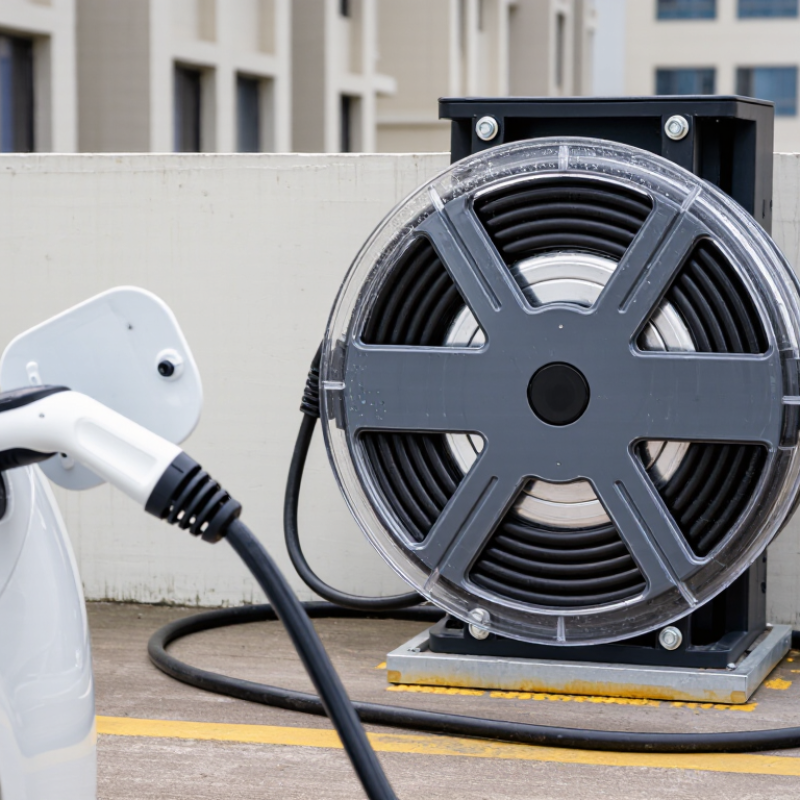
A retractable EV charging cable is a power cable stored inside a spring-loaded reel or enclosed housing. It extends when needed and retracts after charging. This design keeps the cable off the floor and reduces tangling around the vehicle. Unlike a charging station, it does not create electricity or replace electrical protection. It only manages cable storage and connection more efficiently.

Its main role is improving daily charging safety and convenience. In a garage, the cable can reach the vehicle without dragging across a doorway. In a shared parking area, controlled retraction helps reduce trip hazards and unnecessary cable wear. A reliable design should match the charger’s current rating and include durable insulation, strain relief, thermal control, and a suitable connector. Experience shows that smooth retraction matters. Excessive spring tension can damage the plug or make handling uncomfortable.

Tips: Check the cable length before installation. Keep the reel away from standing water. Inspect the connector regularly. Never pull the cable beyond its marked limit. A clean housing also supports longer service life.

Manufacturers should test repeated extension cycles, heat resistance, and load performance under realistic conditions. Weather protection is useful, but “weatherproof” should not be treated as unlimited protection. Dust, freezing temperatures, and careless storage still create problems. The best retractable cable is not simply compact. It should remain stable, easy to inspect, and predictable during everyday charging. Some designs still prioritize appearance too heavily. That deserves more reflection.

China Best Retractable EV Charging Cable Manufacturer - Definition and Role of Retractable EV Charging Cables

Retractable EV charging cables use an integrated reel or winding mechanism to keep the cable organized when it is not in use. Their role is to reduce cable clutter, improve handling safety, and support convenient AC charging across common single-phase and three-phase power ratings.

The chart shows common AC EV charging power ratings calculated from standard nominal voltage and current combinations: 230 V single-phase and 400 V three-phase. Actual charging performance depends on the vehicle, charging equipment, cable rating, and electrical installation.

Core Components and Operating Principles

A retractable EV charging cable depends on several coordinated components. The cable carries charging current and communication signals between the charging unit and vehicle. Its insulation must resist heat, abrasion, moisture, and repeated bending. Inside the reel, a spring mechanism stores mechanical energy during extension. A guide roller helps the cable return smoothly, while a locking device holds the chosen length.

Electrical continuity usually passes through a rotating contact assembly. This part must maintain stable contact as the reel turns. The connector includes power pins, protective earth, and smaller control contacts. The control pilot signal confirms connection and charging readiness. The proximity signal helps detect whether the plug is correctly seated. A temperature sensor near the terminals can reduce charging power when heat rises unexpectedly.

Operation is simple, but the details matter. The user pulls the cable from the housing, and the internal latch engages at set intervals. After charging stops, releasing the latch allows spring tension to retract the cable. A sealed enclosure, strain relief, and drainage path protect internal parts from dust and water. Protection should also include overcurrent control and residual-current detection in the charging system.

Field inspections often find damaged insulation near the connector, not inside the reel. That detail is easy to overlook. A retracting cable is not maintenance-free. Dirt can slow the guide roller, and weak spring tension can cause uneven retraction. Engineers should test bending cycles, temperature rise, grounding continuity, and emergency release performance before regular use. No design is perfect. Practical testing still exposes small failures that drawings cannot predict.

China Best Retractable EV Charging Cable Manufacturer - Core Components and Operating Principles

Technical reference table for retractable electric vehicle charging cables, covering construction, electrical functions, safety systems, and operating considerations.

Data Dimension Core Component or Feature Operating Principle and Technical Details Typical Reference Data
Charging Interface Vehicle-side connector The connector transfers electrical power and control signals between the charging cable and the vehicle inlet. The connector type must match the vehicle and charging standard used in the target market. Type 2 for many AC applications; CCS Combo 2 for compatible DC charging systems
Power Conductors Stranded copper conductors Flexible copper strands carry current from the charging equipment to the vehicle. A larger conductor cross-sectional area generally supports higher current with lower electrical resistance and heat generation. Common AC cable sizes: approximately 2.5–6 mm² per power conductor, depending on current rating
Signal Conductors Control Pilot and Proximity Pilot circuits The Control Pilot communicates charging status and allowable current between the EV and charging equipment. The Proximity Pilot helps detect connector presence and cable capacity in compatible systems. Low-voltage signaling circuits; exact implementation depends on the charging standard
Insulation System Primary conductor insulation Insulation separates energized conductors from one another and from the protective outer jacket. It must withstand the cable's rated voltage, temperature, flexing, and environmental conditions. Common insulation materials include PVC, TPE, and XLPE; typical EV charging ratings include 300/500 V or 450/750 V AC cable designs
Outer Jacket Flexible abrasion-resistant sheath The outer jacket protects the internal conductors against abrasion, moisture, oils, ultraviolet exposure, and repeated bending. TPE and similar elastomeric materials are widely used where flexibility is important. Typical operating temperature ranges vary by construction; many flexible charging cables are designed for approximately −30°C to +50°C
Retractable Mechanism Spring reel, drum, or motorized reel A spring-loaded reel stores the cable by applying controlled return torque. Motorized systems use a geared drive and control circuit to extend or retract the cable. A ratchet or locking system can hold the cable at a selected length. Manual spring reel or powered reel; usable cable length commonly ranges from about 3 m to 10 m
Cable Guidance Roller guide and strain-relief assembly Guides reduce sharp bending and distribute pulling forces near the reel and connector. Strain relief prevents mechanical loads from being transferred directly to electrical terminals. Minimum bend radius is design-specific and commonly specified as several times the finished cable outer diameter
Current Rating Continuous current capacity The current rating depends on conductor size, insulation temperature, ambient temperature, installation method, duty cycle, and connector rating. The complete assembly must be rated by its lowest-rated component. Typical single-phase AC options: 16 A, 32 A, or 40 A; three-phase AC options may reach 32 A where supported
Charging Power AC charging output Approximate AC power is calculated as voltage multiplied by current for single-phase systems. For three-phase systems, power is approximately √3 × line voltage × current × power factor. Single-phase 230 V at 32 A ≈ 7.4 kW; three-phase 400 V at 32 A ≈ 22 kW under suitable conditions
Protective Earth PE conductor and grounding path The protective earth conductor provides a low-resistance path for fault current and helps ensure that exposed conductive parts can be disconnected by the protective device during an electrical fault. Required for protective Class I charging equipment; conductor size is determined by applicable standards and design
Temperature Monitoring Thermal sensor or temperature switch A sensor can monitor heat at high-load points such as the connector or reel termination. If the temperature exceeds the permitted limit, the charging system can reduce current or stop charging. Common sensing technologies include NTC thermistors and thermal switches
Overcurrent Protection Fuse, circuit breaker, or electronic current control Protection limits current during overloads or abnormal conditions. The upstream protective device and the charging equipment control system must be coordinated with the cable's rated current. Protection setting must not exceed the rating of the cable, connector, terminals, or charging equipment
Residual-Current Protection RCD or equivalent leakage-current protection Residual-current protection detects an imbalance between current flowing in the live conductors and current returning through the intended circuit. It disconnects the supply when leakage exceeds the permitted threshold. AC charging installations commonly use 30 mA personnel protection; DC leakage detection requirements depend on the charging system and local rules
Ingress Protection Sealed connector, housing, and reel enclosure Ingress protection indicates resistance to solid particles and water. The rating applies only when the product is correctly assembled and all covers, seals, and connectors are properly positioned. Outdoor charging assemblies often target IP54, IP55, IP65, or higher depending on the enclosure design
Mechanical Durability Flexing, torsion, and insertion-cycle resistance Retractable systems experience repeated extension, retraction, bending, and connector handling. Durability testing evaluates conductor continuity, insulation integrity, locking performance, and jacket condition after repeated cycles. Cycle targets are product-specific and should be verified through documented mechanical and electrical testing
Electrical Safety Testing Insulation resistance and dielectric withstand Insulation resistance testing checks leakage through insulation, while dielectric withstand testing applies a higher test voltage for a specified time to verify separation between energized parts and accessible conductive parts. Test voltage, duration, and acceptance criteria must follow the applicable product and installation standards
Communication Method IEC 61851 control signaling for compatible AC systems The charging equipment uses the Control Pilot circuit to indicate system state and communicate the maximum available current. The vehicle uses this information to manage the onboard charging process. Applicable to compatible conductive charging systems; signaling parameters depend on the charging mode and regional standard
Connector Protection Mechanical lock, cap, and cable hanger A locking feature prevents unintended disconnection during charging, while a cap or holder helps protect the connector from contamination and impact when it is not in use. Recommended for wall-mounted, pedestal-mounted, garage, fleet, and public charging installations
Installation Environment Indoor, outdoor, residential, or commercial use Selection should consider ambient temperature, UV exposure, water, dust, vehicle traffic, mounting height, cable routing, and expected charging frequency. The installation must comply with local electrical regulations. Outdoor installations require suitable enclosure, cable, connector, mounting, and drainage provisions
Maintenance Requirements Inspection and cleaning routine Regular inspection should check the jacket, connector pins, seals, reel return action, locking mechanism, mounting hardware, and signs of overheating. Damaged cables should be removed from service. Inspection interval depends on use frequency, environment, and applicable workplace or electrical safety requirements

Note: Reference values are typical engineering ranges rather than universal specifications. Final ratings, dimensions, materials, testing procedures, and certifications must be confirmed against the applicable charging standard, national regulations, installation conditions, and the complete charging-system design.

Key Performance Standards for EV Charging Cables

China Best Retractable EV Charging Cable Manufacturer

Key Performance Standards for EV Charging Cables

A reliable EV charging cable begins with correct electrical ratings. The cable must match voltage, current, and charging mode requirements. IEC 61851 supports charging system safety and communication requirements. IEC 62196 defines important connector and coupler dimensions. Local certification may also apply.

Small details matter.

Conductor size affects heat buildup during long charging sessions. Insulation must resist abrasion, moisture, heat, and repeated bending. Flame-retardant materials improve safety near garages and parking structures. For retractable designs, the winding mechanism must protect the cable from sharp bends. A controlled bend radius reduces internal conductor damage.

Mechanical testing should reflect real use, not only laboratory conditions. Pulling, twisting, and repeated extension can expose weak points. A dependable manufacturer records cycle tests, temperature-rise results, insulation resistance, and dielectric strength. Product traceability also matters. Each batch should connect materials, test records, and inspection results.

Field experience often reveals overlooked problems. Dust can enter moving parts. Cold weather can stiffen the outer jacket. Users may retract the cable too quickly. These details deserve practical testing. I would not treat one successful sample as proof of durability. Testing should include different loads, storage conditions, and installation environments. A clear inspection process helps identify damaged plugs, exposed conductors, or loose terminals before charging begins.

How to Evaluate a Chinese Retractable Cable Manufacturer

China Best Retractable EV Charging Cable Manufacturer

How to Evaluate a Chinese Retractable Cable Manufacturer

The IEA Global EV Outlook 2024 reported more than four million public charging points worldwide in 2023. Additions increased by over 40% from the previous year. This growth raises expectations for safer, longer-lasting charging equipment. When evaluating a Chinese retractable cable manufacturer, check its quality system, production records, and testing evidence. Ask for reports covering IEC 61851 and IEC 62196 requirements. Review connector temperature tests, insulation resistance, water protection, and repeated retraction cycles. A reliable supplier should explain cable gauge, conductor material, spring design, and operating temperature clearly.

Do not trust factory photos alone. Request videos showing full-load testing and cable movement under realistic conditions. Check whether samples match mass-production materials. Confirm traceability from incoming copper to final inspection. The retraction unit should resist sudden recoil and protect the cable near the connector. Small details matter. A loose guide roller can create sharp bends after months of use. I may still miss hidden weaknesses during a short audit. That is why independent pre-shipment inspection remains valuable.

Tips: Compare at least three suppliers using the same test list. Request a sample before discussing large orders. Measure charging temperature after continuous operation. Review failure records, not only success rates. Also inspect packaging, labels, spare parts, and response time. A manufacturer that answers technical questions with measurements usually deserves closer attention. One attractive quotation is not enough.

Manufacturing, Safety, and Quality Assurance Practices

China Best Retractable EV Charging Cable Manufacturer

Manufacturing, Safety, and Quality Assurance Practices

China’s retractable EV charging cable sector is growing with charging demand. The International Energy Agency’s Global EV Outlook 2024 reported nearly 14 million electric car sales in 2023. That growth raises expectations for safer, cleaner, and more durable cable systems.

Reliable manufacturing starts with controlled materials and repeatable assembly. Conductors need stable resistance across temperature changes. Outer jackets should resist abrasion, moisture, and ultraviolet exposure. Retractable reels require accurate spring tension and smooth cable alignment. Poor alignment can create sharp bends near the plug. That small defect may become a serious heat problem. Each production batch should receive insulation, grounding, leakage, and load testing. Testing should follow applicable charging standards, including IEC 61851 requirements where relevant.

Quality assurance must continue after assembly. Factories can use serialized records, incoming material checks, torque verification, and aging tests. ISO 9001-based procedures improve traceability, but paperwork alone does not prove quality. Practical inspection still matters. An operator may notice uneven winding before automated equipment does. No factory is perfect; this is why corrective-action reviews should examine failed samples instead of hiding them.

Tips: Check cable bend cycles, reel temperature, connector locking, and emergency shutoff performance. Ask for test records, material certificates, and sample inspection photos. Verify claims independently.

Lighting Power & Control-Signal Cable

This content is restricted to site members. If you are an existing user, please log in. New users may register … LEARN MORE “Lighting Power & Control-Signal Cable”