How to Choose Outdoor Electrical Cable for Your Project?
Choosing outdoor electrical cable is not simply a matter of picking a thicker wire. The cable must suit its actual location, electrical load, and exposure to weather. A line running beneath a garden path faces different conditions from one clipped along a sunny exterior wall. Small details matter.
Start by identifying whether the installation will be exposed to sunlight, rain, standing water, soil, or temperature changes. Then check the cable’s marked ratings and manufacturer’s specifications. A cable approved for outdoor use is not automatically suitable for direct burial; some installations require a listed burial-rated product or an approved protective conduit. Read the label carefully.
Next, match the conductor size to the current, circuit length, and equipment requirements. A long run to a shed or pump may experience voltage drop, even when the cable appears substantial. The right choice depends on the complete circuit, not appearance alone. That is easy to miss. Copper and aluminum conductors also differ in termination requirements, so compatible fittings matter.
This guide explains how to compare cable types, ratings, conductor materials, and installation conditions before buying. It also highlights when the project needs a qualified electrician and when local electrical requirements should be checked. Product labels can be confusing, and a quick online chart may not account for your exact setup. Pause and verify. A careful selection helps reduce premature damage and supports a dependable installation, but no general article can replace an on-site assessment.
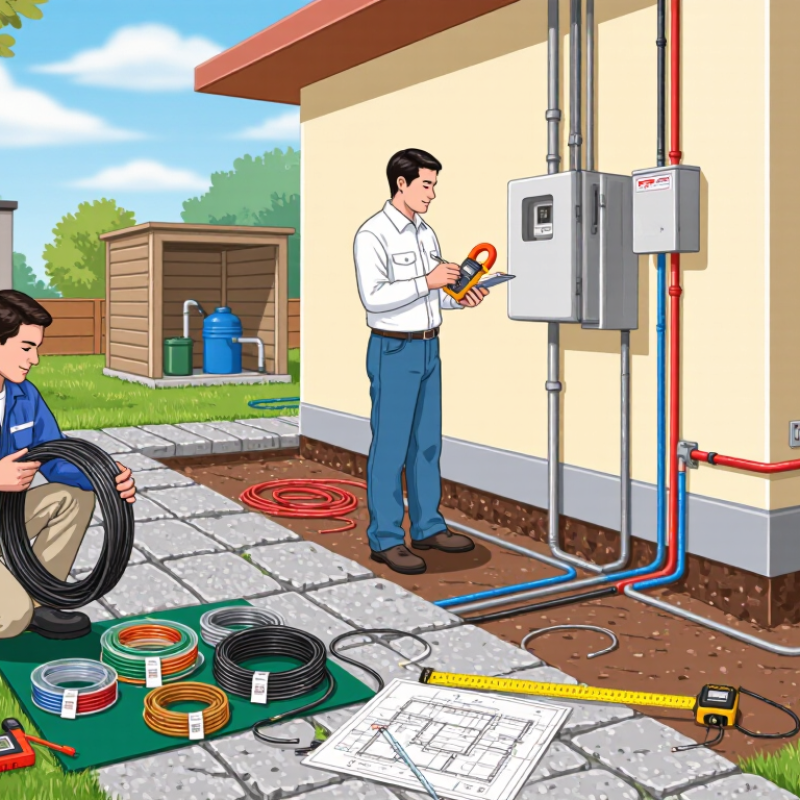
Calculate Load and Conductor Ampacity Using NEC Table 310.16
How to Choose Outdoor Electrical Cable for Your Project?
Begin with the load, not the cable jacket. Add the wattage of connected equipment and divide by system voltage. For a 120-volt, 1,800-watt load, the calculated current is 15 amps. A continuous load operating for three hours or longer requires 125 percent sizing under the National Electrical Code (NEC). That produces 18.75 amps before applying other correction factors. The circuit must then support this adjusted value without exceeding the conductor’s permitted ampacity.
NEC Table 310.16 lists copper ampacities at 30°C ambient temperature with no more than three current-carrying conductors. For example, 12 AWG copper is rated at 20 amps in the 60°C column, 25 amps at 75°C, and 30 amps at 90°C. The 90°C value helps with adjustment calculations, but equipment terminals may limit the final selection. Small-conductor rules also restrict 14 AWG to 15 amps, 12 AWG to 20 amps, and 10 AWG to 30 amps. Outdoor installations need wet-location approval, sunlight resistance, and protection from physical damage.
Field experience shows that cable failures often begin with underestimated loads or loose terminations. NFPA research reported an annual average of 35,150 U.S. home fires involving electrical distribution and lighting equipment during 2015–2019. A clean calculation can still be wrong. Recheck ambient temperature, conductor count, voltage drop, and terminal ratings. Use the current NEC edition and confirm local requirements before installation.
Outdoor Electrical Cable: Copper Conductor Ampacity
Compare copper conductor sizes using the 75°C ampacity column in NEC Table 310.16. Values assume a 30°C ambient temperature and no more than three current-carrying conductors in a raceway or cable. Actual allowable ampacity may be lower after applying ambient-temperature and conductor-count adjustments, terminal temperature limits, and other applicable NEC rules. Verify the requirements for your installation before selecting cable or overcurrent protection.
Choose UF-B or THWN-2 for Wet Locations and Check 600 V Ratings
Choosing cable for a wet location starts with how it will be installed. UF-B cable is designed for wet and dry locations, and may be suitable for direct burial when its markings and installation instructions allow it. THWN-2 conductors are also rated for wet locations, but they are typically pulled through conduit. Water can enter conduit, so the conductor’s wet-location rating matters.
Check the jacket or conductor markings, not just the product description. Look for the type designation and a 600 V rating, then confirm they match the project plans. A 600 V rating describes the cable’s voltage limit; it does not confirm that its size can safely carry your load. Conductor gauge, circuit protection, distance, and expected equipment demand all matter. Small details count.
On site, I would also check the route for soil contact, sharp edges, standing water, and tight bends. Follow the cable’s installation instructions and applicable electrical requirements, and ask a qualified electrician when the route or load is uncertain. I have seen a conduit path look dry at installation, then collect water after heavy rain. That is easy to underestimate. The right cable type still needs correct sizing, terminations, and protection.
Limit Branch-Circuit Voltage Drop to the NEC’s 3% Design Guideline
Outdoor cable sizing is not only about matching the breaker. A long run to a shed, pump, or garden outlet can lose useful voltage before power reaches the load. The NEC’s 3% branch-circuit voltage-drop figure is a design guideline, not a universal pass-or-fail limit. Check the locally adopted code and ask the authority having jurisdiction when requirements are unclear.
Estimate the drop using the circuit length, expected current, conductor material, and operating voltage. For a 120-volt, 20-amp circuit running 100 feet one way, a small conductor may produce noticeable loss, especially during motor startup. Use a suitable voltage-drop calculator or consult a qualified electrician, then select a conductor size that keeps the planned branch-circuit drop near or below 3%. Real loads fluctuate. Your estimate may be imperfect, so leave room for actual conditions.
Tips
Measure the full one-way route, including bends and rises. Confirm the cable is rated for its installation method, such as direct burial or a raceway. Check the load’s nameplate, ambient conditions, and terminal limits before choosing a larger conductor. A bigger wire is not automatically a better fit.
Set Burial Cover According to NEC Table 300.5 and Wiring Method
Before digging, identify the wiring method and the site conditions. NEC Table 300.5 sets minimum cover depths, but the required depth changes with the cable or raceway, circuit type, and location. A direct-burial cable beneath a yard may have a different requirement from conductors in a raceway beneath a driveway. Check the table’s notes, too. They can change how a requirement applies.
Measure cover from the top of the cable or raceway to the finished surface, not from the bottom of the trench. That distinction matters when gravel, paving, or later landscaping raises the grade. For example, a trench that looks deep beside a garden bed may leave too little cover after soil is added. Small detail, big consequence. Use the current NEC edition adopted by your local authority, since requirements and amendments can vary. If the wiring method is unclear, confirm it with the electrical inspector before installation.
Plan the route before breaking ground. Mark the intended path, arrange utility locating, and allow room for bends and fittings if using a raceway. Do not assume that placing cable inside conduit automatically permits a shallower trench; Table 300.5 ties cover to specific wiring methods and conditions. I’ve seen depth guesses become costly rework. Check the actual installation conditions, then verify the required cover with the table and local inspector.
Verify Sunlight-Resistance Markings, GFCI Requirements, and Local Code
Before buying cable, check the jacket for a clear sunlight-resistant or “sunlight resistant” marking if it will be exposed to direct sun. A cable rated for wet locations may still need separate sunlight approval. Read the full product labeling, not just the store description. On a sunny wall, a few hours of afternoon exposure can add up over years. I once overlooked a small marking on a sample; it changed the choice.
GFCI protection is another separate check. Outdoor receptacles and some outdoor circuits require it, but exact rules depend on the installation and the locally adopted electrical code. GFCI protection reduces shock risk; it does not make an indoor-only cable suitable outdoors. For buried runs, verify the cable’s direct-burial rating, required burial depth, and any conduit rules with your local inspector or a qualified electrician. Requirements can differ by location and project details. That part can be frustrating. Before digging or buying a long cable run, confirm the permitted wiring method, conductor size, and inspection requirements. A quick call may prevent a costly rework.