
7 Tips for Choosing the Best Outdoor Electrical Cable?
Outdoor wiring faces more than distance from a power source. Rain can sit in a low spot. Sunlight can heat an exposed jacket, while a shovel can damage a cable hidden beneath soil. Choosing an outdoor electrical cable means matching its rating, conductor size, and installation method to the actual site—not guessing from appearance.
The scale of electrical risk deserves attention. NFPA researcher Marty Ahrens reported that U.S. home fires involving electrical distribution or lighting equipment caused an estimated 470 deaths and $1.3 billion in direct property damage annually from 2015 to 2019. These figures cover many kinds of electrical equipment, not outdoor cables alone. Still, they show why sound installation choices matter. Check the product markings and manufacturer’s instructions. A thick jacket is not proof of suitability.
The National Electrical Code, published by NFPA, cautions: “This Code is not intended as a design specification or an instruction manual for untrained persons.” That is a useful boundary. Cable selection depends on factors such as wet-location exposure, burial conditions, load, and voltage drop. A cable that works beside a dry garage wall may be wrong for a damp trench. Small details count.
This guide offers seven practical checks for comparing outdoor electrical cable. It also leaves room for a necessary reality check: labels can be confusing, and a short online guide cannot replace qualified advice for a specific installation. When conditions are unclear, pause and verify them before buying.
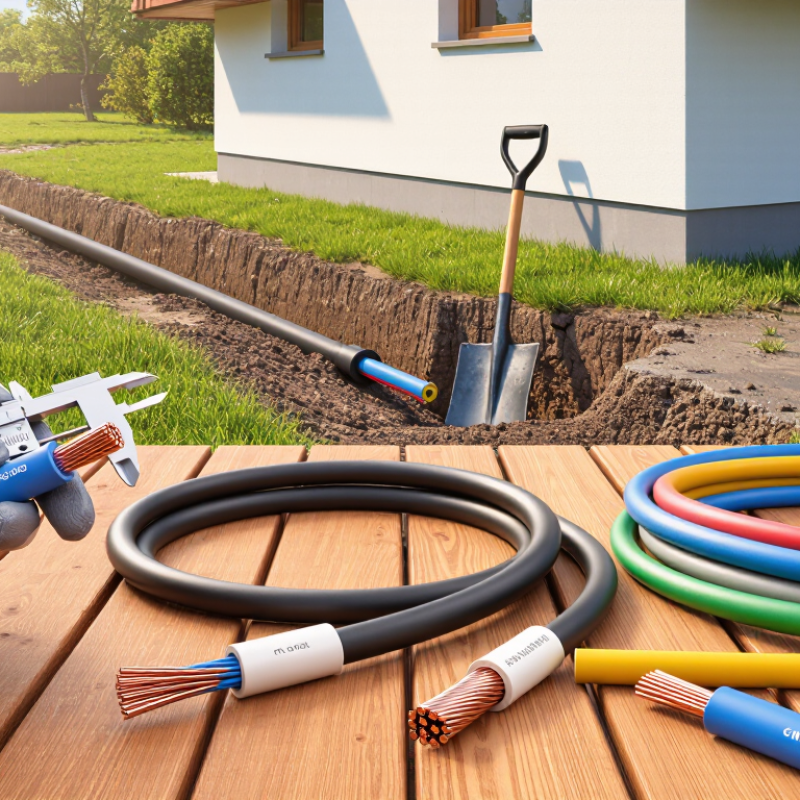
Understand the Outdoor Conditions and Exposure Risks
Outdoor exposure is more than “rain or shine.” Map the cable route before choosing a type. Note direct sunlight, standing water, roof runoff, soil contact, salt spray, and temperature swings. A south-facing wall can bake a jacket; a low spot can stay wet after the rest dries. EPA’s UV Index classifies readings of 6–7 as high and 8 or above as very high. Repeated ultraviolet exposure can age unsuitable insulation. Check the cable’s markings and manufacturer documentation for sunlight resistance and wet-location suitability. For burial, confirm it is specifically rated for direct burial; ordinary outdoor use does not prove that it is.
Storm exposure deserves attention, too. The U.S. National Weather Service reports roughly 25 million lightning flashes strike the United States each year, causing about 20 deaths annually. That figure is not a cable-selection rating, but it shows why an exposed route needs careful planning and properly designed electrical protection. Keep runs away from sharp edges, hot surfaces, and places where mowers or vehicles can crush them. Near coastlines, consider salt-laden moisture; near workshops, check for oil or chemical contact. Small details matter. A jacket may look intact while its rating is wrong for the site. Recheck the route after installation, especially where water collects or sunlight hits the cable for hours.
7 Tips for Choosing the Best Outdoor Electrical Cable? - Understand the Outdoor Conditions and Exposure Risks
| Tip | Outdoor condition or exposure risk | What to check | Practical selection guidance |
|---|---|---|---|
| 1. Confirm the cable is rated for wet locations | Rain, irrigation, condensation, standing water, or moisture entering a conduit can expose outdoor wiring to wet conditions. | The cable’s listing and marking for the intended wet or damp location and installation method. | Choose a cable specifically permitted for the location. Outdoor conduit can collect water, so do not assume that wiring inside conduit is automatically in a dry environment. |
| 2. Account for direct sunlight and UV exposure | Sunlight can degrade insulation or a jacket that is not designed for prolonged outdoor exposure. | Whether the cable is marked or otherwise approved as sunlight-resistant for exposed installation. | Use a sunlight-resistant cable where it will be exposed, or install it in a suitable protective raceway. Verify the cable’s permitted use rather than relying on jacket color or appearance. |
| 3. Match the cable to the temperature range | Outdoor cables may experience freezing conditions, high ambient temperatures, or additional heating from direct sun. | The cable’s temperature rating and any required ampacity adjustment for the installation conditions. | Select a cable suitable for both the expected environment and the connected equipment. Have conductor sizing checked for ambient temperature, load, and installation method. |
| 4. Decide whether the route is above ground or buried | Buried wiring is exposed to soil moisture, rocks, landscaping work, and possible damage from digging. | Whether the cable is approved for direct burial, or whether a listed raceway is required; also check local burial-depth rules. | Use a direct-burial-rated cable only where permitted, or use an approved underground raceway and suitable conductors. Contact the local utility-location service before digging. |
| 5. Evaluate abrasion, impact, and animal damage | Lawn equipment, foot traffic, sharp edges, construction activity, and rodents can damage exposed cable. | The route’s risk of physical damage and whether additional mechanical protection is required. | Route cable away from traffic and cutting tools. Use an approved raceway, guard, or other protection where the installation is vulnerable; secure and support it as required. |
| 6. Size conductors for load and voltage drop | Long outdoor runs and high-current loads can produce voltage drop and heat if conductors are undersized. | Load current, circuit length, conductor material, insulation rating, installation conditions, and applicable electrical-code requirements. | Do not select conductor size by distance alone. Have the circuit designed using the actual load and local code; the required size may be larger for a long run. |
| 7. Check connectors, grounding, and local requirements | Water can enter outdoor enclosures or connections, while incorrect grounding or protection can increase shock and fire risk. | Compatibility of fittings and enclosures with the environment, equipment grounding, required ground-fault protection, and local permit rules. | Use fittings and enclosures listed for the exposure, preserve a continuous equipment-grounding path, and install required protective devices. Consult a qualified electrician when requirements are uncertain. |
Note: Cable markings, permitted uses, burial requirements, and protection rules vary by jurisdiction and installation. Confirm the applicable electrical code and product listing before installation.
Related Posts
-
How to Choose Outdoor Electrical Cable for Your Project?
-

Top Strategies for Sourcing Shielded Power Cable in Global Markets
-
Exploring the Benefits of Shielded Power Cable for Enhanced Electrical Performance
-
How to Choose the Right Shielded Power Cable for Your Project?
-
How to Choose the Best China Shielded Power Cable Supplier?
-
Top 10 Outdoor Electrical Cables in China You Should Know?
Our quality management system is registered to ISO 9001: 2015. Our team is dedicated to consistently providing quality service and products to our customers.