
China Top Cable Wire Connectors Manufacturers How to Choose?
China is a major manufacturing base for cable wire connectors, serving construction, energy, telecommunications, automotive, and industrial projects. However, choosing a reliable manufacturer requires more than comparing catalog prices.
The International Energy Agency’s Electricity 2024 report expects global electricity demand to grow by about 3.2% annually from 2024 to 2026. This expansion increases demand for dependable wiring systems, especially in data centers, solar installations, and modern factories. The International Trade Centre also records China as a leading exporter of electrical equipment and components, reflecting its broad production capacity. Capacity alone is not proof of quality.
A capable supplier should demonstrate compliance with relevant requirements, such as IEC 60999-1, IEC 60502-1, UL 486A-486B, or applicable regional standards. These standards address connection safety, conductor compatibility, insulation performance, and mechanical reliability. Ask for current test reports, material declarations, factory audit records, and traceable batch information. A sample should survive practical checks, including crimp strength, temperature cycling, vibration, and corrosion exposure.
Market reports from Grand View Research and MarketsandMarkets describe continued growth in global wire and cable demand, but forecasts vary by methodology. That matters. Treat impressive market numbers carefully. A low quotation may conceal weak copper, inconsistent plating, or limited quality control. An experienced buyer should inspect production lines, review rejected-batch procedures, and confirm after-sales response times. No supplier scorecard is perfect. Still, a structured comparison can reduce avoidable risk and identify China’s top cable wire connectors manufacturers for the intended application.

Types of Cable Wire Connectors and Their Main Applications
China Top Cable Wire Connectors Manufacturers: How to Choose?
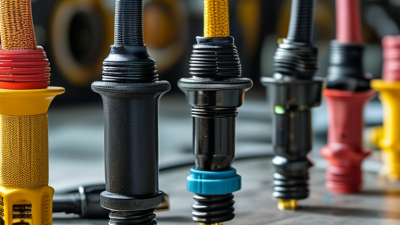
Cable wire connectors vary by structure, material, and installation method. Crimp connectors suit automotive harnesses, control panels, and compact equipment. They create a firm joint when matched with the correct crimping tool. Screw terminals work well in distribution boxes and testing areas. They allow repeated maintenance, but loose screws can cause heat and failure. Push-in connectors save time during indoor wiring and lighting installation. They need clean, correctly stripped conductors.
Waterproof inline connectors protect outdoor lighting, pumps, and agricultural equipment from moisture. Check the IP rating, cable diameter, operating temperature, and current capacity before selection. Terminal blocks support organized connections inside control cabinets. Coaxial connectors serve signal cables, while heavy-duty lugs handle batteries and industrial power systems. Choosing by appearance alone is risky. A connector may fit physically but fail under vibration, corrosion, or continuous load. This is where many installations become expensive.
Tips: Match the connector to conductor size and wire material. Confirm voltage and current ratings from technical documents. Test the joint with a gentle pull. Do not force a connector into a mismatched housing. For outdoor use, inspect seals and strain relief carefully. Good suppliers should provide material details, test records, and traceable production information. Still, even reliable data cannot replace a real installation check. Conditions on site may differ from the catalog.
China Top Cable Wire Connectors Manufacturers How to Choose? - Types of Cable Wire Connectors and Their Main Applications
| Connector Type | Typical Conductor Compatibility | Typical Wire Size Range | Common Materials | Typical Protection Level | Main Applications | Key Advantages | Important Selection Considerations |
|---|---|---|---|---|---|---|---|
| Crimp Butt Splice | Copper and tinned copper conductors | Approximately 0.5–6 mm², depending on terminal size | Tinned copper barrel with PVC, nylon, or heat-shrink insulation | Basic insulated types; heat-shrink versions can provide moisture resistance | Automotive harnesses, control panels, appliance repairs, and general cable splicing | Compact, reliable when correctly crimped, and suitable for permanent connections | Use the correct crimping tool, conductor range, insulation temperature rating, and pull-out requirements |
| Ring and Fork Terminals | Flexible stranded copper wire; some versions accept solid conductors | Approximately 0.25–16 mm² | Electrolytic copper, tinned copper, or copper alloy with insulated sleeves | Usually IP20 or unsealed; environmental protection depends on the enclosure | Grounding points, battery cables, distribution panels, and screw-terminal equipment | Stable mechanical attachment and low contact resistance when properly installed | Match the stud or screw diameter, wire cross-section, current rating, and corrosion environment |
| Screw Terminal Block | Solid or stranded copper conductors; ferrules may be recommended for fine-stranded wire | Approximately 0.2–35 mm², depending on construction | Copper alloy terminals in thermoplastic or thermoset insulation bodies | Commonly IP20 inside control cabinets; sealed versions are available | Industrial control cabinets, power distribution, HVAC systems, and building wiring | Easy inspection, disconnection, and field wiring; available in modular configurations | Verify torque, creepage and clearance, voltage rating, conductor type, and thermal limits |
| Spring-Clamp Terminal | Solid and stranded copper conductors; ferrules may be used for stranded wires | Approximately 0.2–10 mm² | Spring steel clamping element with copper alloy current path and polymer housing | Typically IP20 unless installed in a higher-rated enclosure | Vibration-prone machinery, automation equipment, control panels, and lighting circuits | Maintains contact pressure under vibration and reduces installation time | Check conductor profile, insertion method, vibration conditions, current rating, and temperature range |
| Push-In Wire Connector | Usually solid copper; selected models accept stranded conductors | Approximately 0.5–6 mm² | Spring steel contact elements with flame-retardant thermoplastic housing | Generally intended for dry, enclosed locations unless specifically sealed | Residential lighting, junction boxes, low-voltage control wiring, and maintenance work | Fast tool-free installation and consistent clamping force | Confirm compatibility with solid or stranded wire, allowable combinations, and local electrical codes |
| Twist-On Wire Connector | Mainly solid or stranded copper conductors | Commonly 0.5–10 mm² total conductor capacity, depending on design | Spring insert with insulating thermoplastic or elastomer cap | Usually suitable for dry indoor junction boxes; not inherently waterproof | Residential branch circuits, lighting fixtures, and indoor wiring junctions | Low cost, simple installation, and easy availability in multiple sizes | Do not exceed the approved wire combination; ensure full conductor insertion and proper twisting |
| Insulation-Piercing Connector | Insulated low-voltage copper or aluminum conductors, depending on design | Commonly used for small control, telecommunications, or lighting conductors | Tin-plated metal contact with polymer body; gel-filled variants are available | Gel-filled versions may provide moisture protection; rating must be verified | Branch connections, telecommunications, signaling, and selected outdoor low-voltage systems | Can make a tap connection without fully stripping the main conductor | Match cable diameter precisely and verify suitability for conductor material, voltage, and environment |
| Waterproof Gel Connector | Low-voltage copper conductors; some designs support mixed conductor sizes | Often approximately 0.2–2.5 mm², depending on model | Metal contact element, UV-resistant polymer shell, and sealing gel | Designed for moisture resistance; exact IP rating must be confirmed from test documentation | Outdoor lighting, irrigation controls, landscape wiring, and low-voltage signage | Protects the connection against water, dirt, and corrosion when correctly closed | Check UV resistance, cable diameter, gel compatibility, voltage rating, and installation temperature |
| Heat-Shrink Crimp Connector | Stranded copper and tinned copper conductors | Approximately 0.5–6 mm² | Crimp barrel with polyolefin heat-shrink tube and hot-melt adhesive in sealed types | Sealed versions offer strong resistance to moisture, vibration, and corrosion | Marine wiring, automotive systems, outdoor equipment, and exposed cable harnesses | Provides electrical connection, strain relief, and environmental sealing in one component | Requires a suitable crimp tool and controlled heating; avoid overheating insulation or adhesive |
| IDC Ribbon Cable Connector | Flat ribbon cables with compatible pitch and insulation thickness | Commonly 0.08–0.3 mm² conductors | Phosphor bronze or copper alloy contacts in a thermoplastic housing | Generally for protected indoor electronic assemblies | Computers, industrial controllers, instrumentation, and internal signal wiring | Fast mass termination without individual wire stripping | Pitch, pin count, cable orientation, contact plating, and mating header geometry must match |
| Circular Cable Connector | Single-core or multi-core copper cables, depending on contact system | Approximately 0.14–6 mm² contact capacity, depending on size | Copper alloy contacts with aluminum, zinc, or polymer shell and sealing gaskets | Common options range from IP44 to IP68 when correctly mated | Sensors, robotics, factory automation, outdoor equipment, and detachable power connections | Offers secure mating, strain relief, coding options, and protection against dust or water | Verify pole count, keying, locking method, cable outer diameter, voltage, current, and IP rating |
| Photovoltaic Cable Connector | Single-core stranded copper PV cable, commonly 4–6 mm² | Typically 4, 6, or 10 mm² systems, subject to the connector design | Tinned copper contacts with UV-resistant, flame-retardant polymer housing | Outdoor versions commonly provide IP65–IP68 when fully mated | Solar module interconnections, string cables, combiner boxes, and photovoltaic equipment | Designed for outdoor UV exposure, high DC voltage, and long-term field installation | Confirm DC voltage and current rating, cable diameter, polarity, compatibility, and certified assembly method |
Related Posts
-

How to Select the Right Cable Wire Connectors for Your Project Needs
-
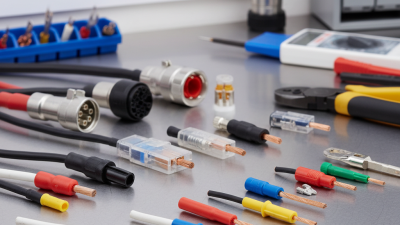
10 Best Electrical Cable Connectors for Optimal Performance?
-
Top Electrical Cable Connectors in China for Reliable Connections?
-
2026 Best Electrical Cable Connectors for Global Buyers?
-
2026 Top Electrical Cable Connectors Buyers Guide?
-
How to Choose the Right Electrical Cable Connectors?
Our quality management system is registered to ISO 9001: 2015. Our team is dedicated to consistently providing quality service and products to our customers.