
Top Electric Cable Manufacturers for Global Buyers?
Choosing the right electric cable manufacturer can shape a project’s safety, service life, and total operating cost. Global buyers face many options, but factory size alone proves very little. A reliable supplier should demonstrate tested designs, stable raw-material sourcing, skilled production, and clear quality records. Small details matter. Think of clean conductor surfaces, controlled insulation thickness, and drums protected against rain.
Nexans CEO Christopher Guerin has described electrification as “the mother of all battles.” His statement reflects a difficult reality: cables now support renewable energy, transport, data networks, buildings, and industrial systems. Demand is rising quickly. Quality cannot fall behind.
This guide examines leading electric cable manufacturers for international buyers. It considers product range, certifications, manufacturing capacity, export experience, technical support, and sustainability practices. It also looks beyond polished websites. Can the supplier provide traceability? Can engineers answer installation questions? Does the company manage delivery risks honestly?
Not every large brand fits every project.
A global name may still offer the wrong voltage class, delivery schedule, or regional approval. Smaller manufacturers can sometimes respond faster, although their documentation may need closer review. That trade-off deserves attention.
The manufacturers discussed here are not ranked by marketing visibility alone. Their practical value depends on application, geography, budget, and risk tolerance. Buyers should verify current certificates and factory information before signing contracts. This is where many comparisons become imperfect. Still, careful screening can reduce failures, delays, and expensive replacement work.
What Defines a Leading Electric Cable Manufacturer?
What Defines a Leading Electric Cable Manufacturer?
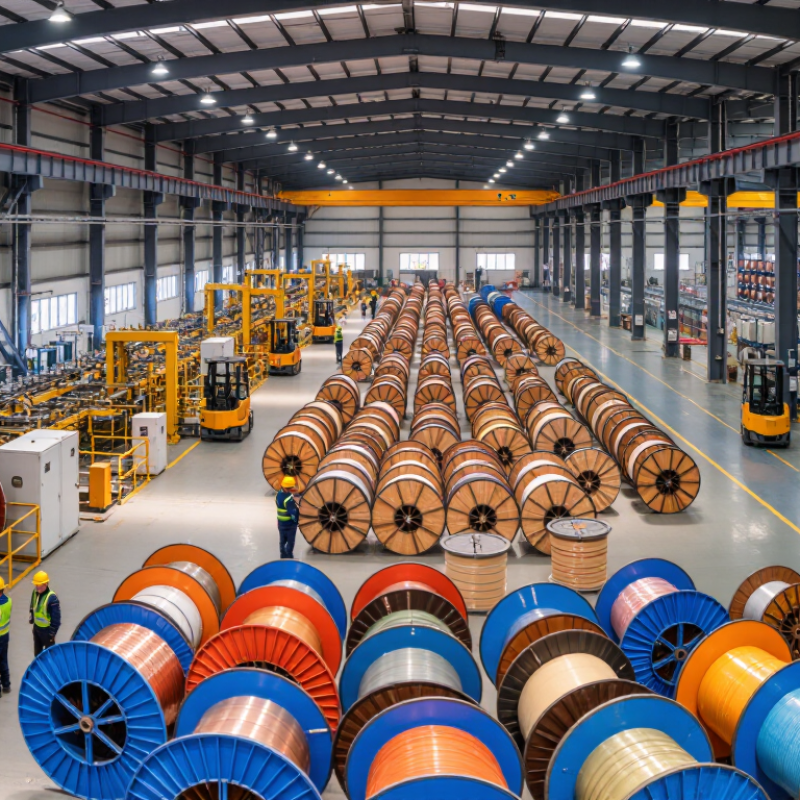
A leading electric cable manufacturer combines practical experience with disciplined engineering. Its team understands how cables behave in factories, tunnels, buildings, and outdoor networks. Product selection should match voltage, temperature, moisture, mechanical stress, and installation conditions. Details matter. A strong manufacturer explains these choices clearly instead of offering one cable for every project.
Reliable production begins with controlled materials and repeatable processes. Copper or aluminum conductors should meet declared specifications, while insulation must resist heat, abrasion, and aging. Qualified laboratories test conductor resistance, insulation performance, tensile strength, and flame behavior. Test records should identify production batches, dates, and inspection results. This traceability helps buyers investigate problems without guesswork.
Responsiveness also reveals professional maturity. Technical staff should review drawings, installation distances, bending limits, and delivery schedules before confirming an order. Clear documentation reduces mistakes during installation. However, no factory gets every detail right. A serious manufacturer admits limitations, corrects unclear data, and improves after field feedback. Certifications can support trust, but they should never replace independent verification and careful sampling. Consistent quality is built through evidence, not confident wording.
| Evaluation Dimension | Recognized Technical Reference | What a Leading Manufacturer Should Demonstrate | Buyer Verification Data |
|---|---|---|---|
| Conductor Quality and Classification | IEC 60228 defines conductor classes, including Class 1 solid conductors, Class 2 stranded conductors, and flexible Classes 5 and 6. | Consistent conductor resistance, accurate cross-sectional area, suitable stranding construction, and traceable copper or aluminium sourcing. | Conductor resistance test reports, material certificates, dimensional inspection records, and batch traceability. |
| Low-Voltage Cable Compliance | IEC 60502-1 covers power cables with extruded insulation for rated voltages from 1 kV up to and including 3 kV. | Products should be designed, manufactured, and tested according to the voltage, installation method, conductor size, and environmental requirements of the target market. | Routine test records, type-test reports, rated-voltage information, insulation-thickness measurements, and applicable declarations of conformity. |
| Medium- and High-Voltage Capability | IEC 60502-2 covers medium-voltage cables; IEC 60840 applies to cables above 30 kV up to 150 kV; IEC 62067 applies above 150 kV up to 500 kV. | Verified expertise in conductor shielding, insulation systems, metallic screens, water blocking, electrical stress control, and installation-specific design. | Independent type-test certificates, partial-discharge results, AC voltage-test results, impulse-test records, and approved project references without disclosing confidential customer data. |
| Insulation and Sheathing Materials | Common cable insulation and sheath materials include PVC, XLPE, EPR, PE, and halogen-free thermoplastic or thermoset compounds. | Material selection should match operating temperature, mechanical stress, moisture exposure, oil or chemical contact, UV exposure, and fire-performance requirements. | Compound technical data sheets, operating-temperature ratings, aging-test results, compatibility information, and incoming-material inspection records. |
| Fire and Smoke Performance | IEC 60332 addresses flame propagation; IEC 60754 addresses halogen acid gas emissions; IEC 61034 addresses smoke density. | Clear differentiation between flame-retardant, low-smoke, halogen-free, fire-resistant, and circuit-integrity products rather than using these terms interchangeably. | Test reports stating the exact cable construction, test method, sample size, result, and report validity from a qualified laboratory. |
| Current-Carrying Capacity | Ampacity depends on conductor material and size, insulation temperature rating, ambient temperature, installation method, grouping, soil conditions, and permissible voltage drop. | Published ratings should identify the calculation assumptions and should not be presented as universal values for every installation. | Calculation sheets based on the applicable national or international installation standard, including derating factors and short-circuit withstand calculations. |
| Mechanical and Environmental Durability | Cable performance may require resistance to tensile force, impact, abrasion, water penetration, UV exposure, oil, chemicals, vibration, or repeated flexing. | Construction should be matched to fixed installation, industrial equipment, robotics, mining, marine, renewable-energy, or underground applications. | Application-specific test results, bending-radius data, tensile and impact results, water-penetration tests, and environmental-resistance documentation. |
| Quality Management System | ISO 9001 is an internationally recognized framework for quality-management systems. Certification scope should cover the relevant cable activities. | Documented control of design, procurement, production, testing, nonconforming products, corrective actions, and customer complaints. | Valid certification issued by an accredited certification body, audit scope, calibration records, inspection plans, and corrective-action performance. |
| Testing and Laboratory Capability | Routine, sample, and type tests are different categories of verification and should be identified separately in technical documentation. | In-house testing should cover production control, while independent laboratories may be used for specialized or project-specific certification. | Equipment calibration certificates, laboratory accreditation where applicable, test schedules, raw test data, and sample-identification records. |
| Product Customization | Cable design may vary by conductor size, core configuration, insulation, screen, armour, sheath, voltage rating, fire performance, and installation environment. | Engineering teams should convert the buyer’s electrical, mechanical, environmental, and regulatory requirements into a controlled cable specification. | Approved drawings, cable construction tables, technical datasheets, sample approval records, change-control procedures, and prototype-test results. |
| Identification and Traceability | Reliable cable identification typically includes product designation, conductor size, voltage rating, manufacturing batch, length marking, and applicable standard. | Markings should remain legible during handling and should correspond with the packing list, test certificate, and production records. | Photographs of cable markings, drum labels, batch numbers, barcode or ERP records, packing lists, and certificate-to-drum traceability. |
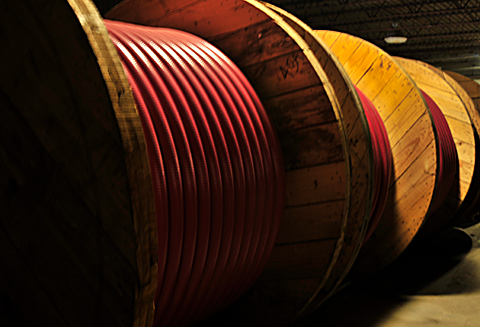
| Export Packaging and Logistics | Long cable lengths require suitable drums, end sealing, moisture protection, lifting information, and protection against impact during transportation. | Packaging should reflect cable weight, drum dimensions, transport mode, storage period, climate, and site-handling equipment. | Drum drawings, gross and net weight, cable-length schedule, loading plan, storage instructions, end-cap inspection, and shipping documentation. |
| Technical Support and After-Sales Service | Correct cable selection and installation are essential for achieving the performance stated in the design and test documentation. | Qualified support should cover specification review, installation guidance, jointing or termination requirements, troubleshooting, and warranty procedures. | Response-time commitments, installation manuals, training records, warranty terms, escalation contacts, and documented nonconformance procedures. |
Related Posts
-
What is Electric Cable at the 139th Canton Fair?
-

10 Best Electric Cable Suppliers for Global Buyers
-
What is the Importance of Wire Cable in Modern Electrical Systems
-
Top Electric Cable Types to Consider in 2026?
-
How to Choose the Right Cable Wire for Your Needs?
-
2026 Best Wire and Cable Types for Home and Industry Needs?
Our quality management system is registered to ISO 9001: 2015. Our team is dedicated to consistently providing quality service and products to our customers.