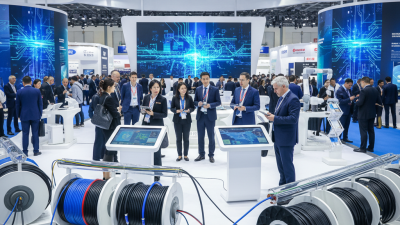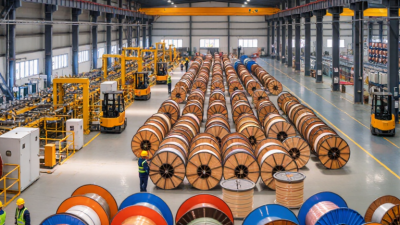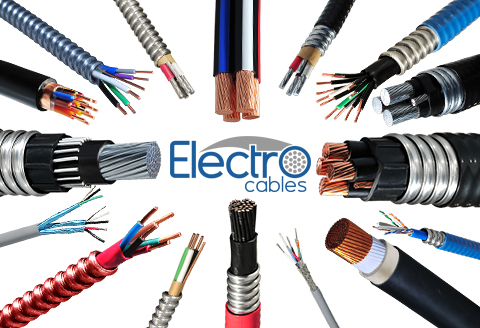
A partner you can trust
Global buyers rarely choose cable by appearance alone. They examine voltage, conductor material, armor, insulation, grounding, and installation conditions. A metal clad cable may look similar across suppliers, yet its performance can differ significantly underground, inside walls, or in exposed industrial spaces.
Electrical educator Mike Holt often emphasizes, “Safety is not an option.” That principle fits every international cable decision. Buyers must verify markings, test reports, manufacturing consistency, and compatibility with local electrical requirements. A low price can become expensive when fittings fail, armor corrodes, or installation crews need unexpected changes. Small details matter.
This guide reviews ten widely used metal clad cable types for commercial, residential, industrial, and infrastructure projects. It considers copper and aluminum conductors, flexible armor, fire-resistant designs, control applications, and cables built for demanding environments. Each type serves a different purpose. Some favor installation speed. Others provide stronger mechanical protection or improved moisture resistance.
Specifications tell only part of the story. Packaging, documentation, and supplier communication also reveal manufacturing discipline. Buyers should ask uncomfortable questions about testing, traceability, lead times, and replacement availability. That process is not always smooth. It can expose unclear assumptions.
No cable fits every project. Not even close.
The best selection balances electrical performance, installation conditions, regional standards, lifecycle cost, and installer experience. This overview offers a practical starting point, not a substitute for engineering review. Product names can change. Standards can be revised. Careful verification remains essential before ordering or installation.
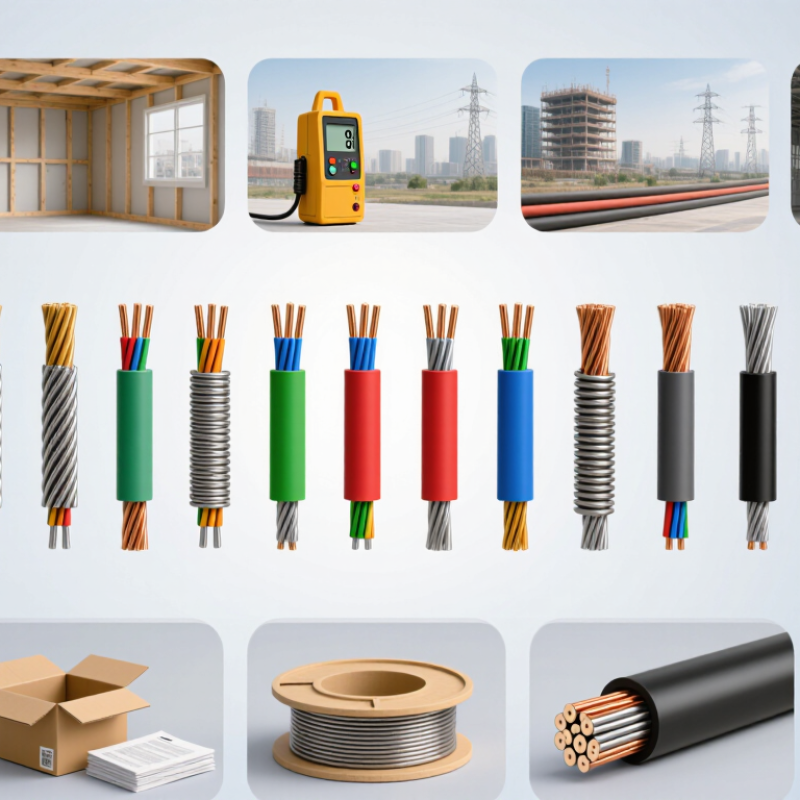
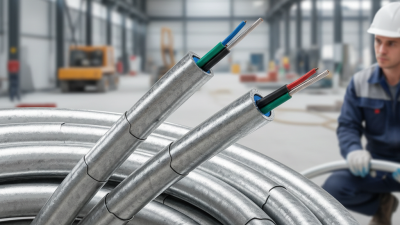
Metal clad cable, or MC cable, combines insulated conductors, a metallic armor layer, and an outer protective covering. Its armor can provide mechanical protection and, in some designs, an equipment grounding path. The cable is not a single global product category. Buyers often compare ten practical types by conductor material, voltage rating, armor form, sheath, fire performance, flexibility, and installation environment. Common variations include steel or aluminum armor, copper or aluminum conductors, indoor, outdoor, wet-location, fire-resistant, flexible, and low-smoke constructions.
Global classification requires careful reading. In North America, MC cable is commonly evaluated under installation rules for metal-clad wiring systems. International projects may use IEC-based cable standards, such as those covering power cable construction, insulation, voltage, and flame behavior. These systems are not interchangeable. A cable accepted for one market may need different markings, testing, or gland selection elsewhere. Certification marks should match the destination country and the project specification.
During site inspections, I check the cable legend before judging the armor. It reveals conductor size, rated voltage, temperature limit, and environmental approval. Small details matter, especially at glands and terminations. A neat label can still hide a wrong assumption. I once treated similar-looking cables as equivalent; the sheath rating later proved different. That mistake reinforces a useful rule: classify by documented performance, not appearance. Buyers should confirm standards, installation method, bending radius, fault-current needs, and local approval requirements with qualified engineers.
Metal clad cable selection starts with the conductor. Type 1 uses solid copper for stable indoor branch circuits. Type 2 uses stranded copper for easier bending. Type 3 uses aluminum to reduce weight and material cost. Type 4 combines copper conductors with a grounding conductor. Type 5 uses compact stranded conductors for tighter installations. Always check ampacity, voltage rating, and termination compatibility.
Insulation changes performance under heat, moisture, and mechanical stress. Type 6 uses thermoplastic insulation for common dry locations. Type 7 uses heat-resistant thermoset insulation near motors or warm equipment. Type 8 uses moisture-resistant insulation for damp areas. Type 9 uses fire-resisting insulation where circuit continuity matters. Type 10 uses low-smoke, halogen-reduced insulation in sensitive occupied spaces. The best choice depends on verified site conditions, not a product label alone.
Sheath design deserves equal attention. Interlocked metal armor bends well around trays and equipment. Continuously welded armor offers stronger moisture protection but may need larger bending radii. A corrosion-resistant outer jacket helps in coastal or chemically exposed areas. I have seen otherwise suitable cable fail because installers ignored pulling tension and gland size. That mistake is easy to repeat. Buyers should request test reports, installation limits, conductor dimensions, and certification for the destination market. Local electrical rules still control the final selection.
Industrial and commercial cable selection starts with the environment, not catalog appearance. The most practical options include standard aluminum-armored MC, steel-armored MC, liquidtight flexible MC, and fire-resistant MC. Aluminum armor reduces weight. Steel armor offers stronger impact protection. Liquidtight designs suit pumps, machinery, and damp connection areas. Fire-resistant constructions support critical circuits where approved by project specifications.
Control MC serves motor starters, relays, and automation panels. Instrumentation MC protects low-level signals from electrical interference. Grounding-conductor MC can simplify bonding when its construction meets local requirements. Tray-rated MC supports organized industrial cable runs. Photovoltaic-rated armored cable can protect exposed solar wiring when the listing matches the installation. Corrosion-resistant armor is useful near washdown zones or chemical processing areas. Hazardous-location versions may be required in classified spaces, but engineers must confirm the exact code classification.
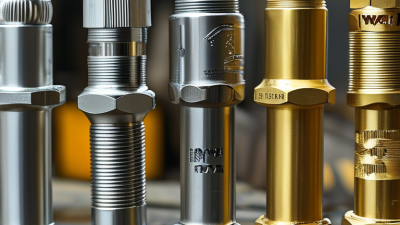
I have seen cable failures caused by unsuitable fittings, not poor conductors. Choose fittings that match armor, moisture exposure, and enclosure type. Check ampacity, temperature rating, bending radius, and grounding continuity before installation. Cable markings matter. So does workmanship. A heavy steel cable may seem safer, yet its weight can complicate overhead support. Lightweight armor may ease installation but provide less impact resistance. These trade-offs deserve review with a qualified electrical professional and the applicable national standards.
Representative nominal voltage classes commonly specified for industrial and commercial metal-clad or armored cable systems. Actual ratings depend on the applicable standard, conductor construction, insulation, installation method, and local certification requirements.
Reference framework: commonly used voltage classes associated with UL 1569, UL 2225, IEC 60502, BS 6622, and BS 7835 cable specifications. Confirm the final rating with the project standard and manufacturer datasheet.
Choosing among the top 10 metal clad cable types starts with voltage, not appearance. Low-voltage MC cable suits many commercial circuits, while armored power cable supports higher loads and longer runs. IEC 60502-1 covers power cables up to 1 kV. For installations above that range, buyers should verify the exact national standard and insulation rating. IEA’s Electricity 2024 report forecasts global electricity demand to grow by about 4% annually through 2026. That growth increases pressure on reliable distribution systems.
Environment changes the choice. Corrosive plants need protective jackets and suitable armor materials. Wet locations require tested water resistance, not only a sealed-looking sheath. Marine and offshore projects may require low-smoke, halogen-free cable, while mines demand stronger mechanical protection and flexible construction. Fire-resistant, instrumentation, control, tray, and data-rated metal clad cables each solve different risks. IEC 60332-3 flame-spread testing can help compare fire performance.
Installation conditions still decide the practical result. Check conductor temperature, short-circuit withstand, bend radius, tray fill, gland compatibility, and grounding continuity. A cable that passes voltage tests may fail during repeated bending. I have seen selection tables ignore heat near crowded trays. That is a costly gap. Regional rules also differ, so buyers should request third-party test reports, production traceability, and clear marking. No checklist replaces a site survey, especially where moisture, vibration, or chemical exposure remains uncertain.
Top 10 Metal Clad Cable Types for Global Buyers
Global cable sourcing begins with the destination market, not the lowest quotation. Metal clad cables may use interlocked armor, corrugated armor, PVC jackets, or low-smoke materials. Each option supports different installation conditions. Buyers should confirm voltage, conductor material, temperature rating, bending radius, and grounding design. These details affect safety and long-term performance.
Compliance evidence must match the destination country. Request current test reports, factory quality records, material declarations, and traceable batch numbers. Check requirements for flame spread, smoke emission, water resistance, impact strength, and corrosion protection. Regional standards can differ, even when cable names appear similar. A familiar certificate may not satisfy a local inspection authority. That assumption causes delays. Quality checks should include outer diameter, armor thickness, insulation uniformity, conductor resistance, and clear labeling. A short sample inspection is useful, but it cannot replace full batch control.
Tips: Compare technical data line by line. Ask suppliers to identify standard editions and testing laboratories. Inspect one sealed coil before shipment. Photograph markings, packaging, and reel condition. Keep samples for later comparison. Do not accept vague terms such as “international quality.” A checklist helps, but it can still miss field conditions. Recheck cable flexibility after storage, especially in cold warehouses. Small discrepancies deserve review, not automatic rejection. A lower price may hide thinner armor, inconsistent insulation, or incomplete documentation. Supplier reliability is measured through evidence, communication, and repeatable results.
| No. | Cable Type | Typical Construction | Common Voltage Range | Typical Conductor Options | Main Applications | Common Standards or Approvals | Key Sourcing and Quality Checks |
|---|---|---|---|---|---|---|---|
| 1 | North American Type MC Cable | Stranded copper or aluminum conductors; thermoplastic or thermoset insulation; interlocked aluminum or galvanized steel armor; optional overall jacket. | Commonly 600 V; higher ratings depend on the certified construction. | 14 AWG to 1,000 kcmil; 2 to 5 cores are common. | Commercial buildings, industrial power distribution, branch circuits, equipment connections, and exposed indoor installations. | NEC Article 330UL 1569CSA C22.2 No. 51 | Confirm the exact listing, conductor material, grounding or bonding path, armor interlock, jacket marking, minimum bend radius, and installation suitability for wet or dry locations. |
| 2 | Metal-Clad Cable with Integral Grounding/Bonding | Insulated power conductors enclosed in metal armor with a dedicated grounding conductor or listed bonding path through the armor. | Commonly 600 V. | Copper or aluminum; typically 2, 3, or 4 insulated conductors plus grounding provision. | Industrial facilities, data-center power systems, commercial wiring, and installations requiring reliable equipment grounding. | NEC Article 330UL 1569CSA C22.2 No. 51 | Check continuity of the grounding path, resistance of bonding components, connector compatibility, armor corrosion protection, conductor identification, and terminal-temperature rating. |
| 3 | Armored Low-Voltage Power Cable | Single-core or multicore copper/aluminum conductors with XLPE or PVC insulation, metallic armor, and PVC or low-smoke outer sheath. | Typically 0.6/1 kV. | 1.5 mm² to 1,000 mm²; single-core, 2-core, 3-core, 4-core, and 5-core arrangements. | Power distribution, industrial plants, infrastructure, utility connections, and fixed indoor or outdoor installations. | IEC 60502-1IEC 60228IEC 60332 | Verify conductor class, insulation thickness, armor coverage, sheath thickness, DC resistance, voltage test results, flame performance, and drum-length accuracy. |
| 4 | Steel Wire Armoured Cable (SWA) | XLPE-insulated conductors with galvanized steel wire armor and PVC, LSZH, or equivalent outer sheath. | Commonly 0.6/1 kV. | Copper or aluminum; 1.5 mm² to 1,000 mm² is widely manufactured. | Buried power lines, external routes, industrial distribution, commercial buildings, and areas requiring mechanical protection. | BS 5467IEC 60502-1IEC 60228 | Inspect galvanized wire diameter, armor lay, bedding integrity, gland compatibility, water penetration resistance where specified, sheath marking, and cable bending performance. |
| 5 | Steel Tape Armoured Cable | Insulated cores covered by metallic tape armor, usually with a protective bedding layer and an outer PVC or LSZH sheath. | Commonly 0.6/1 kV. | Usually multicore copper or aluminum conductors from small control sizes to large power sizes. | Indoor distribution, building services, control-power circuits, and installations where tape armor is preferred for compactness. | IEC 60502-1BS 6724IEC 60332 | Check tape overlap, armor continuity, bedding dimensions, impact protection, sheath abrasion resistance, low-smoke performance, and compatibility with termination accessories. |
| 6 | Mineral-Insulated Metal-Sheathed Cable | Solid copper conductors embedded in compacted magnesium oxide insulation and enclosed in a copper or copper-alloy metallic sheath. | Commonly 500 V or 750 V; project-specific higher ratings are available. | Usually copper conductors; single-core and multicore versions are available. | Fire alarms, emergency circuits, safety systems, high-temperature areas, tunnels, and critical infrastructure. | IEC 60702-1BS EN 60702-1IEC 60331 | Verify insulation resistance, sheath continuity, moisture sealing, fire-survival test evidence, bending radius, end termination quality, and protection against sheath corrosion. |
| 7 | Medium-Voltage Armoured Cable | Single-core or multicore copper/aluminum conductors with screened XLPE insulation, metallic screen, armor where required, and a robust outer sheath. | Typically 3.6/6 kV to 18/30 kV. | 35 mm² to 1,000 mm² or project-specific sizes. | Substations, renewable-energy collection systems, industrial networks, utility distribution, and large commercial facilities. | IEC 60502-2IEC 60228IEC 60840 | Require partial-discharge data, withstand-test records, conductor resistance, screen dimensions, semiconductive-layer quality, armor design, sheath test results, and approved termination compatibility. |
| 8 | Fire-Resistant Armoured Cable | Metallic-armoured cable using fire-resistant insulation or barriers, often with mica-based protection, XLPE, or mineral insulation and a protective sheath. | Commonly 0.6/1 kV; rating depends on the fire-performance design. | Copper conductors are typical; multicore configurations are common. | Fire pumps, emergency lighting, smoke-control systems, evacuation equipment, fire alarms, and life-safety circuits. | IEC 60331IEC 60332IEC 60754IEC 61034 | Confirm the exact fire-survival duration, circuit-integrity test method, installation support system, smoke and halogen performance, gland system, and complete assembly certification. |
| 9 | Low-Smoke Zero-Halogen Armoured Cable | Copper or aluminum conductors with XLPE or LSZH insulation, metallic armor, and a low-smoke zero-halogen outer sheath. | Commonly 0.6/1 kV; some control and instrumentation versions use lower ratings. | Typically 1.5 mm² to 630 mm²; multicore power and control constructions are common. | Transport facilities, hospitals, public buildings, data centers, tunnels, and enclosed areas with strict smoke requirements. | IEC 60502-1IEC 60754IEC 61034IEC 60332-3 | Check halogen-acid gas results, smoke-density results, flame-spread classification, sheath compound consistency, UV and oil resistance where needed, and storage-life controls. |
| 10 | Armoured Instrumentation and Control Cable | Twisted pairs or triads with individual and/or collective screens, drain wires, metallic armor, and PVC, PE, or LSZH outer sheath. | Commonly 300/500 V or 0.6/1 kV, depending on the design. | 0.5 mm² to 2.5 mm² copper conductors are common; pair and triad counts vary by project. | Process plants, automation systems, power-station controls, sensors, building management, and industrial communication interfaces. | IEC 60332IEC 60228IEC 61156EN 50288 | Verify impedance or capacitance balance, insulation resistance, screen coverage, pair identification, crosstalk performance, armor continuity, conductor stranding, and EMC grounding requirements. |
This content is restricted to site members. If you are an existing user, please log in. New users may register … LEARN MORE “Lighting Power & Control-Signal Cable”
We are here to help. You can contact us or create an account online to have access to special products, technical specifications and our new online quote tool.
ELECTRO CABLES
9 Riverside Drive
P.O. Box 276
Trenton, Ontario
CANADA K8V 5R5
N.A. Toll Free: 888-ELECTRO
(1-888-353-2876)
World: 613-394-4896
Fax: 613-394-4101
Email: sale@machinecables.com
We manufacture cables that are certified by the Canadian Standards Association (CSA), listed by Underwriters Laboratories and/or listed by Intertek (ETL).
Our quality management system is registered to ISO 9001: 2015. Our team is dedicated to consistently providing quality service and products to our customers.
© 2025 ELECTRO CABLES • SITE BY SNAP 360•