What Are the Top Electrical Cable Tray Types in 2026?
Choosing the right electrical cable tray affects safety, maintenance, airflow, and long-term installation costs. In 2026, project teams face more data cables, heavier power circuits, and tighter equipment spaces. This guide examines the leading tray types used in commercial, industrial, and infrastructure projects. It considers practical performance, not just product appearance or marketing claims.
Real installations reveal important differences. A ladder tray supports thick power cables and improves ventilation around warm conductors. A wire mesh tray suits data rooms, where frequent cable changes demand flexible access. Solid-bottom trays offer added protection against falling debris and electromagnetic concerns. Aluminum trays reduce weight, while galvanized steel options often provide stronger mechanical protection. Stainless steel can perform better in humid or corrosive locations. The correct electrical cable tray depends on load, span, cable diameter, environment, and maintenance plans.
Details matter.
Reliable selection should use manufacturer load tables, installation manuals, and verified project conditions. Experienced installers also check support spacing, bend radius, bonding, grounding, and future capacity. These small decisions can prevent sagging, sharp cable bends, and difficult repairs. Still, no single tray type wins every project. Some product labels remain confusing, and theoretical ratings may not match crowded field conditions. A neat-looking route can hide poor separation or limited access. This article compares the strongest options for 2026 while acknowledging those practical limitations. Its goal is clear guidance that helps engineers, contractors, and facility managers make safer, more defensible decisions.
Cable Tray Fundamentals: IEC 61537 Testing, Materials, and Applications
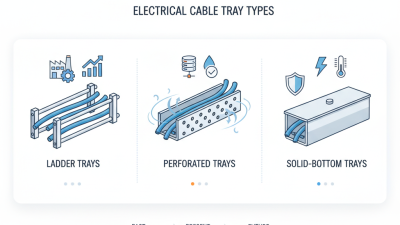
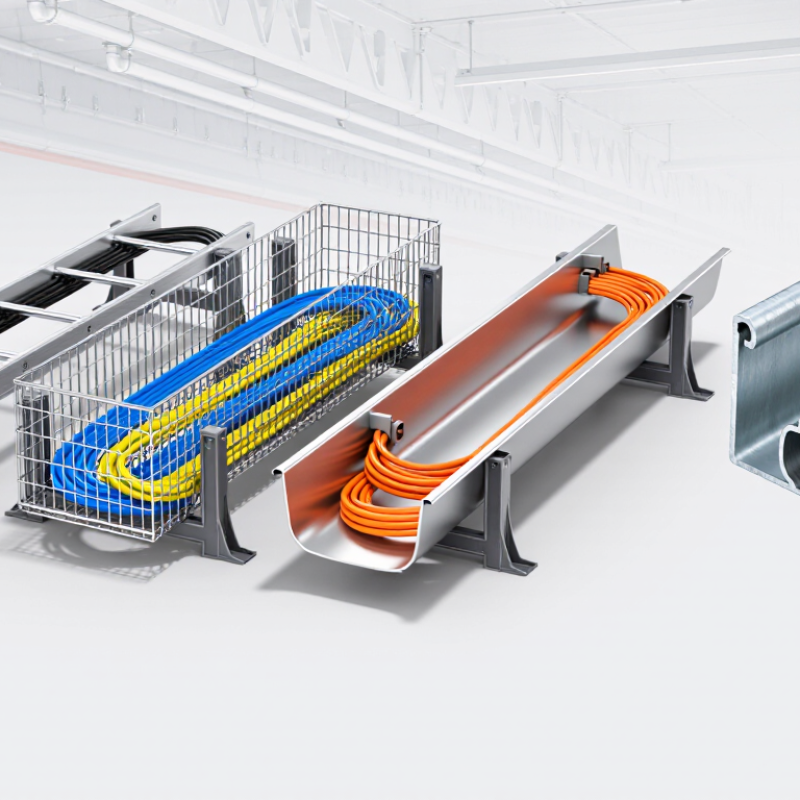
In 2026, ladder, perforated, solid-bottom, wire-mesh, and channel trays remain common choices. Their differences become clear during installation. Ladder trays suit heavy power cables and long spans. Perforated trays support control cables while allowing airflow. Solid-bottom trays protect sensitive wiring from dust and falling debris. Wire-mesh trays help installers route data cables through crowded spaces.
IEC 61537 provides a practical framework for cable tray testing. It addresses load capacity, deflection, electrical continuity, and resistance to mechanical stress. Test results should match the intended support spacing, cable weight, and fixing method. A tray that passes laboratory testing may still perform poorly when overloaded on site. That detail is often missed.
Material selection changes service life. Hot-dip galvanized steel works well in many indoor and outdoor areas. Stainless steel is more suitable for corrosive or hygienic environments. Aluminum reduces weight, but its strength and bonding details require careful review. Fiber-reinforced plastic resists corrosion and performs well in aggressive atmospheres. I have found that drainage, sharp edges, and expansion joints deserve equal attention. A neat layout can still fail. Engineers should verify temperature, fire exposure, cable separation, and earthing continuity before approval. The best tray is not always the strongest one. It is the one tested and installed for its actual environment.
Ladder Trays: Long-Span Power Routing Under NEMA VE 1 Load Classes
Ladder cable trays remain a practical choice for high-capacity power routing in 2026. Their two longitudinal rails and regularly spaced rungs provide strong support with open ventilation. This design helps reduce heat buildup around heavily loaded cables. It also makes cable pulling, inspection, and replacement easier in long industrial runs.
Keep it practical. A ladder tray is not automatically the best solution for every route.
Under NEMA VE 1, load classes help engineers match tray strength to real installation demands. The selection should consider cable weight, support span, concentrated loads, and future additions. A tray carrying several large conductors may require a higher load class than its appearance suggests. Longer spans can increase deflection, even when the total cable weight seems acceptable.
That detail is easy to miss. Project drawings should identify the required class and support spacing clearly.
Field inspections often find overloaded rungs, uneven supports, or cables stacked beyond the intended arrangement. Measure the route. Check clearances near bends, vertical drops, and equipment entries. Rung spacing should allow secure cable placement without damaging insulation during pulling. Bonding continuity also deserves attention, especially across joints and painted surfaces.
I have seen designs that looked efficient but left little room for maintenance. A small allowance for growth can prevent expensive rerouting later. Engineers should verify calculations against current standards, site conditions, and the actual cable schedule before installation.
Wire-Mesh and Channel Trays: Flexible Routing Within NEC 392.22 Fill Rules
What Are the Top Electrical Cable Tray Types in 2026?
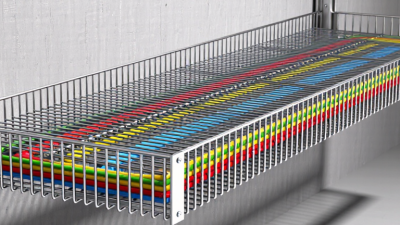
Wire-mesh and channel trays remain practical choices for flexible cable routing in 2026. Wire-mesh trays support quick changes, clean airflow, and easy visual inspection. They work well above machinery, along ceilings, and through compact service corridors. Channel trays provide a slimmer route for smaller cable groups. Their enclosed profile can offer better protection where space is limited. Neither option should be selected by appearance alone.
NEC 392.22 requires cable tray fill calculations based on cable type, size, and installation arrangement. A tray that looks half-empty may still exceed its permitted fill area. Measure the cable diameters carefully, then compare the total area with the applicable NEC table. Leave room for heat movement and future maintenance. Do not assume spare space equals approved capacity. Requirements can vary with conductor configuration and tray construction. Confirm the current NEC edition and local authority requirements before installation. Field conditions often expose mistakes that drawings miss.
Tips: Use actual cable dimensions, not catalog estimates. Keep communication and power cables arranged as required. Check bend space near drops and fittings. Photograph the completed route before covers or equipment block access. A simple fill worksheet helps, but it is not a substitute for engineering review. Recheck crowded sections, especially near transitions. This step is easy to skip. It should not be.
Top Electrical Cable Tray Types in 2026
Wire-mesh and channel trays provide flexible routing, but cable capacity must remain within NEC 392.22 fill limits.
Wire-Mesh Trays
An open structure supports quick visual inspection, ventilation, and frequent cable changes. It is commonly selected where routing flexibility and accessibility are priorities.
Channel Trays
A contained pathway offers compact routing and added protection for smaller cable groups. It is useful where space, segregation, and a cleaner installation are important.
The chart summarizes commonly applied NEC 392.22(A) fill percentages for multiconductor cables. Confirm the adopted NEC edition, cable construction, tray dimensions, and local amendments before final design.
2026 Selection Matrix: Compare Load, Span, Fill, Corrosion, and Cost
In 2026, cable tray selection is less about appearance and more about measurable site demands. A practical matrix should compare ladder, perforated, solid-bottom, and wire-mesh trays. Ladder trays suit power cables because their rungs improve ventilation and support longer spans. Perforated trays offer balanced support for control and communication circuits. Solid-bottom designs protect small cables from falling dust, but they retain more heat. Wire-mesh trays are light and quick to install, although heavy bundles can expose weak supports.
Load and span must be read together. A tray rated for 100 kilograms per meter may need closer supports in seismic or vibration-prone areas. Always check the tested load, support spacing, and deflection limit. A deeper tray does not automatically provide better capacity. Fill should allow working space and future circuits, not merely meet today’s minimum. For many projects, 40 to 50 percent initial fill leaves room for changes. That allowance is often forgotten during value engineering.
Corrosion can decide the material before cost enters the spreadsheet. Indoor dry rooms may accept coated steel, while washdown zones demand stronger corrosion resistance. Near salt air, inspect cut edges, fasteners, and drainage paths carefully. Aluminum reduces weight and handles many outdoor conditions, but its price and bonding details require review. Cost should include supports, covers, labor, maintenance, and replacement access. I have seen a cheaper tray become expensive after crowded routing blocked inspection. The matrix is useful, but field assumptions still need challenge. A tidy calculation can be wrong.