Electro Cables
Login

Top 10 Types of Shore Power Cable for Buyers

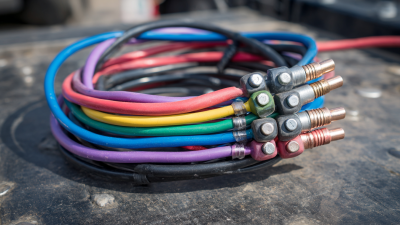
Choosing a shore power cable is not just a matter of matching a plug. The right type depends on the vessel, the dock connection, the electrical load, and the conditions where the cable will be used. A line stretched across a sunny marina faces different demands from one handled in cold weather or stored in a cramped locker. Details matter.

This guide introduces ten common cable types and the features buyers should compare. We look at conductor material, insulation, jacket construction, flexibility, connector compatibility, and resistance to water, oil, and abrasion. These details affect handling and suitability, but no single cable is best for every boat or installation. Check the equipment manufacturer’s specifications and the requirements that apply at your location before choosing.

A thicker cable may support a higher current rating, yet it can also be heavier and harder to coil. A flexible jacket may make everyday handling easier, but its rating still needs to match the intended environment. A common buying mistake is focusing on price or appearance while overlooking length, compatibility, or operating limits. Fit is not guesswork.

The list is a starting point, not a substitute for careful review. Compare product labels and technical data, and ask a qualified marine electrician when ratings or connections are unclear. Even a tidy specification sheet may not answer every practical question. That is worth remembering before you buy.
Top 10 Types of Shore Power Cable for Buyers

Classify shore-power systems by IEC low-voltage and high-voltage categories

For buyers comparing shore-power cable types, begin with system voltage. IEC/IEEE 80005 separates high-voltage shore connection systems from low-voltage systems. IEC/IEEE 80005-1 addresses high-voltage connections; 80005-3 covers low-voltage connections up to 1,000 V. In general IEC terminology, low voltage reaches 1,000 V AC, while high voltage is above that threshold. Check the applicable standard and vessel interface, not just the label. A cable’s voltage class alone cannot determine its suitability.

The distinction affects handling and installation. High-voltage systems can transfer substantial power through fewer, thicker conductors, but require compatible connection equipment and careful insulation coordination. Low-voltage cables may be easier to handle, yet high current can demand larger conductors and increase heating concerns. Details matter: cable length, bend radius, ambient temperature, frequency, connector design, and duty cycle all influence selection.

The IMO’s Fourth Greenhouse Gas Study estimated shipping emissions at 1,056 million tonnes of CO2 in 2018, about 2.89% of global anthropogenic CO2 emissions. Shore power can reduce emissions at berth when supplied with lower-carbon electricity. Still, the voltage category is only a starting point. Port and vessel systems do not always match neatly, and buyers should verify ratings against the project’s electrical design.

Group 10 cable types by voltage, insulation, jacket, and installation duty

Shore-power cable selection starts with voltage, but the cable’s insulation, jacket, and duty matter just as much. IEC/IEEE 80005-3:2014 covers low-voltage shore connections from 400 V to 1,000 V. IEC/IEEE 80005-1:2019 addresses high-voltage systems, including common 6.6 kV and 11 kV ship connections. These ratings give buyers a useful starting point, not a substitute for checking the vessel and terminal interfaces.

A practical ten-type grouping includes 400 V PVC, 690 V EPR, and 1 kV XLPE cables; 6.6 kV EPR and 11 kV XLPE cables; and CSPE-, SHF2-, or chloroprene-jacketed constructions. Add reeling-and-torsion cables and fixed-tray cables to cover installation duty. The categories overlap: a cable can combine XLPE insulation with a specialized outer jacket. That detail is easy to miss. On a damp quay, abrasion resistance and repeated bending may matter more than a nominal voltage label. Verify conductor size, temperature rating, bend radius, and compatibility with the connector system. A cable suited to a fixed tray may fatigue quickly on a moving reel. Standards help narrow the choice, but actual duty still deserves a close review.

Compare IEC 60228 conductor classes 2, 5, and 6 for flexibility

Top 10 Types of Shore Power Cable for Buyers

For shore-power cables, conductor class affects handling as much as electrical performance. IEC 60228 classifies class 2 conductors as stranded, class 5 as flexible, and class 6 as extra-flexible. In practice, class 2 suits fixed runs, while classes 5 and 6 are easier to coil beside a dock or vessel.

IEC 60228:2023 lists maximum DC resistance at 20°C. For a 10 mm² copper conductor, the limits are 1.83 Ω/km for class 2, 1.91 Ω/km for class 5, and 1.95 Ω/km for class 6. Finer strands improve flexibility, but the listed resistance rises slightly. These figures are not a substitute for checking the cable’s rated current, insulation, and installation conditions. A very flexible cable can still be awkward if its overall diameter is large.

Tips: Match the class to how often the lead moves. Class 5 is a practical middle ground for regular handling; class 6 helps with tight bends. Check the cable’s bend-radius specification, too. Flexibility alone is not a complete buying test, and that detail is easy to overlook.

Check marine fire performance under IEC 60332-1-2, IEC 60754, and IEC 61034

When comparing shore power cable types, check more than the jacket label. IEC 60332-1-2 evaluates vertical flame propagation on a single insulated wire or cable under defined conditions. It can help buyers screen fire behavior, but it does not prove a cable will resist every shipboard fire scenario. Ask for a report that identifies the tested construction, including conductor size, insulation, and sheath. Small changes matter.

Smoke and gas tests add useful detail. IEC 60754 assesses gases released during combustion; its parts address acidity and conductivity, and halogen acid gas content. IEC 61034 measures smoke density in a controlled test chamber. Less smoke may help preserve visibility, while lower-acidity gases may reduce corrosion risks to nearby equipment. Still, test results are not a substitute for checking the project specification.

Read the reports closely. Confirm the exact standard part, edition, specimen, and pass criteria, then compare them with the cable offered. A result for one construction should not be assumed to cover another. Not the whole story. Installation conditions, cable grouping, and ventilation also affect real fire performance. Buyers should request complete test documentation and clarify any gaps with a qualified marine electrical professional. Testing helps, but it cannot predict every emergency.

Top 10 Types of Shore Power Cable for Buyers - Check marine fire performance under IEC 60332-1-2, IEC 60754, and IEC 61034

Buyer-oriented cable configurations, not a ranking. Construction, voltage rating, flexibility, and approvals vary by product. Request test reports for the exact cable construction: IEC 60332-1-2 assesses vertical flame propagation on a single cable; IEC 60754 addresses gases evolved during combustion; and IEC 61034 measures smoke density. These tests do not by themselves establish electrical suitability or system compliance.

Cable type Typical construction Common buyer considerations Fire-performance checks
1. Heavy-duty rubber-sheathed flexible cable Flexible copper conductors with rubber insulation and an elastomeric outer sheath; H07RN-F is one commonly encountered harmonized designation. Check the required voltage, conductor size, temperature range, oil and weather resistance, and whether the cable is approved for the intended marine shore connection. A designation alone does not confirm marine-system suitability. Obtain reports for the exact cable model and construction. Do not infer flame, halogen-acid-gas, or smoke performance from the rubber-sheathed description.
2. EPR-insulated, marine-sheathed flexible cable Ethylene-propylene rubber (EPR) insulation with a marine-grade outer sheath, which may be specified as a halogen-free compound. Consider flexibility, water and oil exposure, operating temperature, and the applicable vessel or shore-system specification. Confirm the sheath compound and electrical ratings from the datasheet. Check IEC 60332-1-2, IEC 60754, and IEC 61034 results individually; EPR insulation or a marine-sheath description does not guarantee any particular test result.
3. XLPE-insulated marine cable Cross-linked polyethylene (XLPE) insulation, often paired with a separate marine outer sheath. Often considered for fixed wiring; verify voltage rating, conductor temperature limits, bend radius, and whether the installation requires a more flexible cable. XLPE alone does not define the outer sheath or fire performance. Request test evidence for the complete cable, including its sheath. Check each specified IEC test rather than relying on insulation-material claims.
4. Halogen-free, low-smoke flexible cable Flexible cable using insulation and sheath compounds designed to limit halogen-acid-gas emissions and smoke when tested. Useful where smoke and combustion-gas requirements are specified. Confirm flexibility, electrical ratings, mechanical protection, and the exact test methods and acceptance limits required by the project. Check IEC 60754 and IEC 61034 reports, and verify flame-propagation results separately under IEC 60332-1-2 if required. “LSZH” is not a substitute for test documentation.
5. Single-core shore-power cables One insulated conductor per cable; multiple cables are assembled and routed to form the supply circuit. Check conductor size, phase arrangement, parallel-cable design, current-carrying capacity, routing, and protection. Installation must follow the applicable system design and electrical rules. Confirm fire-test reports cover the single-core cable construction being purchased. Test results do not determine current rating or the suitability of a parallel installation.
6. Multicore shore-power cables Two or more insulated conductors within a common outer sheath; conductor count and configuration depend on the supply and control requirements. Verify conductor count, protective-earth arrangement, voltage and current ratings, overall diameter, and bend radius. Confirm that the configuration matches the shore connection design. Ensure fire-performance evidence applies to the complete multicore cable, not only to an individual conductor or compound.
7. Armoured marine power cable Insulated conductors with metallic armour beneath an outer sheath, designed to provide mechanical protection in suitable installations. Consider armour material, corrosion protection, weight, termination method, and whether the cable is intended for fixed installation. Armour does not automatically make a cable suitable for repeated coiling or movement. Check reports for the complete armoured construction, including the outer sheath. Confirm any installation-specific fire requirements separately.
8. Screened or shielded power cable Power cable incorporating a metallic screen or shield where the system design calls for electrical screening. Specify the screening type, bonding and earthing arrangement, flexibility, and termination details. Screening is an electrical design feature, not a fire-performance classification. Request fire-test documentation for the full screened cable. Screening does not establish compliance with IEC 60332-1-2, IEC 60754, or IEC 61034.
9. Cold-temperature flexible cable Flexible cable with materials specified for operation or handling at a stated low-temperature range. Check the manufacturer’s minimum operating and installation temperatures, bend radius at low temperatures, and resistance to abrasion and weather. Do not assume all flexible rubber cables have the same cold-weather capability. Assess low-temperature suitability separately from fire tests. Obtain the relevant IEC fire-test reports for the exact cable construction.
10. High-voltage shore-connection cable Cable engineered for the voltage level and connection arrangement of a high-voltage shore connection system; construction and accessories are system-specific. Confirm compatibility with the project’s high-voltage shore-connection system, including voltage, current, interfaces, handling, protection, and applicable system standards such as IEC/IEEE 80005-1 where relevant. Check fire-performance requirements and reports specified for the project. IEC 60332-1-2, IEC 60754, and IEC 61034 results alone do not establish high-voltage system compliance.

Match cable ratings to IEC/IEEE 80005-1 high-voltage or 80005-3 low-voltage systems

For shore power cable buyers, voltage class must match the ship and berth interface. IEC/IEEE 80005-1 covers high-voltage shore connections, commonly operating at 6.6 or 11 kV. IEC/IEEE 80005-3 addresses low-voltage connections up to 1 kV. Do not choose by voltage alone: confirm rated current, frequency, conductor size, cable length, and connector compatibility. A long cable run can increase voltage drop and heat. Check twice.

The U.S. Environmental Protection Agency’s 2017 Shore Power Technology Assessment for Ports reports case-specific reductions of up to 95% in vessel nitrogen oxide and particulate emissions at berth. Actual benefits depend on the vessel, operating conditions, and electricity source. This makes correct cable sizing more than a hardware detail: undersized or incompatible equipment can limit reliable connection and power delivery. Keep the cable’s stated voltage and current ratings aligned with the selected system, and verify its resistance to salt spray, abrasion, and repeated handling. A rating printed on a datasheet does not settle every real-world question; installation conditions and maintenance still matter.

Lighting Power & Control-Signal Cable

This content is restricted to site members. If you are an existing user, please log in. New users may register … LEARN MORE “Lighting Power & Control-Signal Cable”