Electro Cables
Login

China Top Waterproof Cable Gland Manufacturers for Buyers

China’s waterproof cable gland manufacturers are gaining attention as industrial buyers seek reliable sealing for power, automation, renewable energy, and outdoor equipment. Grand View Research valued the global cable glands market at approximately USD 2.7 billion in 2023 and expects continued growth through 2030. MarketsandMarkets also identifies infrastructure expansion, factory automation, and renewable-energy projects as major demand drivers. These figures indicate opportunity, not guaranteed quality.

A waterproof cable gland must protect against water, dust, vibration, and cable movement. IEC 62444 provides a useful technical reference for cable-gland design and testing. Buyers should examine IP ratings, thread accuracy, clamping range, sealing materials, temperature resistance, and test documentation. Small details matter. A loose locknut can defeat a strong seal.

John Kinsella, a cable-gland technical specialist associated with CMP Products, has warned, “The seal is only as reliable as the cable diameter and installation practice.” That observation remains practical for sourcing from China. A supplier may show an impressive IP68 certificate, yet the certificate might cover only one model, one cable size, or controlled laboratory conditions. This is where careful verification becomes essential.

Experienced buyers should request traceable test reports, material declarations, production photographs, and samples before approving volume orders. They should also inspect how glands perform after repeated bending and temperature changes. Not every low-cost option is risky. Not every premium option is perfect. The right comparison combines factory experience, engineering evidence, after-sales support, and honest limitations. This guide examines leading Chinese manufacturers through those buyer-focused standards.
China Top Waterproof Cable Gland Manufacturers for Buyers

What Is a Waterproof Cable Gland and Why Does It Matter?

What Is a Waterproof Cable Gland and Why Does It Matter?

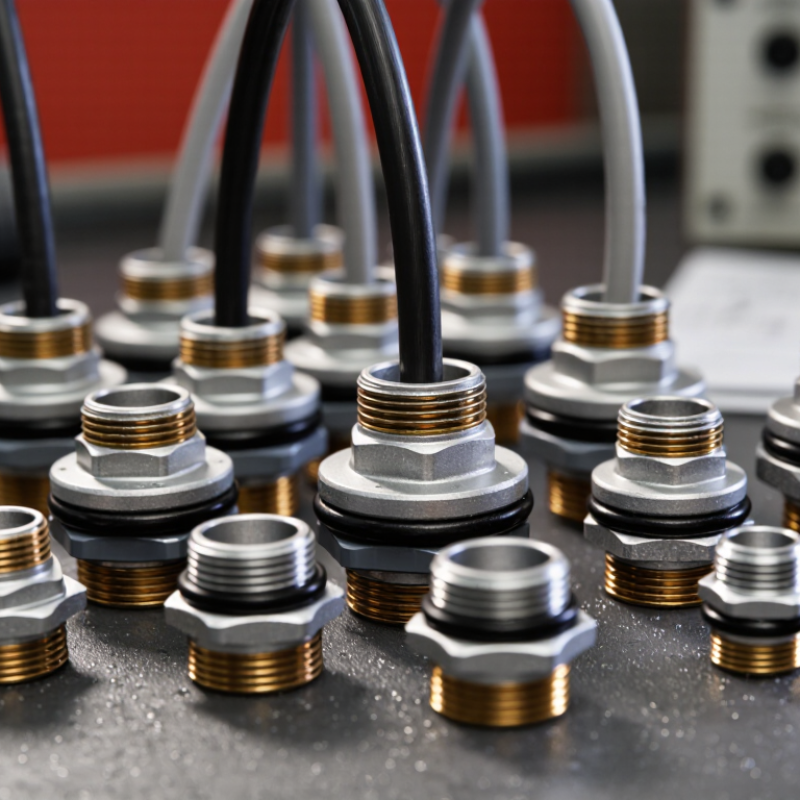
A waterproof cable gland seals the point where a cable enters an enclosure. It usually includes a body, locking nut, sealing ring, and strain-relief element. When tightened correctly, the seal grips the cable jacket and blocks water, dust, and loose particles. The gland also reduces cable movement, which helps protect internal terminals from pulling force.

In outdoor control boxes, a small sealing failure can cause serious trouble. Rain may travel along a cable into the enclosure. Condensation can then corrode terminals, weaken insulation, or trigger unexpected shutdowns. A suitable IP rating matters, but the rating alone is not enough. Cable diameter, thread size, gasket material, and installation torque must match the application. An IP68 gland may still leak when fitted around the wrong cable.

Material selection deserves careful attention. Nylon suits many general installations and resists corrosion. Metal glands provide stronger mechanical protection in demanding environments. Temperature, chemicals, vibration, and ultraviolet exposure can change that decision. During inspections, installers should check for cracked seals, loose nuts, and uneven cable jackets. These details are easy to miss. They are also common failure points.

Manufacturers serving international buyers should provide dimensional drawings, material data, test evidence, and traceable quality records. Buyers should request samples before placing large orders. A gland can look solid and still perform poorly after repeated temperature changes. That possibility deserves testing, not assumptions.

Key Features to Compare Among Chinese Cable Gland Manufacturers

China Top Waterproof Cable Gland Manufacturers for Buyers

When comparing Chinese cable gland manufacturers, examine sealing performance before price. Check IP ratings, test conditions, and the exact cable diameter range. A gland marked IP68 may perform differently under various pressure and immersion conditions. Ask for current test reports, material certificates, and production inspection records. Reliable suppliers should explain these documents clearly.

Material choice matters in real installations. Nylon suits many lightweight applications, while nickel-plated brass handles demanding mechanical environments. Stainless steel may fit corrosive areas, but it usually increases cost. Compare thread standards, locknut design, strain relief, operating temperature, and resistance to oil or ultraviolet exposure. Request samples with your actual cable. A catalog cannot reveal every weakness.

Tips: Ask manufacturers to provide dimensional drawings and sealing-ring details. Compare three samples using the same cable, torque, and installation tools. Check whether replacement seals are available. Keep records.

A polished catalog can still hide small problems. Threads may feel rough, or seals may loosen after repeated bending. These details deserve honest review. Suppliers who explain limitations often appear more dependable than those promising everything. Still, no document replaces controlled sample testing before a large purchase.

How to Evaluate China’s Top Waterproof Cable Gland Suppliers

Choosing a China waterproof cable gland supplier requires more than comparing catalog prices. Start with material evidence. Check whether the gland uses nylon, brass, or stainless steel suitable for your environment. Ask for datasheets showing thread size, cable range, temperature limits, and sealing performance.

Request test reports for the claimed IP rating. Reliable suppliers should explain test conditions, sample quantities, and inspection dates. A clear report is more useful than a large logo. Examine production details too. Look for incoming material checks, torque testing, dimensional inspection, and batch traceability. Ask whether each shipment receives a final inspection record. Small details matter.

Test samples before placing a large order. Fit the gland to your actual enclosure and cable diameter. Then check compression, thread engagement, and strain relief by hand. I once trusted a neat sample package too quickly. The thread fit was acceptable, but the sealing ring felt unusually stiff after storage. That issue deserved more questions. Suppliers should respond with measurements, photographs, and corrective actions, not vague promises. Confirm packaging, lead times, replacement procedures, and technical support in writing. A factory visit can help, but it cannot replace independent checks. Past experience is useful, yet every project has different moisture, vibration, and temperature risks. Evaluate the evidence that matches your application.

Common Certifications, Materials, and Testing Standards

For buyers comparing China’s waterproof cable gland manufacturers, certification should be checked before price. ISO’s 2023 Survey recorded more than 1.26 million ISO 9001 certificates worldwide. This figure shows quality systems are common, but certification alone does not prove gland performance. Ask for current certificates, factory scope, and batch traceability. For enclosure protection, IEC 60529 defines IP ratings. IP66 requires protection against powerful water jets, while IP68 depends on the manufacturer’s stated immersion conditions. The details matter.

Material selection changes service life. Nickel-plated brass offers mechanical strength and useful corrosion resistance in industrial panels. Stainless steel is more suitable for saline or chemically aggressive environments, though it costs more. Polyamide glands reduce weight and resist many chemicals, but ultraviolet exposure and heat require careful review. Sealing elements commonly use EPDM, NBR, or silicone. Each material reacts differently to oil, temperature, and compression. Small details matter.

Testing should reference EN 62444 for cable gland construction and performance. A reliable supplier should provide pull-out, torque, impact, temperature, and ingress-test records. Reports should identify cable diameter, sealing material, test duration, and laboratory conditions. UL 514B may also matter for North American installations. RoHS and REACH declarations support restricted-substance control, but they are not substitutes for mechanical testing. In practice, I would request samples and repeat the IP test after installation. Suppliers sometimes show excellent laboratory results. Field assembly can still fail. That gap deserves honest review.

China Top Waterproof Cable Gland Manufacturers for Buyers

Common Certifications, Materials, and Testing Standards

How to read the chart: The first IP digit indicates protection against solid objects and dust, while the second digit indicates protection against water. IP6X is the highest dust-protection level defined by IEC 60529. IPX7 and IPX8 refer to temporary and continuous immersion conditions, with IPX8 requiring conditions specified by the manufacturer and testing agreement.

Common buyer checks: Waterproof cable glands are commonly manufactured from nickel-plated brass, stainless steel 304/316, or PA66 nylon. Typical compliance documentation may include IEC 60529 ingress-protection test reports, RoHS and REACH declarations, CE conformity documentation, and UL or CSA approvals where required by the application.

Steps for Choosing the Right Manufacturer for Your Project

Choosing the Right China Manufacturer for Your Waterproof Cable Gland Project

Begin with the application, not the catalogue. Confirm cable diameter, thread type, material, temperature range, and exposure conditions. A gland fitted beside a salty dock needs different protection from one installed inside a dry control cabinet. IEC 60529 defines IP protection levels, while IEC 62444 covers cable gland requirements and testing principles. Ask the manufacturer for test reports, dimensional drawings, and material declarations.

Production evidence matters more than attractive samples. Request factory audit records, batch traceability, inspection plans, and photographs of sealing tests. The 2024 MarketsandMarkets cable glands report identifies industrial automation, energy, and infrastructure as major demand areas, where reliability and certification strongly influence purchasing decisions. This supports checking whether the manufacturer has relevant project experience, rather than accepting general claims. Require samples from normal production, not specially prepared pieces.

Review quality consistency across several batches. Measure thread accuracy, sealing-ring hardness, and clamping performance. Small differences can cause water entry after installation. Ask how defects are handled, including replacement timing and root-cause reporting. A manufacturer may offer a lower price, but thinner metal or unstable rubber compounds can increase field costs. My own practical caution is simple: a clean sample proves little. Independent testing is safer when the application is critical. Even experienced buyers sometimes overlook installation torque, which can damage the seal. Leave room for that mistake in the evaluation process.

China Top Waterproof Cable Gland Manufacturers for Buyers - Steps for Choosing the Right Manufacturer for Your Project

Step Evaluation Dimension Reliable Technical Requirement Information Buyers Should Verify Recommended Decision Rule
1 Cable and gland compatibility The gland must match the cable outer-diameter range, cable construction, thread type, and installation environment. Armoured cable glands require the correct armour-clamping design. Cable drawings, cable outer-diameter measurements, thread specification, armour details, and the manufacturer’s dimensional datasheet. Required
Reject options that cannot cover the actual cable diameter with sufficient sealing and strain relief.
2 Ingress protection rating Select the rating according to the enclosure and site conditions. IP66 protects against dust and powerful water jets; IP67 additionally covers temporary immersion under the test conditions of IEC 60529. IP test report identifying the tested product configuration, cable diameter range, sealing insert, and test standard. Required
Do not accept a general IP claim without a traceable test report or certificate.
3 Applicable product standards Cable glands should be designed and tested in accordance with relevant requirements, commonly including IEC 62444 for cable glands and IEC 60529 for enclosure ingress protection. Declaration of conformity, standard edition, scope of certification, product family covered, and test laboratory details. Required
Confirm that the cited standard applies to the exact series and material, not only to a different product.
4 Material and corrosion resistance Common materials include nickel-plated brass, stainless steel, polyamide, and other engineering polymers. The selection should reflect humidity, salt spray, chemicals, UV exposure, and temperature. Material grade, plating or surface-treatment specification, chemical-resistance data, UV information, and corrosion-test results where required. Required
Specify the environment first; avoid selecting a material only by purchase price.
5 Temperature performance The operating temperature range of the gland, seal, and cable must cover the lowest and highest temperatures expected during normal operation and storage. Temperature range on the datasheet, seal material, low-temperature flexibility information, and test conditions. Required
Allow a practical safety margin above the project’s expected temperature range.
6 Electrical and EMC requirements For screened or armoured cables, the gland may need to provide bonding, earth continuity, or electromagnetic compatibility performance. The design must match the project’s earthing method. Electrical continuity data, bonding design, EMC test information where applicable, and installation instructions for armour or screen termination. Preferred
Require documented electrical performance for power, industrial automation, rail, or data applications.
7 Hazardous-area suitability Equipment for explosive atmospheres requires the correct protection concept, gas or dust classification, temperature class, equipment protection level, and certificate scope. Ordinary waterproof glands are not automatically suitable. A valid third-party hazardous-area certificate, marking, certificate number, installation conditions, and permitted cable dimensions. Required when applicable
Use only certified products whose markings and installation conditions match the site classification.
8 Quality management system A documented quality system, such as ISO 9001 certification, supports controlled production, inspection, corrective action, and traceability. Certification does not replace product testing. Current certificate, certification scope, issuing body, validity dates, incoming-material controls, and final inspection records. Preferred
Verify the certificate independently and assess product-specific quality controls.
9 Regulatory and environmental compliance For applicable markets, materials and products may need to meet requirements such as EU RoHS Directive 2011/65/EU and REACH obligations. Market-specific rules must be checked separately. RoHS test or declaration, REACH statement, material declarations, restricted-substance information, and market-specific conformity documents. Required for regulated markets
Record the applicable destination-market requirements in the purchase specification.
10 Product range and customization A suitable manufacturer should offer the required thread standards, sizes, sealing options, reducers, locknuts, earth tags, blanking plugs, and other compatible accessories. Complete catalogue, dimensional drawings, accessory compatibility chart, sample availability, and engineering-change procedure. Preferred
Favor a compatible product family that reduces assembly errors and simplifies spare-parts management.
11 Production capacity and lead time Capacity should support the project quantity, delivery schedule, packaging requirements, and repeat orders without compromising inspection or traceability. Production lead time, monthly capacity statement, order cut-off rules, packaging specification, and recent delivery performance records. Required
Obtain a written production and delivery schedule for both initial supply and replenishment.
12 Sample and verification process Before mass production, samples should be checked for dimensions, thread fit, sealing performance, material, appearance, and installation torque where specified. Approved sample record, inspection checklist, first-article report, test results, and retained sample identification. Required
Approve a production-equivalent sample before releasing the bulk purchase order.
13 Total cost of ownership Compare unit price together with tooling, testing, freight, customs, accessories, installation labor, replacement cost, and potential failure risk. Itemized quotation, shipping terms, tooling ownership terms, warranty conditions, and estimated accessory requirements. Required
Choose the lowest compliant total cost rather than the lowest unit price.
14 After-sales support and traceability The supplier should provide installation guidance, complaint handling, batch identification, replacement support, and technical responses throughout the project lifecycle. Warranty terms, response-time commitment, batch or lot coding, corrective-action process, and technical contact procedure. Preferred
Include documentation, traceability, and response obligations in the purchase agreement.

Lighting Power & Control-Signal Cable

This content is restricted to site members. If you are an existing user, please log in. New users may register … LEARN MORE “Lighting Power & Control-Signal Cable”