Electro Cables
Login

What Is the Best Shielded Power Cable from China?

Choosing the best shielded power cable from China requires more than comparing price lists. It demands evidence.

The global wire and cable market reached an estimated USD 216.7 billion in 2023, according to Grand View Research. Its outlook reflects steady demand from power networks, factories, buildings, and renewable energy projects. The International Energy Agency’s Electricity 2024 report also forecasts continued growth in global electricity consumption through 2026. These trends increase pressure on cable buyers to select products that remain stable under real operating conditions.

A reliable Chinese manufacturer should provide clear conductor details, insulation materials, shielding structure, voltage ratings, and documented testing. Look for copper resistance records, insulation thickness measurements, bending tests, and routine inspection reports. The cable should also match relevant requirements, such as IEC 60502-1, IEC 60332, or project-specific UL standards. Certification alone is not enough. Traceable batch records matter.

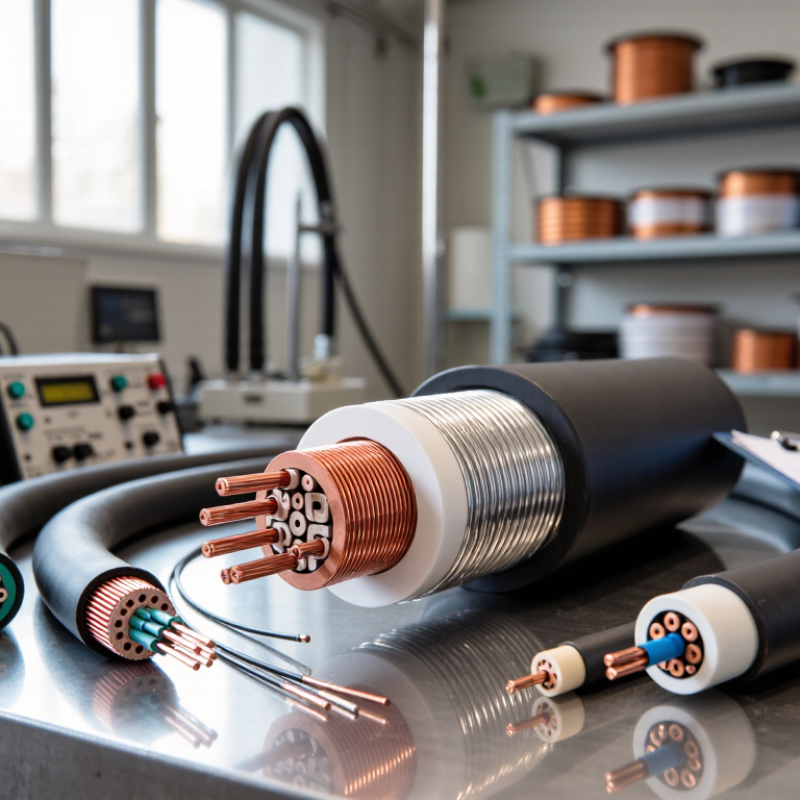
Field experience often reveals small differences. A dense copper tape shield can improve electromagnetic protection. A carefully applied drain wire can simplify grounding. Poorly controlled extrusion may leave weak spots beneath the jacket. These details are easy to miss in photographs.

No single cable suits every project.

The best choice depends on voltage, installation distance, mechanical stress, moisture, temperature, and local compliance requirements. Buyers should request samples, technical data sheets, factory audit evidence, and independent test results before approval. Cost still matters, but the cheapest option may create greater replacement risk. This assessment is not perfect without site information, so careful review remains essential.

What Is the Best Shielded Power Cable from China?

Types of Shielded Power Cables Available from China

The best shielded power cable from China depends on voltage, installation conditions, and the required shielding performance. Available types vary widely.

Copper tape shielded cables are common in medium-voltage systems. Their overlapping tape creates reliable coverage and supports controlled electrical stress. They are less flexible than braided designs.

Copper wire shielded cables offer better flexibility and handle repeated movement more effectively. They suit low-voltage power, control panels, and equipment connections.

Foil shielded cables, often paired with a drain wire, provide lightweight electromagnetic protection. However, they are not ideal where high fault-current capacity is required. A small detail matters here.

Steel tape armored and steel wire armored cables add mechanical protection for underground routes, industrial floors, and exposed installations. Armor is not automatically the same as an electrical shield. It may need separate grounding arrangements.

Aluminum foil shields can reduce weight and material cost, while concentric copper screens provide stronger current-handling capability in demanding systems. Single-core and multi-core versions are available with PVC, XLPE, or low-smoke halogen-free insulation.

During supplier evaluation, request conductor resistance data, insulation test results, shielding coverage, bending radius, and full traceability. Check whether the cable matches the project voltage and installation temperature. In practice, a cable may pass a basic test yet perform poorly after tight bending. That deserves attention. I would not choose from price alone; factory process control, sample inspection, and consistent batch records often reveal more than a polished specification sheet.

Key Materials and Shielding Designs Explained

What Is the Best Shielded Power Cable from China? The answer depends on materials, voltage, and electromagnetic conditions. Copper conductors offer low resistance and strong flexibility. Aluminum reduces weight and material cost, but needs careful joint design. XLPE insulation handles heat better than ordinary PVC in many power applications. IEC 60502-1 covers extruded-insulation cables from 1 kV to 3 kV, making it a useful reference for specifications.

Shielding design matters just as much. Aluminum foil gives near-total coverage and blocks high-frequency interference. A copper braid adds mechanical strength and improves grounding performance. Concentric copper wires suit medium-voltage cables and can carry fault current. Combined foil-and-braid structures provide wider protection, especially near variable-speed drives. A thicker shield is not automatically better. Poor contact, loose terminations, or missing drain wires can still create noise. The IEA’s Electricity 2024 report expects global electricity demand to grow by about 3.4% annually through 2026. Reliable cable design is becoming less optional. Still, project conditions differ, and a neat specification can hide practical weaknesses.

Tips: Ask Chinese suppliers for conductor resistance, insulation thickness, shield coverage, bending radius, and routine-test records. Verify tests against IEC requirements, not only factory brochures. For outdoor layouts, check moisture barriers and UV resistance. For industrial sites, request impedance and grounding details. I would also inspect sample terminations before approving a large order.

What Is the Best Shielded Power Cable from China?

Copper provides the highest electrical conductivity among the commonly used shielding materials shown here, while aluminum foil offers full physical coverage with low weight. A foil-and-braid construction combines excellent coverage with improved mechanical strength and low-frequency grounding performance. Actual shielding effectiveness depends on frequency, shield coverage, transfer impedance, grounding, cable geometry, and installation quality.

How to Evaluate Cable Performance and Safety

What Is the Best Shielded Power Cable from China?

How to Evaluate Cable Performance and Safety

The best shielded power cable is not chosen by price or appearance. It should match the voltage, current, temperature, and installation environment. Check the conductor material, cross-sectional area, and measured resistance. Lower resistance usually means less heat and energy loss. Ask for production records and test results from the actual cable batch. Generic certificates are not enough.

Look closely at the insulation and outer jacket. The surface should be smooth, even, and free from bubbles or cuts. Measure the insulation thickness at several points, not just one. An uneven layer can weaken electrical safety. Test the shielding coverage and grounding path. Braided shields need firm contact, while foil shields need proper drainage conductors. Poor grounding can leave sensitive equipment exposed to interference.

Bend a sample carefully.

A cable may pass a factory test and still fail during installation. Check its bending radius, pulling strength, and resistance to moisture or oil. Review flame behavior and temperature ratings against local requirements. Independent laboratory testing adds useful confidence, especially for large orders. Still, I would inspect samples personally. A polished datasheet can hide small inconsistencies. Even a minor jacket flaw deserves attention before shipment. Keep photographs, measurements, and batch numbers for traceability. Safety depends on both verified design and careful handling.

Choosing the Right Chinese Cable Manufacturer

What Is the Best Shielded Power Cable from China?

Choosing the right Chinese cable manufacturer requires more than comparing prices. The best supplier should understand your voltage, current, installation environment, and shielding requirements. Ask whether the cable uses copper, aluminum, or another conductor. Confirm insulation materials, screen coverage, bending radius, and temperature ratings. These details affect safety and service life.

Request technical drawings and a physical sample before placing a large order. A reliable manufacturer should explain its testing process clearly. Look for conductor resistance tests, insulation checks, voltage tests, and shielding continuity inspections. Factory experience matters too. Ask for evidence of similar projects, production capacity, and quality records. Traceability is important. Each batch should connect to material certificates and inspection reports.

Visit the factory if possible, or arrange a professional remote audit. Check the extrusion lines, laboratory equipment, storage areas, and packing methods. Do not ignore communication quality. Slow answers may create costly misunderstandings later. The lowest quotation can conceal thinner insulation, weaker shielding, or unstable delivery times. Still, a high price does not guarantee excellence. I once assumed a detailed brochure proved strong manufacturing ability; it did not. A sample exposed uneven shielding and unclear labeling. That mistake changed my evaluation process. Now, I compare test results, sample performance, contract terms, export documents, and after-sales response before selecting a manufacturer.

Quality Standards, Testing, and Customization Options

What Is the Best Shielded Power Cable from China?

The best shielded power cable is not simply the cheapest option. It must match your voltage, current, environment, and installation method. Experienced buyers check conductor resistance, insulation thickness, shielding coverage, and jacket durability. Relevant standards may include IEC 60502, IEC 60332, or UL requirements for specific markets. Always confirm the latest applicable edition. A certificate alone is not enough.

Testing should reflect the finished cable design. Ask for insulation resistance, high-voltage withstand, conductor resistance, flame performance, and bending tests. For shielded cables, verify shielding continuity and coverage across the full production length. Request batch records and traceable test reports. A third-party laboratory can add confidence, especially for critical equipment. In practice, a perfect report can still hide a specification mismatch. Review the drawing carefully.

Tips: Order samples before mass production. Compare the sample with the approved drawing. Specify conductor material, insulation type, voltage rating, temperature range, shield structure, jacket color, length, and connector requirements. Foil, braid, or combined shielding may suit different interference conditions. Also define the minimum bend radius. Small omissions here can create installation problems later. A pilot batch is often wiser than a large first order.

What Is the Best Shielded Power Cable from China? - Quality Standards, Testing, and Customization Options
Shielded Cable Construction Typical Voltage Rating Conductor and Insulation Shielding System Recommended Applications Key International Standards Typical Routine and Type Tests Main Advantages Customization Options
XLPE Insulated, Copper-Wire Screened Power Cable 0.6/1 kV to 18/30 kV Stranded copper or aluminium conductor with XLPE insulation. Suitable for fixed installations and medium-voltage distribution when manufactured to the applicable voltage standard. Concentric copper wires, normally combined with a copper tape or counter-helix. The screen cross-section can be selected to meet earth-fault current requirements. Medium-voltage feeders, substations, industrial plants, underground distribution, and systems requiring a defined metallic earth-return path. IEC 60502-2 for medium-voltage cables;
IEC 60228 for conductor and screen-wire requirements;
IEC 60840 may apply to higher-voltage cable systems above the IEC 60502-2 range.
Partial-discharge testing, AC voltage testing, conductor resistance, screen resistance, insulation thickness, sheath integrity, and dimensional verification. Better screen conductivity and fault-current capability than a simple copper-tape screen. Screen-wire diameter, number of wires, metallic screen area, water-blocking materials, longitudinal sealing, conductor size, oversheath material, and armor selection.
XLPE Insulated, Copper-Tape Screened and Steel-Wire Armored Cable 0.6/1 kV to 3.6/6 kV Copper or aluminium conductor with XLPE insulation and an inner bedding layer. The design is intended for fixed installation rather than repeated flexing. Copper tape provides electromagnetic screening and an earth-continuity path. Galvanized steel-wire armor provides mechanical protection. Direct burial, outdoor industrial routes, cable trays, areas exposed to impact, and installations requiring enhanced mechanical protection. IEC 60502-1 or IEC 60502-2, depending on voltage;
IEC 60228;
IEC 60332-1-2;
Additional burial or fire requirements may be specified by the project.
Armor continuity, voltage withstand, conductor resistance, insulation resistance, sheath spark testing, bending, impact, and crush testing where specified. Combines electromagnetic shielding with improved resistance to impact, pulling forces, and installation damage. Steel-wire or steel-tape armor, armor coverage, galvanized finish, inner sheath, anti-termite additives, water blocking, sheath color, and outer diameter limits.
LSZH Shielded Power Cable 0.6/1 kV Copper or aluminium conductor with XLPE or thermoset insulation and a low-smoke, halogen-free oversheath. Conductor operating temperature depends on the selected insulation system. Copper tape, tinned copper braid, copper-wire screen, or a combined screen may be selected according to the required EMC level. Public buildings, rail facilities, data and communication rooms, tunnels, airports, and enclosed spaces where smoke and corrosive gases must be limited. IEC 60502-1;
IEC 60228;
IEC 60332-1-2;
IEC 60754-1 and IEC 60754-2 for halogen-acid gas and pH/conductivity assessment;
IEC 61034-2 for smoke density.
Flame propagation, smoke emission, halogen-acid gas, pH and conductivity, voltage withstand, insulation resistance, screen continuity, and sheath integrity. Reduced smoke and corrosive gas emission during fire compared with conventional PVC-sheathed designs. LSZH compound classification, screen type, fire-performance level, conductor material, armor, UV resistance, oil resistance, color, and printed identification.
PVC Insulated and PVC-Sheathed Shielded Power Cable 0.6/1 kV Copper or aluminium conductor with PVC insulation and PVC oversheath. The usual maximum conductor operating temperature is approximately 70°C. Copper tape, copper braid, or wire screen depending on the required shielding and flexibility. General industrial wiring, machinery, building services, cable trays, and indoor or protected outdoor installations. IEC 60502-1;
IEC 60228;
IEC 60332-1-2.
Conductor resistance, voltage withstand, insulation resistance, dimensional checks, flame propagation, screen continuity, and sheath inspection. Economical, widely available, and suitable for many standard low-voltage installations. PVC temperature grade, oil resistance, UV stabilization, conductor class, screen coverage, armor, sheath color, and packaging format.
Flexible Shielded Power Cable for Moving Equipment 300/500 V to 0.6/1 kV Fine-stranded flexible copper conductors with elastomeric, PVC, or thermoplastic insulation. The exact bending radius and flexing life must be defined by the cable design. Tinned copper braid, spiral copper screen, or combined braid and foil screen. Braid coverage commonly varies according to EMC and flexibility requirements. Robotics, variable-speed equipment, machine tools, automated production lines, cranes, and cable chains when the design is rated for continuous flexing. IEC 60228 for conductor classes;
IEC 60332-1-2 where flame performance is required;
EN 50525 or a project-specific flexible-cable standard may apply depending on the intended market.
Conductor resistance, voltage withstand, flexing or bending-cycle testing, screen coverage, insulation resistance, flame testing, and tensile or elongation tests for sheath materials. Designed for movement and improved electromagnetic compatibility around motors, drives, and automation equipment. Minimum bending radius, flexing-cycle target, torsion resistance, conductor class, braid coverage, oil resistance, coolant resistance, temperature range, and custom overall diameter.
Selection note: The best shielded power cable depends on voltage, installation method, fault-current requirements, EMC conditions, fire-performance requirements, mechanical exposure, bending frequency, and applicable national or project standards. Final cable construction should be confirmed through the supplier's datasheet and test documentation.

Lighting Power & Control-Signal Cable

This content is restricted to site members. If you are an existing user, please log in. New users may register … LEARN MORE “Lighting Power & Control-Signal Cable”