A partner you can trust
Choosing a cable wire connectors supplier in China is not only a price comparison. A connector may look simple on a catalog page, yet small design differences can affect fit, assembly time, and service life. This guide introduces ten suppliers to consider, treating “top” as a practical shortlist rather than a universal ranking. Needs vary by application. A factory serving automotive harnesses may not suit a compact sensor or industrial control cabinet.
Compare each supplier against the details of your project. Check supported wire gauges, contact materials, plating options, operating temperatures, and ingress protection ratings. For crimp products, ask about pull-force testing and recommended tooling. For custom parts, confirm drawing control, sample lead times, and how design changes are documented. Details matter. Request current technical datasheets and relevant quality-system certificates, then verify that they apply to the manufacturing site and product category you are evaluating. Ask for samples. A small trial assembly can reveal fit or handling issues that a polished brochure may not show. Pricing, minimum order quantities, and production capacity can also change, so confirm them directly before making a decision. The list is a starting point, not a substitute for qualification. Some supplier information may be incomplete or outdated; that is worth acknowledging. Careful comparison helps buyers identify a partner whose capabilities match their actual specifications, delivery needs, and quality expectations.
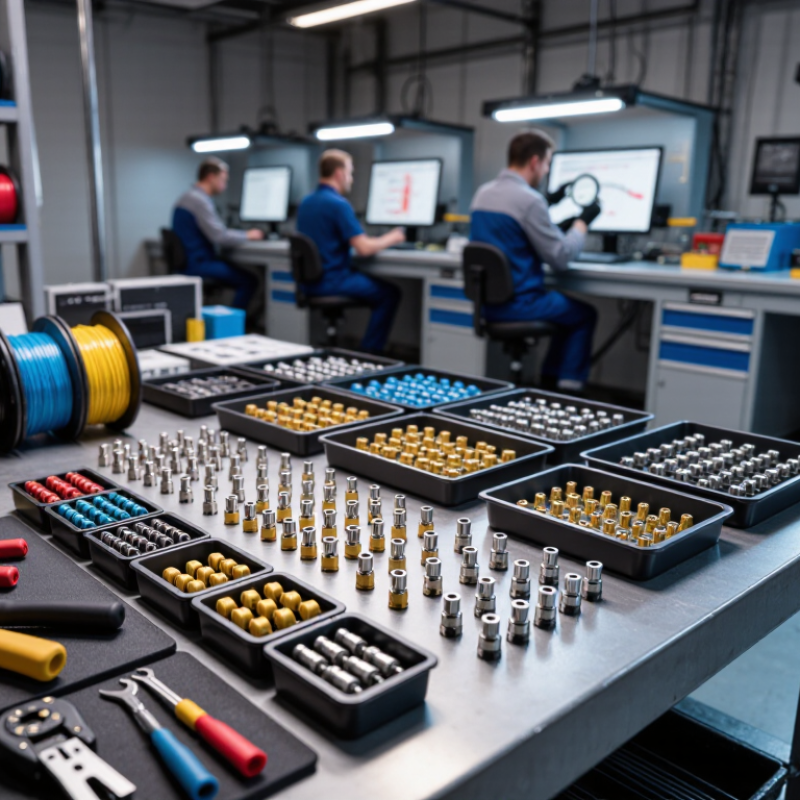
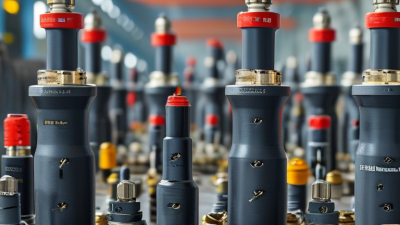
Cable wire connectors join conductors while helping maintain a stable electrical path. Common types include screw terminals, push-in connectors, crimp terminals, and butt splices. Screw terminals are often used in control panels and fixed wiring, where a technician can tighten and inspect each connection. Push-in connectors allow quick assembly, but the conductor size and strip length must match the connector’s specifications.
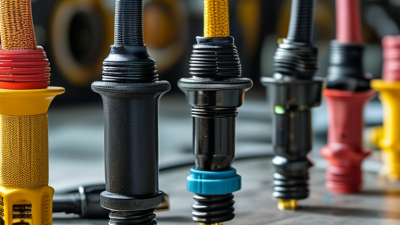
Crimp connectors are widely used in vehicles and equipment exposed to vibration. They need the correct terminal size and a suitable crimping tool; a loose crimp can heat up under load. Ring and fork terminals attach wires to studs or screw terminals, while sealed connectors help protect outdoor or damp installations. Protection is not automatic. Check the connector’s stated environmental rating.
Choosing a type means checking conductor material, wire gauge, current, temperature, and installation conditions. A connector that fits can still be the wrong choice. In practical installations, faded wire markings or limited access can make identification difficult. Do not guess. Verify the wiring and connector instructions before assembly, then inspect the finished joint for secure retention, exposed strands, and strain on the cable. A careful check takes little time, but it can prevent a weak connection from being overlooked.
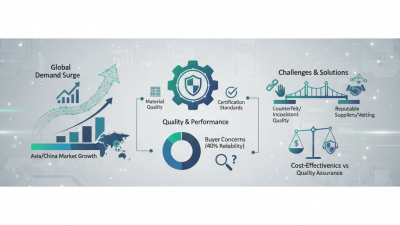
China’s cable connector market is organized by application, product type, and supply-chain role. It is not one uniform supplier pool. Some manufacturers focus on terminal blocks, crimp connectors, or cable glands; others produce customized assemblies for telecom, power, and industrial equipment. Large-volume producers typically serve standard specifications, while smaller workshops may handle short runs and special dimensions. Short runs matter.
The Ministry of Industry and Information Technology reported 4.25 million 5G base stations in China by the end of 2024, indicating a substantial installed network that requires connection and maintenance components. The IEA’s Renewables 2024 report states that China accounted for almost 60% of global renewable capacity additions in 2023, supporting demand for connectors used in energy systems. These figures describe end markets, not connector sales, so they should not be read as direct market-size estimates. Supplier catalogs can look similar. Buyers should compare conductor range, insulation material, rated current, and test documentation against the actual application. Regional sourcing and customization also affect lead times; a low unit price may not reflect the cost of tooling, inspection, or small-batch production.
China Top 10 Cable Wire Connector Suppliers?
Key Criteria for Evaluating Chinese Connector Suppliers
Choosing a cable wire connector supplier takes more than comparing unit prices. Start with the application: conductor size, rated current, operating temperature, vibration, and exposure to dust or moisture. Request drawings, material specifications, and test reports for the exact connector model. Confirm that any stated certification covers the product and facility you are evaluating. A certificate alone cannot guarantee consistent production.
Small details matter. Check contact material, plating thickness, housing dimensions, and wire-retention performance. Ask how the supplier controls incoming materials and monitors production batches. A sample can reveal fit and finish, but one sample cannot prove long-term consistency. No checklist is perfect. Review lead times, minimum order quantities, packaging, and how the supplier handles quality concerns. Clear, specific answers are more useful than broad promises.
Tips: Test samples with your actual cable and assembly tools. Record fit, pull strength, and any connection failures. Ask for updated reports when materials or manufacturing processes change.
Suggested evaluation weights for comparing suppliers. These are a buyer’s planning framework, not survey results or supplier rankings.
Prioritize product quality and electrical safety, then verify applicable certifications and test reports, engineering support, production capacity, delivery performance, and total cost for your application.
China Top 10 Cable Wire Connector Suppliers?
China’s cable connector market includes factories with different strengths, not one universally “top” group. The profiles below describe supplier types worth comparing; actual capabilities should be confirmed through samples, drawings, and recent quality records.
1. A high-volume terminal supplier may offer automated crimping and steady output for standard wire sizes. 2. A custom-molding factory can develop insulated housings around a buyer’s dimensions. 3. A waterproof-connector maker focuses on seals, locking features, and enclosure fit. 4. A harness-focused supplier can pair connectors with cut, stripped, and labeled wires. 5. A metal-contact producer may specialize in stamping, plating, and contact consistency. Ask for material details.
6. A small-batch workshop may suit prototypes, though lead times can vary. 7. An export-oriented factory may provide clearer inspection documents and packing specifications. 8. A solar-cable supplier often emphasizes outdoor-rated insulation and firm locking connections. 9. An appliance-connector maker may support repeat orders with stable tooling. 10. A testing-focused supplier can provide crimp pull-test results and continuity checks. These are useful signals, not guarantees. A polished catalog can hide weak samples. Compare wire fit, contact resistance, and workmanship under the same test conditions before choosing a supplier.
Anonymized supplier archetypes for market research. This is not a verified ranking or a profile of ten individually confirmed companies; product scope and certifications should be checked directly with each supplier.
| Profile | Typical Product Focus | Common Product Examples | Potential Buyer Applications | Key Checks Before Purchasing |
|---|---|---|---|---|
| Supplier Profile 1 Crimp terminal specialist |
Wire terminals and crimp connections | Ring, fork, pin, blade and butt-splice terminals | Control panels, appliances, vehicle wiring and equipment assembly | Wire-size range, conductor material, plating, crimp-tool compatibility and applicable test reports |
| Supplier Profile 2 Cable lug and power-termination specialist |
High-current cable terminations | Copper or aluminum lugs, mechanical connectors and splice connectors | Power distribution, electrical installation and industrial equipment | Conductor size, material compatibility, connection method, temperature rating and installation instructions |
| Supplier Profile 3 Waterproof connector specialist |
Sealed wire-to-wire and cable connections | Circular connectors, inline connectors and sealed cable assemblies | Outdoor lighting, sensors, machinery and other exposed installations | Verified IP rating under IEC 60529, mating compatibility, cable diameter range and environmental limits |
| Supplier Profile 4 Terminal block specialist |
Fixed wiring connections for electrical panels | DIN-rail, feed-through, ground and modular terminal blocks | Industrial control cabinets, building systems and automation equipment | Rated voltage and current, conductor range, mounting format and relevant IEC 60947-7 series documentation |
| Supplier Profile 5 Photovoltaic connector specialist |
Connectors and cable assemblies for PV systems | PV plug connectors, branch connectors and pre-assembled leads | Solar module strings and photovoltaic installations | Mating compatibility, verified IEC 62852 conformity where applicable, UV resistance and installation requirements |
| Supplier Profile 6 Automotive connector specialist |
Vehicle wire-harness connection systems | Sealed and unsealed connectors, terminals and connector housings | Automotive harnesses, commercial vehicles and mobility equipment | Terminal retention, vibration performance, sealing, traceability and customer-specific validation records |
| Supplier Profile 7 Wire-harness assembly provider |
Customized cable and wire assemblies | Cut-and-terminated wires, harnesses and connectorized cable sets | Appliances, industrial machinery, lighting and electronic equipment | Drawings and revision control, continuity testing, material traceability and sample approval process |
| Supplier Profile 8 Industrial heavy-duty connector specialist |
Multi-contact connectors for demanding environments | Rectangular connectors, inserts, housings and cable glands | Factory automation, machine tools and industrial equipment | Contact configuration, rated electrical values, mechanical locking, enclosure protection and mating-system compatibility |
| Supplier Profile 9 PCB wire-connection specialist |
Connections between wires and printed circuit boards | Wire-to-board headers, pluggable terminal blocks and board terminals | Power supplies, controls, consumer electronics and instrumentation | Pitch, mounting method, wire range, current rating and PCB layout compatibility |
| Supplier Profile 10 Coaxial and signal connector specialist |
Connectors for coaxial cable and signal transmission | RF coaxial connectors, cable-end connectors and adapter assemblies | Telecommunications, test equipment, antennas and signal systems | Connector series, cable dimensions, impedance, frequency range and measured performance data |
Note: These profiles describe common supplier specializations, not independently verified company-level capabilities. Confirm certifications, ratings, samples and production capacity with the specific manufacturer before placing an order.
When comparing China’s cable wire connector suppliers, ask for evidence tied to the exact product, not a generic company profile. Request material declarations, traceable batch records, and inspection results for dimensions, crimp pull force, and contact resistance. For relevant applications, check whether testing follows applicable IEC 60512 methods. Confirm that compliance documents match the connector’s materials and intended market. A certificate alone does not prove every batch is consistent. Paper is not proof.
Delivery deserves the same scrutiny as quality. The World Bank’s 2023 Logistics Performance Index assessed 139 economies and included timeliness and tracking and tracing among its six dimensions. Apply that logic at supplier level: compare quoted lead times with shipment history, on-time delivery rates, and the speed of delay notifications. Ask for a sample order schedule, including production, inspection, and transit milestones. Check how the supplier handles a failed inspection or a sudden material shortage. I would still treat a short trial order cautiously; one smooth shipment cannot establish a stable pattern. Look for clear, dated records across several orders, then weigh price against measurable quality and delivery performance.
This content is restricted to site members. If you are an existing user, please log in. New users may register … LEARN MORE “Lighting Power & Control-Signal Cable”
We are here to help. You can contact us or create an account online to have access to special products, technical specifications and our new online quote tool.
ELECTRO CABLES
9 Riverside Drive
P.O. Box 276
Trenton, Ontario
CANADA K8V 5R5
N.A. Toll Free: 888-ELECTRO
(1-888-353-2876)
World: 613-394-4896
Fax: 613-394-4101
Email: sale@machinecables.com
We manufacture cables that are certified by the Canadian Standards Association (CSA), listed by Underwriters Laboratories and/or listed by Intertek (ETL).
Our quality management system is registered to ISO 9001: 2015. Our team is dedicated to consistently providing quality service and products to our customers.
© 2025 ELECTRO CABLES • SITE BY SNAP 360•