How to Choose the Right XLPE Insulated Power Cable?
Choosing the right xlpe insulated power cable is an engineering decision, not merely a purchasing exercise. The cable must match voltage, load, installation depth, soil conditions, fault levels, and expected service life. A specification that looks adequate on paper may fail beside a hot transformer or in waterlogged soil.
The International Energy Agency reported in Electricity Grids and Secure Energy Transitions that the world must add or replace 80 million kilometres of grids by 2040. It also estimated that annual grid investment must more than double by 2030. IRENA’s Renewable Capacity Statistics 2025 recorded 585 gigawatts of renewable capacity added during 2024. These figures point to one practical reality: reliable cable selection will influence new generation, transmission, and industrial expansion.
“Electricity grids are the backbone of secure, reliable and clean energy transitions,” said Dr. Fatih Birol, Executive Director of the IEA. His statement explains why insulation quality deserves careful attention. XLPE offers strong thermal performance, low dielectric losses, and practical installation advantages. However, it is not automatically the best choice for every route. Engineers should verify conductor size, screen design, sheath material, short-circuit withstand, bending radius, and compliance with IEC 60502-1 or IEC 60840.
Price can mislead.
A cheaper cable may carry hidden risks, including poor accessories or inconsistent testing. Yet higher cost alone proves nothing. Buyers should request type-test evidence, routine-test records, manufacturer experience, and clear warranty terms. No selection method is perfect. Soil data may be incomplete, and future loading is often guessed. That uncertainty deserves review before the cable reaches the trench.
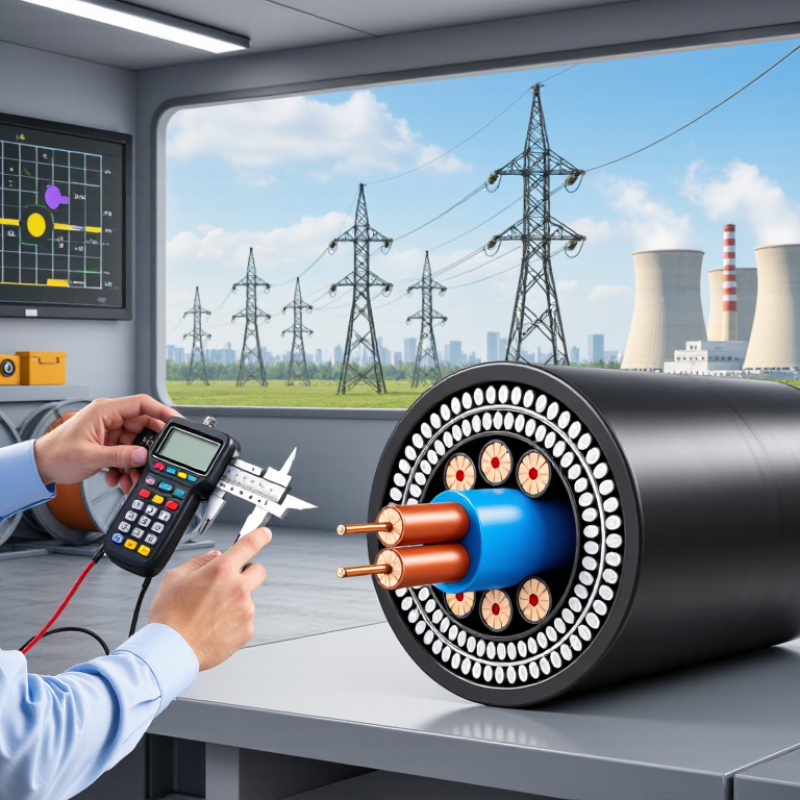
Define the Operating Conditions and Installation Environment
How to Choose the Right XLPE Insulated Power Cable?
Define the Operating Conditions and Installation Environment
Choosing an XLPE insulated power cable starts with the conditions it must survive. Record the system voltage, expected load, fault current, and operating frequency. Do not guess. Conductor size should reflect ampacity, voltage drop, and short-circuit withstand requirements. XLPE insulation commonly supports continuous conductor temperatures near 90°C, but the complete cable system may have lower limits.
Examine the installation route carefully. A cable in a dry indoor tray faces different stresses from one buried beside a roadway. Measure ambient temperature, soil thermal resistivity, burial depth, and grouping with other circuits. Water changes everything. Wet ground, standing water, or poor drainage may require suitable sheathing and construction. Outdoor cables also need protection from sunlight, chemicals, impact, and rodents. In industrial areas, oil exposure and vibration deserve special attention.
Installation practice can quietly decide service life. Check the minimum bending radius, pulling tension, joint locations, and available space before ordering the cable. I have seen designs that met the electrical calculation but failed during tight installation. That mistake is avoidable, although site measurements are sometimes incomplete. Confirm the cable’s screen, armour, earthing method, and fire-performance requirements against applicable electrical standards. Ask for verified test data, not only a convenient catalogue value. A qualified engineer should review the final selection with actual route conditions, seasonal temperatures, and future load changes in mind.
Match Voltage, Current Capacity, and Conductor Size
Choosing the right XLPE insulated power cable starts with the system voltage. Select a cable with a voltage rating equal to or higher than the network requirement. Medium-voltage systems need suitable insulation thickness and test levels. Do not judge the cable only by its printed voltage. Installation conditions matter too. Burial depth, grounding method, and nearby circuits can affect performance.
Current capacity must match the real operating load. Calculate the expected current, then apply correction factors for ambient temperature, grouping, and installation method. A cable carrying 300 amperes in open air may carry less inside a crowded duct. That difference is easy to miss. In field reviews, overloaded conductors often resulted from trusting basic ampacity tables without checking site conditions. The calculation may look complete, but one missing factor can change the result.
Tips: Choose conductor size after checking ampacity and voltage drop. Longer runs usually need larger conductors. Copper and aluminum also require different sizes and termination methods. Check short-circuit withstand capacity, especially near transformers and distribution boards. Confirm every selection against current electrical standards and project drawings. A qualified engineer should review the final design. My own preference is to leave a practical margin, not an oversized guess. Too small creates heat. Too large increases cost and termination difficulty.
Select the Appropriate XLPE Insulation and Sheath Materials
Selecting XLPE insulation and sheath materials requires more than checking voltage and conductor size. The insulation must match operating temperature, moisture exposure, and installation stress. IEC 60502-1 specifies a 90°C continuous conductor temperature for thermosetting insulation. It also lists a 250°C short-circuit limit under defined conditions. These figures guide thermal selection, but they are not permission to ignore soil conditions or joint quality.
Moisture changes everything.
CIGRE Technical Brochure 496 identifies water-treeing as a major aging concern for extruded cable systems in wet environments. For buried circuits, choose water-tree-retardant XLPE when the design faces groundwater or damaged outer protection. A polyethylene sheath usually provides better moisture resistance than PVC. PVC can remain practical where flame performance, flexibility, and cost matter more. The choice should follow the project’s fire, chemical, and mechanical requirements. Do not guess.
Sheath thickness also deserves attention. Rocky backfill, rodents, pulling tension, and repeated thermal movement can damage an otherwise suitable cable. High-density polyethylene offers strong abrasion resistance, while low-smoke, halogen-free compounds can reduce corrosive smoke during fire events. However, LSZH materials may need careful mechanical verification in harsh soil. IEC 60840 and IEC 62067 provide test frameworks for higher-voltage extruded cable systems, including insulation and sheath performance. In practice, the datasheet rarely tells the whole story. Ask for water-immersion, aging, elongation, and sheath-impact results from the proposed material system. A slightly conservative selection is often wiser than chasing the lowest purchase price.
Check Standards, Safety Features, and Environmental Resistance
Choosing the right XLPE insulated power cable starts with verified standards, not a familiar product description. IEC 60502-1 covers many low-voltage and medium-voltage extruded cables, while IEC 60228 defines conductor classes and resistance limits. For fire safety, check IEC 60332 flame propagation tests, IEC 60754 acid-gas requirements, and IEC 61034 smoke-density performance. These details matter in tunnels, factories, and crowded cable trays.
Safety must match the installation. XLPE commonly supports a 90°C continuous conductor temperature, but emergency and short-circuit limits depend on the cable design and applicable standard. Ask for routine, sample, and type-test records. IEA’s Electricity 2024 report recorded 2.2% global electricity-demand growth in 2023 and forecast approximately 4% growth in 2024. More load means less tolerance for poor joints, undersized conductors, or weak screening.
The environment is less forgiving than a laboratory. Outdoor cables may need UV resistance, while buried cables need radial water blocking, suitable armour, and verified soil-temperature ratings. In coastal or industrial areas, salt, chemicals, and ozone deserve specific test evidence. Check minimum bending radius before installation; a cable can pass its electrical tests and still suffer mechanical damage during a tight pull. I have seen specifications focus heavily on voltage while ignoring drainage and backfill conditions. That is a useful warning. Choose based on measured site conditions, documented test results, and the actual protection system—not assumptions.
Compare Cable Construction, Quality, Cost, and Supplier Support
Choosing the right XLPE insulated power cable requires more than comparing prices. Cable construction affects safety, service life, and installation performance. Check the conductor material, cross-sectional area, insulation thickness, metallic screen, bedding, and outer sheath. Copper offers excellent conductivity, while aluminum can reduce weight and material cost. The correct choice depends on load, voltage, installation method, and permitted voltage drop.
Quality should be verified through test records, traceability, and compliance with recognized standards such as IEC requirements. Inspectors should review insulation resistance, partial discharge results, conductor resistance, and routine test reports. Small defects may remain hidden during delivery. They can become serious after years of heat, moisture, or mechanical stress. In field inspections, poor sealing at cable ends appears more often than expected. That detail deserves attention.
Cost comparison should include transport, accessories, installation time, testing, and potential replacement expenses. A low quotation may exclude screens, glands, terminations, or technical documents. I have learned that unclear specifications create expensive misunderstandings. Supplier support matters throughout the project. Reliable support should include load calculations, cable schedules, installation guidance, storage advice, and prompt answers during testing. Ask how the supplier handles damaged drums, documentation changes, and delivery delays. Response quality is evidence of operational reliability. Good support is practical. It reduces avoidable decisions on site.