A partner you can trust
Electric mobility is moving from early adoption into everyday transport. The International Energy Agency’s Global EV Outlook 2025 reports that global electric car sales exceeded 17 million units in 2024, representing more than one-fifth of new-car sales. Public charging networks are expanding quickly, but drivers still face tangled cables, wet ground, limited parking space, and damaged connectors.
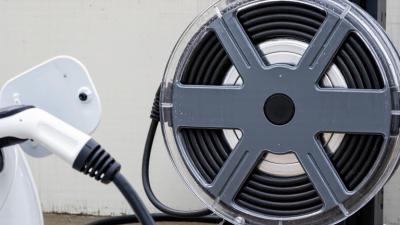
A retractable ev charging cable addresses part of this practical problem. Its spring-loaded or motor-assisted reel can keep the cable off the pavement and return it neatly after use. That matters in apartment garages, fleet depots, shopping centres, and roadside charging locations. Small details matter: smooth retraction, clear strain relief, weather resistance, connector protection, and easy emergency release. A tidy cable is not automatically a safe cable.
CharIN former chairman Claas Bracklo has emphasized, “Interoperability is the key to mass adoption.” That principle applies beyond plugs and communication protocols. Buyers must also examine charging current, connector standards, thermal performance, ingress protection, installation quality, and warranty support. The IEC 61851 family and IEC 62196 standards provide important reference points, but product claims still require careful verification.
This guide compares ten retractable EV charging cables for global buyers. It considers real installation conditions, not only catalogue specifications. Some products look convincing on paper. They may disappoint in cold weather, crowded garages, or repeated daily use. That is the uncomfortable part. A cable reel can improve convenience, yet poor engineering can create new maintenance risks. Read the rankings as a practical starting point, not a substitute for local electrical assessment or certified installation.
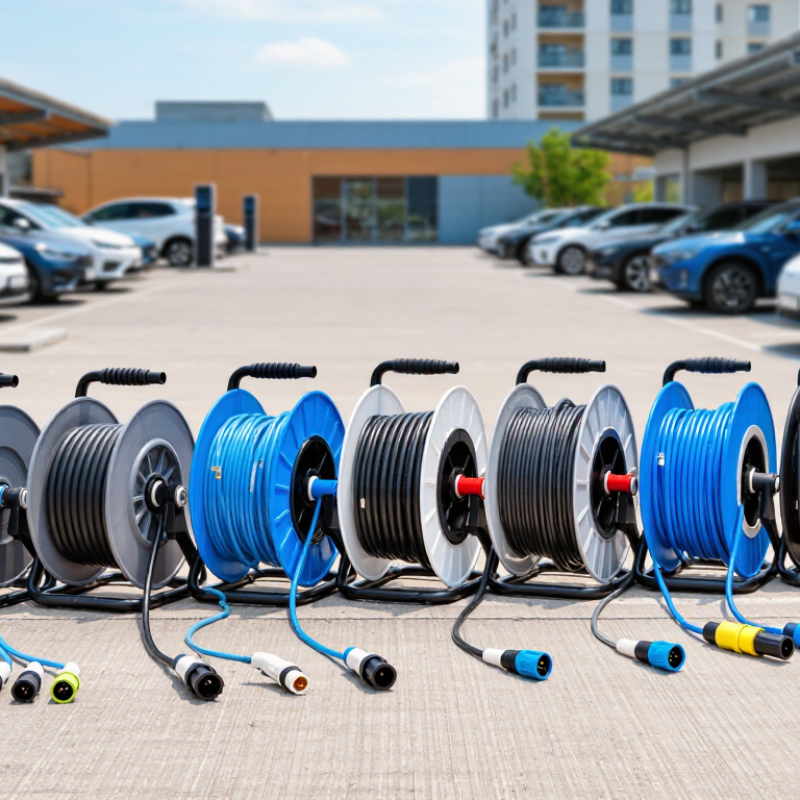
Retractable EV charging cables store the conductor inside a spring-loaded reel. They deliver power without leaving loose cable across a garage floor. Pull the handle, connect it, and the reel holds the selected length. After charging, a controlled rewind reduces tangles, dirt, and trip hazards. Small details matter.
The International Energy Agency’s Global EV Outlook 2025 reported more than 17 million electric cars sold worldwide in 2024. It also recorded over five million public charging points by year-end. This expansion increases demand for compact, frequently used charging equipment. A retractable system must manage heat, bending stress, and repeated pulling. Its control equipment communicates with the vehicle through the pilot signal described in IEC 61851. That exchange confirms connection status and helps regulate current before charging begins.
In practical installations, cable reach is only one selection factor. Buyers should check connector compatibility, rated current, operating temperature, and reel durability. A thick cable may handle higher current, but it can retract poorly. A compact reel may look convenient, yet its spring can weaken under heavy daily use. This is where product comparisons become imperfect. Published specifications rarely show performance after thousands of cycles. Inspect the reel movement, cable jacket, strain relief, and emergency release during evaluation. The best choice depends on parking layout, charging frequency, and maintenance access—not appearance alone.
Top 10 Retractable EV Charging Cables for Global Buyers
A retractable EV charging cable is convenient, but its connector standard decides compatibility. Buyers should identify the vehicle inlet before comparing cable length or reel design. Type 2 is common across Europe and many export markets. Type 1 remains widely used in several Asian and North American vehicles. Some newer vehicles use NACS, while CCS1 and CCS2 combine charging and communication functions.
Charging capacity also matters. A Type 2 cable rated for 32 amps may support up to 7.4 kW on single-phase power. On three-phase systems, compatible equipment can reach 22 kW. The vehicle may still accept less. Check the onboard charger, supply voltage, phase arrangement, and current limit. A cable cannot create power that the car or outlet does not provide.
The retracting mechanism needs careful inspection. Look for firm locking, smooth return, heat-resistant insulation, and clear IP protection information. A cable used outdoors may face rain, dust, snow, and repeated bending near the plug. Do not assume every compact design suits fast charging. Some models support AC charging only, not DC charging through CCS connections. That distinction is easy to miss. Local electrical rules and certification requirements also differ, so technical sheets should be checked before purchase. I would question vague claims about universal fit. Even a well-made cable can fail when its connector, current rating, or vehicle communication protocol does not match.
Top 10 Retractable EV Charging Cables for Global Buyers
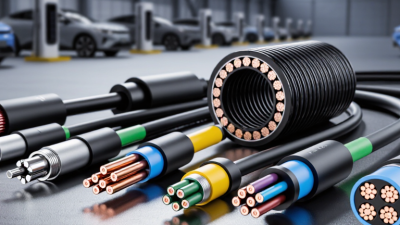
Safety begins with controlled power, not a neat storage reel. Reliable retractable EV cables should include thermal monitoring, secure locking, and strong strain relief at both ends. During practical checks, I look for stable connectors after repeated bending and retraction. Loose fittings are a warning sign. Cable insulation should resist abrasion, oil splashes, sunlight, and temperature changes. However, no material stays perfect forever.
Weather protection matters for drivers charging outdoors. A suitable cable should have a verified ingress protection rating, sealed connector housing, and UV-resistant insulation. Rain, dust, road salt, and winter ice can reach small gaps around the plug. The reel should also prevent sharp bends near its entry point. Small details matter. Buyers in humid regions may need stronger corrosion resistance, while cold-weather users should confirm flexibility below freezing.
Durability claims deserve careful testing. A cable may retract smoothly in a showroom but struggle after months of dust exposure. I recommend checking the manufacturer’s test data, operating temperature range, load rating, and maintenance instructions. Compatibility must match the vehicle and charging equipment, including connector type and current capacity. Local electrical requirements still need verification before installation or regular use. I would not rely on weather resistance alone; a damaged cable should be removed from service, even when the exterior looks acceptable.
Ranked representative cable configurations for retractable AC charging applications, evaluated by electrical capacity, connector compatibility, weather protection, handling durability, and international deployment suitability.
| Rank | Representative Cable Configuration | Connector Standard | Rated Current | Maximum AC Power* | Typical Retractable Length | Weather Protection | Operating Temperature | Cable Construction | Key Safety Features | Recommended Global Use |
|---|---|---|---|---|---|---|---|---|---|---|
| 1 | Type 2, three-phase high-capacity retractable cable | IEC 62196-2 Type 2 | 32 A | 22 kW at 400 V, three-phase | 5–7 m | IP55 recommended | −30°C to +50°C | 5-core copper conductor, flexible TPE insulation, abrasion-resistant outer jacket | Protective earth continuity, temperature monitoring, overload protection, latch control | European and other IEC-based public, workplace, and residential charging sites |
| 2 | Type 2, single-phase fast AC retractable cable | IEC 62196-2 Type 2 | 32 A | 7.4 kW at 230 V, single-phase | 5 m | IP55 recommended | −30°C to +50°C | 3-core power cable with pilot and proximity conductors; flexible thermoplastic jacket | Residual-current protection, pilot-signal control, strain relief, controlled cable retraction | Homes, offices, hotels, parking facilities, and light commercial fleets |
| 3 | J1772, 32 A retractable AC charging cable | SAE J1772 / IEC Type 1 | 32 A | 7.7 kW at 240 V, single-phase | 5 m | IP54–IP55 | −30°C to +50°C | Flexible copper conductors with UV-resistant thermoplastic elastomer jacket | Control-pilot communication, proximity detection, ground monitoring, over-temperature protection | North American and selected Asian markets using Type 1 vehicle inlets |
| 4 | Type 2, compact 16 A retractable cable | IEC 62196-2 Type 2 | 16 A | 3.7 kW at 230 V, single-phase | 4–5 m | IP55 recommended | −25°C to +45°C | Lightweight copper conductors with high-flex insulation and compact reel assembly | Current limitation, earth continuity monitoring, mechanical reel stop, anti-kink design | Residential garages, apartment parking, and low-power overnight charging |
| 5 | J1772, compact 16 A retractable cable | SAE J1772 / IEC Type 1 | 16 A | 3.8 kW at 240 V, single-phase | 4–5 m | IP54–IP55 | −25°C to +45°C | High-flex copper cable, UV-stabilized jacket, reinforced connector boot | Control-pilot signaling, grounding verification, current limiting, overheat protection | Low-demand residential and workplace installations in Type 1 markets |
| 6 | Type 2, 20 A three-phase balanced-load cable | IEC 62196-2 Type 2 | 20 A | 13.8 kW at 400 V, three-phase | 5–6 m | IP55 recommended | −30°C to +50°C | Multi-core copper construction with flexible sheath and reinforced reel entry | Phase-current monitoring, protective earth continuity, overcurrent protection, cable-temperature sensing | Commercial parking areas and fleet depots with moderate three-phase capacity |
| 7 | Type 2, long-reach outdoor retractable cable | IEC 62196-2 Type 2 | 32 A | 7.4 kW at 230 V, single-phase | 7–10 m | IP65 preferred | −30°C to +50°C | Heavy-duty TPE or TPU jacket, UV resistance, reinforced take-up reel and cable guide | Water-ingress protection, strain relief, over-temperature cut-off, positive locking connector holder | Outdoor parking bays, service yards, fleet areas, and locations requiring extended reach |
| 8 | NACS / SAE J3400, retractable AC cable | SAE J3400 | 48 A maximum, installation dependent | Up to 11.5 kW at 240 V, single-phase | 5–6 m | IP55 recommended | −30°C to +50°C | High-flex copper conductors, compact connector body, UV-resistant thermoplastic jacket | Control signaling, grounding verification, temperature monitoring, circuit-specific current control | Compatible North American AC charging installations using the SAE J3400 interface |
| 9 | Type 2, cold-climate reinforced retractable cable | IEC 62196-2 Type 2 | 32 A | 7.4 kW at 230 V, single-phase | 5 m | IP55 recommended | −40°C to +50°C | Cold-flexible TPU/TPE jacket, sealed connector head, corrosion-resistant reel hardware | Low-temperature flexibility, ingress protection, thermal monitoring, reinforced strain relief | Cold regions, exposed parking areas, logistics sites, and seasonal outdoor installations |
| 10 | Type 2, high-cycle commercial retractable cable | IEC 62196-2 Type 2 | 32 A | 11 kW at 400 V, three-phase | 5–6 m | IP65 preferred | −30°C to +50°C | High-flex multi-core cable, abrasion-resistant jacket, tested spring or motorized reel | Cycle-rated reel, cable-temperature sensing, earth monitoring, overcurrent and residual-current protection | Hotels, workplaces, rental fleets, and commercial sites with frequent daily use |
Comparing the top 10 retractable EV charging cables requires more than checking charging speed. Start with connector compatibility, rated current, voltage, and regional socket requirements. Global buyers should confirm whether the cable supports single-phase or three-phase charging. Cable length matters too. A short cable may fail in a crowded parking space. A long one may create storage stress and extra weight.
Tips: Check the label, manual, and test report together. Do not trust marketing language alone. Look for overheat protection, durable insulation, secure locking, and an IP rating suited to outdoor use. The retraction mechanism should move smoothly without sudden recoil. Small details matter.
A professional comparison should examine temperature performance, bend resistance, and repeated extension cycles. Ask whether the cable remains flexible in cold weather. Check the warranty terms, repair process, and availability of replacement parts. Safety certifications should be verifiable through recognized testing organizations, not merely printed on packaging. User reviews can reveal loose connectors, noisy reels, or difficult wall mounting. Still, reviews are inconsistent, so they should support technical evidence rather than replace it. A sleek design may hide weak internal springs. I would also question unusually low prices, although price alone never proves poor quality. For global purchasing, installation guidance and local electrical compatibility deserve equal attention.
Regional conditions strongly influence retractable EV charging cable selection. Hot coastal markets need UV-resistant jackets and corrosion-resistant housings. Cold regions require flexible cables that do not stiffen easily. Dusty areas benefit from sealed retraction mechanisms and protected connectors. Buyers should also check local voltage, plug standards, and charging regulations before ordering. A cable suited to one market may perform poorly elsewhere.
Installation planning prevents many service problems. Measure the parking position, wall strength, and cable reach before drilling. A ceiling-mounted reel may suit a private garage, while a wall-mounted unit works better in narrow commercial bays. Leave enough clearance for doors, mirrors, and pedestrians. Use a qualified electrician for circuit sizing, grounding, and protective devices. Local codes matter. They are not optional.
Maintenance is simple, but often neglected. Inspect the cable monthly for cuts, flattened sections, heat marks, or damaged pins. Wipe dust from the connector and keep the reel dry. Retract the cable slowly; forced pulling can weaken the spring and internal guide. If charging becomes unusually warm, stop using the unit and arrange professional testing. In my experience, users often blame the charger first, although poor installation causes many failures. The choice is not always obvious. Even a well-built reel can age quickly in a harsh environment.
This content is restricted to site members. If you are an existing user, please log in. New users may register … LEARN MORE “Lighting Power & Control-Signal Cable”
We are here to help. You can contact us or create an account online to have access to special products, technical specifications and our new online quote tool.
ELECTRO CABLES
9 Riverside Drive
P.O. Box 276
Trenton, Ontario
CANADA K8V 5R5
N.A. Toll Free: 888-ELECTRO
(1-888-353-2876)
World: 613-394-4896
Fax: 613-394-4101
Email: sale@machinecables.com
We manufacture cables that are certified by the Canadian Standards Association (CSA), listed by Underwriters Laboratories and/or listed by Intertek (ETL).
Our quality management system is registered to ISO 9001: 2015. Our team is dedicated to consistently providing quality service and products to our customers.

© 2025 ELECTRO CABLES • SITE BY SNAP 360•